


The 2027 London Marathon ballot results landed on Thursday, and for roughly 12 of every 13 applicants the email was a rejection, even with a one-off two-day format that doubled the places on offer.
A record 1.33 million people entered the draw for 100,000 spots at the 2027 Double London Marathon, which will be run across Saturday, April 24 and Sunday, April 25, 2027. As Marathon Handbook reported Thursday, that works out to odds of about 1 in 13, which leaves more than 1.2 million runners with a spring goal and no race attached to it.
A well-established pattern follows every ballot day: a wave of those runners enters something else, and for many in the UK that something is the Brighton Marathon, run on Sunday, April 4, 2027, three weeks before London. Entry is open to anyone, with no ballot or qualifying time, at £74.99 early bird and £79.99 after. For runners weighing that switch, it is worth knowing what the race is and what it is not.

The Same Organization Now Runs Both Races
Brighton has been part of the UK spring calendar since 2010 and bills itself as the country’s third-largest marathon. Its recent history is relevant for anyone who remembers the race’s rougher years, including a 2021 edition whose course measured 568 meters too long after a setup error. The original organizer, Grounded Events, went into administration in late 2022 owing around £1.2 million, and London Marathon Events bought the race that December, with Brighton & Hove City Council granting a licence to operate the event through at least 2027.
Since the takeover, the race has run on London’s operational systems: drink stations, a park and ride, free bag drop, and pacers covering finish times from 3 hours to 7 hours. The marathon anchors a weekend that also includes a 10K and a mile, with up to 20,000 participants across the three events. That is a fraction of London’s field, and the crowds are thinner too, though dense by the standards of UK marathons outside the capital.

What The Course Asks Of You
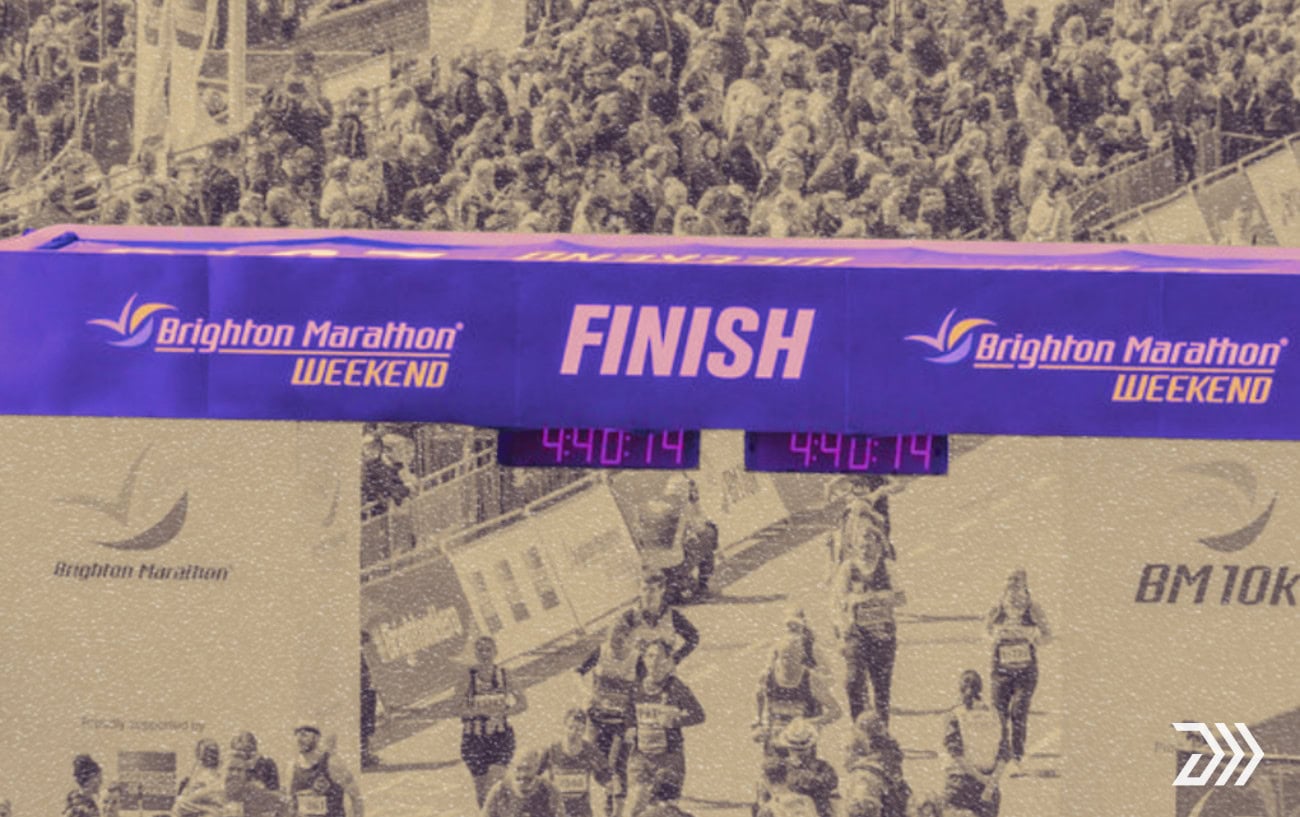
The race starts in Preston Park, loops through the city centre past the Royal Pavilion, heads east along the clifftops to Ovingdean, then runs back through Hove before finishing on Madeira Drive, on the seafront with the pier in view. The course was revised in 2023, when the industrial stretch through Shoreham Port, long the race’s least popular section, was removed and replaced with an out-and-back near the start.
There are two real differences from the race most entrants were hoping for. The course carries 477 feet of elevation gain, most of it in the first half, which makes it noticeably hillier than London, though still moderate overall, and manageable with some hill work in training. The other is wind. Long sections run exposed along the coast, and a stiff sea breeze can make the closing seafront miles slow going, which is worth building into a race pace plan and worth preparing for in training.
The Practical Considerations
The logistics are the main reason the switch is common. The early April date sits on the same winter training block a London runner would have followed anyway, so nothing about the preparation changes except the finish line. Brighton is about an hour from London by train. And because the race falls three weeks before London, runners who later get a charity place or a 2028 ballot spot have not burned their spring on a conflicting date.
Brighton is not the only candidate. Manchester stages a large, flat spring marathon that draws a similar overflow, and plenty of smaller April and May races serve the same purpose. The honest comparison is that Brighton offers the closest thing to London’s event infrastructure, run by the same organization, at the cost of more climbing and more weather exposure. Runners chasing a fast time on a calm day will find the course fair. Runners expecting London’s flat profile and wall-to-wall crowds should adjust their expectations, and possibly their race strategy, accordingly.
More than 1.2 million runners opened a rejection on Thursday. For a share of them, the spring marathon will happen anyway, about 50 miles south of the one they planned.
RunClub
Get more running stories — join RunClub
Daily running news, a community of 300,000+ runners, free training plans for every distance, and a daily running game. Free to join — no card.
Already a member? Log in →












Start the conversation