


A total of 106 men broke 64 minutes for the half-marathon on Saturday in Tachikawa, on the western edge of Tokyo, and nearly every one of them was a university student racing for the same prize: a place for his school at the Hakone Ekiden in January.
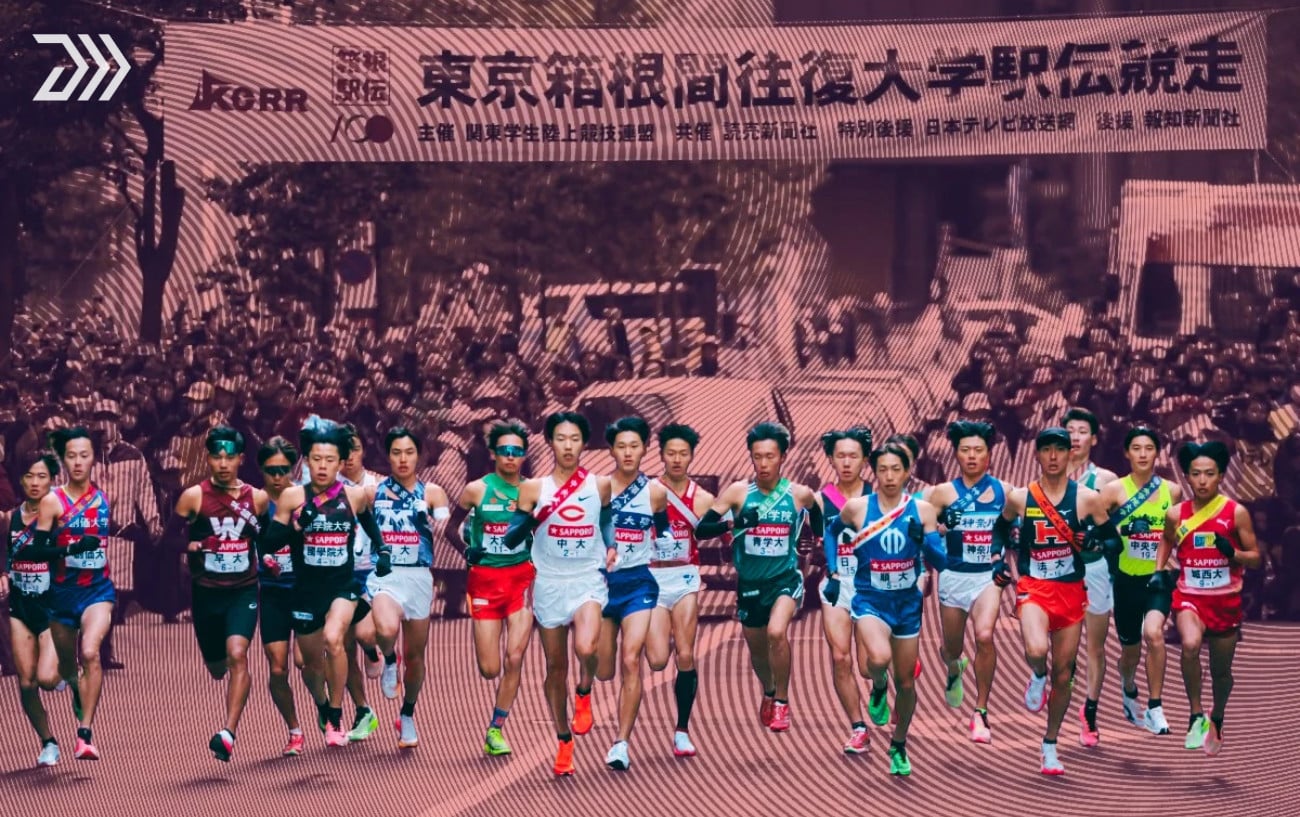
The race is the qualifier for the 103rd edition of the relay, and it is scored much like a cross-country meet. Each school can start up to 12 runners, the first 10 across the line count, and the 10 teams with the lowest combined time join the race from Tokyo to Hakone and back on Jan. 2 and 3, 2027. Forty-five teams started on the runway at the Ground Self-Defense Force’s Camp Tachikawa and finished inside Showa Kinen Park. With a team’s score riding on its 10th finisher as much as its first, the event rewards depth above everything else.
According to the official results posted by World Athletics, 44 runners finished under 1:03:00, seven broke 1:02:00 and three got under 1:01:00. The 100th man home ran 1:03:54, and by the time the clock reached 1:05:00, 193 runners had finished. A 1:04:00 half works out to a little over 3:02 per kilometer, or 4:53 per mile for 13.1 miles, a pace that sits far beyond what most runners would call a good half-marathon time. Of the 106 under that mark, 92 were Japanese. Kenyan students at Japanese universities made up 13 of the rest, and one runner was Eritrean.
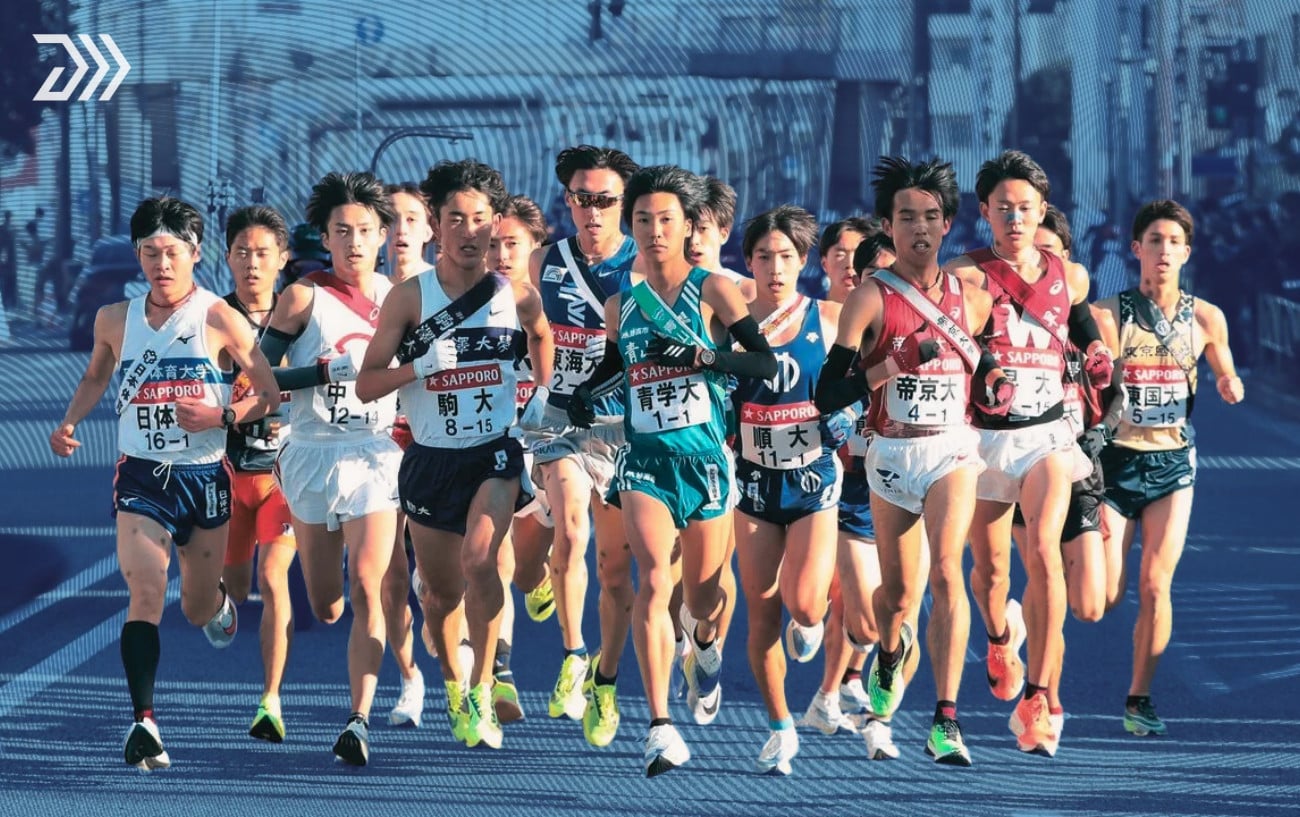
The qualifier has produced fields like this for years. In 2023, when it was opened to universities from across Japan for the 100th edition, 108 men from 57 teams broke 64 minutes and 38 broke 63, according to Brett Larner’s Japan Running News. Last year the 100th finisher ran 1:03:50, four seconds quicker than this year, and Japan Running News put the number under 1:03:00 at 38. Saturday’s race was quicker at the front and a little slower further back. Hosei University took the 10th and last qualifying place in 10:40:08, which was 3:12 slower than the cutoff Rikkyo University set in 2025.
Toyo Wins Its Way Back to Hakone
Toyo University had not needed to run the qualifier in 21 years. Its 14th-place finish at the Hakone Ekiden in January cost it a seeded place, and on Saturday it answered with the fastest team total of the day, 10:31:30, an average of about 1:03:09 for each of its 10 scoring runners. Yu Miyazaki, a third-year, led the team home in fourth overall in 1:01:05, the fastest time by a Japanese runner in the field.
Chuo Gakuin University, which won the qualifier last year before finishing 11th at Hakone and missing a seeded place by one spot, was second in 10:33:31. Tokai University was just 10 seconds back in 10:33:41, and Senshu University another second behind in 10:33:42. Tokyo University of Agriculture, Yamanashi Gakuin, Daito Bunka, Kanagawa, Nippon Sport Science University and Hosei filled the remaining six places.
A year ago Hosei finished 11th in the qualifier and missed Hakone by just 17 seconds. This time it had 1:46 to spare over Kokushikan University, the first team out.
Brian Kipyegon Wins Again
Brian Kipyegon of Yamanashi Gakuin won the individual race for the second straight year, in 1:00:48, a little slower than the 1:00:16 he ran to win in 2025. Runners from Tokyo International University and Musashino Gakuin University tied for second in 1:00:59. Kazuma Maeda of Tokyo University of Agriculture was the second Japanese finisher, seventh in 1:01:57, and Tokai’s Shu Nagamoto rounded out the top 10 in 1:02:19.
The 10 qualifiers now join the 10 schools that earned seeded places in January, led by Aoyama Gakuin University, which won its third straight Hakone title, along with a Kanto student select team drawn from runners at schools that missed out. It will be the last Hakone Ekiden at that size. From the 104th edition in January 2028, the field grows to 23 teams, according to Japan Running News.
RunClub
Get more running stories — join RunClub
Daily running news, a community of 300,000+ runners, free training plans for every distance, and a daily running game. Free to join — no card.
Already a member? Log in →








Start the conversation