


A Quebec dairy company has decided that the bouncing motion of a long run is, in fact, a useful biomechanical event. Lactantia, the 80-year-old Canadian butter and milk brand, has built what it calls the Ultimate Butter Churning Vest and is running a contest to give one away.
The premise is simple. You fill the vest with cream, you head out for your usual long run, and the up-and-down motion of running does what a hand churn or stand mixer would normally do. By the time you get home, the cream has separated into butter and buttermilk.
Lactantia says the project was born partly out of frustration with amateur efforts online. “It’s hard to just sit back and watch the… let’s say, less-than-perfect attempts on social media,” the brand wrote on its contest page. “So we decided to give butter-loving runners a little boost.”
The vest is being put through real-world testing by Canadian runner Ralph Goulet, who posts as @ralphay.runs on TikTok and Instagram. Lactantia says the test footage starts going up June 10.
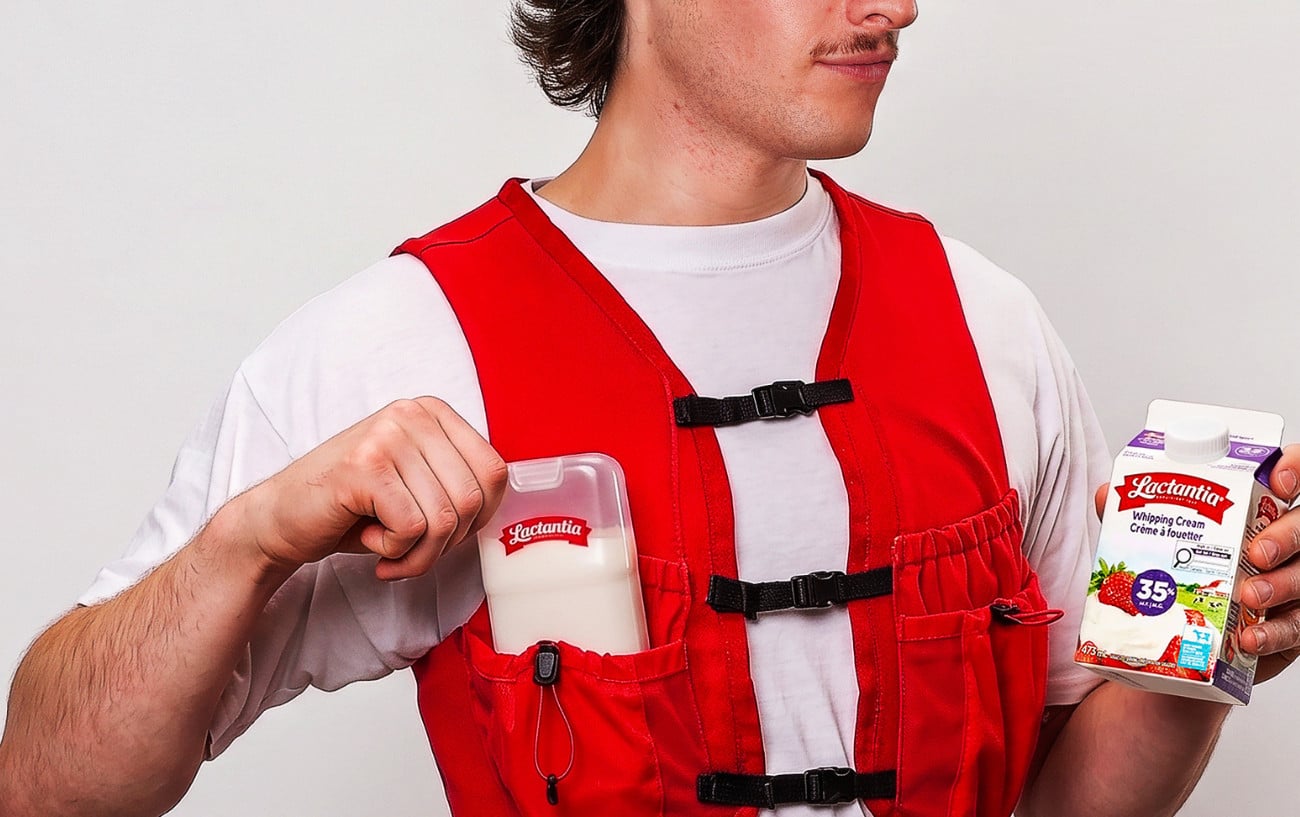
The contest
To enter, runners fill out a short form on the Lactantia website with a first name, last name, and email. There is also a French-language version of the page for Quebec entrants. The brand has not published the number of vests on offer or a closing date in the public-facing copy, so anyone interested should check the entry page directly for terms.
The safety rules are the interesting part
This is not a gag without fine print. Lactantia has published a list of guidelines that read like food-safety advice from a public health pamphlet, and they are worth paying attention to if you actually plan to do this.
Cream is perishable. The company says it should not be left unrefrigerated for more than two hours, and that window drops to one hour if the air temperature is above 20 °C (68 °F). The maximum recommended churning session is 90 minutes, and Lactantia says runners should postpone the activity entirely if it is hotter than 30 °C (86 °F) outside.
Other instructions: keep the cream chilled until the moment you leave, use pasteurized or UHT cream, wash your hands before filling the container, and put the finished butter in the fridge as soon as you walk in the door.
For most recreational runners, that 90-minute cap is a useful constraint. It rules out churning on a marathon, a long trail outing, or a hot July summer effort. A weekend easy run of an hour to ninety minutes in cool weather is the sweet spot, close to the easy, conversational pace most coaches recommend for the bulk of weekly mileage anyway.
Does running actually churn butter?
Yes, and the proof has been racking up millions of views online. The trend took off after Libby Cope, a running content creator based in Oregon, posted footage of an experiment with her boyfriend Jacob Arnold, according to Parade. The two poured heavy cream and a pinch of salt into sealed bags, tucked them into their hydration vests, and headed out for a six-mile trail run. About an hour later, they pulled out small portions of soft, spreadable butter.
The video took off on TikTok and Instagram, and TODAY and CBC News both covered the wave of copycat attempts that followed. Food Network ran its own test and confirmed the science holds up. Some runners have started calling it a “butter run.”
The mechanics are not new. Butter is made by agitating cream until the fat globules clump together and separate from the liquid. The traditional plunger churn, the rocking barrel churn, and a jar of cream shaken by hand all work on the same principle. A jogging human carrying a sealed container of cream is, mechanically, just another version of the same idea. Home cooks have been making butter in mason jars for generations.
Temperature is the variable that makes a run especially good for the job. Cream churns best when it is moderately cool but not cold. Too cold and the fat molecules move too slowly to bind together. Too warm and the butter softens rather than separating cleanly. A cool outdoor run with a bit of body heat against the vest tends to land in the right zone. That same logic is why Lactantia’s temperature warnings matter, and why heat is something runners already have to plan around. Cream sitting against a warm torso for an hour and a half on an August afternoon is a different thermal situation than cream in a kitchen.
If you do decide to try it, the same rules of long-run prep still apply: eat properly beforehand, hydrate with actual water rather than the cargo in your vest, and treat the dairy like the perishable food it is. The viral runners who started this trend aren’t the first to find a strange new use for a hydration vest, and they probably won’t be the last; this trend joins a growing list of unusual running stunts that have moved from social media into the mainstream conversation.
RunClub
Get more running stories — join RunClub
Daily running news, a community of 300,000+ runners, free training plans for every distance, and a daily running game. Free to join — no card.
Already a member? Log in →








Join the conversation
Why would anyone use expensive fresh cream to make cheaper butter?
April Fools?!
It\'s June.