


Strava launched a Model Context Protocol connector on Monday that allows its subscribers to query their own training history through Claude, the AI assistant made by Anthropic. The company said in a press release that the rollout begins this week and will reach all paying subscribers globally over the coming days.
The integration makes Strava one of the first major connected fitness platforms to ship a native link to an AI assistant. Until now, runners who wanted to run their mileage logs, heart rate streams, or pace data through a chatbot had to export files from Strava and paste the contents into a model by hand, repeating the process for every new question. Some turned to unofficial third-party scripts, which raised questions about data security.
Strava says the new connector removes those steps. Once a subscriber links their account, Claude can pull live data directly from Strava and answer questions in plain English. This is the same company that recently added physical therapy as a trackable activity and, last year, acquired the running coaching app Runna, signalling a steady push beyond simple activity logging.
“Athletes have been telling us, in increasingly creative ways, that they want more ways to analyze their own training data,” said Ryan Dixon, vice president of partnerships and developer relations at Strava, in a statement. “They’ve been doing it with spreadsheets, exports, and third-party scripts for years. The MCP connector gives them a far more efficient, safer tool while keeping the athlete in control, representing a step-change in our subscription offering.”

What runners can actually ask
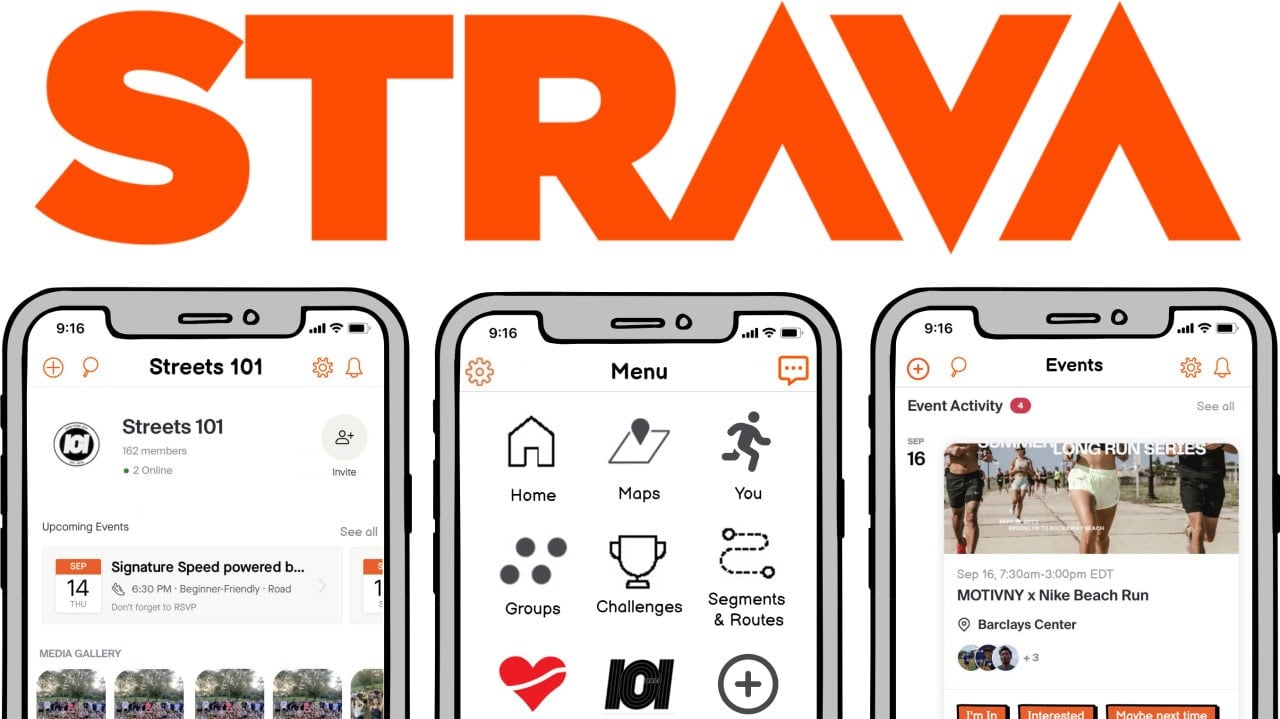
The connector gives Claude access to a runner’s full activity history, including per-second heart rate and pace data, GPS routes, power data from cycling, and club and event information. Strava published a short list of example prompts to illustrate the use cases it has in mind.
Among them: “What types of activities have most improved my fitness?” which the company says can surface volume trends and compare current training cycles against past peaks. Another suggested question, “Are my easy days easy enough?”, aims at a common problem for distance runners who struggle to keep recovery pace truly slow, an idea reinforced by the 80/20 method that many coaches preach. A third, “How is my cross-training affecting my running?”, lets athletes look at strength work, cycling, and running side by side.
The MCP can currently be used for activity history, fitness trends, readiness, goal planning, cross-sport analysis, and gear. Strava says more functionality will be added over time.
Subscriber-only, read-only
Access is limited to paying subscribers. That includes the standard Strava subscription, the Strava and Runna bundle, the Family Plan, the Student Plan, and the company’s Military, Educator, and Medical discount tiers.
The connector is read-only. It cannot upload activities, edit them, or change anything in a user’s account. Access is scoped to the individual account and can be revoked at any time through Strava’s settings page. Strava also noted that there is a cap on how many requests a subscriber can make per minute and per day, though it did not publish the specific numbers.
The company is launching with Claude only. Asked about support for other AI tools, Strava said it is “looking to support other AI clients in the future” but did not name any.

A note on the answers
Strava warned that the figures Claude reports may not always line up with what runners see inside the Strava app itself. “AI clients have their own ways of processing information that may lead to insights and responses that differ from what you see on Strava,” the company said, citing features like Performance Predictions and Runna training plans as examples where the numbers might not match.
For runners, the practical question is whether asking Claude about a training block produces something more useful than scrolling through the app’s existing charts. The answer will depend on the questions a runner thinks to ask, and how much they trust the response. Anyone who has ever pored over Strava data from a big race already knows the value of slicing the numbers from a new angle, but also how easy it is to read too much into a single graph.
It is worth remembering that the most valuable training questions often have nothing to do with raw data. Knowing your Zone 2 sweet spot, or simply showing up for an easy run when you said you would, matters more than any chatbot answer.
Strava has more than 195 million users across more than 185 countries, according to the company. Setup instructions for the connector are available in the Strava Help Center, and subscribers can check their eligibility on the MCP settings page in their account.
RunClub
Get more running stories — join RunClub
Daily running news, a community of 300,000+ runners, free training plans for every distance, and a daily running game. Free to join — no card.
Already a member? Log in →










Start the conversation