


When Adidas sent representatives to Kenya last summer to show the world’s best marathon runners their new performance suit, the runners laughed.
Not politely. Laughed.
“Every time we would show the suit to athletes, they would just burst out laughing,” said Patrick Jacobson, a senior apparel designer at Adidas. “The suit was almost dead quite a few times.”
The Techfit Endurance Suit is a tight, structured unitard — shoulders to knees — built around laser-cut bands of thermoplastic polyurethane that stabilize the pelvis and hips. Adidas says it improves running economy by more than 1 percent. For a marathon near two hours, that’s roughly 48 seconds.
On April 26 at the London Marathon, that number stopped being theoretical.
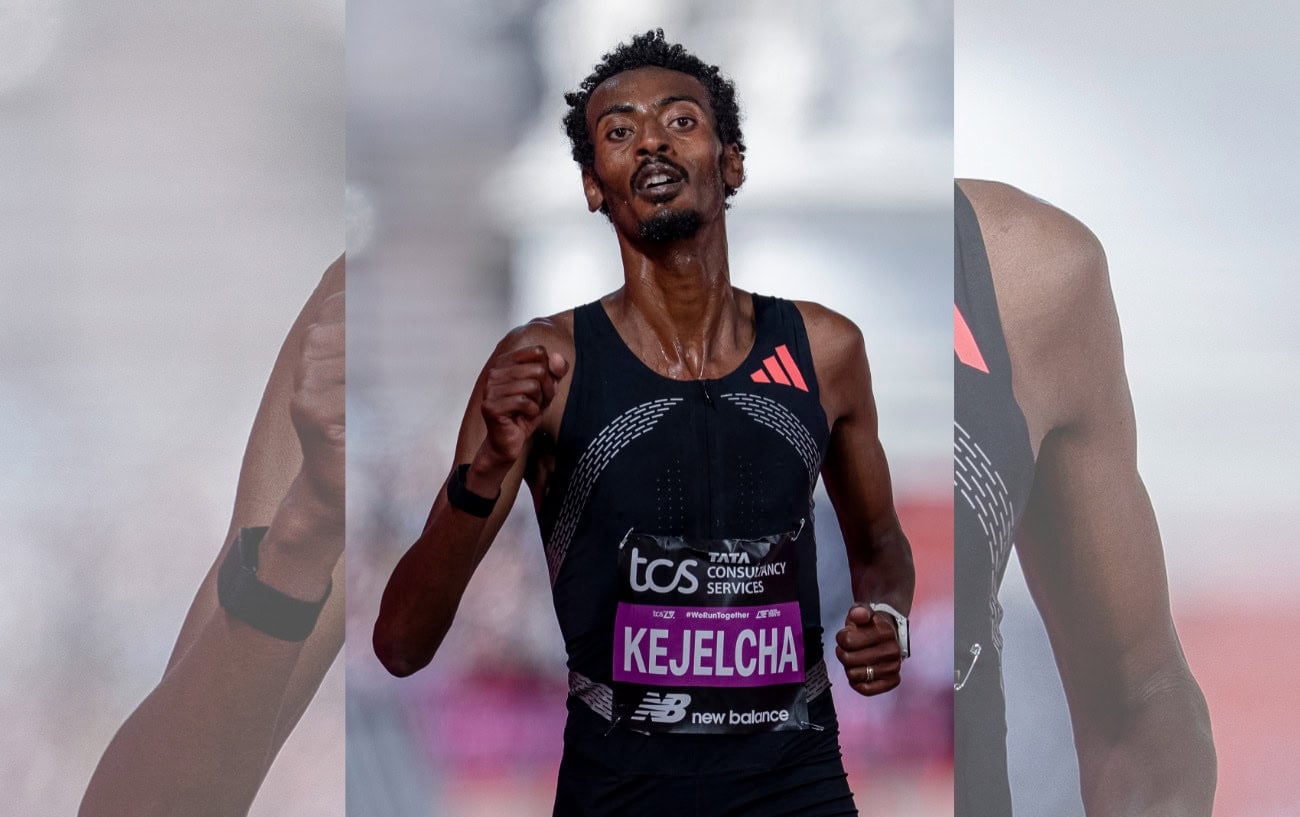
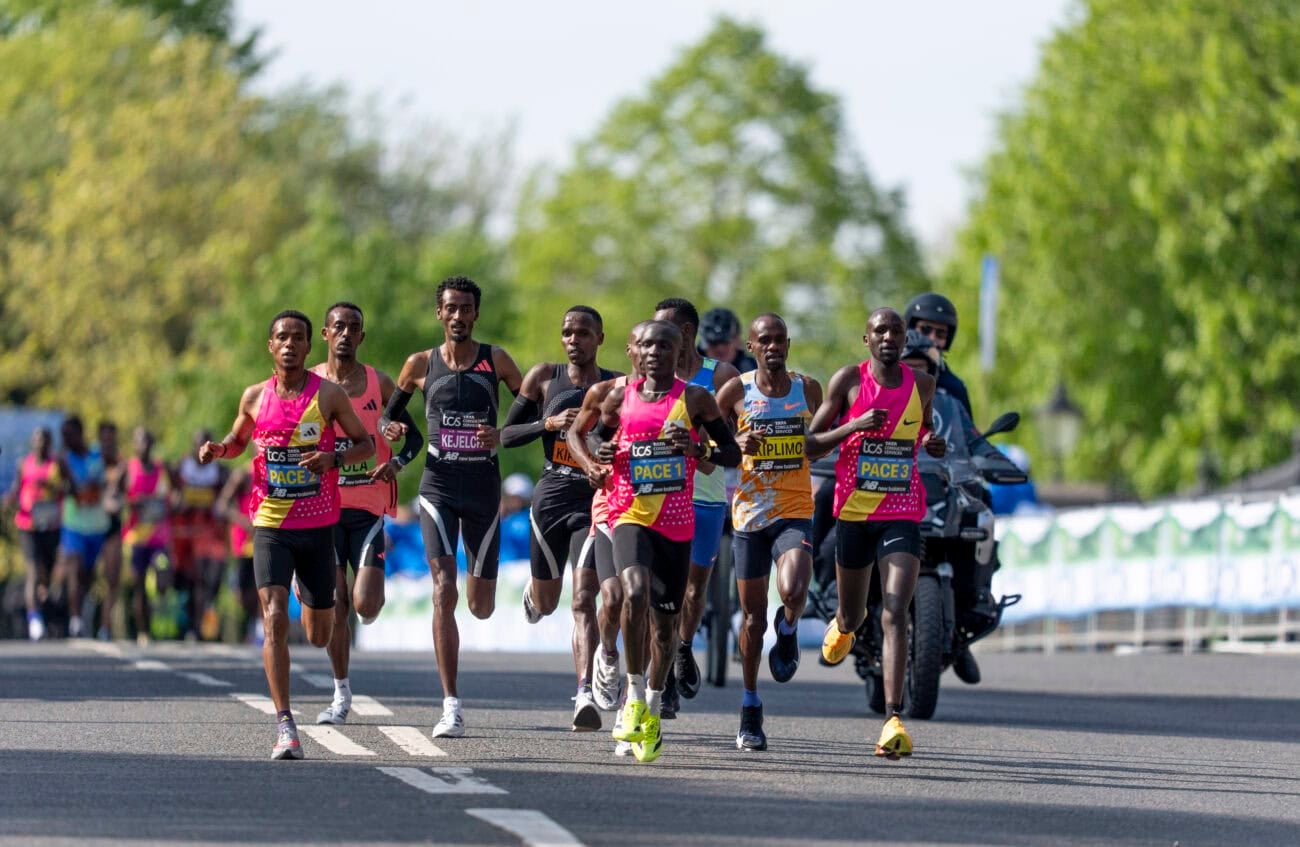
Sabastian Sawe and Yomif Kejelcha became the first two men in history to finish a marathon in under two hours — Sawe in 1:59:30, Kejelcha in 1:59:41. Kejelcha wore the suit. Sawe, who had trained in it and seemed ready to race in it, showed up at the start line in a plain white singlet and black shorts.
Jacobson found out when he saw him on the line. “I guess today’s not the day,” he said to himself.
Kejelcha had been sold from the start. “I wanted to use the suit in training as soon as I saw it for the first time,” he said. “I feel the hip and back support, and I wanted to use it in competition, so I did it. It’s a special one for me.”
Whether it made the difference between 1:59 and 2:01 is impossible to say with certainty. But the math is suggestive.
Not About Aerodynamics
The suit works differently than you might expect. It’s not primarily about aerodynamics — cutting drag, reducing wind resistance. The bigger claim is biomechanical. As runners fatigue over 26 miles, their form breaks down. The hips drop, the pelvis tilts, efficiency falls apart. The suit’s structure is designed to slow that process.
Jessica G. Hunter, a manager of athlete performance at Adidas who led the research, spent years building the case internally. Leadership wasn’t convinced apparel could move the needle. “Nobody had ever done it successfully before,” she said to NY Times.
Her finding was that stabilizing the connection between the core and the hips — the muscles that keep a runner upright and efficient — required something that crossed the whole body. A singlet and shorts, no matter how good, can’t do that. “The only way to do that is with a full, connected suit,” she said.
In photos from London, Kejelcha looks like he’s wearing half-tights and a singlet. That’s the point — the suit is designed not to look radical. The critical detail is that the two pieces are one connected garment. Sawe wore aerodynamic half-tights too, but with a regular untucked singlet on top. You can see every piece of gear Sawe wore in the race.
A Long History of Runners Resisting Suits
Getting elite runners to change what they wear has never been easy. The history of performance suits in running is mostly a history of rejection. Nike unveiled a full-body aerodynamic suit at the 2000 Sydney Olympics — Cathy Freeman won gold in the 400 meters wearing it — but distance runners never adopted it. The gains were modest and the fit was uncomfortable.
The shift came in 2017, when Eliud Kipchoge ran his near-miss sub-two-hour attempt in Monza wearing aerodynamic half-tights. Before that, Jacobson said, elite marathon runners wouldn’t go near them. “It was a split short or nothing. But as soon as Kipchoge almost broke two hours in the tights, the runners were like, ‘OK, maybe there’s something here.'”
Kejelcha’s run may do the same for the full suit. Or it may not. Sawe ran 1:59:30 without it.

Where Does Performance Apparel Go Now?
World Athletics has not moved to regulate performance apparel in marathon running, though the question may not stay quiet for long. Former Olympians have already called on World Athletics to act following the London sub-two. Speedo’s LZR Racer — a similar concept applied to swimming, stiffening the core to improve body position in the water — was banned after swimmers broke dozens of world records in it. The super shoe triggered its own regulatory scramble.
Hunter is watching and waiting. “We were hoping to make a suit that was disruptive enough that people would freak out about apparel like they started freaking out about the shoes,” she said. “So far it hasn’t happened, which is a little disappointing.”
For now, the suit is legal, available, and largely unworn. The two-hour marathon barrier is broken. Whether the suit gets credit — or gets worn again — is still an open question.
Original reporting by Calum Marsh for The New York Times and Robert Johnson for LetsRun.
RunClub
Get more running stories — join RunClub
Daily running news, a community of 300,000+ runners, free training plans for every distance, and a daily running game. Free to join — no card.
Already a member? Log in →








Start the conversation