


Here’s a number worth sitting with: for the 2026 Boston Marathon, 33,249 runners met the qualifying standard. Only 24,362 got in.
Nearly 9,000 people ran a hard, legitimately fast marathon, hit their qualifying time, submitted their entry… and still got a rejection email because the cutoff demanded they beat their BQ by another 4 minutes and 34 seconds on top of that.
These aren’t people who showed up undertrained. These are dedicated runners who built their entire racing year around a qualifying attempt, delivered, and still came up short. There were simply too many of them.
Now add the much larger group of runners who will never hit a BQ at all — not through lack of effort, but because a sub-3:25 or sub-4:00 marathon, depending on your age group, is genuinely out of reach. Plenty of them have been running for twenty years. Some have completed five of the six Abbott World Marathon Majors and are staring at the one finish line they may never be allowed to cross.
The London Marathon made headlines this week with reported plans for a two-day, 100,000-runner event in 2027. It’s a bold move, driven by a ballot so oversubscribed it borders on absurd. Boston’s problem is different. But the question it raises is the same: is there a version of this race that serves more people without losing what makes it worth running in the first place?

“Just get a charity bib” isn’t the answer people think it is
The standard response to this conversation usually goes: there are other ways in. Charity bibs, invitational entries, international tour operators. And technically, yes — those pathways exist.
But let’s look at the charity route honestly. The 2026 Boston Marathon had approximately 3,000 charity spots spread across nearly 200 organisations. That’s an average of 15 bibs per charity — and many organisations have far fewer than that. Fundraising minimums start at around $3,000 and can climb to $15,000 or more depending on the charity, and spots typically go to applicants who can demonstrate the strongest fundraising potential. It is, in other words, a system that primarily rewards people with large personal networks, significant disposable income, or both.
That’s not a criticism of the charity programme — it raised over $45 million in 2024, and it does extraordinary good. But it is a narrow door. 3,000 spots for a running community of millions isn’t a solution to the access problem. It’s a pressure valve.
The other routes are similarly limited. International tour operator entries are expensive and logistically complicated for most runners. Invitational bibs are, by nature, selective. For the average runner who doesn’t qualify and can’t secure a charity spot, the honest answer is: there isn’t a way in. There just isn’t.
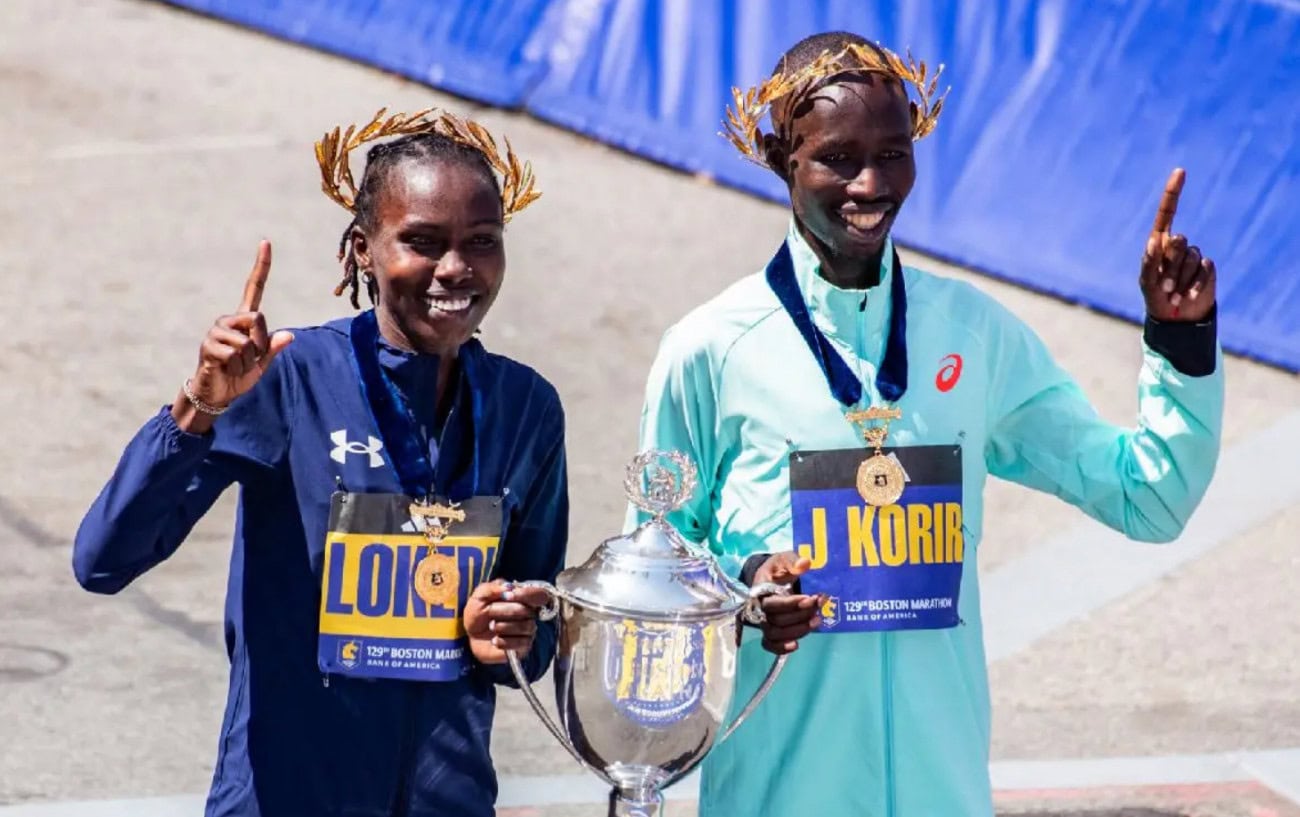
A Sunday Boston that doesn’t touch what Monday means
This is why the two-day idea is worth taking seriously rather than dismissing.
The proposal is straightforward: a Sunday edition of the Boston Marathon, running the day before the main event, open to runners who have a marathon finish under 5:30 but don’t meet the BQ standard. Slots allocated to older runners first — partly because older runners are disproportionately represented in the non-qualifying population, and partly because a 67-year-old finishing a marathon in 5:10 deserves acknowledgment, not a form rejection. Entry fees set higher than Monday’s field, to both manage demand and offset the real cost of staging a second race day.
Monday stays exactly as it is. The qualifying standard is untouched. The BQ retains every shred of its meaning — in fact, it arguably becomes more meaningful, because now there’s a visible contrast. Monday’s field qualified. Sunday’s field didn’t. That distinction is clear, it’s worn on the bib, and it doesn’t need to be blurred.
What you’ve added is a race for people who have earned their spot through a different kind of dedication. Not speed. Just the stubborn commitment to keep showing up.

The Six Star problem nobody talks about enough
For a lot of runners, this isn’t an abstract policy debate. It’s personal.
Boston is the only Abbott World Marathon Major you cannot enter through a ballot.
Tokyo, London, Berlin, Chicago, New York — all have lottery systems that give every runner a realistic shot regardless of how fast they are. Boston does not. Which means for the growing community of runners chasing the Six Star medal, Boston is the one that can’t be solved by persistence alone. There are over 23,000 Six Star finishers worldwide, and for a significant portion of them, Boston was the piece that required years of training just to get to the start line — or that remains permanently out of reach.
A Sunday edition changes that equation without cheapening the BQ. It creates a legitimate, structured pathway for runners who’ve completed five Majors and are staring at a wall they may never be fast enough to climb. The demand for those Sunday spots would be enormous, global, and deeply motivated. These are not casual entrants. These are people who have flown to Tokyo, navigated the Berlin ballot, and run New York in the rain. They know exactly what they’re getting into. They just can’t run a 3:35.

The obstacles are real and shouldn’t be waved away
A genuine case for this idea has to be honest about what makes it hard.
Hotels are probably the biggest practical obstacle, and it’s not a small one. Boston on marathon weekend is already one of the most squeezed accommodation markets in the country. A Sunday race doesn’t just add runners — it adds hotel nights, travel days, and logistical complexity for tens of thousands of people who now need to arrive Friday and leave Tuesday. The city’s infrastructure isn’t currently built for that, and pretending otherwise would be naive.
Volunteers are a real concern too. Boston’s operation relies on thousands of people giving up a Monday in April to stand in often brutal conditions and hand cups of Gatorade to strangers. Asking many of them to do effectively the same thing the day before requires an entirely separate recruitment and coordination operation.
And the weather. Patriots’ Day in Boston is notoriously unpredictable — extreme heat one year, driving rain the next, headwinds that break spirits somewhere in Newton. Running two race days doubles the exposure to conditions that can turn a major event into a crisis management exercise.
The prestige argument — that a Sunday edition somehow dilutes the Monday race — is the weakest objection, but it will be the loudest. The honest response is that two separate races, with distinct entry criteria and distinct bib colours, don’t dilute each other. The Monday BQ qualifier isn’t less impressive because someone ran the same course on Sunday with a 5:15. That logic doesn’t hold.

What it would actually take
The BAA is a conservative organisation, and deliberately so. They have spent 129 years protecting the integrity of a race that means more to its participants than almost any other event in sport. That conservatism is one of the reasons Boston still feels like Boston. They are not going to move fast on something like this, and they probably shouldn’t.
But the conditions for a serious conversation have rarely been better. The London Marathon news has shifted what feels possible — if a two-day, 100,000-runner London is apparently in advanced talks with the mayor’s office, then a second race day in Boston is no longer a fringe idea. It’s a legitimate operational question. And if you want to understand just how complicated it already is to get into each of the World Marathon Majors, the fact that Boston has no non-qualifying pathway at all stands out more sharply than ever.
What it requires isn’t just logistics. It requires the BAA to decide that expanding access — thoughtfully, carefully, without compromising what Monday represents — is worth the effort. That’s a cultural shift as much as anything else.
Nearly 9,000 qualified runners couldn’t get into Boston this year. Millions more will never qualify at all. The charity programme does important work but serves a fraction of that population. The other entry routes are narrow and expensive.
A Sunday Boston doesn’t fix everything. It wouldn’t help the runners who hit their BQ but missed the cutoff — they’d still be out of luck for the Monday. But it would give the much larger group of runners who sit outside the qualifying system entirely a real race, on one of the world’s most storied courses, with a real finish line that actually counts.
RunClub
Get more running stories — join RunClub
Daily running news, a community of 300,000+ runners, free training plans for every distance, and a daily running game. Free to join — no card.
Already a member? Log in →









Join the conversation
Firstly, charity runners should have to qualify. No being able to buy your way in allowed.
Secondly, I have been suggesting a second marathon as one solution to the problem faced by BAA for the past few years. I hope they do it.
Either way, my advice to all the old back of the pack runners like me: Forget about Boston. And any of the other elite races that throw up hurdles to register and run. Ignore them, don't read about them, and make yourself frustrated and miserable. Instead, find a regular normal low-key race that anyone can enter, run it and be happy. You ran a marathon. Same distance as the exclusive marathons, but less hassles, and cheaper hotels. Let the people with egos to satisfy chase after Boston. Run a normal race somewhere and be happy.
What a horrible idea. That would be like handing out maratthon Finisher medals to runners who only ran 18 miles.
This is an elegant solution that democratizes this storied race. People dream of running this marathon all their lives. The opportunities to make a documentary about these dreams and eventual finishes is similar to the NYC final finishers. The issue of lodging and sufficient accommodations is real but solvable. Between VRBO and AirBnB as well as accommodations in nearby towns and cities…the option of shuttle buses or clear instructions re: public transportation seems doable.
Why do you NEVER post any of my comments on any of your articles????
That’s a bonkers idea! No, keep Boston as is. If anything, standards could be raised again.
It is not supposed to be easy to qualify and run Boston. That is what makes it so special! Adding another day to make it easy to enter and run only takes away its uniqueness and specialness. It cheapens the event, in my opinion. Bad idea.
Will absolutely NEVER happen.