


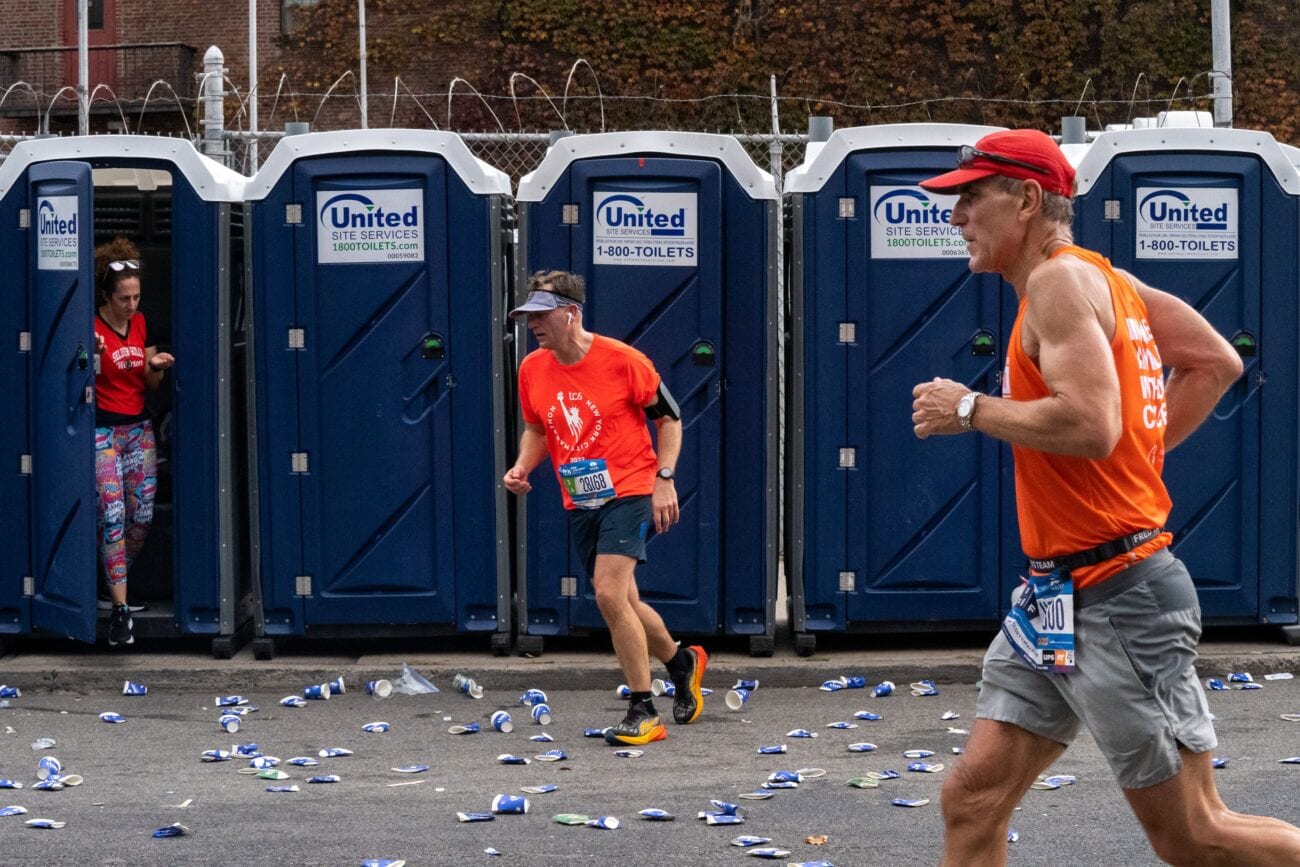
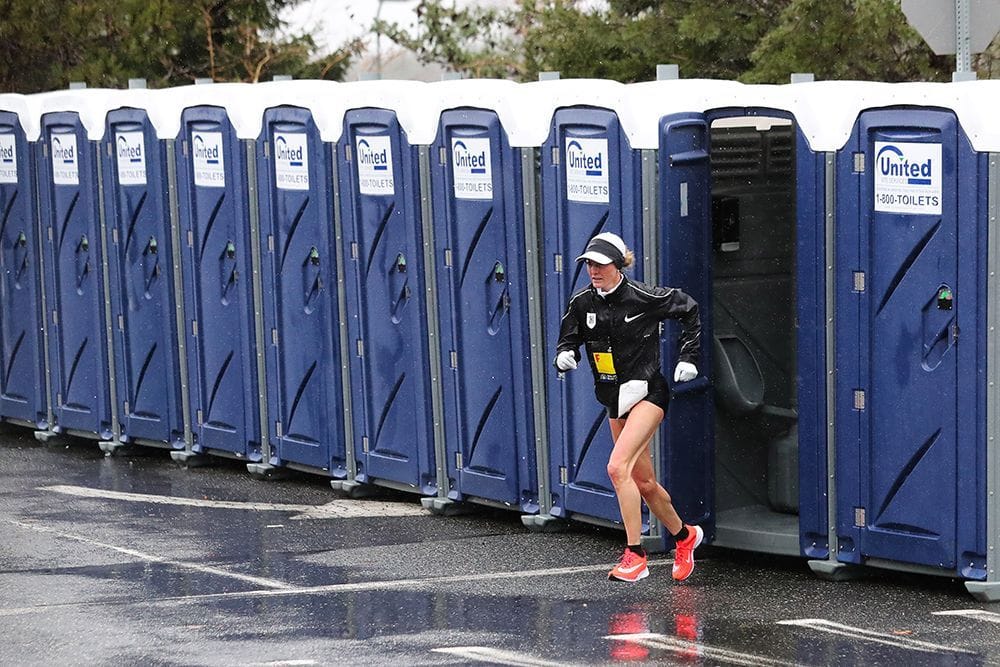
We’ve all been there. Race morning, jittery nerves, and an urgent visit to the porta-potty—sometimes more than once.
Whether it’s pre-race anxiety, a ritualized part of your warm-up, or an unfortunate case of runner’s trots, what happens in the bathroom before you hit the starting line might be more important than you think.
It turns out that pooping before a race isn’t just about comfort—science suggests it might actually make you faster, sharper, and better prepared to handle the demands of a race. Yes, really.
Let’s take a deep dive into the science behind the pre-race poop, what it means for runners, and whether you should be making it a priority before your next big event.
The Gut-Brain Connection: More Than Just a Feeling
We often hear phrases like “gut feeling” or “trust your gut,” but there’s actually a scientific reason why we associate our intestines with decision-making.
The gut and brain are in constant communication via the gut-brain axis, a network that links the central nervous system (brain and spinal cord) with the enteric nervous system (the nerves in your digestive tract).
This connection influences everything from mood to cognition, and, as it turns out, athletic performance.
A new study published in Sports Medicine and Health Science found that elite triathletes performed better on cognitive tests after defecation.
The findings suggest that emptying your bowels before a race doesn’t just make you feel lighter—it could actually make you think faster and execute decisions more effectively during competition.
The Study: Pooping for Peak Performance
Researchers studied 13 elite triathletes to determine how defecation affected cognitive function.
Each athlete performed the Stroop test, a standard cognitive challenge measuring reaction time and executive function, under three different conditions:
- No Defecation – The athlete did not go to the bathroom before testing.
- Natural Defecation – The athlete pooped without any supplements.
- Magnesium-Induced Defecation – The athlete took magnesium oxide, a common laxative, before pooping.
The Results
The results were surprising—but also kind of hilarious. Every athlete who pooped (whether naturally or with magnesium) performed better on the cognitive test.
The magnesium group, however, saw the biggest boost, with 100% of participants showing improved reaction time and cognitive sharpness.
Meanwhile, researchers used Near-Infrared Spectroscopy (NIRS) to track blood flow and oxygenation levels.
They found that after defecation, oxygen levels dropped in the sub-navel region (suggesting increased metabolic activity in this area) while the prefrontal cortex (the brain’s control center for decision-making) remained stable.
This supports the idea that our gut plays a bigger role in cognition than we previously thought.
Why Does This Happen?
So why would pooping before a race make you mentally sharper? Researchers believe it could come down to energy distribution and nervous system function:
- Reallocating Resources: When you hold in stool, your body is expending unnecessary energy maintaining control over the rectal muscles. Once you go, those resources (oxygen, blood flow, and nervous system function) can be redistributed to more useful areas—like your brain and muscles.
- Stress Relief: Ever feel a sense of relief after pooping? That’s because the parasympathetic nervous system (the “rest and digest” system) is activated. This can help calm race-day jitters and improve focus.
- Enteric Nervous System Activation: The gut has been called the “second brain” because it contains a vast network of neurons. Researchers believe that clearing the rectum might allow for more efficient gut-brain communication, leading to improved cognitive sharpness.
What Does This Mean for Runners?
The study’s findings suggest that a pre-race bathroom routine isn’t just about comfort—it’s a legitimate performance strategy. Here’s how runners can apply these insights:
1. Make a Pre-Race Poop Part of Your Routine
If you’re not already prioritizing a pre-run bathroom break, it might be time to start. A consistent morning routine—waking up early, hydrating, and allowing time for digestion—can help train your body to empty your bowels before a race.
2. Stay Hydrated
Dehydration can lead to constipation, which is the last thing you want before a big race. Drinking warm liquids (like coffee or tea) in the morning can stimulate bowel movements naturally.
3. Consider Magnesium—With Caution
Magnesium oxide was shown to enhance the cognitive benefits of pre-race pooping. However, too much magnesium can lead to an upset stomach, diarrhea, or dehydration—none of which are race-friendly. If you’re considering using magnesium, experiment well before race day to see how your body reacts.
4. Move Around
Light activity, such as a short warm-up jog, stretching, or even walking, can help stimulate digestion and encourage a timely bowel movement.
5. Don’t Stress Too Much
If your body isn’t cooperating on race morning, don’t panic. Stress can actually make things worse by triggering the sympathetic nervous system (the “fight or flight” response), which can inhibit bowel movements. Stay relaxed, breathe deeply, and trust your training.

Pooping before a race might be more than just a quirky pre-race ritual—it could actually give you a cognitive and performance boost.
The science suggests that emptying your bowels allows your body to reallocate resources efficiently, leading to improved focus, quicker reaction times, and better overall race execution.
While taking magnesium could enhance this effect, runners should approach supplementation with caution to avoid any unwanted gastrointestinal surprises. Instead, focus on establishing a consistent pre-race routine that supports regularity and gut health.
So, the next time you’re waiting nervously in line for a porta-potty before a race, just remember: science is on your side. That pre-race poop could be the secret weapon you never knew you needed.









If there wasn’t shame & disgust with pooping perhaps I could have developed healthier pooping habits younger, and avoided some unpleasantness. That said I’m pretty regular now, & having a poop before and after an activity.