


In an ideal world, you’d wake up on the morning of your run, get ready, and your bowels would cooperate right on cue—bathroom trip complete before you lace up.
Few things are more uncomfortable than needing to poop mid-run. Runner’s trots earned their names for a reason: running stimulates the bowels, often at the worst possible moment.
But your body and your running schedule don’t always align. Sometimes you sit on the toilet before a workout and wait… and wait… and wait. You check your watch and realize you need to get out the door—or worse, the starting gun for your race is about to go off.
That’s when knowing how to make yourself poop before a run becomes a genuinely useful skill—one that can save you from ducking into a porta-potty (or the woods) mid-workout.
You can’t always hurry Mother Nature along, but there’s plenty you can do to improve your odds. Below, we’ll cover what to do if you’re constipated before a run and share nine practical tips for emptying your bowels before you head out the door.

What to Do If You Are Constipated Before Running
If you’re constipated before a race or workout, making yourself go to the bathroom before running is even harder—your bowels need extra stimulation to empty on command.
So what causes constipation in runners, and how can you prevent it before a race?
Constipation typically results from low motility in the GI tract, which increases stool transit time—the time it takes for digested food to pass through the intestines and colon and be expelled as stool.
The longer stool sits in the colon, the more water is reabsorbed back into the body, leaving it harder, drier, and more compact. This is why constipation makes bowel movements infrequent, painful, and difficult to pass.
Many factors can contribute to constipation in runners, including dehydration, a low-fiber diet, stress, and certain medications and medical conditions.
Because gut motility directly affects transit time,1Dimidi, E., Christodoulides, S., Scott, S. M., & Whelan, K. (2017). Mechanisms of Action of Probiotics and the Gastrointestinal Microbiota on Gut Motility and Constipation. Advances in Nutrition: An International Review Journal, 8(3), 484–494. https://doi.org/10.3945/an.116.014407 anything that alters motility—the central nervous system, gut secretions and enzymes, the nutrient content of food, and the gut microbiome and its metabolic byproducts—can play a role as well.
A sedentary lifestyle is also a major risk factor, though as a runner, you’re largely protected on that front. That said, if you’re injured, taking a few days off, or changing up your training routine, temporary constipation can absolutely strike.

How to Poop Before a Run Or Workout
In general, our bodies are fairly regular: if you eat your meals and snacks at approximately the same time every day, you’ll find you also have a bowel movement around the same time every day.
This means you can “train” your bowels to either let you relieve yourself before your usual workout time or, at the very least, stay quiet and calm during your run—so you can focus on running your route rather than running to the nearest bathroom.
The best way to ensure you can go before a run or a workout is to be consistent. Keeping the same eating and exercise routine helps your body settle into a predictable pattern of bowel movements.
It’s also important to make sure your diet supports healthy bowel movements. Aim for at least 25–30 grams of fiber every day—and more is even better.
Fiber-rich foods include legumes such as beans and lentils, vegetables, bran, certain whole grains, and avocados.
Finally, stay well hydrated: dehydration is a primary cause of constipation in runners.

9 Tips On How To “Go” Before Running
Even with plenty of fiber and water in your diet, we all have days when we just can’t go before a workout.
Maybe you’re running earlier than usual, ate something unfamiliar, didn’t sleep well, are dehydrated or traveling, have race-day nerves, or simply had to rush out the door—whatever the reason, your body isn’t always ready to cooperate on schedule.
In these cases, it helps to know how to move things along.
#1: Wake Up Earlier
Rushing yourself can sometimes make matters worse because stressing about not pooping can make it even harder to poop.
If you’re habitually struggling to go to the bathroom before your morning workout, try waking up earlier, having your coffee or tea, and walking around for at least 30 minutes as you get ready for the day to give your bowels time to wake up.

#2: Drink Your Coffee
Although the exact mechanism isn’t fully understood, evidence suggests2Brown, S. R., Cann, P. A., & Read, N. W. (1990). Effect of coffee on distal colon function. Gut, 31(4), 450–453. https://doi.org/10.1136/gut.31.4.450 that coffee acts as a cathartic, meaning it stimulates colonic contractions—and, in turn, bowel movements.
Interestingly, the caffeine doesn’t appear to deserve all the credit for coffee’s laxative effect.
That’s good news for runners who don’t drink coffee: any hot beverage—tea, or even hot water with lemon—seems to work in a similar way.
Hot liquids increase circulation and cause vasodilation in the digestive tract, which can boost peristalsis, the wave-like muscle contractions that move contents through your gut.
#3: Move Around Before Heading Out
Exercise is one of the best ways to get things moving before a run or workout because it increases blood flow and stimulates intestinal contractions.
After all, every runner knows the feeling: you head out the door with no urge whatsoever, and within minutes of starting your run, you’re desperately scanning for a bathroom.
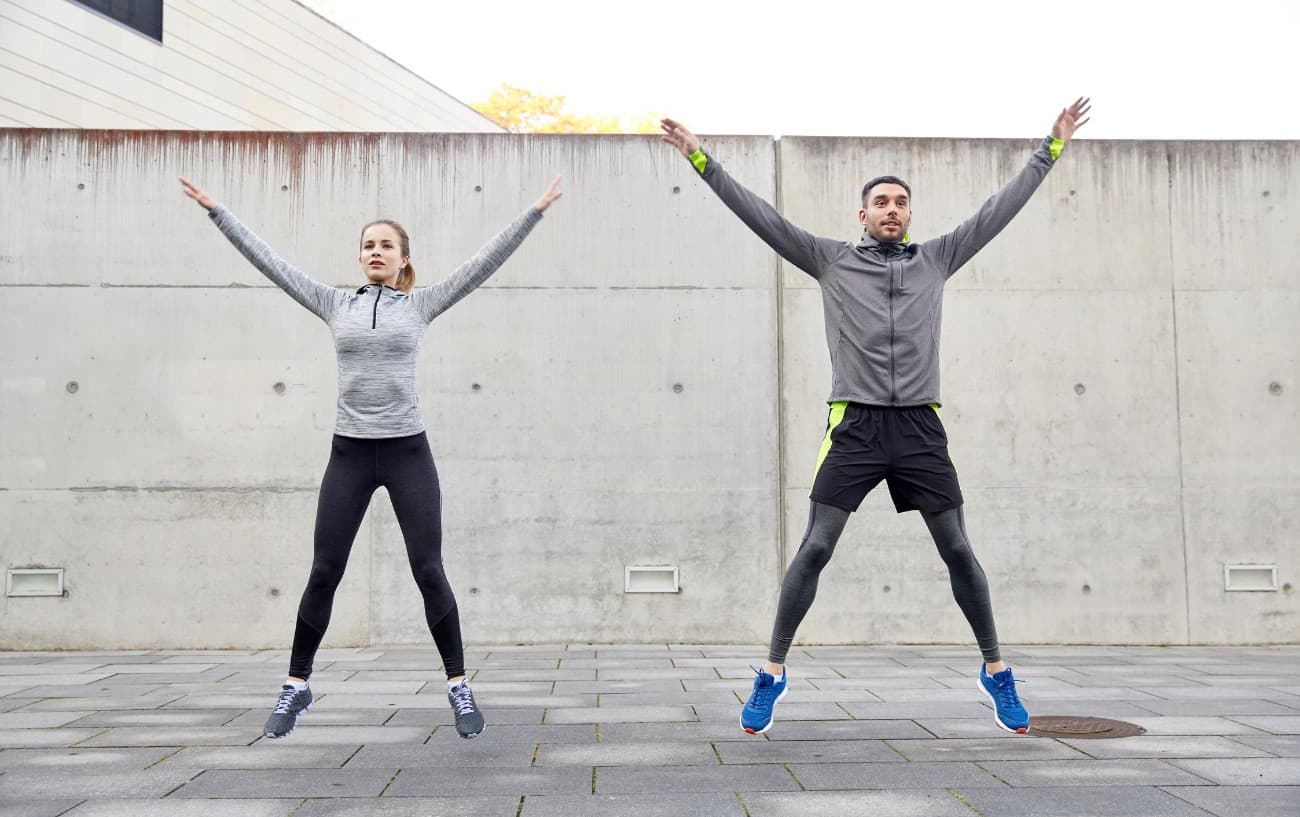
You can use this to your advantage. Do your warm-up or some light calisthenics indoors while you wait for nature to call.
Try jogging in place, jumping jacks, mountain climbers, crunches, or a few trips up and down the stairs—or take a quick lap around the block, then come back and hit the bathroom before your real run.
#4: Try Abdominal Massage
Gently massaging your lower belly can stimulate colonic contractions, helping move stool along so you can go.
There’s also evidence to suggest that applying gentle pressure to your perineum—the area between your anus and genitals—can trigger the urge to have a bowel movement.
#5: Drink Prune Juice
Most people aren’t rushing to guzzle prune juice, but it’s a proven option3Lever, E., Cole, J., Scott, S. M., Emery, P. W., & Whelan, K. (2014). Systematic review: the effect of prunes on gastrointestinal function. Alimentary Pharmacology & Therapeutics, 40(7), 750–758. https://doi.org/10.1111/apt.12913 to keep on hand when you need to get things moving before a run or workout.
Prunes contain both fiber and sorbitol, a sugar alcohol that acts as a natural laxative by drawing water into the bowels and bulking up stool.
#6: Eat Magnesium-Rich Foods
Foods high in magnesium—such as Brazil nuts, almonds, and prunes—can help promote bowel movements and relieve constipation.

#7: Sit On the Toilet
Sometimes, even if you don’t have an immediate urge to go, just sitting and relaxing on the toilet can prompt your brain and body to coax the urge.
#8: Meditate
Whether you lie on your bed, stretch out on the floor, or sit right on the toilet while summoning your inner zen, meditating can help you go before a run or workout by reducing stress and calming the nervous system.
Thanks to the intricate connection between the gut and the brain—known as the gut-brain axis—your emotional state has a major influence on the health and function of your microbiome and digestive tract.
For example, the gut microbiota help regulate serotonin and other signaling molecules like cortisol and tryptophan, which directly impact mood and influence the hypothalamic-pituitary-adrenal (HPA) axis and central nervous system.4Li, Y., Hao, Y., Fan, F., & Zhang, B. (2018). The Role of Microbiome in Insomnia, Circadian Disturbance and Depression. Frontiers in Psychiatry, 9. https://doi.org/10.3389/fpsyt.2018.00669
When you’re stressed, the sympathetic (“fight or flight”) nervous system takes over. From an evolutionary standpoint, this system evolved to save us from danger—like outrunning a lion—and even though modern stressors are rarely life-or-death, our brains process stress the same way.
Under fight-or-flight control, functions deemed non-essential for immediate survival—including digestion and excretion—are effectively put on pause.
By calming your body and mind through meditation, you can shift into a parasympathetic (“rest and digest”) state, where your body feels safe enough to prioritize digestion. This can switch peristalsis back on and encourage a bowel movement.

#9: Try Yoga Or Gentle Stretching
One of the healthiest ways to relieve constipation and get your bowels moving before a run is yoga or gentle stretching. In fact, yoga has long been used in Ayurvedic medicine for digestive issues.5Evans, S., Cousins, L., Tsao, J. C., Sternlieb, B., & Zeltzer, L. K. (2011). Protocol for a randomized controlled study of Iyengar yoga for youth with irritable bowel syndrome. Trials, 12(1). https://doi.org/10.1186/1745-6215-12-15
Yoga alleviates constipation in two primary ways: by physically massaging the digestive tract through movement, and by modulating the gut-brain axis and shifting the body into a parasympathetic state.
Yoga poses—particularly when performed in a flowing sequence—involve twisting, inverting, and folding the torso. These movements apply pressure to shifting pockets of the intestines, stimulating peristalsis, the slow, wave-like contractions that propel contents through your GI tract. In this way, a yoga sequence acts as an effective colonic massage.
The second mechanism is stress reduction. By relaxing the body and mind, yoga activates the parasympathetic (“rest and digest”) nervous system, which promotes digestion and, in turn, elimination.
Several studies back this up. One study using an integrated yoga therapy approach found a 61% reduction in physical discomfort and a 59% reduction in the psychological effects of chronic constipation after just one week. That won’t help you in the next few minutes, but it can pay off with more reliable pre-run bowel movements over time.6Amit Singh, J. R. K. G. M. (2016, June). Effect Of Integrated Approach Of Yoga Therapy On Chronic Constipation. Working Papers; Voice of Research. https://ideas.repec.org/p/vor/issues/2016-06-07.html
Other research7Kavuri, V., Raghuram, N., Malamud, A., & Selvan, S. R. (2015). Irritable Bowel Syndrome: Yoga as Remedial Therapy. Evidence-Based Complementary and Alternative Medicine, 2015, 1–10. https://doi.org/10.1155/2015/398156 has concluded that yoga stimulates digestion, eases constipation, and improves symptoms and quality of life in people with constipation-predominant irritable bowel syndrome (IBS-C) by increasing circulation in the lower abdomen, activating the parasympathetic nervous system, massaging the digestive organs, and strengthening the mind-body connection.
Yoga interventions have also been shown to lower cortisol levels8Evans, S., Cousins, L., Tsao, J. C., Sternlieb, B., & Zeltzer, L. K. (2011). Protocol for a randomized controlled study of Iyengar yoga for youth with irritable bowel syndrome. Trials, 12(1). https://doi.org/10.1186/1745-6215-12-15 and regulate HPA axis function.
Some of the best constipation-relieving poses include Supine Twist, Wind-Relieving Pose, Garland Pose, Downward-Facing Dog, Plow Pose, Upward-Facing Dog, and Cat-Cow.
Give one or more of these strategies a try when you’re desperate to get things moving.
References
RunClub — Free
Join 300,000+ runners in RunClub
Free training plans for every distance, a daily running game, exclusive coaching content, and a real community of runners. Create your free account in 20 seconds — no card.
Already a member? Log in →









Join the conversation
I also do "pre-run poo run" of 3-4km that has really worked for me. One thing worth noting is that during summertime, spending time inside a port-a-potty after the warm-up run under hot, steamy weather can trigger dizziness or even temporary pass-out. Just know that it's normal, temporary and make sure you won't injure yourself when it happens. It'll go away quickly with no damage and then you'll be ready for your actual training run.
For years, I've been doing a poop loop before my actual run. It indeed requires waking up earlier and investing some time, but it's worth it.
My poop loop is about 2,5 kilometers. I've found that less than that, for me, doesn't do the trick. I also treat it as my warm-up run so I run slowly, with maybe a little sprint at the end if it feel like my bowels haven't woken up yet. I get back home, go to the loo, stretch, and get ready for my actual run. (I usually don't extract this 2,5 km from my scheduled training, but I might skip the warm-up part if there's any.)
I've tried training at home (running in place etc.) but nothing did the trick like an actual run. An extra advantage is that I can check what the weather conditions are like, since I have a tendency to overdress. Also, I live in Europe, in a town that allows me to run near my house, and I don't have to commute to go run; that helps as well.
It seems like a lot to run 2,5 km before your actual run but if this method works for you, it reaaaaally works. For me, this has proven to be so successful that nowadays, I hardly ever need the poop loop anymore – I've read somewhere that you can train your bowels and I think I did just that.
So true, I always do a 3 or 4K ‘warm-up’ run (the pre-run poo run) before the run, I had to do 4K before a marathon! I also appreciate the same benefits re-weather so I can dress accordingly.
As a Dude that does almost all long runs on country/back roads and away from potential 'prying eyes' (for this exact reason), I can attest that if you're not a regular coffee drinker, get ready for a few 'stops' along the way. Having a regular bathroom routine is really key for our everyday and pre-race workouts, but race day is something different. Sometimes it is mind vs. body. Getting up early is the best way to ease pre race gitters and let our body relax...even if it's just a little bit. I do find the most frustrating part, is that, we've done the work. Our legs, lungs, and heart are ready, but the stress of the actual race can, and sometimes does, override the best laid plans. Sh*t happens, literally. I'm sorry that I don't have any real advice, only know that you're not the first to go through this and certainly not the last. Even Pro's have this issue...look up Telga Loroupe. Not to highlight it, but again, sh*t happens.
Run long...bring some TP,
Excelsior,
C