


On Saturday, June 13, Rachel Lima crossed the finish line in Llanwrtyd Wells on her horse Zameel in 2 hours, 31 minutes, and 37 seconds. Daniel Connolly, the fastest runner in a field of 706 individuals, arrived eight minutes later on foot. Lima took the overall win at the 45th Man v Horse Marathon. Connolly was the top runner.
For most of the race’s history, that outcome would be the expected one. Horses won every year from 1980 to 2003. Huw Lobb ended the streak in 2004, running 2:05 and beating the fastest horse by two minutes. He collected a jackpot that had grown to £25,000. Since then, only four runners have repeated the feat: Florien Holtinger in 2007, Ricky Lightfoot in 2022, Connolly himself in 2023, and Dewi Griffiths in 2025.
A new course, new tech, and a new sponsor
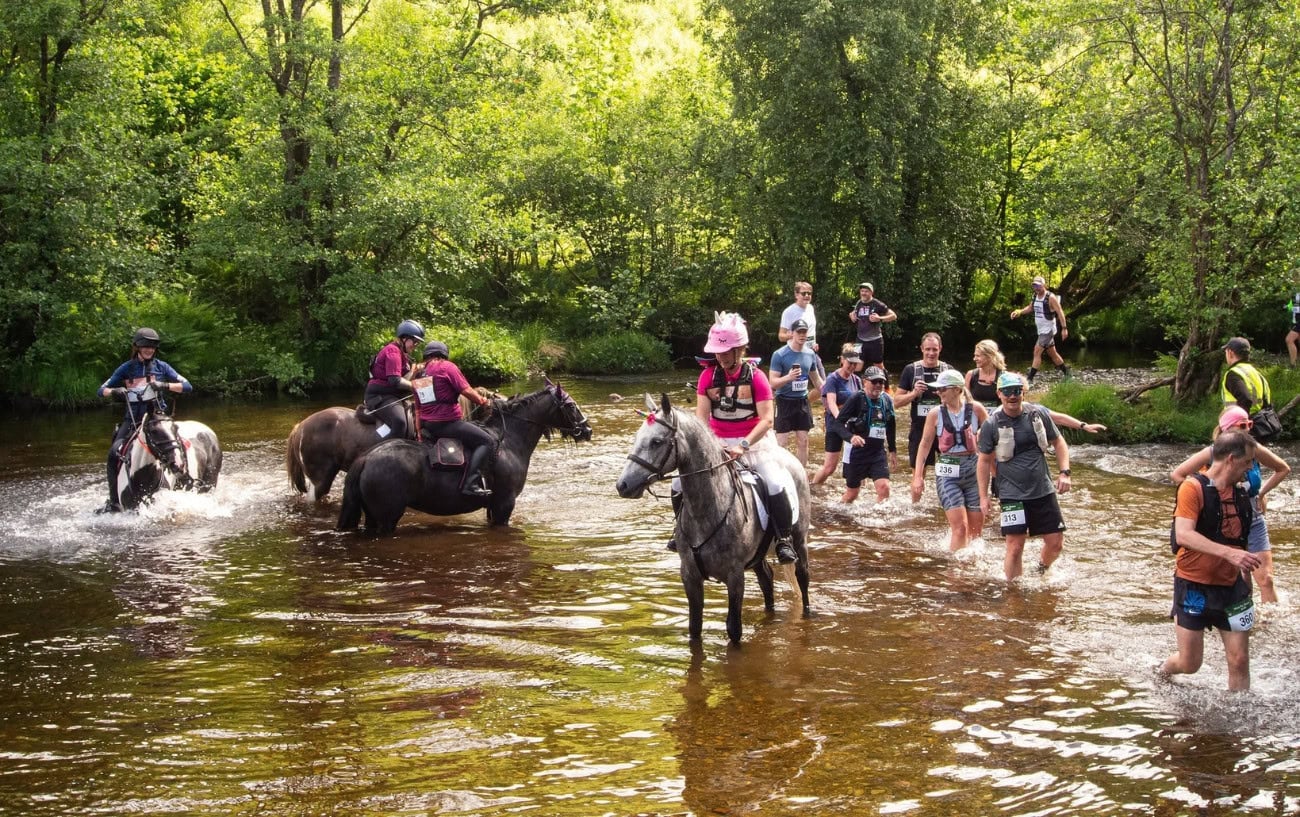
Green Events, the race organizer, redesigned the course for 2026. Runners and riders climbed to 4,000 feet across tarmac roads, forestry tracks, farm trails, bridleways, open moorland, and river crossings. Handy terrain if you have been putting in the hill running workouts. GPS tracking was introduced for the first time, giving live positions to organizers and spectators throughout the day.
Cambrian Training Company also signed on as headline sponsor, a first for the race. Cambrian’s founder, Arwyn Watkins OBE, was born in Llanwrtyd, and much of the new course crosses his family’s farmland.
“Cambrian Training Company is proud to be the headline sponsor for Man v Horse 2026,” Faith O’Brien, the company’s managing director and a keen horsewoman, told Herald Wales. “This event embodies everything we value—wellbeing, the outdoors, community spirit and celebrating the Welsh landscape. We were delighted to support the runners, riders, volunteers and spectators, and even more delighted to see members of our own team take on the challenge.”
A packed start line outside the Neuadd Arms
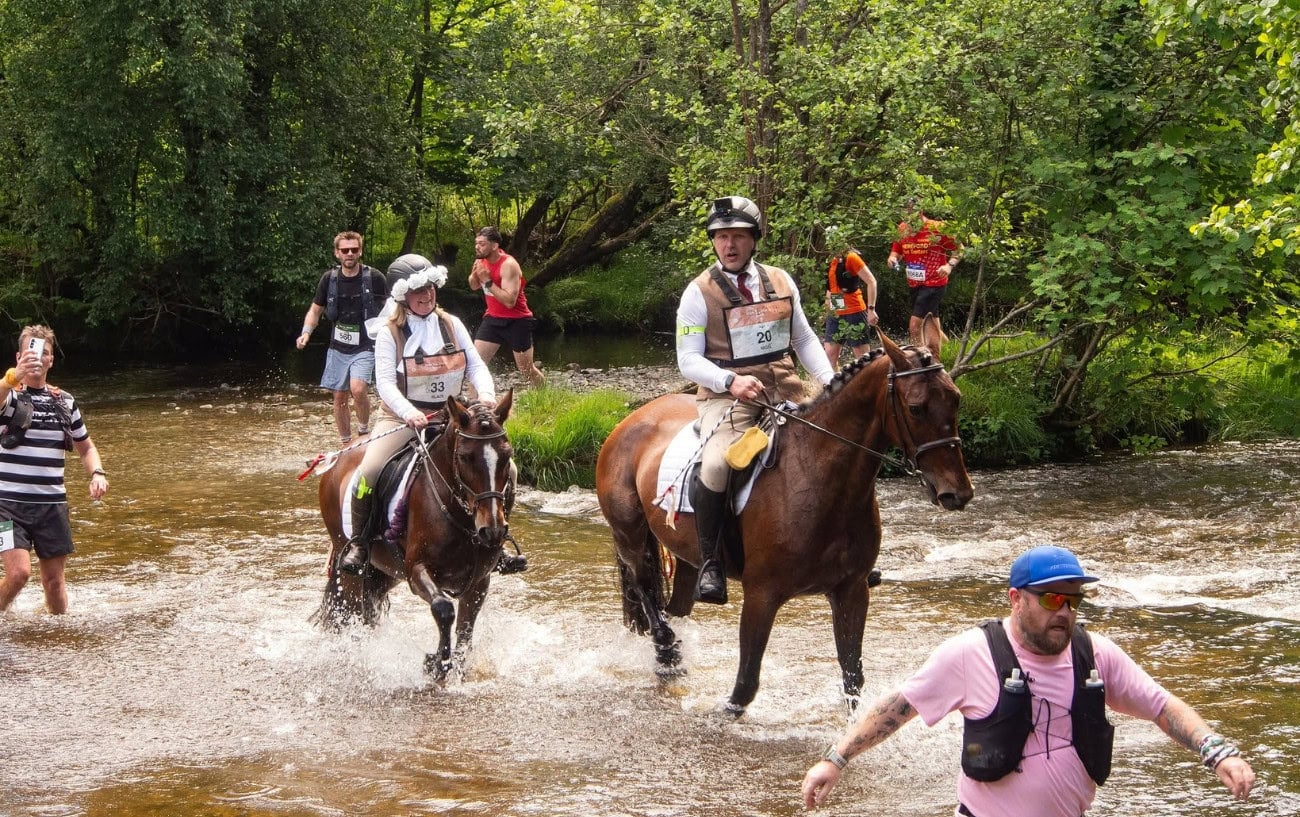
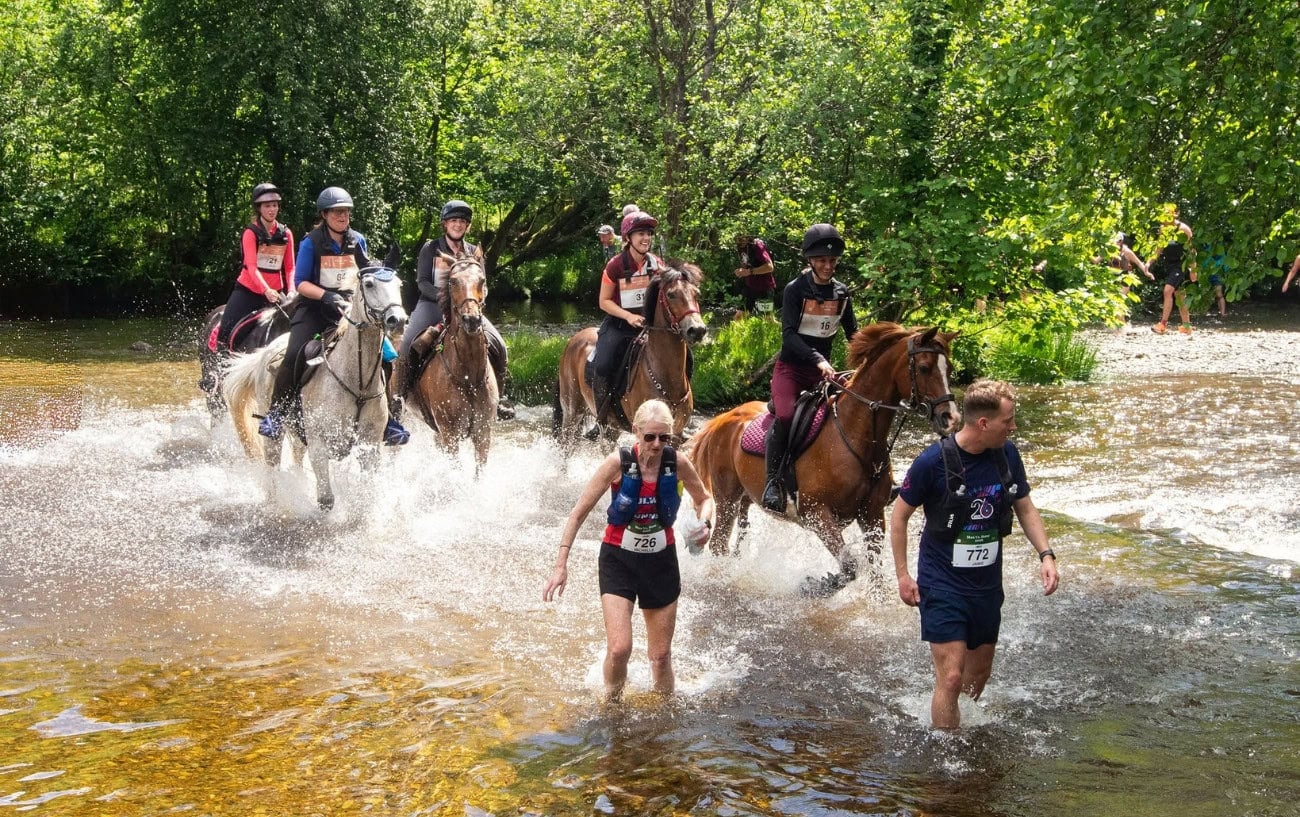
The Neuadd Arms Hotel, where the race was first proposed over a pint in 1980, remains the start line. This year’s field: 75 horses, 186 relay teams of three runners each, and 706 individual runners. Runners set off at 11:00 a.m. Horses and riders followed at 11:15 a.m., preserving the 15-minute head start that has been part of the format since the early 1980s.
Lima said the redesigned route pushed her horse harder than she expected. “I took part last year for the first time and came second. The new race route was quite a technical race for the horse. The most difficult part were the bogs and riding downhill.”
Connolly, who won the race outright in 2023 in 2:24:38, focused on the terrain rather than the horses. “I ran the course three years ago when I was the overall winner,” he told Herald Wales. “This year the new course was very challenging.” The fell-running-style terrain is closer to a mountain race than a road marathon, which is part of what makes the format work.
The jackpot resets, again
The race’s runner-only jackpot is one of the more unusual prize purses in trail running. It grows by £500 each year until a runner beats the first horse and rider across the line and the horse passes its post-race vet check. When Griffiths claimed it in 2025, the pot dropped back to zero. The 2026 total sat at £500. It now rolls into 2027.
A £250 cash prize also goes to the first horse and rider to cross the line and clear the vet check, an incentive introduced in 2025. Cut-off times were enforced again this year, at three hours for horses at the mid-way vet check and four and a half hours for runners at the second relay changeover, roughly 14 miles into the course.
The event has been running most Junes since 1980. Landlord Gordon Green overheard two customers in the back bar of the Neuadd Arms arguing over whether a person or a horse would win a long race across rough country. He decided to settle it in public. The course was adjusted in 1982 to make the contest closer, and the format has produced years of finishes separated by seconds. Electronic timing arrived in 2014. GPS tracking followed this year.
So, could you beat a horse?
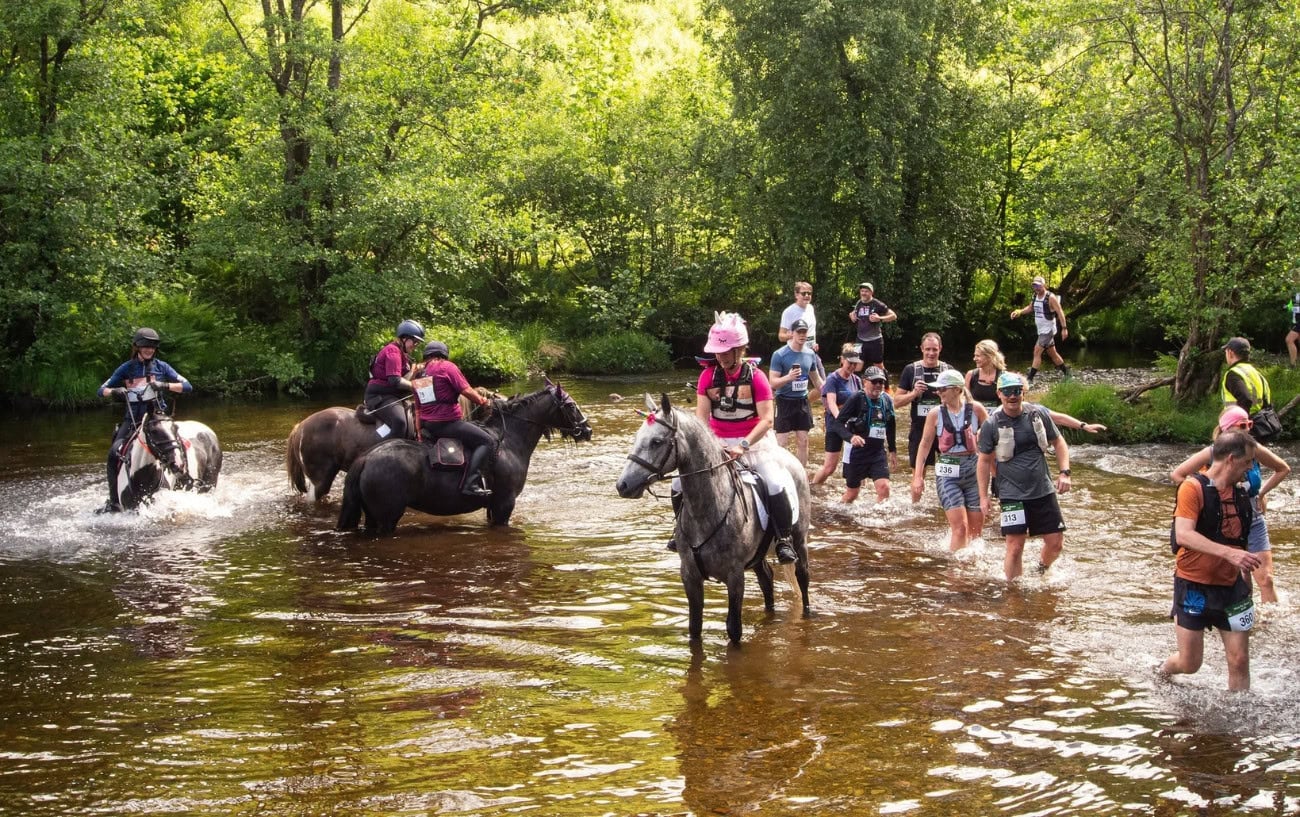
Statistically, no. Across 45 editions, runners have won five times. The 2026 result fits the pattern: on the new course, the horses were faster over 23.5 miles of Welsh hills, even after giving the runners a quarter-hour head start. It sits comfortably on the list of the toughest races a road runner might realistically enter.
Connolly’s 2:39:37 is still a serious time on this terrain. The gap to Lima’s 2:31:37 was eight minutes on elapsed time, closer than most horse-versus-runner comparisons across sports and endurance formats. If you’re considering the leap from a road PB to something like this, our marathon to ultramarathon guide is a good starting point, along with our overview of the different types of races a runner can enter and how the average running speed stacks up to what these front-runners hit on rough terrain.
Entries for next year’s race open through Green Events. The jackpot starts at £1,000.
RunClub
Get more running stories — join RunClub
Daily running news, a community of 300,000+ runners, free training plans for every distance, and a daily running game. Free to join — no card.
Already a member? Log in →






Start the conversation