


The Edmonton Marathon has defended a half-marathon course that runners say measured long by invoking a 1 percent tolerance. No such allowance applies to the length of a certified road course. Race director Tom Keogh, in a statement to media Monday reported by CBC News, attributed the figure to World Athletics and Athletics Canada. The World Athletics and AIMS Course Measurement Book, which Athletics Canada adopts, sets one limit bearing on distance, 0.1 percent on measurement uncertainty. Its only 1 percent figure governs how relay stages are marked.
Sunday’s 35th edition drew about 10,000 participants, its half-marathon doubled as the Canadian Half Marathon Championships, and two course records fell in the marathon, which shares roads with the half. Robbie Yamada, speaking to CTV News Edmonton, said his watch had him close to 800 meters over, about 3.8 percent; another first-timer’s half was reported at 22K. “I missed my time because I wasn’t expecting to run almost 800 metres longer than what the course should have been,” Yamada said.
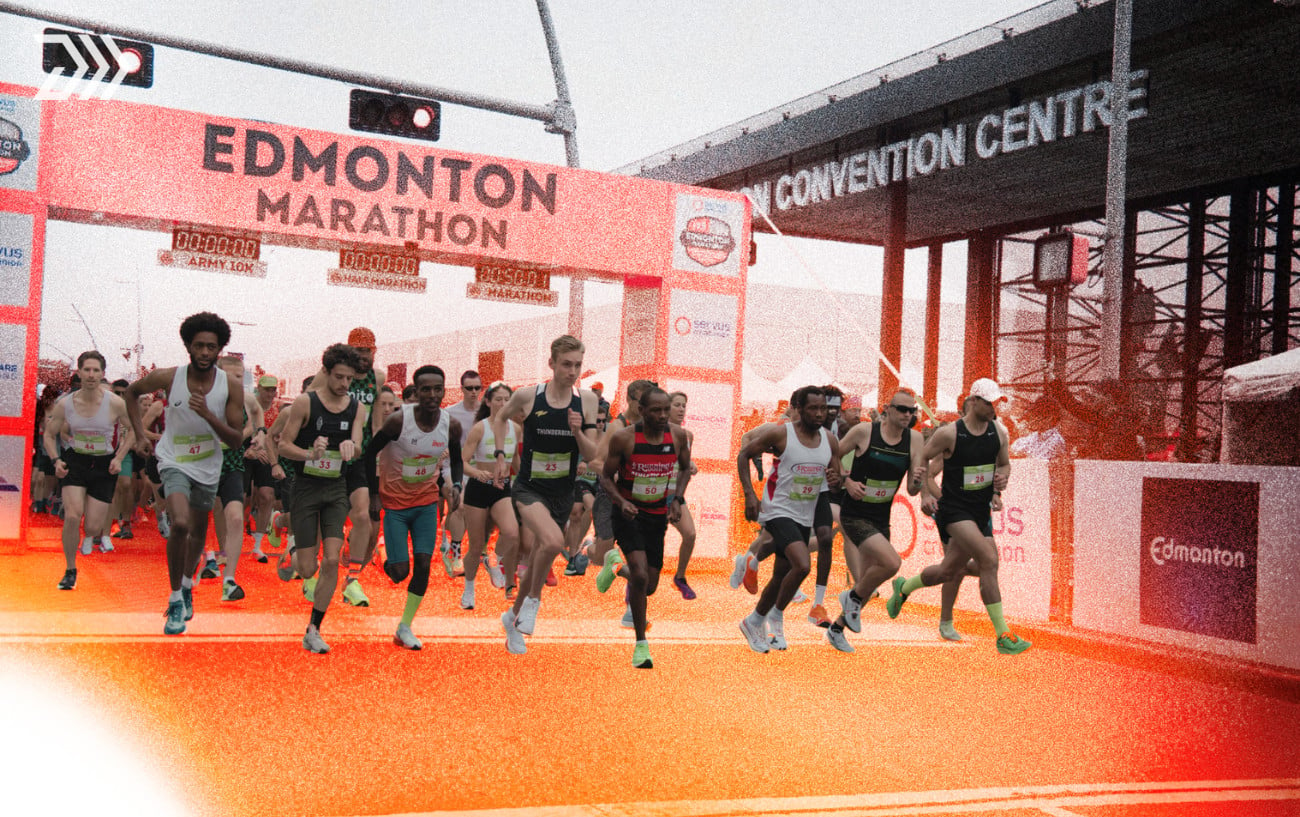
Those readings are larger than either percentage. One percent of a half-marathon is about 211 meters and 0.1 percent about 21 meters, while the manual puts observed GPS accuracy near 5 meters per kilometer and warns the error accumulates. The Edmonton coach Simon Stewart was among the first to say the times looked wrong, and he was careful about the technology anyway. GPS “is not the be-all-end-all,” he told CTV, and dodging runners and cones adds distance too.
The certified figure represents what the race called the “optimal racing line,” the shortest legal path a measurer rides by calibrated bicycle, 30 centimeters off the curb. Runners forced out of their lane at a work zone covered ground that line excludes, Keogh said, and excluding it is standard practice. He also said satellite tracking reads long on straights and short through corners, of which the route has many, several added by the Wellington Bridge closure.
Chris Winter, who directs safe sport and domestic programs at Athletics Canada, backed the race in a statement carried by the Edmonton Journal and CTV. “Based on this process, and the fact that the route was also confirmed on race day by a World Athletics/AIMS Grade A Course Measurer, we are confident in the accuracy of the certified course distances and the validity of the race results,” he said.
Rory Linkletter, a 59:49 half-marathoner, won Sunday in 1:04:34 after winning the same race in 1:03:00 last year. Natasha Wodak was fourth in 1:15:28 after 1:11:40 in 2025, though she told CBC her own form that morning was poor. Fitness and tactics vary, so the year-to-year gaps are suggestive rather than conclusive. At Linkletter’s pace on Sunday, his 94 seconds is worth roughly 510 meters. He said he sensed it around 15K while speeding up, and the turnaround looked too close for the detour. “I spent the rest of the race cursing under my breath,” he told the Journal.
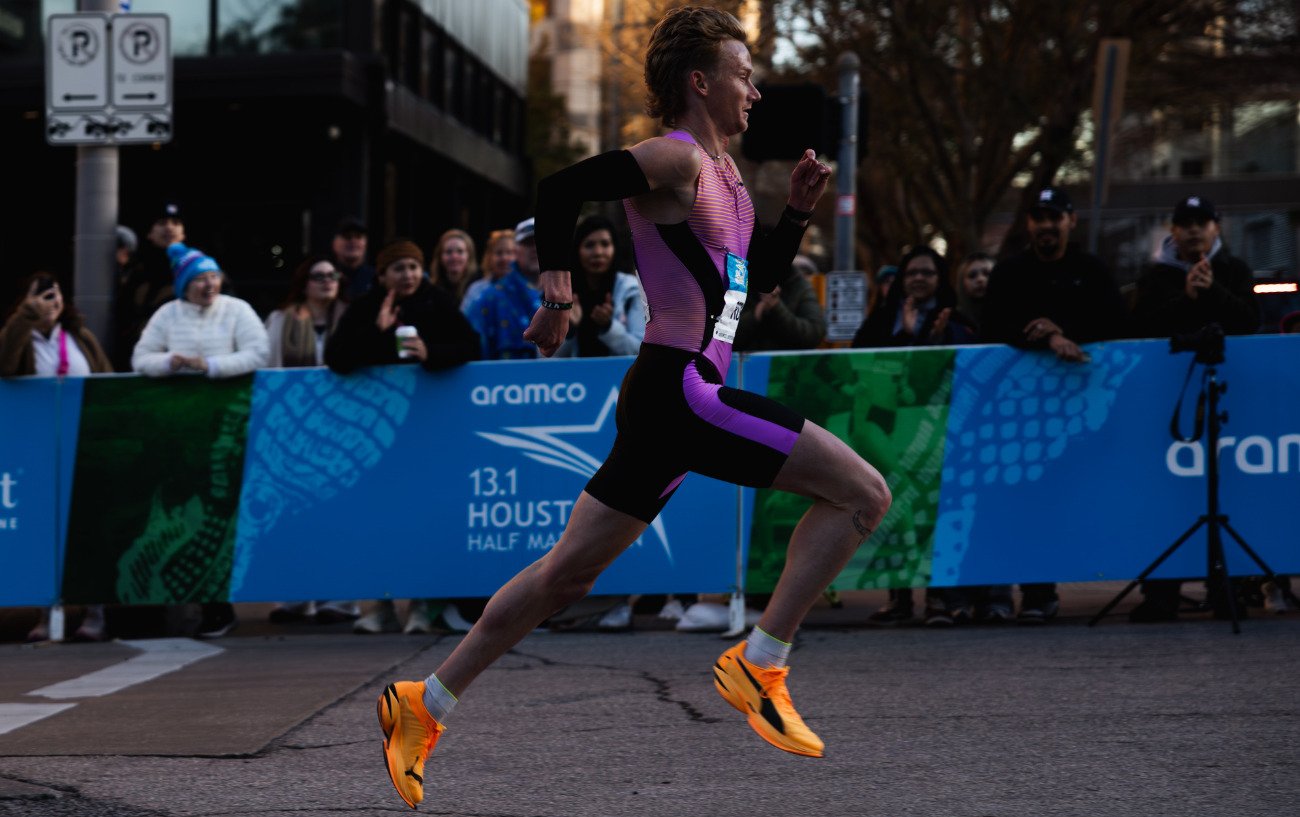
Registration for the 2027 Boston Marathon opens Sept. 14, and the BAA takes times from courses certified by USATF, AIMS or a national body, as Edmonton’s is. For the 2026 race, 8,887 qualified applicants were turned away under a cutoff of 4:34 below the qualifying standard, and the BAA now adds time to marks set on steeply downhill courses.
Athletics Canada rewrote its road race sanctioning and certification policy in March. A course altered from one year to the next must be re-measured and certified again, unless the change is slight enough to amend the existing certificate, and a valid certificate is the condition for records and qualification. The policy sets out no tolerance percentage and no way to contest a certified distance. Under the separate records rules, a record course must be re-measured near race day, preferably by a different Grade A measurer.
Elsewhere, that check has moved results. The Association of UK Course Measurers confirmed the 2024 Newport Marathon in Wales 276 meters long, and adjusted times were accepted for Good for Age entry, about 70 seconds at three hours and 94 at four. Athletics Canada’s policy gives Edmonton’s runners no way to ask, and Boston stops taking applications at 5 p.m. ET on Sept. 18.
RunClub
Get more running stories — join RunClub
Daily running news, a community of 300,000+ runners, free training plans for every distance, and a daily running game. Free to join — no card.
Already a member? Log in →




Join the conversation
Every single person I spoke to at the end of the marathon said their watches read 43.something kms. Mine was 43.31. The fact that they tried to deny it and/or lie about it is absurd. They finally released an email stating they made an error of 675m, which is a lot of extra time, 3-5 minutes depending on your pace.
Thank you for pointing out that the World Athletics/AIMS Grade A Course Measurer assumed a 1 percent error as acceptable when in fact it is .1 percent. I have heard about the 1 percent for years. Kind of a mantra. Thank you for your extra work to note the assumption is incorrect and pointing out the actual rule of .1 percent. Lets hope that clarification helps all races in the future. 211 metres vs 21m
Wow. Scarey! The course is long and it is justified by Grade A International course measurer who believe that the allowable course measurement error was 1 percent rather than .1 percent. I have been hearing that 1 percent allowance for many years. This is the first time I have ever read the actual rule is .1 percent not 1 percent. I cannot thank you enough for pointing this out. Lets hope the Grade A International measurers also read the .1 percent rules.
Good coverage. It is insulting for the organizers to blame individual runners for not running straight instead of accepting blame for rerouting the route a few blocks around construction and failing to shorten the turn around point to properly accommodate. I won\'t be back to Edmonton.