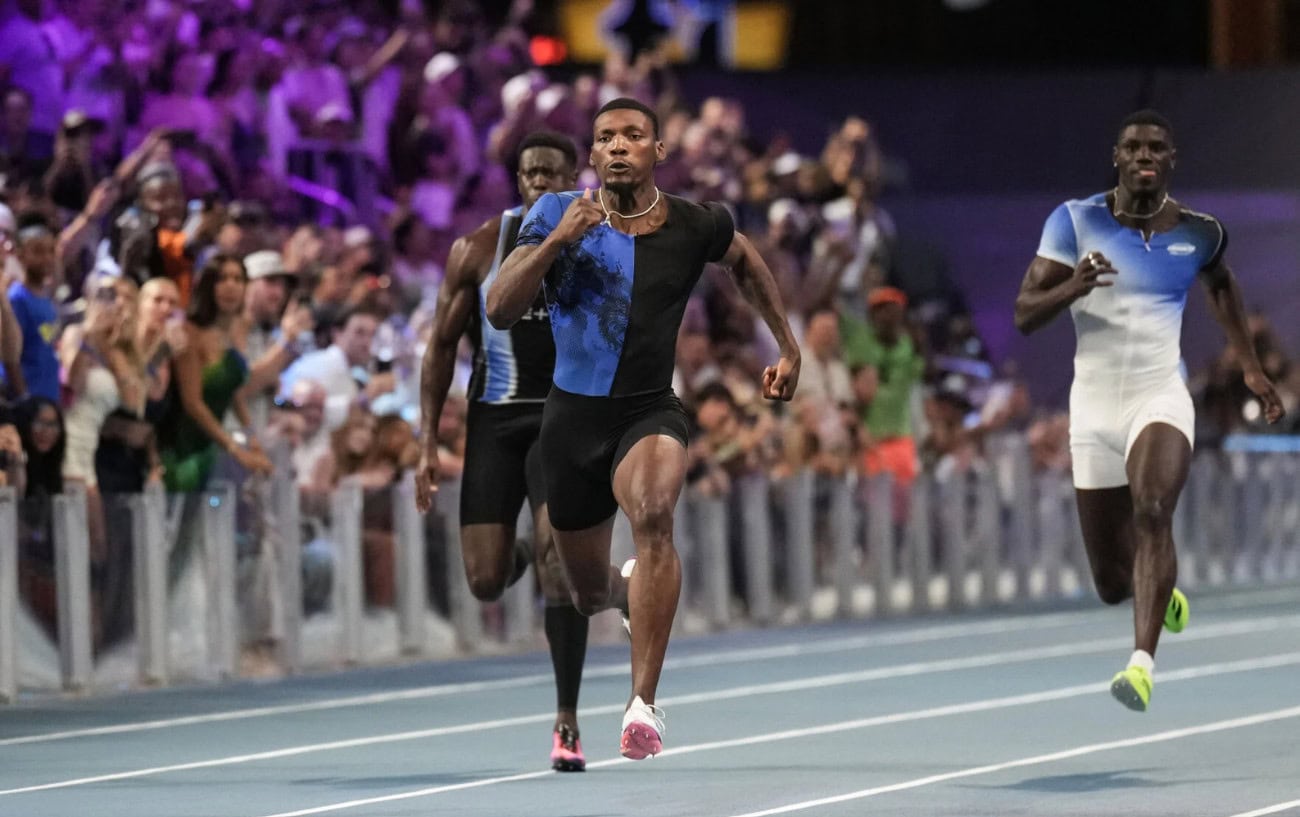
Grand Slam Track arrived this year, insisting it would change the way the sport sells itself. Michael Johnson spoke about guaranteed payouts, polished production, and a league that treated athletes like the stars they are.
For a moment, the concept looked shiny enough to believe in. Johnson stood on the infield in branded gear, Olympic medalists posed on a podium, and the league insisted it had more than $30 million lined up from investors.
That confidence has aged poorly.

Seven months later, GST is asking vendors to absorb half of what they’re owed.
Millions of dollars are outstanding. Athletes still haven’t received full prize money from the very first meet. And the league that promised a new era of professional track is instead fighting off the reputation of a project that collapsed in real time.
Letters sent to companies in recent days outline the deal.
Invoices through October would be paid at 50 percent, and only if every vendor agrees. The deadline to accept the offer is December 5.
Several vendors told The Athletic that this isn’t a negotiation; it’s a take-it-or-leave-it situation being managed by Force 10 Partners, the corporate restructuring firm now advising GST, along with an insolvency law group.
For many small businesses, the request is potentially catastrophic.
“It really wasn’t until the plug was pulled on LA that we were aware that there were problems,” said Matt Gordon of Eastern Lighting Design, one of the firms that helped stage the events in Kingston, Miami, and Philadelphia.
His team, like many others, allowed GST to present a polished, big-budget image; lighting, staging, broadcast enhancements, all the things that made the league feel legitimate on screen.
“Ultimately, I feel we were taken advantage of.”

Other vendors echoed the sentiment privately, some weighing legal action, others weighing which loss is worse, accepting 50 percent or risking 0 percent.
GST’s problems didn’t materialize overnight.
The league’s financial foundation, once touted as secure, was shaky from the start. Although a September 2024 press release claimed $30 million in commitments, reports from this summer stated that only $13 million had actually been received.
The lead investor, Winners Alliance, chaired by billionaire Bill Ackman, retained the option to withhold an additional $19 million. After the underwhelming debut in Jamaica, which drew sparse crowds despite the star power on the track, that option was exercised. A separate potential infusion from Eldridge, the investment firm linked to Todd Boehly, also evaporated after the initial Kingston meet.
What followed was the slow-motion disintegration of a league still publicly projecting strength.
Athletes continued to line up in Miami and Philadelphia, unaware that prize money from Kingston (a whopping $3.2 million) hadn’t been paid out. Johnson issued a statement in August admitting GST had missed its own payment deadlines.
At that point, 28 Olympians from the 2024 Paris Games were still waiting for appearance fees and winnings. Some had already made real-life plans based on the promised payouts, including house purchases that fell through once checks didn’t arrive.
A league built on “guaranteed money” was suddenly struggling to guarantee anything.

GST tried to stabilize things in October by securing financing to pay athletes 50 percent of what they were owed. The catch: the league must repay that financing later. Athletes were told they’d get more updates in 60 days. They’re still waiting.
For vendors, the situation was even murkier.
Many found out the league was in trouble only when the fourth and final meet, scheduled for Los Angeles, was abruptly canceled in June. Until then, they were working event to event, assuming the budget matched the production level GST demanded.
The reality was far more fragile: GST owed more than $10 million to vendors alone, with total debt exceeding $20 million by the time the season halted.
Communication since then has been minimal.
GST has not commented on its current situation. Johnson hasn’t addressed the newest developments publicly and skipped his regular BBC commentary role at the World Athletics Championships in Tokyo. The only real explanation came in a brief October email to athletes describing the partial payments as “the beginning of Grand Slam Track’s reboot.”
If this is the reboot, it’s off to a rocky start.
For a league that launched with big rhetoric about revolutionizing the sport, the sudden unraveling has left its participants wondering how so much ambition could collapse so quickly.
Track and field has never been flush with venture-backed experiments, and GST briefly gave the impression that someone had finally cracked the code.
Instead, the sport is left sifting through unpaid bills, partial payouts, and a list of vendors wondering how a project promising unprecedented financial backing ran out of money before the season even finished.