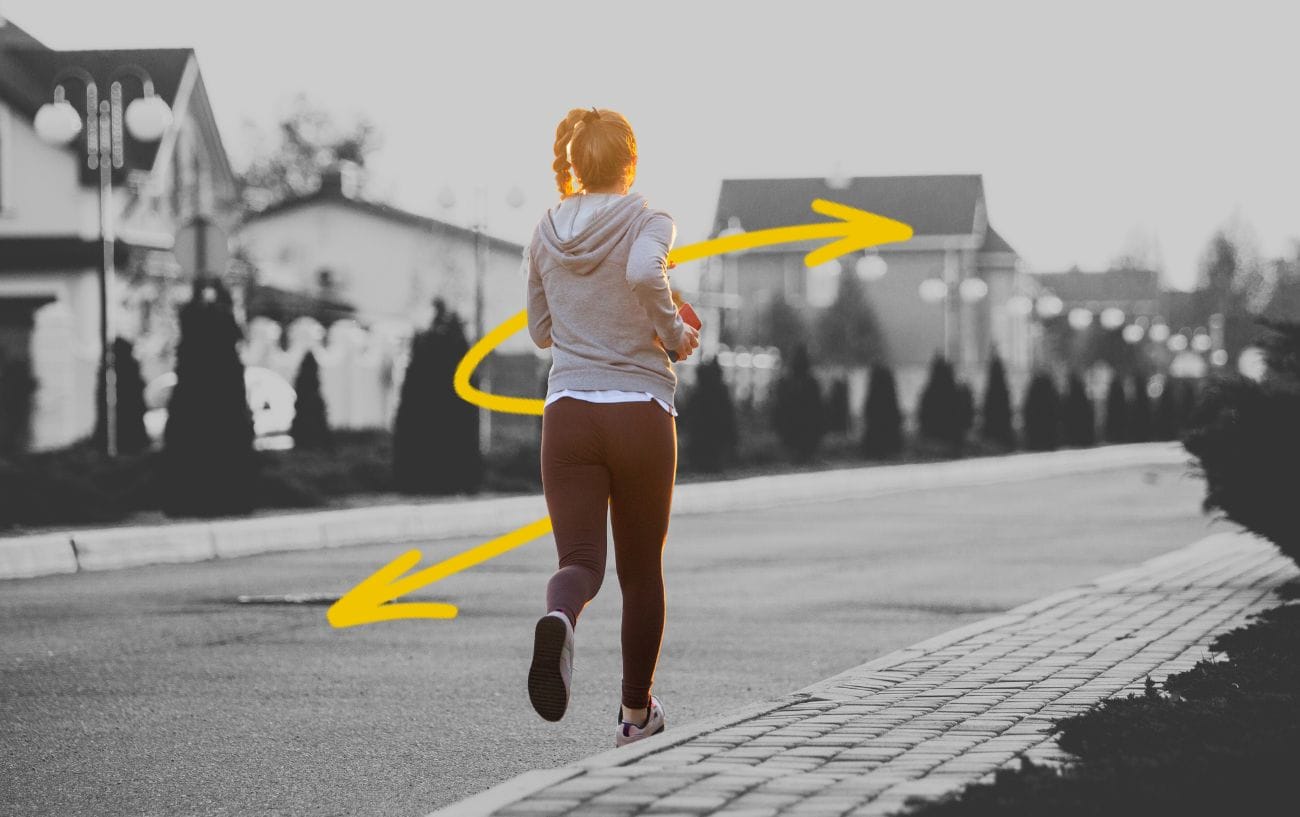
When you’re running a marathon, every second feels earned. You can train for months, nail your pacing, and still feel your goal time slipping away. Most runners blame the heat, hydration, or nerves.
But new research suggests another invisible factor could be slowing you down, the air itself.

The Study: Millions of Finish Times, One Clear Pattern
A major study from Brown University, published in Sports Medicine in December 2024, analyzed more than 2.5 million marathon finish times from nine major U.S. races between 2003 and 2019. The researchers wanted to know: does air pollution affect performance, even in the healthiest athletes?
The short answer: yes.
They found that every 1 microgram per cubic meter (µg/m³) increase in fine particulate matter (PM2.5) was associated with slower finish times, 32 seconds slower for men and 25 seconds for women on average.
PM2.5 refers to airborne particles smaller than 2.5 micrometers, generated by everything from vehicle exhaust to industrial emissions and wildfire smoke. These particles are small enough to bypass the body’s natural filters and enter deep into the lungs, even reaching the bloodstream.
In marathon terms, the findings are striking.
On a day with PM2.5 levels just a few points above average, a runner could lose several minutes off their expected finish time. For faster-than-median runners, the slowdown was even more pronounced.
“What’s notable is that we’re looking at people who are all incredibly healthy,” said Dr. Joseph Braun, professor of epidemiology at Brown University’s School of Public Health. “But even among really healthy people, air pollution is having an important, albeit subtle, effect on physiology.”

Breathing in Trouble: Why PM2.5 Hits Runners Hard
Fine particulate matter has long been linked to cardiovascular and respiratory problems, but its effects on athletic performance are less understood. When inhaled deeply during exercise, PM2.5 can trigger inflammation, constrict blood vessels, and reduce oxygen uptake efficiency, all of which undermine endurance performance.
According to the Brown team, marathoners are especially vulnerable because they breathe in 10 to 20 times more air per minute than when at rest, effectively increasing their “dose” of pollutants.
The study’s lead author, Elvira Fleury, a doctoral researcher at Harvard’s T.H. Chan School of Public Health, said that air quality should be considered a key race-day condition, much like heat or humidity.
“When evaluating your performance, think about it the way you might think about heat,” Fleury said. “If it was really polluted, maybe I ran a little slower than I could have.”
The Data Behind the Findings
To capture air pollution levels with unprecedented precision, the researchers used a spatiotemporal machine-learning model combining satellite data, topography, weather, and ground-based monitors. The model estimated race-day PM2.5 levels along marathon routes themselves, down to the mile, rather than relying on distant monitoring stations.
Among the nine marathons analyzed, including Boston, New York, Chicago, Los Angeles, Philadelphia, Twin Cities, Grandma’s, Marine Corps, and Houston, pollution levels varied widely. Los Angeles had the highest average PM2.5 concentration, while Twin Cities had the lowest.
Unsurprisingly, finish times in Los Angeles were also among the slowest, though the authors noted that factors like heat and elevation also play roles.
Across the dataset, the pattern held: more pollution, slower marathons.
Running in the Modern Atmosphere
Air quality has improved across the U.S. since the early 2000s thanks to cleaner vehicle standards and emission regulations, but new challenges, particularly wildfire smoke and heat waves, are reversing progress in some areas.
In 2023, thick smoke from Canadian wildfires blanketed parts of the U.S., briefly giving New York City some of the worst air quality on the planet.
According to the EPA’s Air Quality System, even moderate pollution days can push PM2.5 levels above 12 µg/m³, the updated 2024 U.S. health-based standard. Yet the Brown study found performance impacts even below those levels. That means runners may experience measurable slowdowns, and potential health stress, on days when air quality is officially deemed “safe.”
“Even a single microgram difference could mean the gap between a personal best and missing a Boston qualifier,” Braun said.
Why Faster Runners Are Hit Harder
One of the study’s more surprising insights is that faster marathoners saw the most pronounced slowdowns.
The researchers speculate this may be because elite and sub-elite runners breathe more deeply and frequently, taking in greater volumes of polluted air per minute. Their higher ventilation rates may amplify the physiological burden of airborne pollutants.
A 2023 Scientific Reports study of 334 collegiate athletes found a similar pattern, showing that those exposed to higher PM2.5 and ozone levels during training ran slower 5K times, even after adjusting for weather and fitness levels.

What It Means for Runners
While it’s impossible to avoid all air pollution, runners can take precautions. Experts recommend:
- Check the Air Quality Index (AQI) before long runs or races.
- Avoid high-traffic routes or industrial areas during training.
- Run early in the morning, when traffic emissions and ozone levels are lower.
- Consider an N95 or sports filtration mask on particularly bad days (though these can restrict airflow).
- If you have asthma or respiratory conditions, scale back effort or move your workout indoors on high-AQI days.
Matthew Ely, an environmental physiology researcher at Providence College who was not involved in the study, said the findings underscore a larger truth: “We all know exercise is good for us. But as more people run in big cities, we also have to think about what we’re breathing.”

This research doesn’t just raise questions about race-day conditions, it points to broader implications for how cities plan events and manage pollution. With most world majors set in large metropolitan areas, organizers may soon need to factor air quality into health advisories alongside heat and hydration warnings.
Efforts to cut down traffic and industrial emissions near marathon courses could pay dividends not just for runners, but for residents too. As the Brown study concludes, even “subtle acute effects of PM2.5 exposure, at levels below ambient air quality standards, may adversely affect healthy individuals.”
That’s something worth keeping in mind the next time you toe the start line and take a deep breath.