


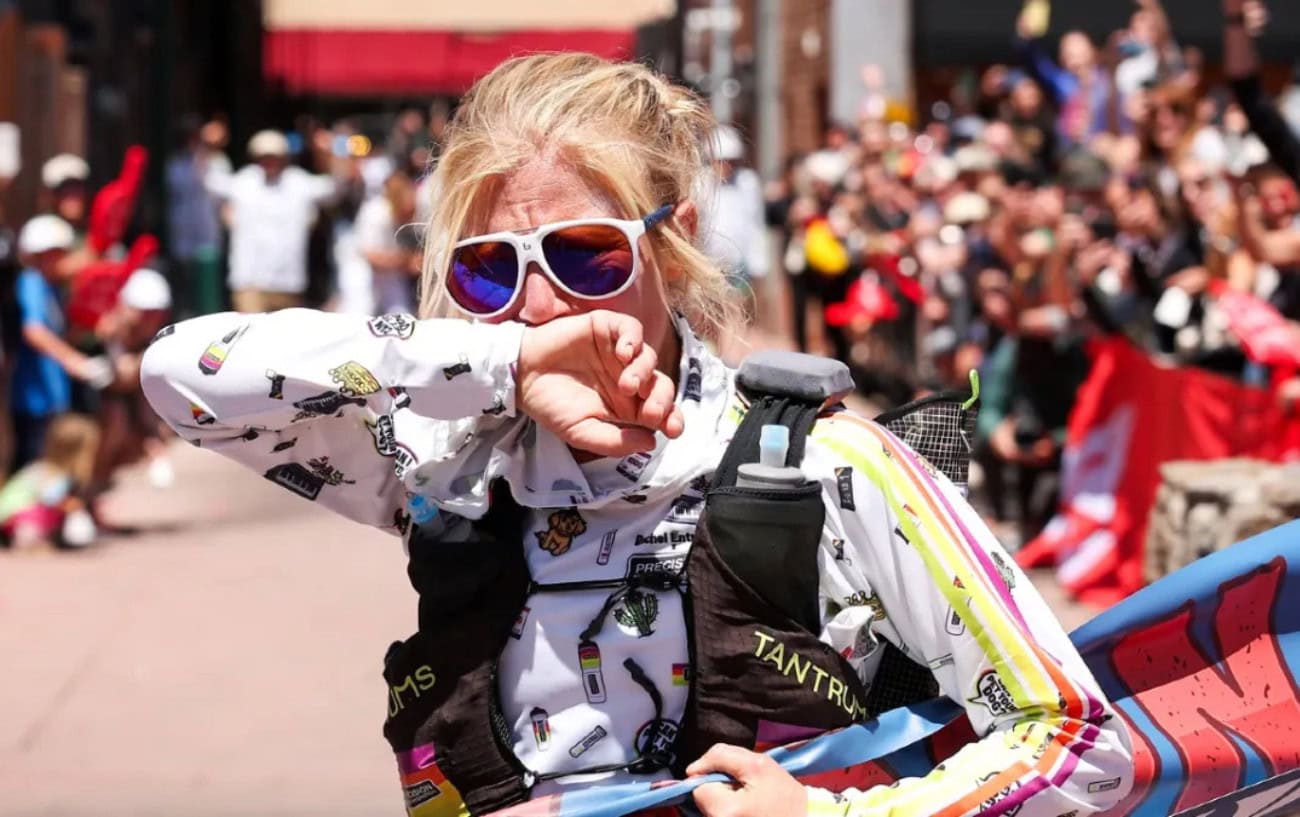
Rachel Entrekin’s record-breaking run through Arizona this week was powered by three things: mashed potato, three short naps in the dirt, and what she has called “delusional self belief.” Total sleep across 56 hours, 9 minutes and 48 seconds of racing? About 19 minutes.
That’s what Entrekin told BBC and Runner’s World in interviews after she became the first woman to ever win the Cocodona 250 outright on Wednesday afternoon.
Her time set a new overall course record at the 254-mile Arizona event, broke her own women’s mark by close to eight hours, and made her the only three-time winner of the race. She also hit three goals she had set before the start: a sub-60-hour finish for the leading women, a woman in the top three overall, and three women in the top 10. She finished first, Courtney Dauwalter sixth, and Megan Eckert eighth, according to Runner’s World.
“None of [the goals], I guess, necessarily belonged to me,” Entrekin told Runner’s World. “I just thought that together, we could probably figure out a way to make all of those things happen.”
The fueling plan
Two years ago, Entrekin started working with Emily Arrell, a sports scientist at Precision Fuel & Hydration. Before then, she told Runner’s World, her eating habits had been mostly an “eat when you’re hungry” approach. Now she had numbers to hit: 60 grams of carbs per hour, and 300 to 800 milliliters of fluids per hour depending on the heat.
Arrell crewed at Cocodona, handing off gels, chews and fluids between aid stations. “I’m just the race car,” Entrekin said. “Emily is the mastermind.”
Real food balanced the gels. “Basically if it’s beige, I’m all over it,” Entrekin said. Ramen, rice, broth, and especially mashed potatoes.
“Mashed potatoes are the best,” she told the BBC. “You get tired of chewing and you don’t want to expend any extra energy doing that.”
According to Arrell, the ratio of real food to gels was unusual at the front of a race like this. “I’ve crewed a lot of 100-milers now, and compared to some top-10 finishes at say, Western States 100, Rachel was using proportionally more real food out here at Cocodona,” she told Runner’s World.
Dirt naps
Total race-day sleep: 19 minutes, in three pieces.
The first came near the Kelly Canyon aid station around mile 200. Entrekin had started falling asleep on her feet, even running into her pacer, Dom. They lay down by the trail, set a five-minute timer, and got back up.
“Wow, you’re running so much better,” Dom remarked, according to Runner’s World.
Two more seven-minute naps followed near mile 230, on the floor of an aid station. That was the last sleep she got until 11 p.m. on race day.
Hallucinations and the cornmeal
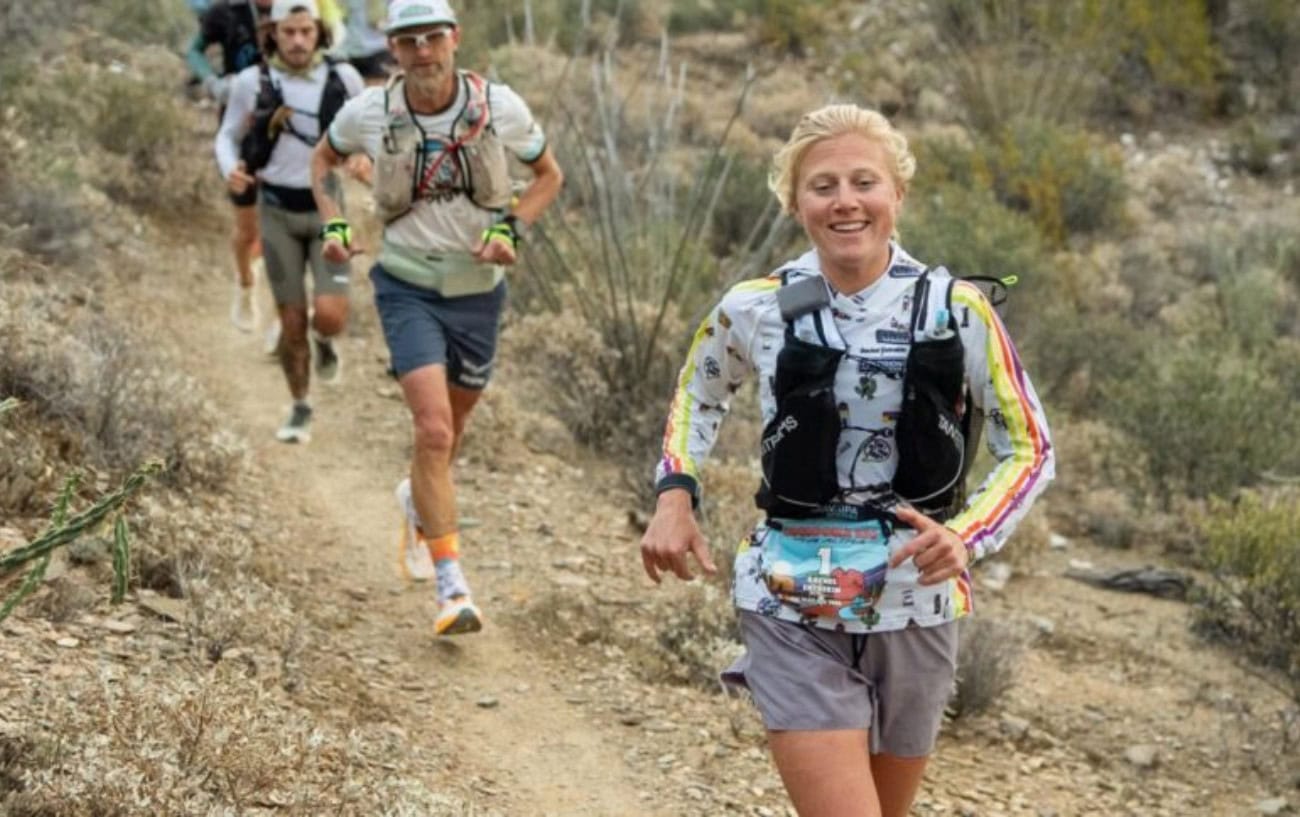
Entrekin doesn’t usually hallucinate during ultras. This time, she told Runner’s World, she did. Most of it was small animals in her peripheral vision, but at one point she looked at Dom and saw what she described as a shape-shifting bird behind his head.
The most memorable moment came on the final climb up Mount Elden, a 3,500-foot pull with about 15 miles to go. Pacers are not allowed on that section. A third of the way up, Entrekin said, she met a Native American woman who gave her some cornmeal and offered a blessing.
“I remember thinking, well she gave me strength, so I’m going to climb this entire mountain,” she told Runner’s World. “I’m going to run up this mountain.”
She did, and closed the race with a sprint finish.
A “paradigm shift”
Entrekin’s training is, in her words, non-traditional. She runs 70 to 80 miles a week around the Arkansas Valley in Colorado, no rigid plan, no coach, she told the BBC. Mental strength, she argued, matters as much as fitness.
“Your attitude and your ability to combat stress is so important,” she said. “They are at least as important as how physically fit you are, so I think the field is just so much more levelled at something like this.”
She also noted that many viewers on the live stream had assumed she would fall back, even with a sizable lead on men’s winner Kilian Korth. Korth, who had DNF’d Cocodona twice before, ran the second-fastest time in the race’s history at 57:28:36.
“Why is it just assumed that I’m going to blow up? Like, that’s kind of a sexist assumption,” she told Runner’s World. “I just think that it’ll maybe make people think twice before they decide that a man is going to win.”
What’s next
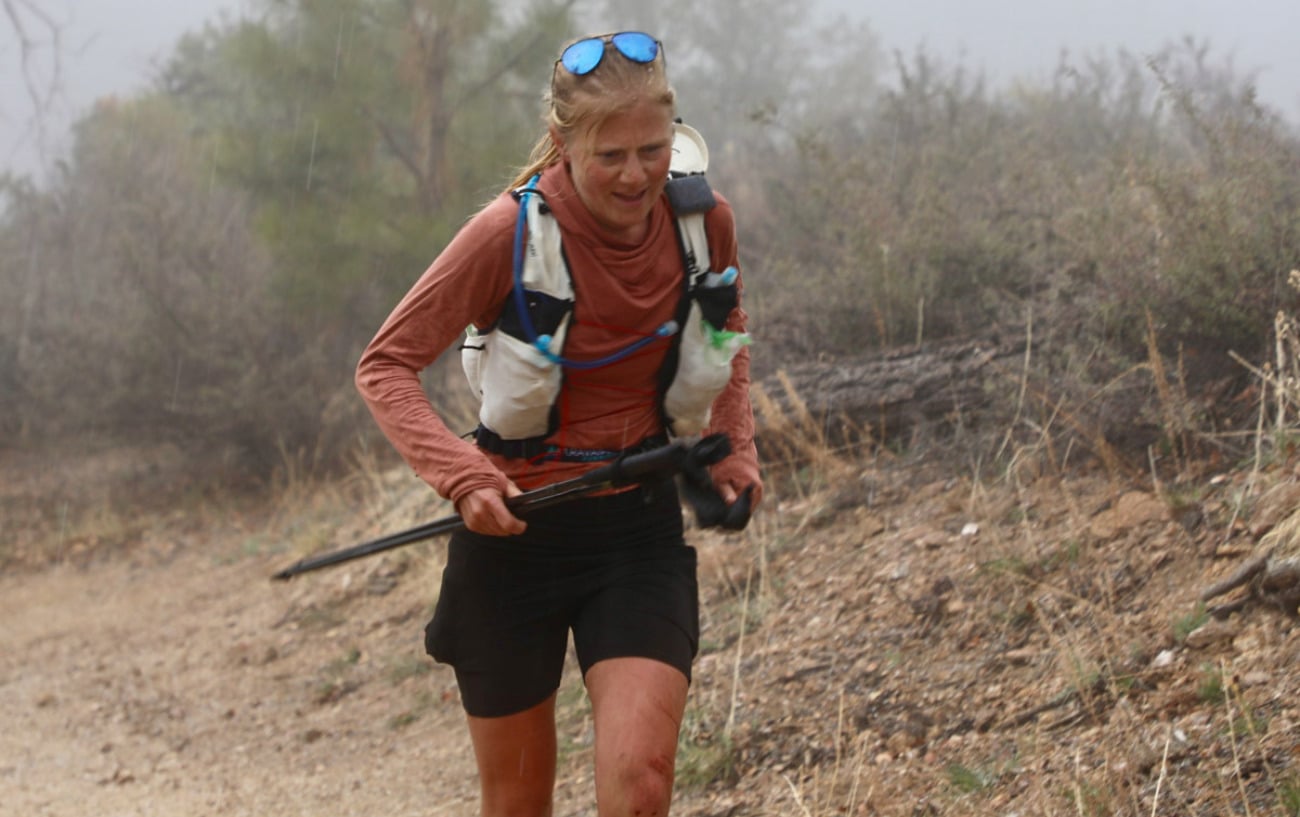
Entrekin slept from 11 p.m. on Wednesday until 6:30 a.m. on Thursday, then spent the morning eating and cheering finishers in. After a break, her next race is UTMB in Chamonix in August. At 108 miles, she joked to the BBC, “it’ll probably feel like a stroll in comparison.”
RunClub
Get more running stories — join RunClub
Daily running news, a community of 300,000+ runners, free training plans for every distance, and a daily running game. Free to join — no card.
Already a member? Log in →




Start the conversation