


The Tokyo Marathon is one of the most sought-after races in the world. As one of the original events that formed the Abbott World Marathon Majors, it attracts runners pursuing the Six Star Finisher medal as well as those hoping to experience one of the most distinctive marathon courses anywhere.
The original Abbott World Marathon Majors include Tokyo, Boston, London, Berlin, Chicago, and New York City. Runners who complete all six races earn the coveted Six Star Finisher medal, one of the most recognizable achievements in distance running.
For many runners on the Six Star journey, the Tokyo Marathon becomes one of the most memorable stops along the way. The race combines the prestige of a World Marathon Major with the cultural experience of running through one of the world’s most dynamic cities.
The series continues to evolve. The Sydney Marathon was recently added as the seventh major, while the Cape Town Marathon and Shanghai Marathon are working toward possible future inclusion. For now, completing the original six races remains the requirement for earning the Six Star medal.
The 2026 Tokyo Marathon took place on March 1, marking the nineteenth edition of the race. The event will celebrate a milestone next year, as the 2027 race marks the marathon’s twentieth anniversary.
At the heart of the race is the concept “The Day We Unite.” On marathon day, runners, volunteers, spectators, race staff, and city residents all become part of the experience as the streets of Tokyo transform into a shared global stage.
For the 2026 race, organizers also emphasized the idea of “one.” Inspired by the Japanese character for one, the concept reflects both individuality and unity. Each runner arrives with a personal goal and months of preparation behind them, yet on race day, thousands move together through the same city streets.
This philosophy is reflected in the phrase “Run. Tokyo. Own.” The message encourages runners to experience the marathon in their own way. Some chase personal bests, others pursue the Six Star Finisher medal, and many simply want to run through one of the world’s most fascinating cities.
A Tour Through Tokyo: Highlights Of The Marathon Course
The course offers a sweeping tour of Tokyo across the classic marathon distance of 42.195 kilometers.
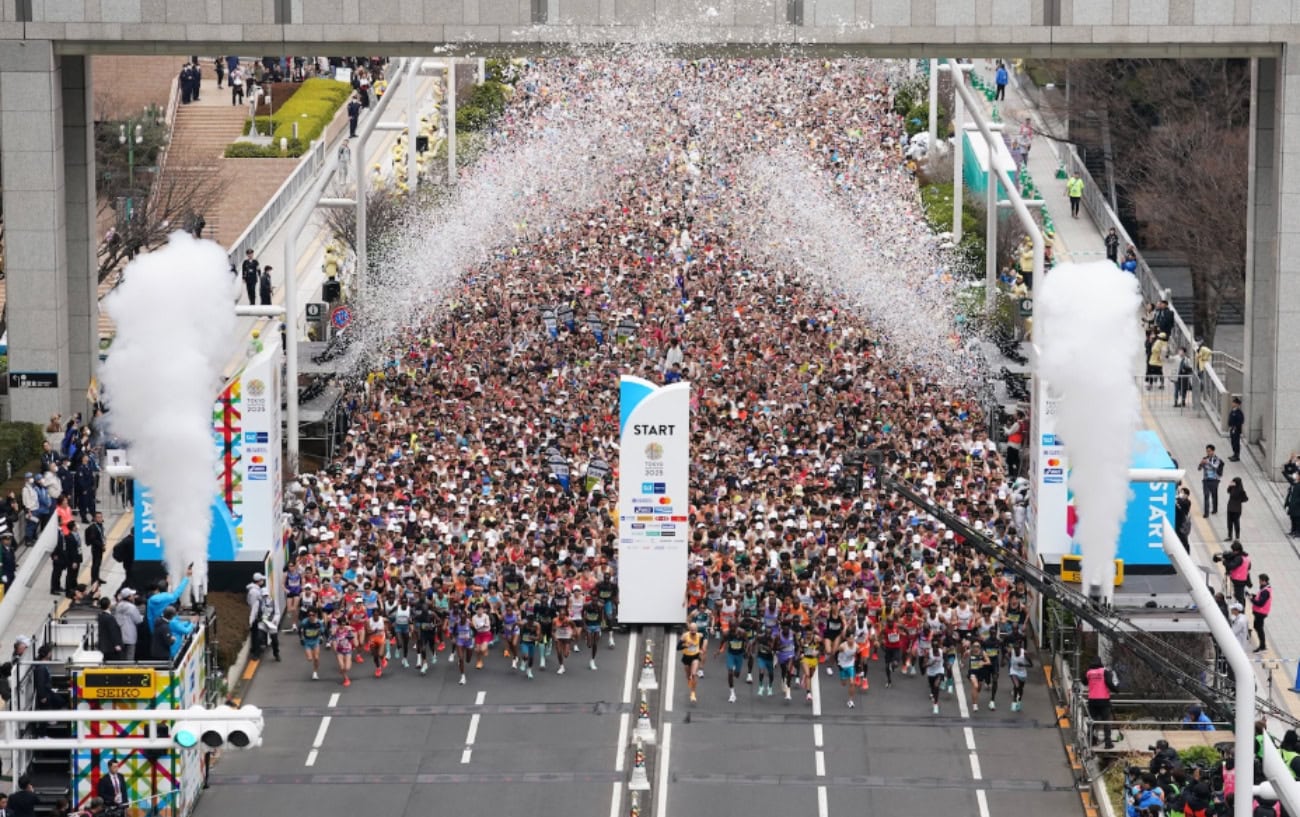
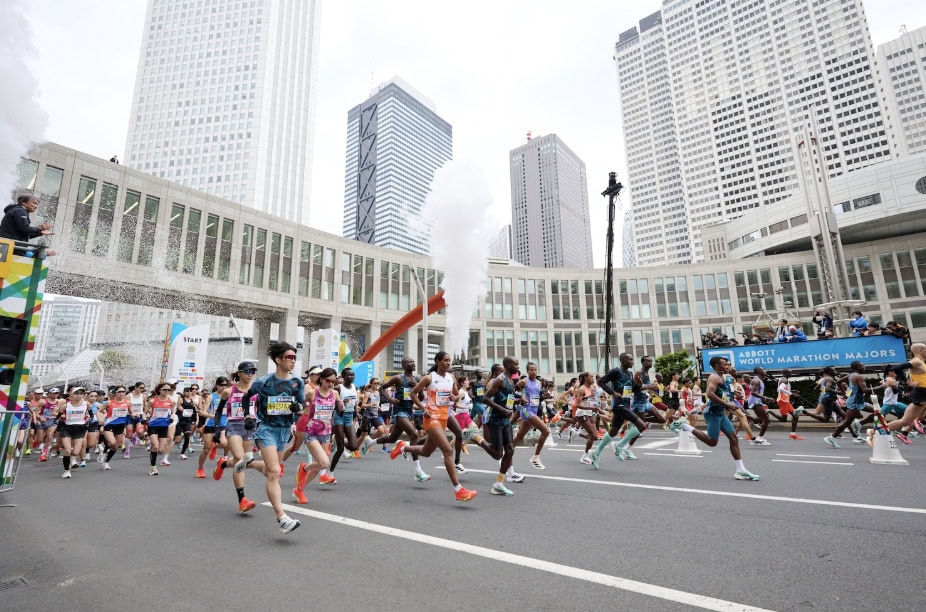
The race begins in front of the Tokyo Metropolitan Government Building in Shinjuku before heading east across the city. Early in the race, runners pass near Tokyo Dome before moving toward Akihabara, Tokyo’s famous Electric Town, known for its bright lights and electronics culture.
Around the 15-kilometer mark, the course reaches Asakusa, where runners pass beneath the massive red lantern of Kaminarimon Gate at the entrance to Senso-ji Temple, one of the city’s most recognizable landmarks.
As the course approaches the Sumida River, the skyline opens to reveal Tokyo Skytree, Japan’s tallest structure.
Later sections of the race pass through Nihombashi, a district that dates back to the Edo period. In the later miles, runners move through Ginza, Tokyo’s luxury shopping district, which is home to the famous Seiko Clock Tower.
Near the end of the race, runners can catch a glimpse of Tokyo Tower before heading toward the finish along Gyoko-dori Avenue beside the Imperial Palace, finishing near Tokyo Station.
World-Class Organization And An Unforgettable Race Atmosphere
The Tokyo Marathon is widely recognized for its organization. Volunteers guide runners with quiet efficiency, and aid stations operate with remarkable precision despite the enormous scale of the event.
Aid stations provide water and Pocari Sweat, the Japanese electrolyte drink that serves as one of the marathon’s official sponsors. Traditional marathon staples such as bananas are available, and some stations include Japanese snacks that give runners a small taste of local culture.
The enthusiasm of volunteers and spectators adds to the atmosphere. Volunteers often bow slightly as they hand runners drinks, while spectators line the streets waving both hands forward in encouragement and shouting “Ganbare,” the Japanese expression meaning “Do your best” or “Keep going.”
Understanding the Cutoff System: What You Need to Know to Stay in the Race
The Tokyo Marathon has a total race time limit of seven hours, but runners must also reach a series of checkpoints along the course before designated cut-off times. These checkpoints allow race officials to reopen city streets on schedule and ensure runners maintain the required pace.
Participants who arrive after the official cut-off time at any checkpoint may be directed off the course.
For the 2026 Tokyo Marathon, the checkpoints and cutoff times were listed as follows:
- 4.9 km – Ichigaya-Mitsuke Crossing — cutoff 10:25
- 9.2 km – Sudacho Crossing — cutoff 11:10
- 15.4 km – Hisamatsucho Crossing — cutoff 11:55
- 20.9 km – Midori 1-chome Crossing — cutoff 12:45
- 24.7 km – Fukagawa 1-chome Crossing — cutoff 13:20
- 29.2 km – Asakusabashi Crossing — cutoff 14:00
- 33.5 km – Sukiyabashi Crossing — cutoff 14:35
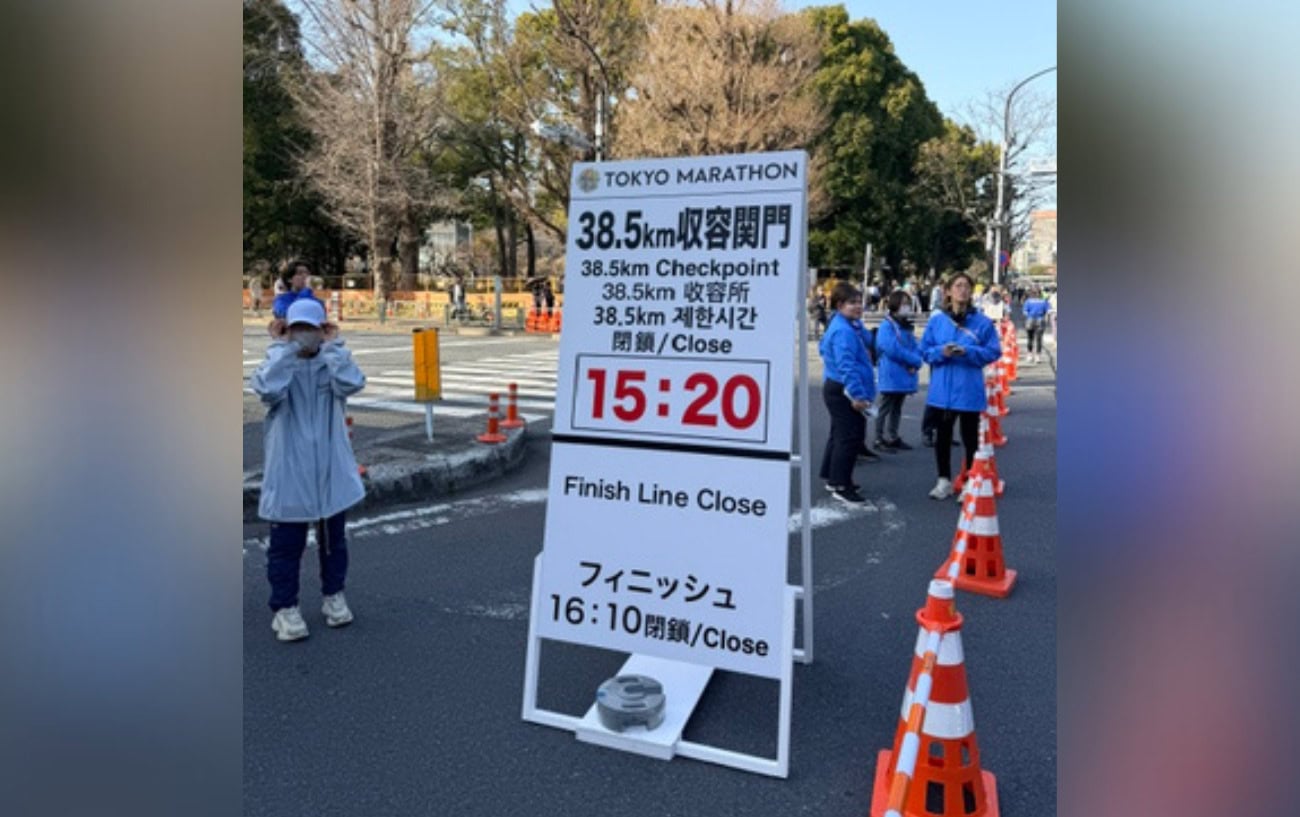
- 38.5 km – Shibakoen Ground-mae Crossing — cutoff 15:15
During the race, the time displayed at the final checkpoint near 38.5 kilometers appeared to extend slightly to around 15:20. For runners near the back of the pack, that brief extension became a meaningful moment, as every second can determine whether a runner can continue toward the finish.
Once runners passed the final checkpoint, they had until 16:10 to reach the finish line near Tokyo Station on Gyoko-dori Avenue, completing the race’s overall seven-hour limit.
Checkpoint times are reviewed each year and may vary slightly, so runners should always confirm the official cutoff schedule in the race guide for the specific edition of the Tokyo Marathon.
How to Get Into the Tokyo Marathon: Entry Options and Strategies
Entry into the Tokyo Marathon is highly competitive, with hundreds of thousands of applicants each year.
Many runners apply through the general lottery, while others enter through the official charity program by raising funds for partner organizations.
International runners may also increase their chances through the One Tokyo Global membership program. Additional entry pathways include Tokyo Marathon virtual challenge races, special drawings through the Abbott Gold Club, and the Abbott Six Star Lottery for runners pursuing the Six Star medal.
Some runners also participate through official tour operators that offer travel packages with guaranteed race entry.
Looking Ahead: Tokyo Marathon’s 20th Anniversary Celebration
To celebrate the twentieth edition of the race in 2027, organizers launched the Interview Relay 2nd RUN campaign, inviting runners, volunteers, spectators, and race staff to share stories about meaningful connections created through the Tokyo Marathon.
The campaign is currently accepting submissions through March 19.
More Than a Marathon: A Global Running Experience in Tokyo
Few marathons reflect their host city the way the Tokyo Marathon does. Over 42.195 kilometers runners pass temples, historic districts, skyscrapers, and cheering crowds lining the streets of one of the world’s most dynamic cities.
Some runners arrive chasing a medal. Others come simply for the experience.
But by the time runners reach the finish near Tokyo Station, the race offers something that extends beyond the medal itself: the opportunity to take part in a global running tradition that brings the world together for one day on the streets of Tokyo.
RunClub — Free
Join 300,000+ runners in RunClub
Free training plans for every distance, a daily running game, exclusive coaching content, and a real community of runners. Create your free account in 20 seconds — no card.
Already a member? Log in →






Start the conversation