

Recovery After an Ultramarathon
Running an ultramarathon is not for the faint of heart. Preparation for the race requires dedication and discipline, and the race itself probes deeply into aspects of the psyche that were previously untouched. After the race, there is so much relief that the event is over that the recovery period is either neglected or taken for granted and allowed to occur passively. The lack of attention to recovery often extends to the daily training sessions. This attitude toward recovery is not unique to ultramarathoners—indeed, appropriate recovery after exercise is one of the most neglected aspects of training across all sport (Smith 2003). This behavior exposes a poor understanding of basic physiology and increases the risk of the runner becoming stale and not adapting fully after each training session. Runners who have the passive approach to recovery need a reminder of basic physiology, as this will empower and encourage them to change their attitudes and adopt a more proactive approach.
Physiology 101
Running an ultramarathon imposes considerable physiological stress on the body. Consider, for example, that during a 50-miler each foot strikes the ground about 25,000 times. Each foot strike represents a high-impact collision of 1.5 to three times body mass within 50 milliseconds of the foot striking the ground. Prior to each foot strike, the muscles of the lower limb contract to prepare the muscles for the impending contact with the ground and the subsequent shock absorption. As the race progresses and fatigue develops, the preactivation of the muscle is regulated less well and the shock-absorbing ability of the muscle deteriorates. This reduced ability to absorb shock causes muscle damage and explains the muscle stiffness that occurs for several days after an ultramarathon (Burgess and Lambert 2008).
While we know that muscles are designed to repair and regenerate after injury, some runners have a limited capacity for this to occur, resulting in the “acquired training intolerance syndrome,” which has nasty consequences and often results in a running career ending prematurely (Derman et al. 2008). To reduce the risk of this happening, it is important to treat the recovery period after a race seriously. A recovery strategy should be planned and implemented seriously, just as seriously as the training in preparation for the race is planned. To fully appreciate the importance of recovery after exercise, it is necessary to understand the dose/response relationship for a bout of exercise and the basic processes that occur during the period after exercise.
“Dose” of exercise training and the subsequent “response”
A training session for any sport can be interpreted as an application of a biological stimulus, which elicits a “response.” The response to the exercise session can be explained in biological terms and is represented as physiological, structural, and metabolic changes that contribute to an improved athletic performance. In the case of training for long-distance running, the adaptations are associated with the muscles being able to resist fatigue so that greater distances can be covered at a faster speed and, most important, without a decrease in running speed as the distance of the run progresses. The “dose” of exercise training depends on the interaction between the duration and the intensity of the training session. Other factors such as the athlete’s nutritional and training status and the recovery period after the training session can also influence the training stimulus. The frequency of the training sessions also affects the nature of the stimulus. Training for an ultramarathon involves a systematic application of a training load, followed by a period during which recovery and adaptation can occur. If there is an imbalance between training load and recovery, the runner will not reach peak shape (if the training load is too low) or will get symptoms of fatigue (if the training load is too high). In both cases, the runner will underperform during competition.
What happens after a training session or race?
After a training session or a race, different physiological processes recover at different rates ranging from minutes to months. For example, heart rate, blood lactate, and body temperature, which are all elevated during exercise, may take minutes to return to their preexercise levels. Oxygen consumption, which is also elevated during a training session, may take hours to return to resting levels after training. If the training run was longer than about 12 miles, muscle-glycogen levels take a few days to restore to their pretraining levels. If the training session or race caused muscle stiffness, it can be assumed that there was muscle damage with elevated levels of creatine-kinase activity in the blood. Creatine kinase is an enzyme that usually occurs within the muscle cell—when it is measured in the blood, it means that the muscle-cell membrane is damaged and the enzyme has leaked out of the muscle cell into the blood. After an ultramarathon, muscle pain subsides only after about seven days, whereas creatine-kinase activity in the blood reduces after five days (Burgess and Lambert 2008). Muscle function and neuromuscular coordination take weeks to recover fully after an ultramarathon (Chambers et al. 1998), whereas muscle fibers may take months to regenerate completely (Warhol et al. 1985).
The disturbing point about gauging long-term recovery is that pain is not a good guide to the state of repair of the muscle. It stands to reason that subjecting the muscles to hard training sessions before they have fully recovered is not desirable. For these reasons, adequate recovery after training and racing is important for optimal adaptation.
Can recovery be accelerated?
Recovery can be viewed either as a passive process, where it is assumed that muscles will recover in accordance with the biological regenerative processes, or an active process, where the biological processes are supported and even accelerated. Popular proactive strategies include massage, cooling the muscle (cryotherapy), compression of the muscles, and stretching (Barnett 2006). Ingesting foods or drinks with carbohydrate and protein after training and racing is also included in the repertoire of recovery procedures. However, whichever proactive strategy is adopted, it must be remembered that recovery is a multidimensional process involving a number of systems, all which might have a different time course.
The recovery strategies are designed to shift the “stress-recovery” balance in favor of the recovery processes. A purported consequence of this is that the athlete will be able either to tolerate a higher training volume or to get back into training sooner after an ultramarathon. Professor Andrew Bosch of Cape Town University, a 2:22 marathoner and consultant and coach to elite ultramarathoners, has firm advice for the runners he works with. “After an ultramarathon, don’t train until your stiffness has disappeared. Then run very lightly for a week before gradually getting back into easy training.” He mentioned an example of an overenthusiastic runner who did not heed this advice and started training hard too soon. After a week, he had a major slump, and by the time he recovered and managed to train again, other runners in the training group were two weeks ahead in their training programs. The moral of the story is to recuperate fully before embarking on an increased training load.
While there is strong evidence showing that nutrition, particularly carbohydrate and protein, has an important role during recovery after a race, the same level of agreement has not been achieved for the other strategies promoting recovery. This makes it difficult to decide on the optimum method. However, the main points of each method will be discussed next, followed by a practical example showing how the different methods can be implemented.
Cryotherapy
Cryotherapy describes different treatments aimed at lowering tissue temperature by the withdrawal of heat from the body. Treatment can be applied in the form of ice packs, ice massage, ethyl chloride, cold air, or cold-water immersion. Cryotherapy has been used in medicine for a long time to reduce swelling and pain. The premise behind cryotherapy is that it is effective for decreasing metabolic rate, inflammation, blood flow, and skin, muscle, and intra-articular temperatures. Studies suggest that cryotherapy may reduce symptoms of muscle damage, but the influence on performance is less clear (Burgess and Lambert 2010).
Massage
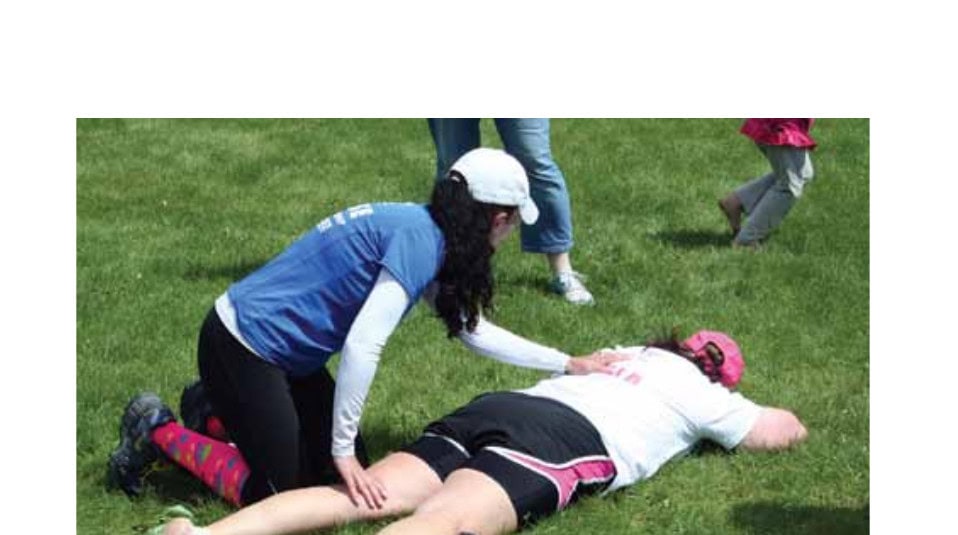
The principles upon which massage treatment exerts its effects are through decreasing edema and reducing pain and promoting healing by increasing muscle blood flow. The results of studies that have used massage to treat symptoms of muscle damage are quite varied. This can be attributed to the many different types of massage therapy and the duration and frequency of treatment. It is also difficult to have a blinded control group in studies on massage. However, there are sufficient positive results from the peer-reviewed literature to support the application of massage as part of the recovery process; further research is needed to fully understand the mechanism of action.
Stretching
The main goal of stretching is to increase the range of motion about a joint. A comprehensive review of studies that used stretching after exercise with the goal of reducing muscle soreness (with stretches held from 80 seconds to 600 seconds per session) showed that 72 hours after exercise, pain had reduced by only 2 percent, which was not regarded as meaningful (Andersen 2005).
Compression
Compression is a therapeutic technique whereby external pressure is applied following exercise or an injury. The theory behind this treatment suggests that the external pressure of the compression garment reduces edema. Although the evidence for the efficacy of this treatment is largely anecdotal, recent studies suggest that compression can be effective in minimizing swelling (Kraemer et al. 2004). The pressure of the compression garment should not exceed diastolic pressure, which is about 40 to 60 mm of mercury for the upper limbs and 60 to 100 mmHg for the lower limbs. If the pressure exceeds these values, blood flow will be impeded. The compression treatment should be applied constantly for at least 72 hours.
Practical examples of recovery strategies
This section describes practical ways of applying the different recovery strategies. Despite the lack of firm scientific guidelines, there is sufficient knowledge to conclude that it is better to be proactive with recovery than to have a passive approach. The fine details, however, can be tailored to individual needs.
After training
- Rehydrate and refuel with carbohydrate and protein immediately after training.
- Avoid sitting for long periods immediately after training. Runners who have desk jobs should get up from sitting and walk a few steps every 30 minutes.
- Wear a lower-limb compression garment (if the session was particularly hard).
After an ultramarathon
- Rehydrate and refuel with carbohydrate and protein. Check body mass to guide drinking patterns.
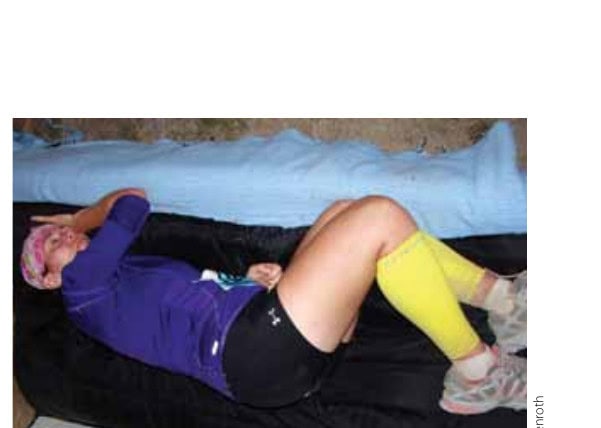
- Lie down and elevate legs for 15 to 20 minutes.
- Use cryotherapy (15–20 degrees Celsius for five to 20 minutes).
- Wear a compression garment.
Day after race (and repeat daily until pain has subsided)
- Easy walk. Any jogging should be done at a very slow, easy pace.
- Massage
A few pointers to end
Recovery is a biological process that is important for muscle repair and regeneration. Do not short-circuit the steps by using nonsteroidal anti-inflammatories unless they are prescribed for an injury after full consultation with a doctor.
Pain may be an appropriate guide on the state of the muscle for about seven days after the race, but it is a poor guide for the remaining weeks during which regeneration occurs. Therefore, be cautious, and do not start training too hard, too soon.
Treat recovery after training and racing with as much respect as the process of training itself. This is “best practice” and will in all likelihood prolong a running career.
References
- Andersen, J. C. 2005. Stretching before and after exercise: effect on muscle soreness and injury risk. Journal of Athletic Training 40(3):218–220.
- Barnett, A. 2006. Using recovery modalities between training sessions in elite athletes: does it help? Sports Medicine 36(9):781–796.
- Burgess, T., and M. Lambert. 2008. Differences in muscle pain and plasma creatine kinase activity after “up” and “down” Comrades marathons. South African Journal of Sports Medicine 20(2):54–58.
- Burgess, T., and M. Lambert. 2010. The efficacy of cryotherapy on recovery following exercise-induced muscle damage. International SportMed Journal 11(2):258–277.
- Chambers, C., T. D. Noakes, E. V. Lambert, and M. I. Lambert. 1998. Time course of recovery of vertical jump height and heart rate versus running speed after a 90-km foot race. Journal of Sports Sciences 16(7):645–651.
- Derman, W. E., M. P. Schwellnus, D. E. Rae, Y. Albertus-Kajee, and M. I. Lambert. 2008. “Clinical Myology in Sports Medicine,” in Olympic Textbook of Medicine in Sport, ed. Martin Schwellnus (Hoboken, NJ: Wiley), 200–231.
- Kraemer, W., D. French, and B. Spiering. 2004. Compression in the treatment of acute muscle injuries in sport. International SportMed Journal 5(3):200–208.
- Smith, D. 2003. A framework for understanding the training process leading to elite performance. Sports Medicine 33(15):1103–1126.
- Warhol, M., A. Siegel, W. Evans, and L. Silverman. 1985. Skeletal muscle injury and repair in marathon runners after competition. The American Journal of Pathology 118(2):331–339.
No content belonging to an article titled “Recovery After an Ultramarathon” was found in the provided page images. The pages shown contain only the article “Nutrition for the Marathon and Beyond” by Ellen Coleman.
This article originally appeared in Marathon & Beyond, Vol. 16, No. 5 (2012).
← Browse the full M&B ArchiveMore like this
1,000+ stories from 19 years of Marathon & Beyond
The complete archive of the legendary long-distance journal — digitized and free to read.
