

Time to Run
Sure, most runners have injuries. But runners generally are healthier and have fewer illnesses than nonrunners and fewer illnesses than if we did not run. If we listen to our bodies and take time off, cut back, or cross train when our bodies warn of impending injury, then we can become healthier still. Just a few avoided illnesses frees up more time than running requires.
RUNNING MAY TAKE HOURS, BUT IT GIVES YOU YEARS
The man I grew up calling Granddaddy loved to sail. Someone cross-stitched these words for him:
“God does not take from one’s allotted years the hours spent sailing.”
So it is with running. In fact, as distance runners know best, life is not a sprint. It is a marathon. One should train—and run—accordingly. The time taken to drink, refuel, or hit a pace not too fast, is time you get back by the finish line, along with much more.
Over the long haul, running a few hours a week can add many more hours, indeed years, to life.
Furthermore, the years you are allowed are much more productive when you’re healthfully conditioned.
RUNNING CAN TAKE LESS TIME
Philosophers and physicists can opine on the nature and essence of time. My simple goal is to share with you how we can run as time-effectively as possible. To that end, here are some simple but practical suggestions.
Run Regularly
I have spent many hours planning, replanning, arranging, and rearranging to run. It can take as much time and energy trying to schedule and reschedule runs as it does to do them. So, structure your days around a regular time when you can almost always run. And then stick to that time and arrangement. If something comes up or there is no way you can be regular, then plan for and arrange the next run while still running. That way, when you finish the run, the next one is already in place, and it takes no more of your time to schedule it.
I don’t remember whether it was Casey Stengel or Yogi Berra who once observed that it was not what trouble ballplayers got into at night that hurt their performance but rather the staying up all night looking for trouble. Similarly, the less time spent looking for or arranging running, the better.
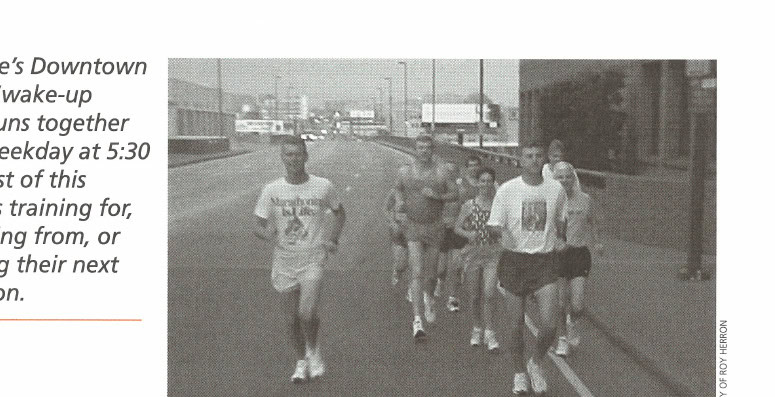
Just Do It
With respect to Nike (I’m a New Balance guy myself), they are correct: Just do it.
Many of us waste more time figuring out when and where and with whom we will run than actually running. We spend countless hours worrying about running, procrastinating, contemplating weather forecasts and windchills and heat indexes. So, “Just do it.” And while you are doing it, plan your next run.
Run Where You Are
At home, I regularly run a little over a mile to a friend’s house. This slow run loosens me so I stretch at his house. When we are through running, I run home. This way I use the extra couple of miles to loosen up, cool down, and get a bit stronger.
Shower Once
As the father of three young sons, I do not argue against cleanliness, even if and especially because I do not see a lot of it. So, if you enjoy showers and have the time to bathe more than once a day, by all means, let it flow. But we can save time (and water) by running right before the daily shower, thus avoiding the necessity of a second shower later in the day.
Work on the Run
During the 2000 election, fellow campaign staffers and I would skip lunch or dinner to run. As we ran, we talked about the issues confronting us. Time and again we got new information from each other and moved the work forward—without having to have a separate meeting.
Similarly, I especially enjoy running with and learning from other attorneys. Often their insights help me better serve my clients—and we don’t have to make time for a conference call or meeting. In other words, meetings can take place on the run and add to the work day instead of taking from it.
Run With Friends
Most of us need time to talk and socialize. Running with friends can meet that need and thus free other time for work or family. My most frequent running companion says of me, “Roy’s feet are connected to his mouth. If he couldn’t talk, he couldn’t run.” He’s probably right.
I know if I could not listen and talk, I could not run nearly as much.
On the most hectic work days, my only social time may be running time. So, I take that time, and enjoy it. Run with your friends, or make friends with whom you can run.
Run With Family
My wife and I sometimes run together, different gaits and paces notwithstanding. (She would also fit into the “running with friends” category.) With three young sons, our runs give us time to talk, share information on the boys, and catch up with each other while we move along together.
Thus, running really takes no additional time. We just use the time while running instead of while in the den or kitchen. The conversations are more efficient, too, because we are not constantly interrupted by requests for parental assistance or attention.
When the children were smaller, I pushed them in a running stroller. The increased resistance built up my strength, and the kids generally enjoyed it or slept through it.
Recently, the twins accompanied me on a 17-miler on their bikes. They rode about three times farther than they had ever gone
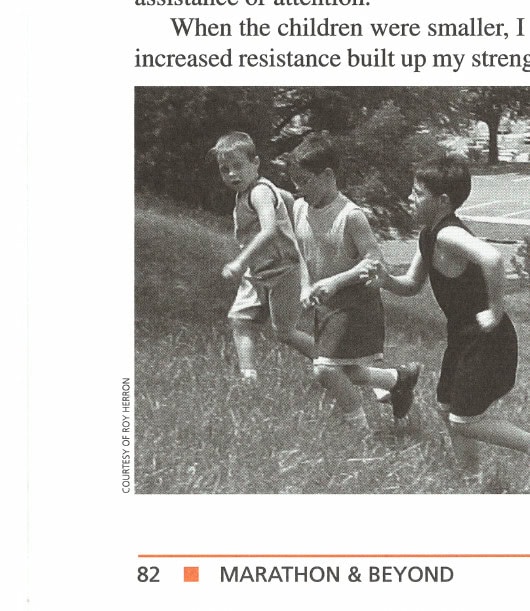
at one time, and I got in a long run that otherwise would have gone undone. Despite the rainstorms that made it a bit interesting, when it was over they were impressed with what they had done—and so was I. It was a special run and ride that none of us will ever forget. We got extraordinary time together, and I got the run in without it taking extra time.
Run Alone—Regardless of Whether You Are Alone
Brother Roger of the Taizé Community in France wrote a book called Struggle and Contemplation. He pointed out that those of us who work hard and struggle need time for contemplation and solitude—perhaps more than others.
Running can provide that time alone for contemplation and prayer, for reflection and renewal.
When you realize that running can mean prayer or reflection, you gain extra motivation to run. Running then becomes not one more thing to do but perhaps the most important thing.
Also, you do not have to run alone to be alone. Often, particularly on long runs, I isolate from the group or even from a single companion to reflect and pray. Sometimes I pull ahead, drop back, or simply move over from other runners. Other times, I just fall silent and let my mind drift away.
I never will forget my first ultra, the Mountain Mist 50K outside Huntsville, Alabama. This flatlander from West Tennessee’s gentle slopes and flat fields had no idea what mountains and rock climbing I was getting into until I was already committed to doing the event with friends. Perhaps it was the altitude as well as the distance, but in the midst of dozens of other runners, scrambling over the rockiest course I have ever seen, I often found myself alone, contemplating the beauty and giving thanks. It was one of the most worshipful experiences I had known in quite some time.
Save the Talking for Running
I like to run, then visit afterward with friends. But if you clock not only runs but also the visits before and after, then you can see this visiting can take as long or longer than the run itself. It is wonderful if you have the time. But if you do not have that much time and something has to go, make sure it is the visiting before and after the run and not the run itself.
When I was in high school, I worked for my congressman and the United States House of Representatives. I would often eat in the cafeteria in the Longworth House Office Building where a server would call out to those of us in line, “Walk and talk. Walk and talk.” She kept us moving and steady progress was made.
Runners should also “walk and talk”—or perhaps “run and fun.” The key is to keep moving. One gains little fitness “sitting and quitting” or “standing and planning.”
Run Instead of Eat
Instead of going out for a meal, what about going out for a run? Many of us could miss a meal. Burning calories, instead of piling them in and piling on fat, would help most of us. By substituting miles for meals, you can burn fat. Furthermore, we can return to work invigorated instead of sleepy and increase our productivity in the afternoon.
Wear the Right Shoes
The right shoes help you avoid injuries. To make your investment of time productive, the time needs to be invested running, not licking wounds. Have at least two pairs of good shoes so one pair can dry and you don’t have to waste time trying to dry the other pair. Also, when one pair gets some wear, go ahead and invest in a third pair to begin working it into your running cycle. This way you won’t have to go looking for shoes at an inconvenient time or place.
Relatedly, find shoes that work for you, and then stay with that brand and model. The less time you spend shopping for and switching shoes, the higher percentage of your running time you will actually spend running. When the company changes the model you wear, try the new model, or stockpile the ones you are used to wearing that are going out of stock.
Have Enough Clothes
I grew up hearing about the Great Depression when my grandparents almost lost their farm because they could not pay the taxes. And I read Augustine’s admonition that there are two ways to be rich, one being to have the world’s goods and the other to need few of them.
Still, I finally decided to buy enough running clothing so that I no longer have to waste time trying to find something clean.
Investing in extra shorts, socks, and singlets for summer and extra tights, gloves, and headbands for winter means I have what I need when and where I need it. And sooner or later I will use or lose them anyway.
HAPPINESS IS RUNNING STRONG
What difference does it make if you are not only healthy physically but also emotionally and spiritually? Our experiences reveal and scientific studies confirm that runners are happier than the general public. Happier than the general public, you say? Yes. But most important, happier than we would be if we did not work out regularly.
I started running for my physical health. Today, I know running is just as important for my mental, emotional, and spiritual health. My wife can testify to the difference it makes when I do not run.
If we are happier and more productive, then we also tend to elevate others so that not only we but those around us can benefit, too. But even if running took more time and did not expand our time, should not our brief time on Earth be happier?
Quick Tips on Running Fast
Most articles about running fast focus on running at a faster pace. These tips, however, are on how to get your running in, whatever your pace, in less time.
- Run regularly. It saves time (and energy) when you don’t have to try to decide and arrange when and where to run. Plan a regular schedule with regular starting points and companions you can count on being there.
- Hard/easy. It’s best for your body, and also saves time, to alternate hard/long runs with easy/short runs or cross training or even “active rest.”
- Run, not ride. Run from where you are to where you want to be rather than driving more than you have to drive. The time you invest running instead of commuting will build you up instead of take time away.
- Change quickly. Rather than changing and chatting, get ready and get running. Then you can talk on the run when it does not take more of your time.
- Fun and run. If you can have fun while running, time will really fly by—and even if you run longer, it won’t seem as though you have.
“I N MY early 30s, I had just about everything anyone could ask for or dream about,” Rick Schaefer relates. “I had the lavish lifestyle, a wildly successful business that I had built from $300 to $30 million in three years, a couple of wonderful children, and the list goes on and on. By the time I was 37, I had lost everything. I had sustained a heart attack, I was bankrupt, hounded by the IRS, recovering from addictions to cocaine and alcohol, and out of touch with my children. I had just returned to Boulder at age 39 to start over . . . and then I realized the folks I was working with weren’t good people.
“My longtime girlfriend had had enough of my trials and relocated out west. My weight was back up to a dangerous level for a post–heart attack victim. I hadn’t made many new friends since I returned to Colorado. The magazine stress tests where points are totaled for life events showed me maxed off the charts. Try as I might, I couldn’t get back on my feet. I’m a fighter, but I just kept getting knocked down. It took every ounce of positive energy just to make it from day to day. It was hard to battle so many major forces on so many fronts that I couldn’t control, and I was as close to helpless as I’ve ever been.”
Looking at Rick now, you’d never guess his past problems. Watching him run easily, bantering with his running friends in the middle of a three-hour workout, it’s particularly difficult to believe that he suffered a heart attack 10 years ago at the age of 35. What’s weird is that the heart attack came at a time when Rick had begun to clean up his act.
Rick relates, “The first 33 years of my life could be characterized by bad genetics, drug use, alcohol abuse, high-stress work, elevated blood pressure, bad diet, a weight problem, and smoking.” Before the attack, Rick had lost 65 pounds by swimming 4,000 meters a day and eating a healthy diet. “I had stopped doing cocaine cold turkey two years before. My cholesterol was almost normal, and my blood pressure was way down. I had cut back but not quit drinking alcohol.”
After recovering from his heart attack, Rick began doing two-mile runs with employees of his high-tech firm before work. He worked his way up to six miles, but then he moved several times and found it difficult to keep running when his established routine was disrupted. He also couldn’t find a convenient place to swim.
WEIGHTY MATTERS
“On Thanksgiving Day one year later, after we had stuffed ourselves with every kind of food imaginable, I realized I had ballooned back up to 245 pounds. I was desperate to do something that would make me trim down. I had already dodged the Grim Reaper once, and I didn’t want him knocking on my door again.”
Armed with a new resolve, rather than a knife and fork, Rick managed to will himself out the door for a couple of runs a week. It wasn’t easy for him at the beginning, though. “It was lonely,” he recalls. “It was just me, myself, and I. I had no idea what I was doing. I was too embarrassed to try to find ‘real’ runners and ask for their advice. I thought they would laugh at me. But I would try to run regularly. I knew, out of desperation, that the only key to getting into shape was to run regularly.
“Without a doubt, the most important body part for a beginning runner resides between the ears. I still remember my fears as if it were yesterday. I didn’t think I looked like a runner. I sure didn’t think guys built like me were runners. It is particularly intimidating in Boulder, where everyone seems to have the body mass of a zipper, and my build was more like a Sherman tank. So I couldn’t imagine myself as a runner. I spent the first five months of running in quiet and desperate isolation.”
An Internet group Rick stumbled upon called the Clydesdale Virtual Racing Team helped him to break his isolation and give him inspiration. He had considered trying to run in a race but was hesitant. “A slow woman in the Clydesdale Internet group did her first 5K race and wrote about it to everyone. She ran a 40-minute 5K, and she was surprised that she wasn’t dead last. Even more important was her enthusiasm. She was thrilled, and she wanted to do another race as soon as possible.”
Rick’s interest in the Clydesdale group led to his decision to sign up for his first race, the Bolder Boulder 10K. His cardiologist warned him about getting caught up in the excitement and overdoing it, and his girlfriend at that time didn’t like the idea of his running the race. He promised he would make the race a “fun run” and coasted through in 70 minutes. “That was 1995; it was about 55 degrees and raining, so I just kind of dorked around the course in 1:10. It was a blast!”

This article originally appeared in Marathon & Beyond, Vol. 5, No. 5 (2001).
← Browse the full M&B Archive1,000+ stories from 19 years of Marathon & Beyond
The complete archive of the legendary long-distance journal — digitized and free to read.
