


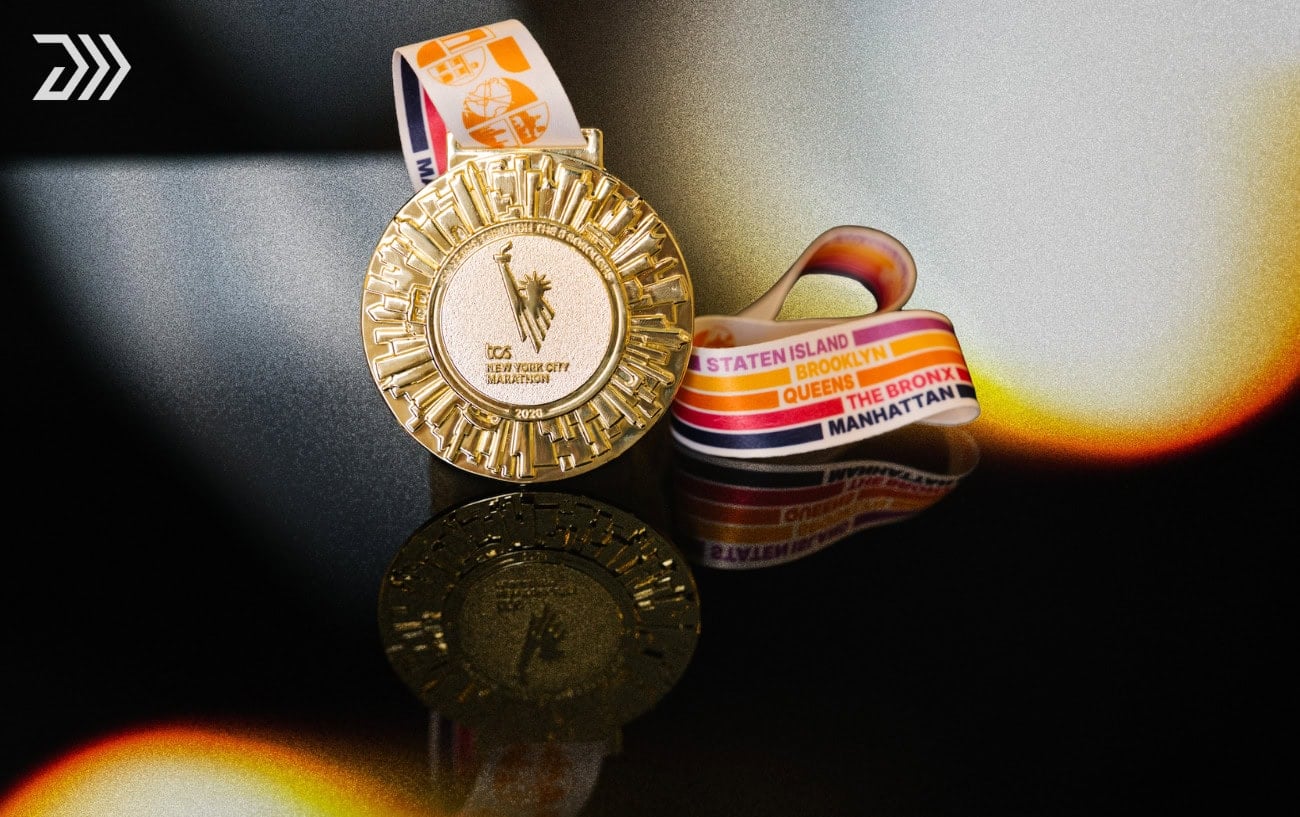
Nearly 60,000 runners will cross the Verrazzano-Narrows Bridge on Sunday, Nov. 1, in a New York City Marathon that marks 50 years since the race left Central Park for all five boroughs. The first five-borough edition was run on Oct. 24, 1976, and this year’s redrawn mile through the Bronx is the first change to the route in 15 years.
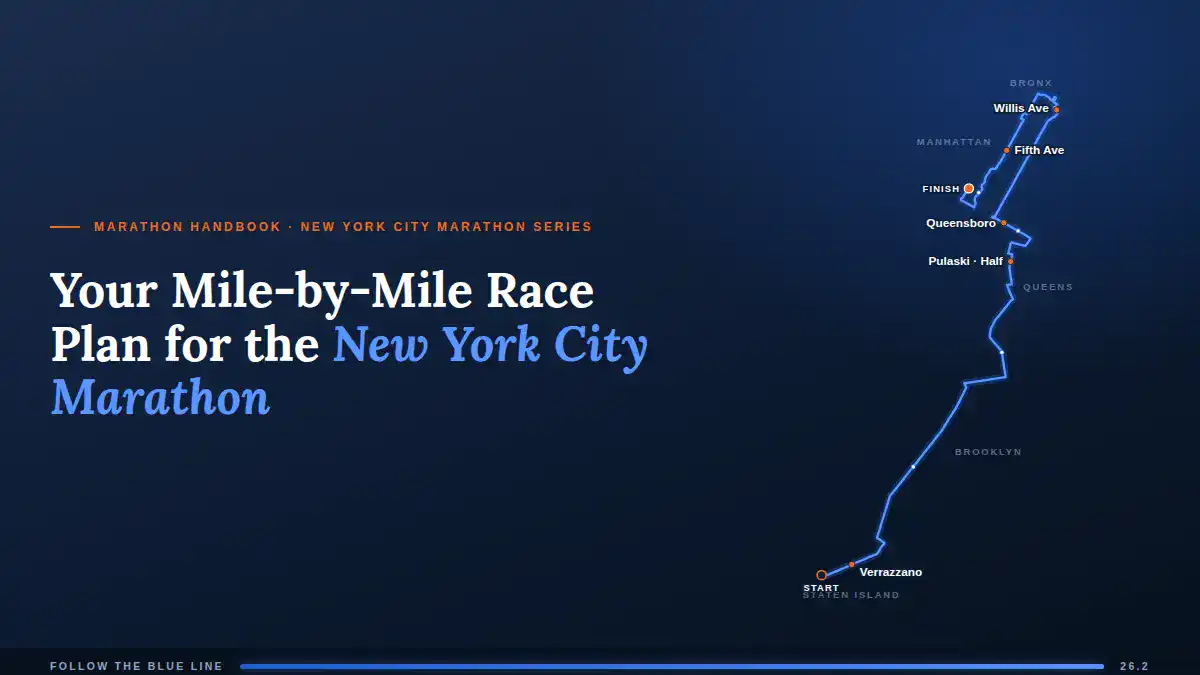
From Fort Wadsworth on Staten Island the course drops into Brooklyn and runs north for more than 11 miles, crosses into Queens at halfway and reaches Manhattan over the Queensboro Bridge, then makes a short trip into the Bronx before coming back down Fifth Avenue into Central Park. There are five bridges along the way and no pacemakers in the professional races, so the records here are slower than on the flat courses, with Tamirat Tola’s 2:04:58 from 2023 and Hellen Obiri’s 2:19:51 from last year still standing. Start times, the forecast and both elite fields are in our complete guide to the 2026 race.
Start to Mile 2: Fort Wadsworth and the Verrazzano-Narrows Bridge
The professional wheelchair races go first, at 8 a.m. ET, followed by the professional women at 8:35 a.m. and the professional men at 9:05 a.m. The first of five waves leaves at 9:10 a.m. and the last at 11:30 a.m., and every runner starts from one of three colored villages, blue, orange or pink, shown on the bib. Blue and orange share the upper level of the bridge, one on each side, while pink takes the westbound side of the lower level.
The bridge fills almost all of the first two miles, and its 4,260-foot main span, still the longest in the Americas, sits 228 feet above the water at high tide. The opening mile climbs to the middle of it, the highest point anywhere on the course, with the mile 1 marker just past the top, and the second mile runs back down the Brooklyn side into Fort Hamilton. Spectators are kept away from the start and off the bridge, so the first crowds anyone meets are on Fourth Avenue.
Miles 2 to 8: Fourth Avenue Through Bay Ridge, Sunset Park and Park Slope
The three starts follow separate lines for a while once they are off the bridge. Pink reaches mile 3 on 74th Street in Bay Ridge, a few blocks from the others, and merges with blue before mile 4, while orange keeps its own line until mile 8, where all three come together at Lafayette Avenue, each having covered exactly the same distance.
Fourth Avenue is wide and dead straight, and it carries the race north for close to five miles through Bay Ridge, Sunset Park and Park Slope. The first fluid station is at mile 3, and from there water and lemon-lime Gatorade Endurance Formula are handed out at every mile up to mile 25, apart from miles 5, 7 and 9. Tables are set up on both sides of the road, and New York Road Runners suggests skipping the first one, where the crowding is worst. Toilets and medical aid start at mile 3 too and come roughly every mile after that, and so do the timing mats, which sit at every mile from 3 onward and at every 5K.
Miles 8 to 13: Fort Greene, Williamsburg, Greenpoint and the Pulaski Bridge
At mile 8 the course leaves Fourth Avenue for Lafayette Avenue, which takes it east through Fort Greene and Clinton Hill, and the first Culligan refill station of the day is right at the turn, for runners carrying their own approved bottles. Four more follow, at miles 14, 17, 20 and 23, so there is at least one in every borough after Staten Island.
Bedford Avenue then turns the race north, past the 15K mark and mile 10, through Williamsburg at mile 11 and on into Greenpoint, where the route runs along Manhattan Avenue to the first of two Maurten gel depots at mile 12. Both depots carry the plain Gel 100, in black packets, and the caffeinated Gel 100 Caf 100, in white, though supplies are limited, and NYRR asks runners to bring their own and take just one at each stop. Williamsburg and Greenpoint, from miles 10 to 13, are among the spots NYRR recommends for watching in Brooklyn.
Mile 13 brings the Pulaski Bridge, which takes the race into Queens, and the halfway mat sits on the bridge itself. Last year 21 men went through halfway within three seconds of the lead, in 65:18, LetsRun reported, while the women’s leaders were through in 1:11:01 on their way to a course record.
Miles 13 to 16: Long Island City and the Queensboro Bridge
Queens gets only a couple of miles, as the course winds through the streets of Long Island City, past mile 14 and the Queens refill station, and onto the lower level of the Queensboro Bridge, where both mile 15 and the 25K mark fall. Spectators are not allowed on any of the bridges, and this one keeps the runners to themselves for more than a mile, all the way past the mile 16 marker on the Manhattan side.
In 2023 Tola pushed from 20K in Greenpoint and ran 14:41 for the next 5K, through Queens and up onto the bridge, then 14:07 for the 5K after that, down into Manhattan and up First Avenue, World Athletics reported. By the 20-mile marker he was out on his own, and he went on to win in 2:04:58.
Miles 16 to 20: First Avenue and East Harlem
Runners come off the bridge near 59th Street and turn north onto First Avenue, where the sidewalks fill up again. NYRR names miles 16 to 18 on First Avenue as one of the best places to watch, and there are pedestrian crossing zones at 69th, 72nd, 83rd and 86th Streets for spectators trying to get from one side to the other. The Manhattan refill station and a lactation space are at mile 17, and the second Maurten depot is at mile 18, near 96th Street.
First Avenue runs straight for more than three miles, past the 30K mark at 110th Street and mile 19 a few blocks on, into East Harlem, where the Charity Cheer Zone, one of a long list of cheer zones along the course, sits at First Avenue and 120th Street between miles 19 and 20. At the top of the avenue the Willis Avenue Bridge takes the course into the Bronx.
Miles 20 to 21: The New Bronx Mile
Mile 20 comes almost as soon as runners reach the Bronx, on East 135th Street, and the course turns right onto Alexander Avenue as it always has, which is where the new route starts. Runners used to leave Alexander at East 138th Street, and now they carry on to East 141st Street, swing left there and left again onto Third Avenue, and pick up East 138th Street with a right turn on the way to the Madison Avenue Bridge and back into Manhattan. The old loop around a supermarket and a laundromat on East 140th Street is gone, and the borough’s mile has five turns where it used to have seven.
NYRR redrew it so that people in Mott Haven could get to those businesses while the race is on, as we reported in September, after the change was first reported by the New York Times. The distance is unchanged, and the Bronx refill station is at mile 20.
Miles 21 to 24: Harlem and the Climb Up Fifth Avenue
Mile 21 comes as runners step off the Madison Avenue Bridge, and bananas are handed out there. The route then heads south on Fifth Avenue through Harlem, past the 35K mark near 125th Street and around Marcus Garvey Park at mile 22, where there is another lactation space.
Below the park, Fifth Avenue starts to climb, gently rather than steeply, and it keeps climbing for more than a mile, all the way to the park entrance. The last refill station comes just before mile 23, which is near 105th Street, and NYRR recommends the blocks between 90th and 105th Streets for anyone hoping to see a runner before the finish. The course turns into Central Park at 90th Street a little before mile 24.
By mile 23 last year the men’s lead group was down to four, and Benson Kipruto ran the 24th mile, up Fifth Avenue and into the park, in 4:39, even with more than 20 meters (66 feet) of climbing in it, according to LetsRun’s splits.
Miles 24 to 26.2: Central Park, Columbus Circle and the Finish
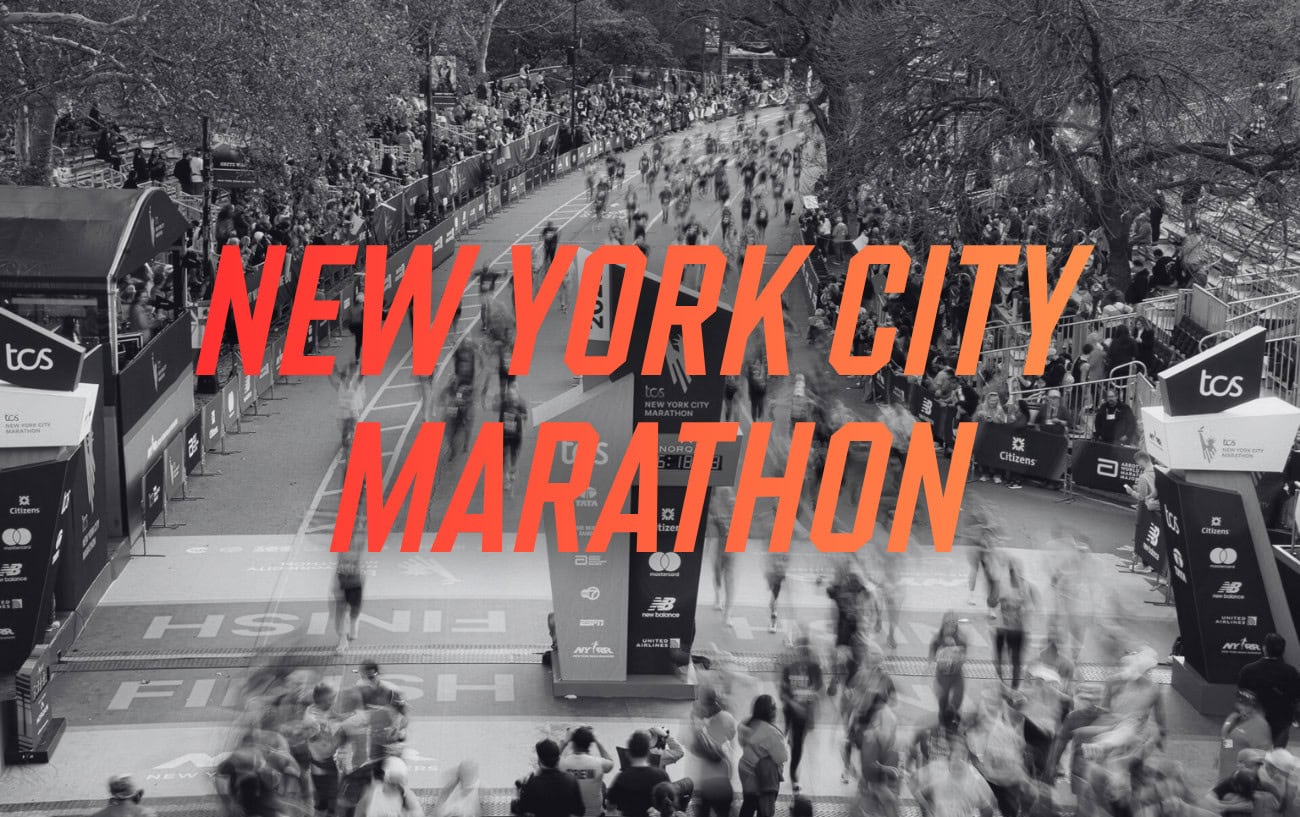
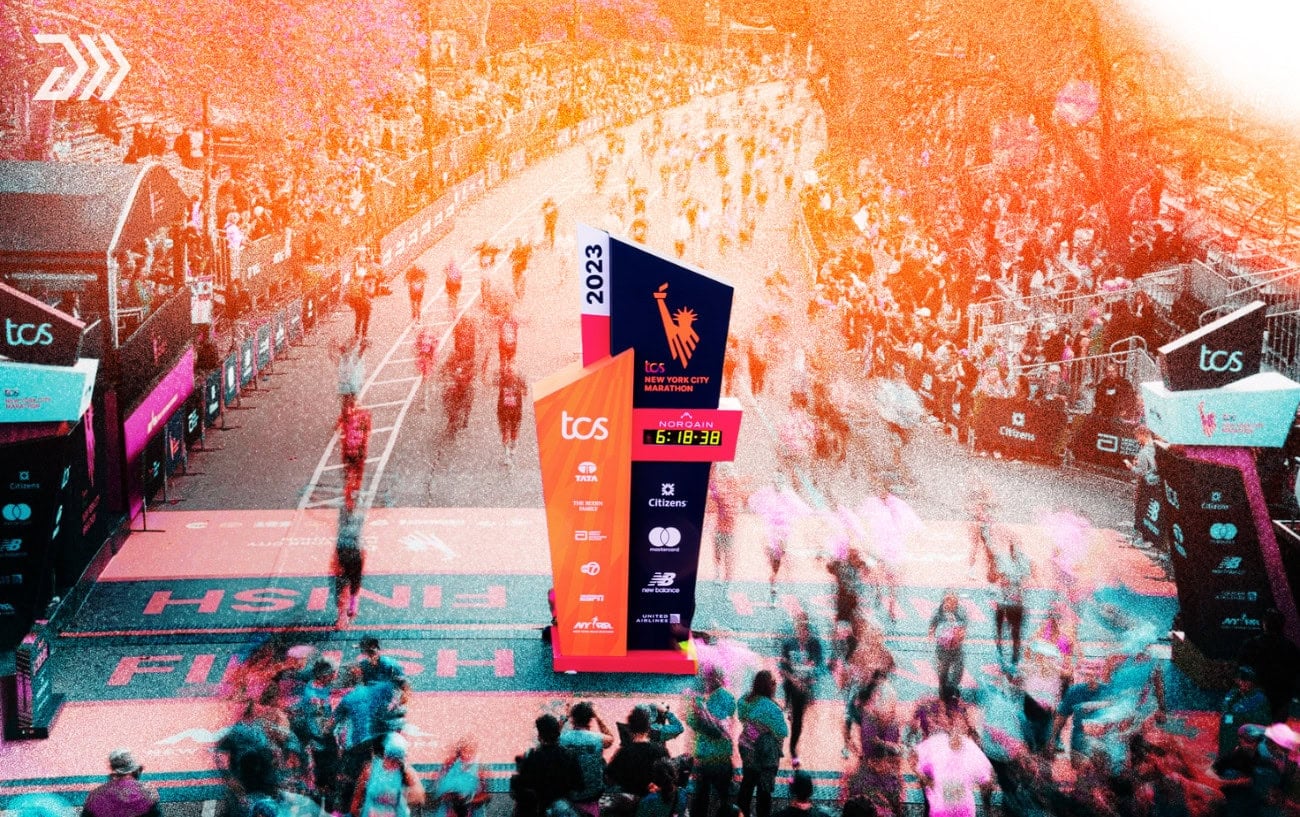
Inside the park, East Drive takes the race south past mile 24, the 40K mark and mile 25, down to the bottom of the park, where runners leave it and head west along Central Park South to Columbus Circle. They come back into the park there, pass mile 26 on West Drive and finish at 67th Street, beside Tavern on the Green, with a final timing mat at 25.2 miles and grandstands lining the last 200 meters. Spectators without grandstand tickets can stand inside the park from Columbus Circle to about 500 feet before the line, but there is no access north of the grandstands. Our guide to how to watch the race has the TV and streaming options for everyone else.
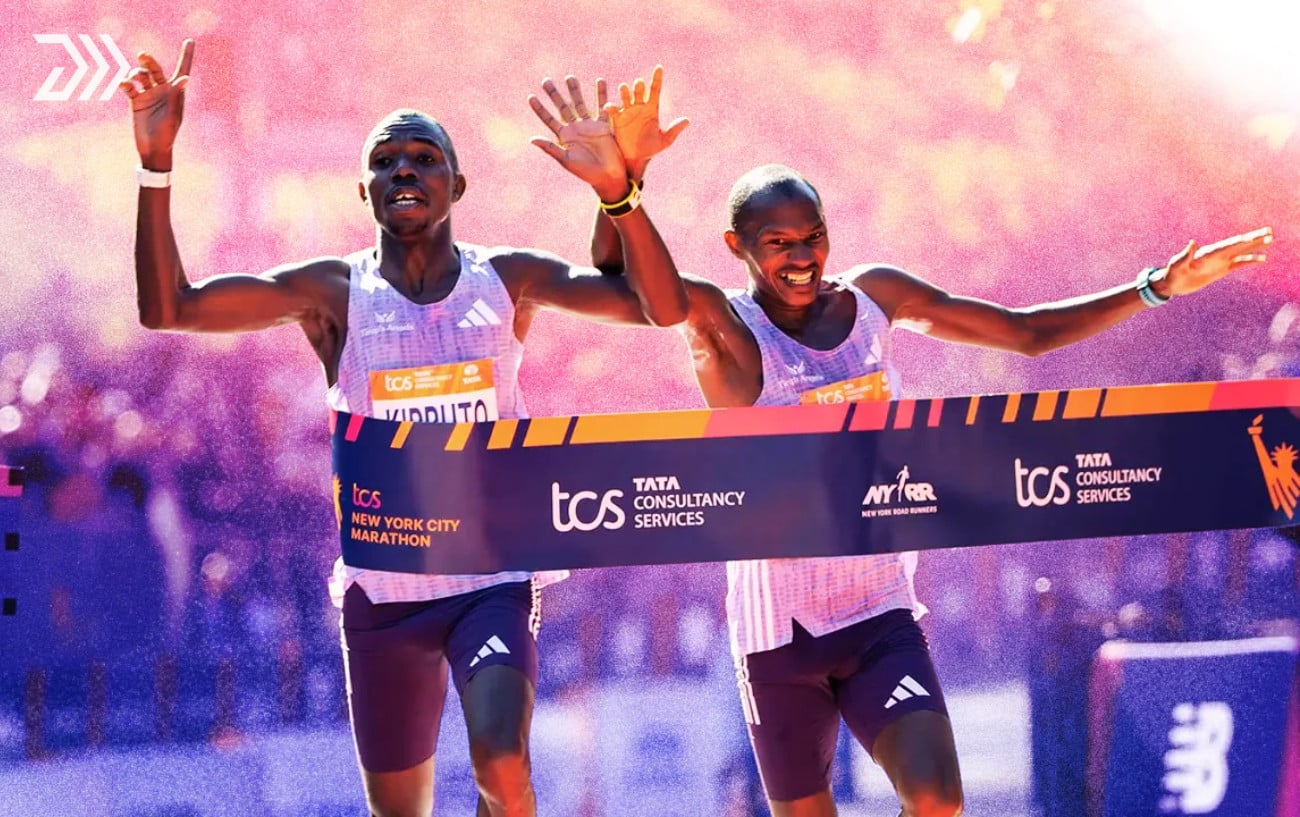
Kipruto and Alexander Mutiso left the last of their company in the 25th mile last year, which Kipruto covered in 4:30, then ran 4:32 for the 26th and 58 seconds for the final 0.2188 miles. Both men were timed in 2:08:09, and the photo finish gave the win to Kipruto by 0.03 seconds. In the women’s race, Obiri, Sharon Lokedi and Sheila Chepkirui were still together at 35K before Chepkirui lost touch around 24 miles, and Obiri only got away from Lokedi in the final mile, on Central Park South, winning in 2:19:51, 2:40 under the record Margaret Okayo had held since 2003.
Kipruto and Obiri are both back to defend their titles, and we will be following the leaders through all five boroughs on Sunday in our 2026 New York City Marathon live blog, with splits, updates and results as the races unfold.
Fuel, Water and Medical Stops
- Fluid stations: every mile from mile 3 to mile 25, except miles 5, 7 and 9, with water and lemon-lime Gatorade Endurance Formula on tables on both sides of the road
- Maurten gels: miles 12 and 18, with Gel 100 (black packets) and caffeinated Gel 100 Caf 100 (white packets), in limited supply
- Culligan water refill stations: miles 8, 14, 17, 20 and 23, self-serve, for approved bottles
- Bananas: mile 21
- Medical aid and toilets: about every mile from mile 3, with medical tents at the finish
- Lactation spaces: miles 8, 17 and 22, plus the start village
- Pace groups: the NYRR Pace Team runs groups from 2:55 to 6:15, and our NYC Marathon pace calculator builds a mile-by-mile plan for any goal time
- Time limit: the course is supported at a 16:00 per mile pace from the final wave’s 11:30 a.m. start, with sweep buses following at that pace, and anyone who finishes by 10 p.m. ET is an official finisher
The full 2026 course map, and NYRR’s interactive version with every fluid station and mile marker, are on the race’s course page.
RunClub
Get more running stories — join RunClub
Daily running news, a community of 300,000+ runners, free training plans for every distance, and a daily running game. Free to join — no card.
Already a member? Log in →



Start the conversation