Blanka Dörfel ran her first marathon in Frankfurt on Sunday without a watch and finished second in 2:20:46, the fastest debut ever by a German woman. Only Irina Mikitenko, whose national record of 2:19:19 has stood since Berlin in 2008, has run the distance faster for Germany.
The 24-year-old took more than three minutes off the previous best German debut, Melat Kejeta’s 2:23:57 from Berlin in 2019, and moved past Domenika Mayer’s 2:21:26 from this spring into second on the German all-time list. Both the organizers and the German athletics federation (DLV) rank her eighth among European women of all time. Zeineba Yimer of Ethiopia won the race in 2:19:45, and in the men’s race Amanal Petros finished second to Jirata Dinki.
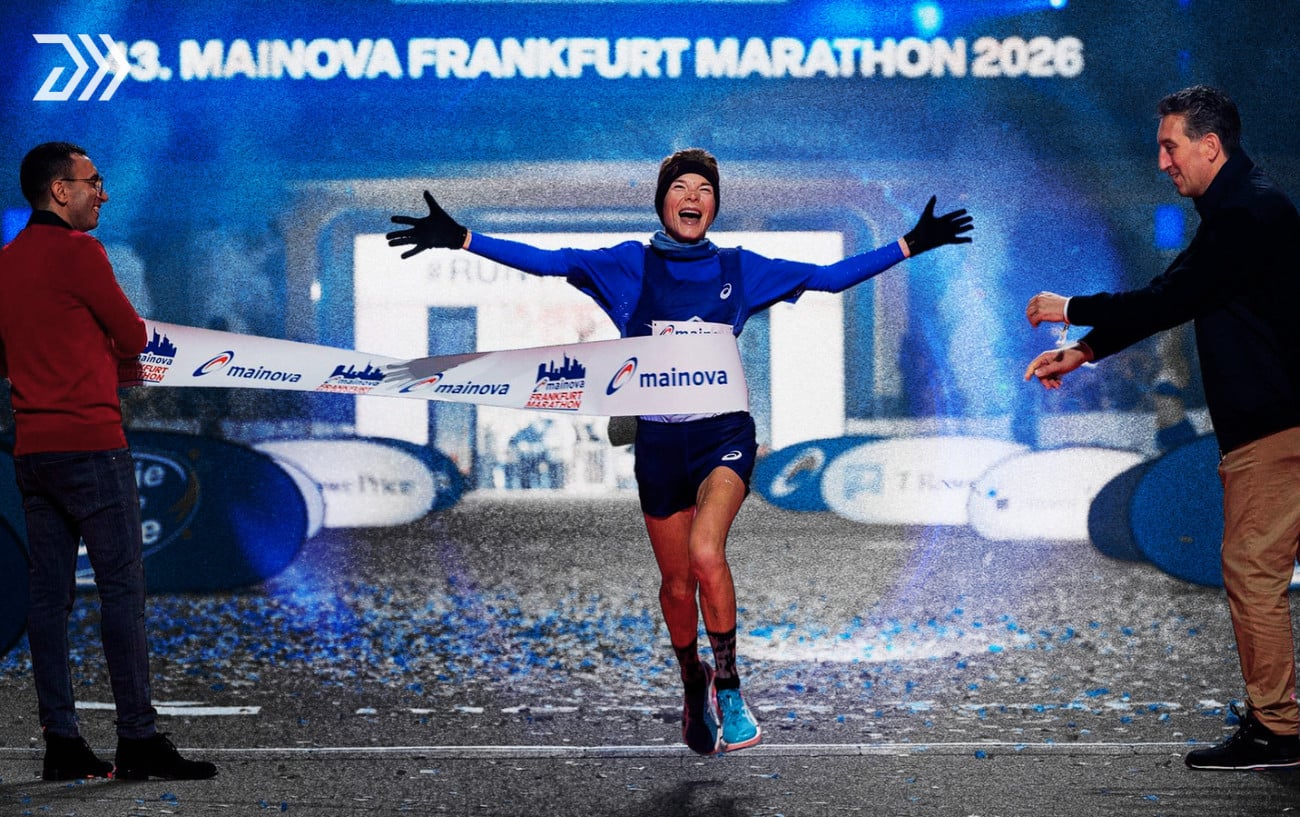
The rain that had hung over race week was there at the start, with deep puddles on parts of the course and wind for long stretches. Dörfel went through halfway in 1:10:29 and came home 12 seconds quicker, according to the DLV, which had her second with 5K to go and kept her there to the line. “I almost died over the last five kilometers, it was very hard,” she said afterward, in comments translated from German.
Racing by feel is a habit with her. When she ran 1:08:06 for second at the Mainz half-marathon in May, she did not look at her watch until the finishing straight. Eight days before that, she won her first German 10,000m title in 31:53.60. She was selected for the European Championships in Birmingham in August but withdrew after problems in her speed training, then spent two months training in Boulder, Colo., under Dieter Hogen, the coach who once guided Uta Pippig, as Jörg Wenig reported for Runner’s World Germany in September.
Yimer’s win came just four weeks after she dropped out of the Berlin Marathon with stomach problems. Her 2:19:45 was about a minute outside her best of 2:18:47, and the conditions kept Hawi Feysa’s course record of 2:17:25 well out of reach. Beriha Gebreslasie, also of Ethiopia, was third in 2:22:46.
Amanal Petros Finishes Second to Jirata Dinki
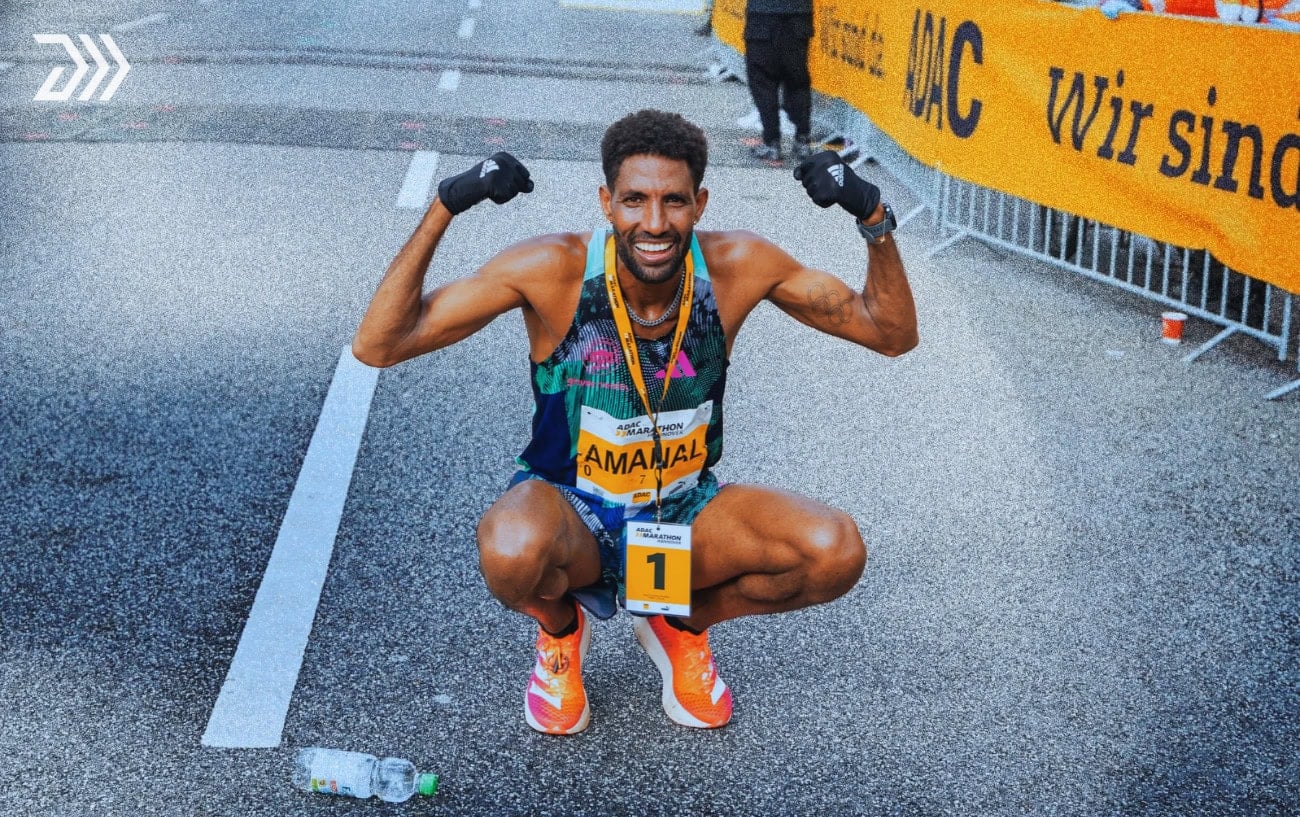
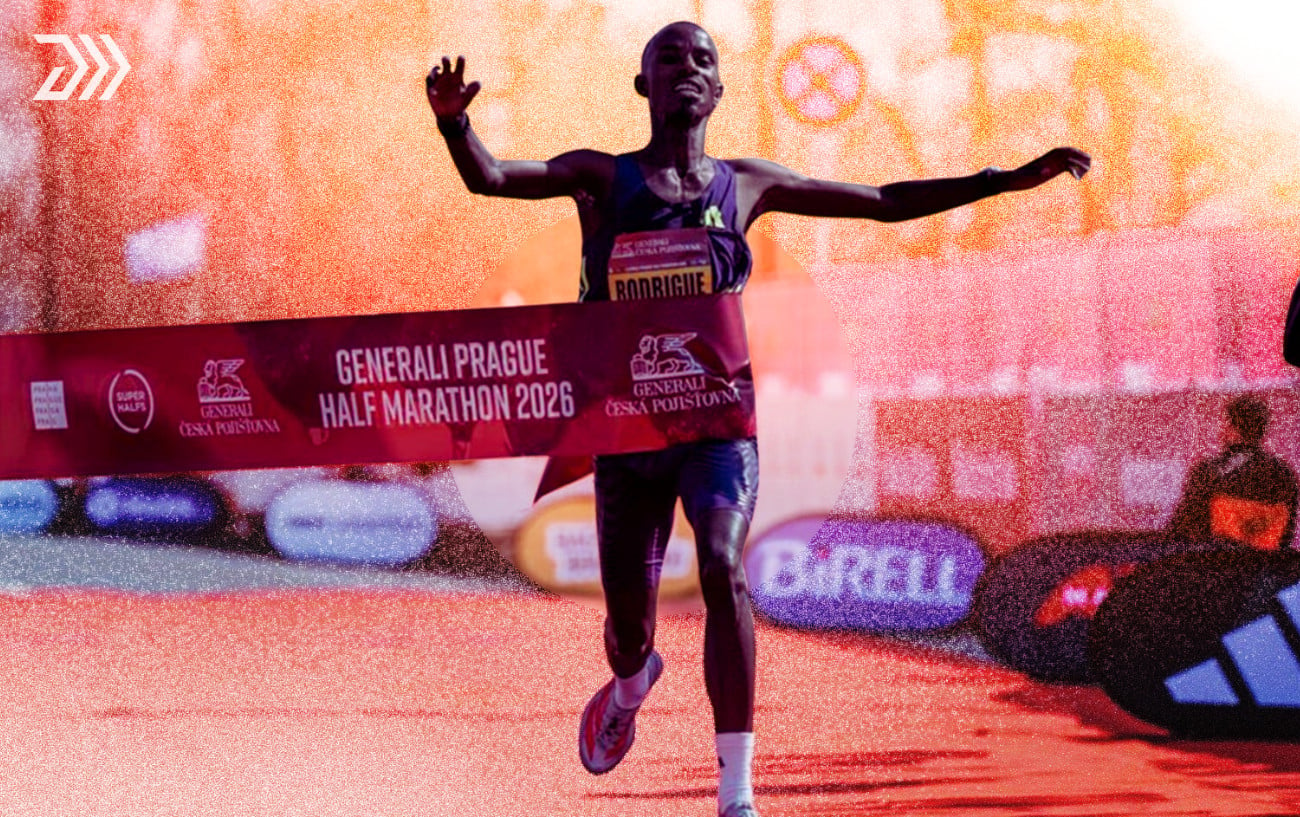
Petros came to Frankfurt with Bashir Abdi’s European record of 2:03:36 in mind, at the head of the fastest men’s field in the race’s history. The weather ruled that out early. The leaders ran close to 3:00 per kilometer through 30K, about 2:06:35 pace, before Petros began to press, and at first only Benard Biwott, the 2024 winner, could go with him. Dinki stayed within reach and closed on the pair by 35K. Petros pushed again at 38K and broke Biwott, but Dinki went past him around 40K and won in 2:05:26.
Petros finished 20 seconds back in 2:05:46, the third-fastest marathon of his career after the German record of 2:04:03 he set in Valencia last December. His second place ends a long wait for the home crowd: according to the organizers, he is the first German man on the Frankfurt podium in more than 25 years. The European champion told the broadcaster hr that he had given everything he had and that a little strength went missing at the end. The conditions were not ideal, he said, and “at some point I decided to just have fun.”
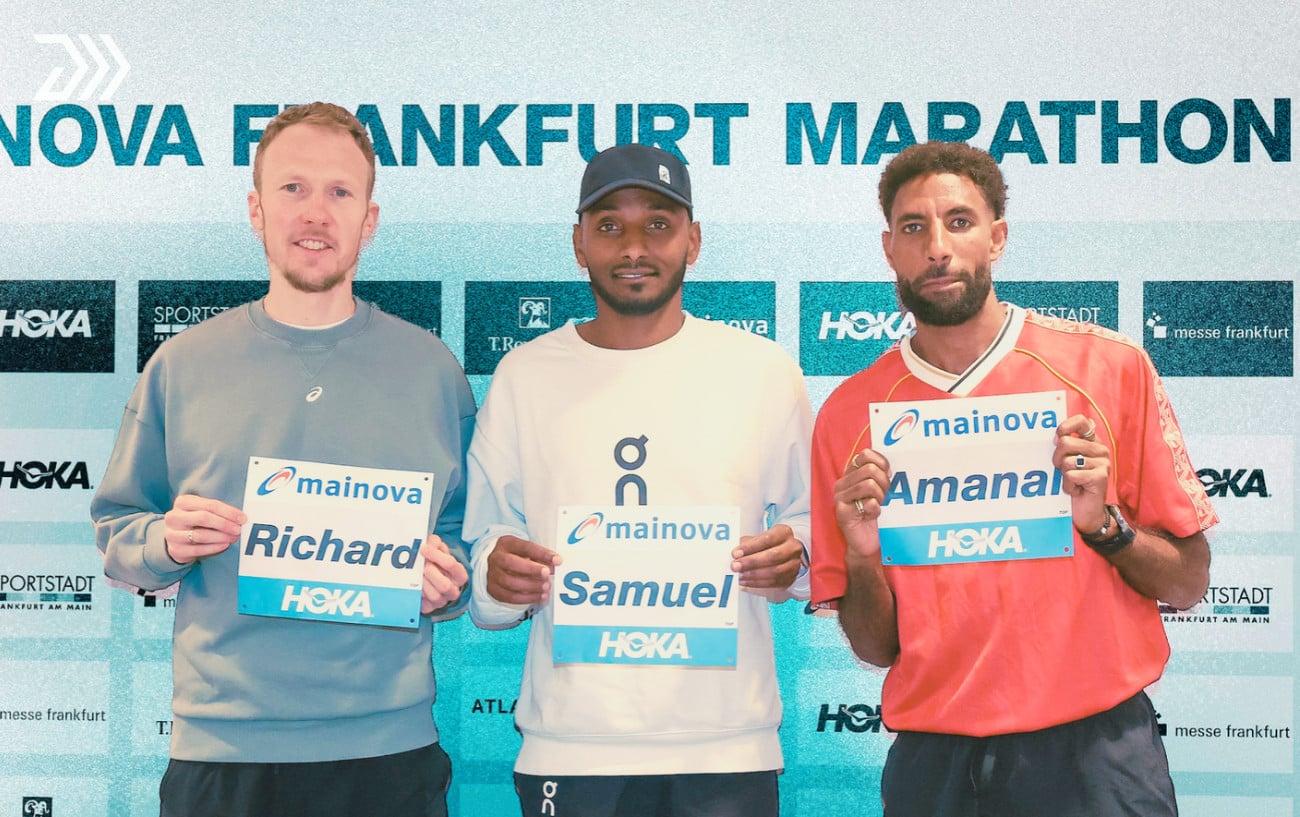
Biwott held third in 2:06:23, ahead of Israel’s Haimro Alame in 2:06:58. Richard Ringer, eighth in Boston in April, ran 2:07:07 for fifth after a summer interrupted by a muscle problem, and Samuel Fitwi was seventh in 2:08:57.
A record 19,720 runners from 128 nations entered the race, the last under race director Jo Schindler. Petros and Ringer have one more Frankfurt appointment on Monday evening, when they read from this year’s books on their careers: Petros’s memoir of his flight from Ethiopia and his road to a world silver medal in Tokyo, written with journalist Mara Pfeiffer, and a guide to Ringer’s training philosophy co-written by his wife, Nada-Ina Pauer.
RunClub
Get more running stories — join RunClub
Daily running news, a community of 300,000+ runners, free training plans for every distance, and a daily running game. Free to join — no card.
Already a member? Log in →