


On June 26 in Paris at an event dubbed Breaking4, Faith Kipyegon will attempt to do what no woman ever has: run a mile in under four minutes.
It’s a bold target, 7.65 seconds faster than her own world record of 4:07.64, and one that’s pushing Nike’s innovation engine into overdrive.
The company has built a one-of-a-kind performance system around the reigning Olympic and world champion, including an aerodynamic race suit, a 3D-printed sports bra, and a fully customized spike developed through wind tunnel trials, lab data, and feedback straight from Kipyegon’s home training base in Kenya.
“We had to learn specifically what requirements were needed for the four-minute mile and the requirements for Faith to achieve it,” said Brett Kirby, Principal Scientist of Applied Performance Innovation at Nike, to Forbes. “This is the recipe we have today.”
Designed for Speed, Not for Sale
This isn’t a product drop, it’s a prototype package built for one person, with no guarantee it’ll ever hit retail shelves.
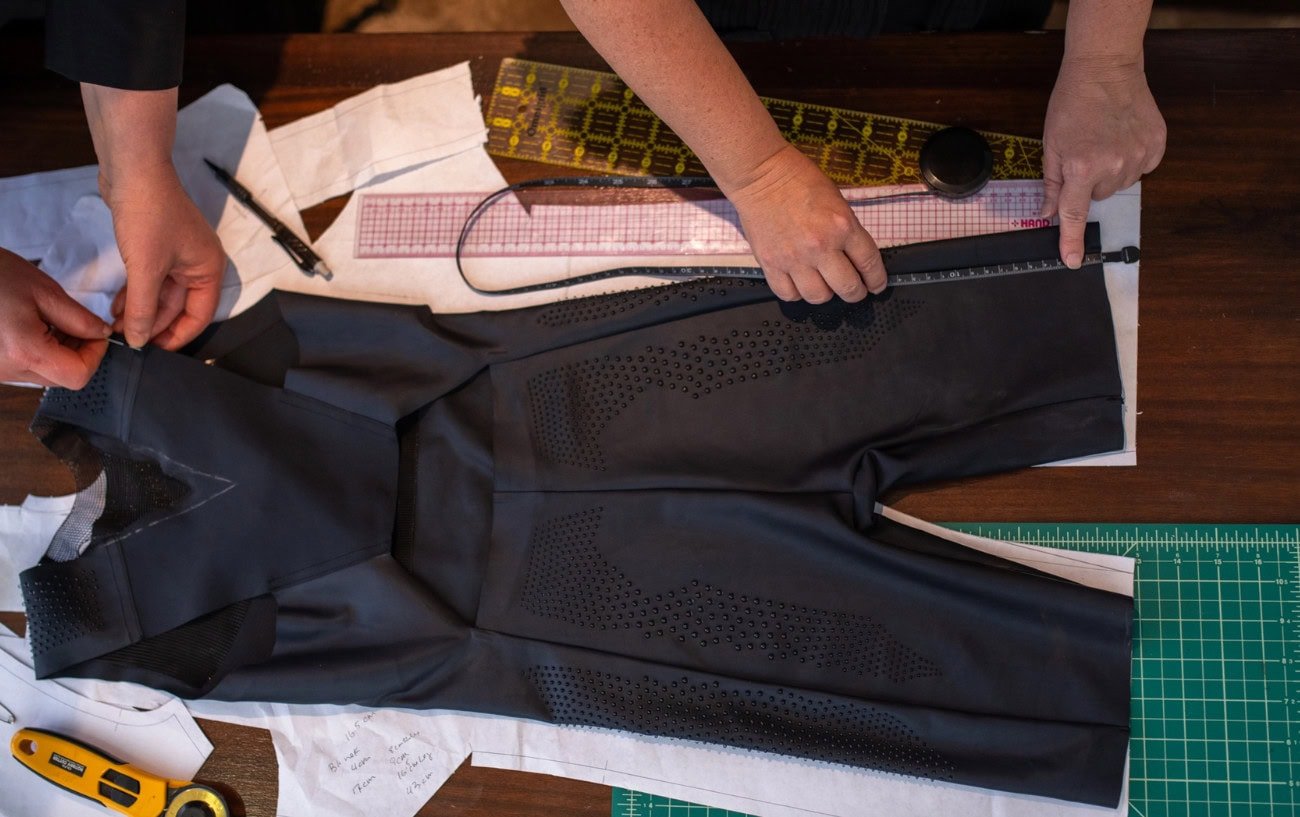
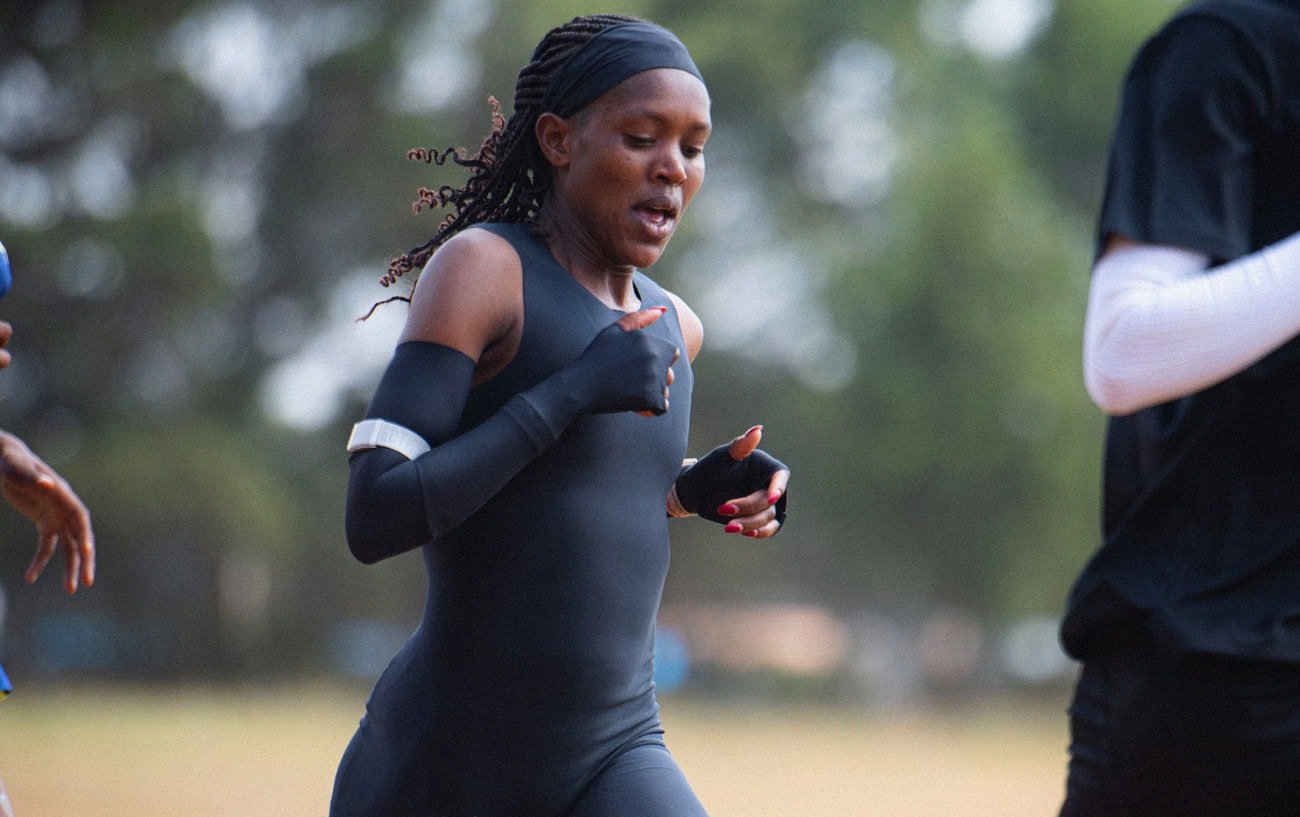
The centerpiece is the Nike Fly Suit, a slick, body-hugging speed kit designed to fight drag at top speeds. The suit incorporates lightweight sleeves and a headband along with hundreds of tiny raised textures, known as aeronodes, engineered to help air flow more cleanly around Kipyegon’s body.
“We are trying to make sure the air and wind are flowing as smoothly around Faith as possible,” said Lisa Gibson, Nike’s Apparel Innovation Lead. “We created a little bit of magic with aeronodes.”
Each half-spherical node is placed in specific zones to manipulate how air detaches from her body, reducing the turbulent wake that can cost valuable seconds. The sizing and spacing were tested through digital simulation and refined in wind tunnels before being physically prototyped.
“It became clear how much faster Faith could potentially run if the suit had certain physical features beyond the slickness of its material,” Gibson added in Nike’s interview with Forbes.
The aerodynamic theory is rooted in Nike’s long history with performance suits, from Cathy Freeman’s iconic bodysuit at the 2000 Olympics to Eliud Kipchoge’s gear in his Breaking2 marathon attempt.
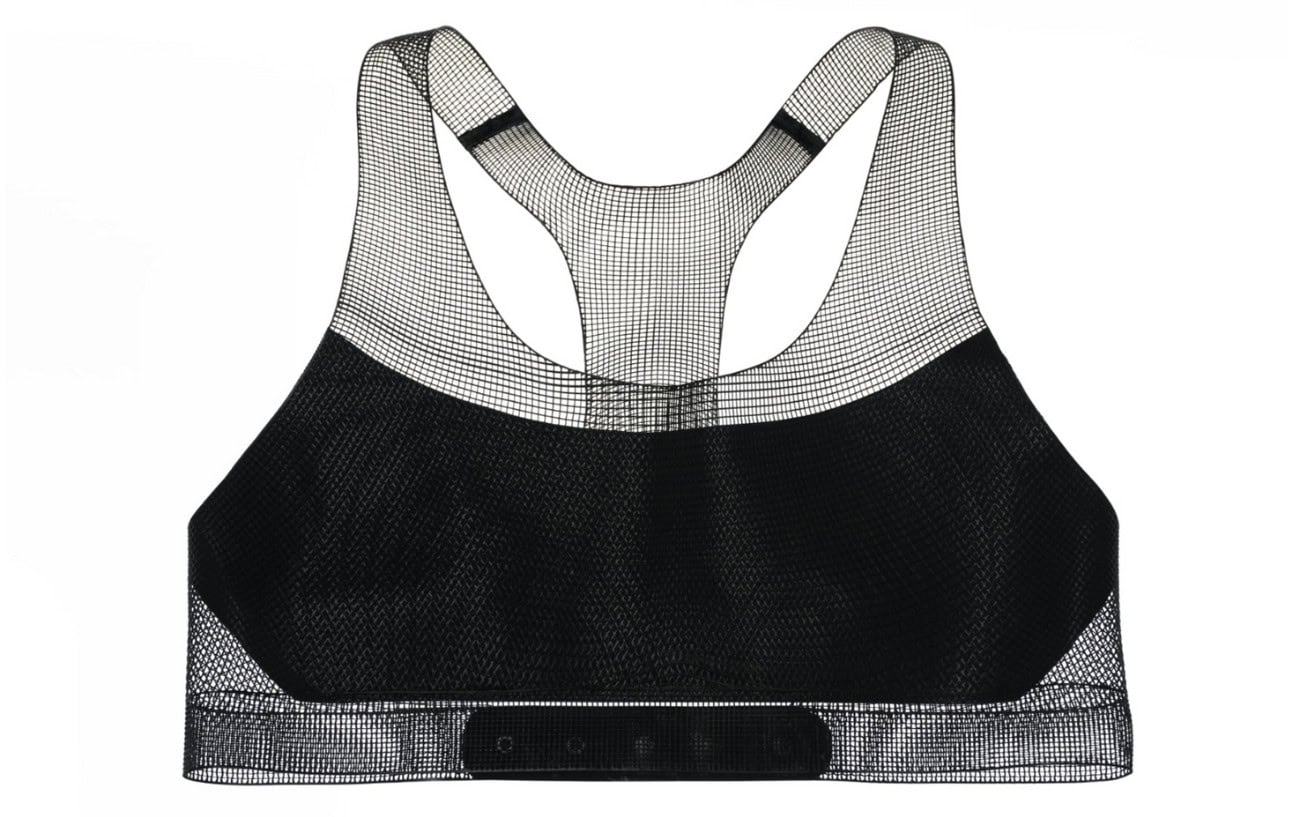
A 3D-Printed Sports Bra That Reduces Heat Load
For all-out efforts like this one, excess heat becomes a critical performance limiter, especially in a garment like a sports bra that sits tight to the skin. That’s where the Nike FlyWeb Bra comes in.
Made from a 3D-printed TPU (thermoplastic polyurethane) material instead of traditional fabric, the bra is designed to maximize moisture management while minimizing weight and thermal load.
“This 3D-printed material innovation represents something entirely new on a visual and visceral level,” said Janett Nichol, Nike’s VP of Apparel Innovation. “The material is soft, light and incredibly supportive — yet it also feels like you’re not wearing anything at all.”
The bra’s racerback cut improves range of motion while its zoned structure varies in density, offering extra support where needed and more ventilation elsewhere.
Spikes Made for One Woman and One Race
Footwear was also built from the ground up. While Kipyegon set her previous world record in the Nike Air Victory 2, her new spike, the Nike Victory Elite FK, is a fully customized model with significant performance upgrades.
The upper is made from ultra-light Flyknit yarns, which Nike says cuts weight by about 60 percent. A forefoot Zoom Air unit, taller than in the Victory 2, is designed for maximum energy return.
“We are able to return over 90% of energy and force back to her,” said Carrie Dimoff, Nike’s Footwear Innovation Lead.
Titanium spikes, lighter than steel and stronger than aluminum, are embedded in a redesigned carbon fiber plate, boosting traction while saving weight. Kipyegon’s shoe also includes personal touches: gold accents to mark her global titles, and the initials “FK” to represent both her name and “Fastest Known.”
Dimoff emphasized the importance of integrating both lab data and athlete feel:
“It was a combination of what we could measure in our lab as well as what she felt more comfortable in.”

Not Record-Eligible But That’s Not the Point
Despite the hype, Kipyegon’s Breaking4 run won’t be eligible for a world record.
The custom spikes were not submitted to World Athletics for review and approval, as more changes could be made ahead of Breaking4. The organization’s approval process typically takes about 30 days, meaning the shoe could not appear on the list of Approved Athletic Shoes in time.
This detail is similar Eliud Kipchoge’s 1:59:40 marathon in 2019, not ratified as a world record, but widely recognized as one of the most groundbreaking performances in sports history.
“Moments like this can be a great catalyst for athletes all over the track,” Dimoff said.
The Final Ingredient: Kipyegon Herself
Technology can help shave seconds, but the most critical variable is still the athlete. Kipyegon remains the most dominant female miler of her generation — perhaps of all time — and the only woman in history to run under 4:08.
Nike’s design team built everything with one idea in mind: making sure Faith feels ready.
“If that product feature doesn’t match how Faith likes to feel, move and show up, then we’re not doing our jobs,” said Amy Jones Vaterlaus, VP of Innovation at Nike’s Sport Research Lab.
And for Nike’s Kirby, the broader meaning of the attempt goes beyond gear or time.
“One of Faith’s unique qualities as an athlete is to bring out a spirit of connection among individuals, who all come together to achieve new heights,” he said. “When she suits up for this attempt, we’ll all be there alongside her.”
RunClub
Get more running stories — join RunClub
Daily running news, a community of 300,000+ runners, free training plans for every distance, and a daily running game. Free to join — no card.
Already a member? Log in →







Start the conversation