


Where the 2026 New York City Marathon Course Got Most Crowded
Based on 61,018 of the 61,060 official finishers, including the professional fields and the early starts for athletes with disabilities. The 42 not shown had incomplete splits or no matching bib number.
Crowding on the course was never spread evenly. It built at a handful of places where the road climbs, narrows or turns, and each peaked at a different time as the waves arrived.
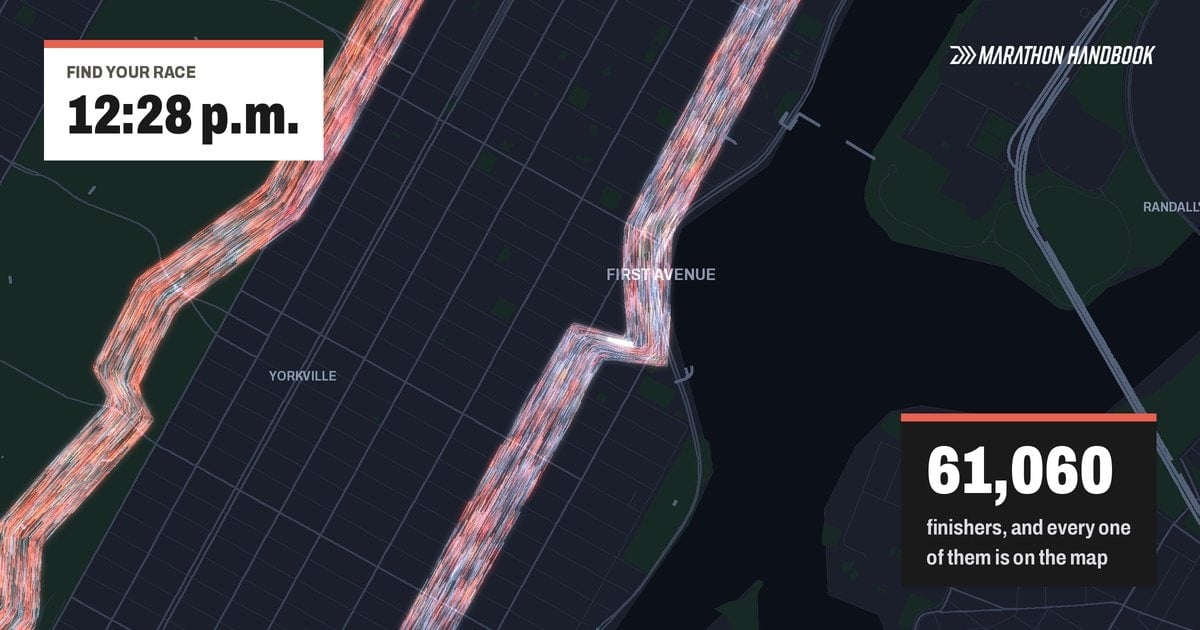
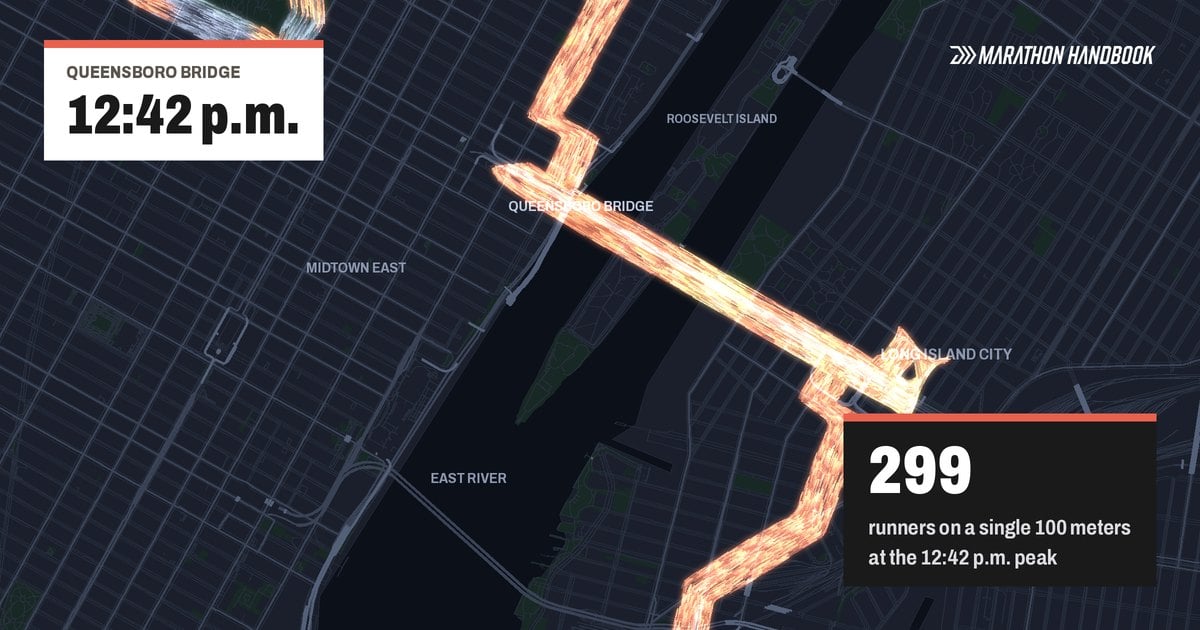
The most crowded road of the day was the Verrazzano-Narrows Bridge in the minutes after each wave was released, when as many as 1,429 runners shared a single 100-meter stretch before the field had any chance to spread out. Once the race was under way, the pressure points were the Pulaski and Queensboro Bridges around midday: 289 runners per 100 meters on the Pulaski at 12:23 p.m., and 299 on the Queensboro at 12:42 p.m.
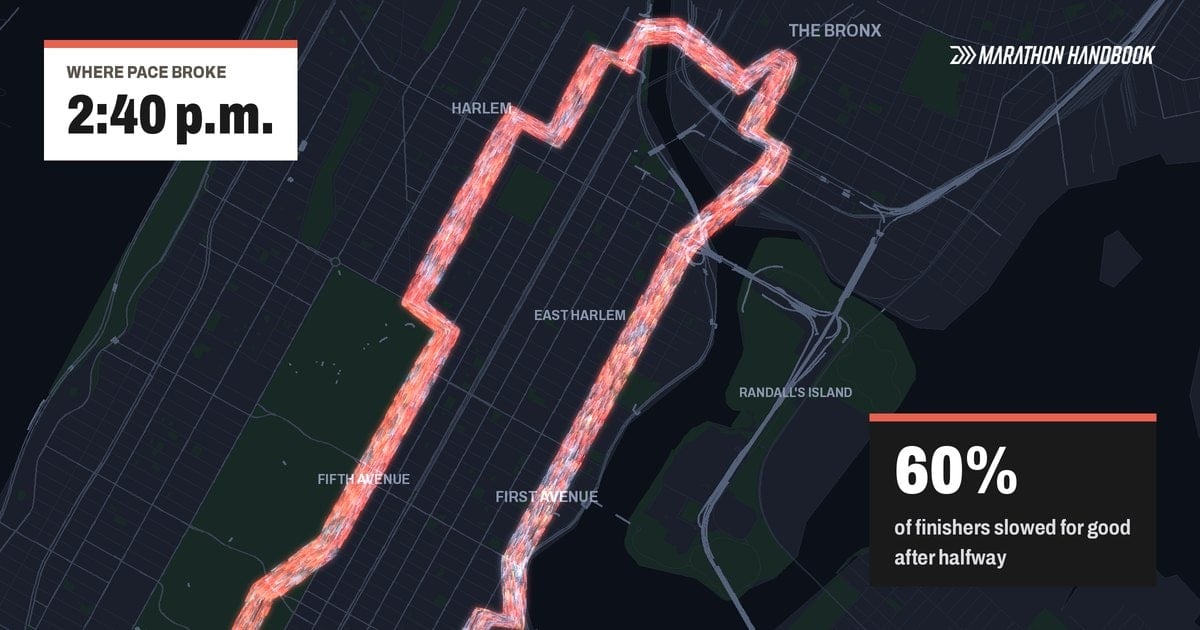
Crowding, though, is not the same as slowing. The place where runners lost the most time was the climb up Fifth Avenue at mile 23, where the median runner ran 16.5 percent slower than over the first half, 4.5 points more than the miles on either side. The Queensboro, by comparison, cost runners little beyond the gradual slowing of the late race.
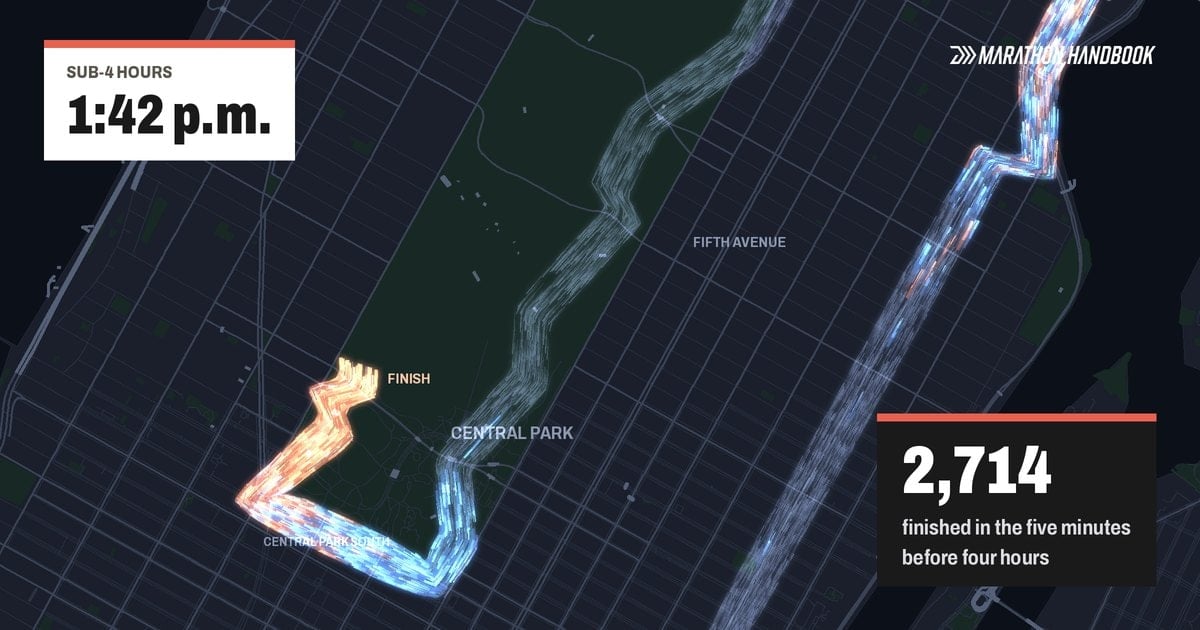
At the finish, the busiest minute of the day came at 2:20 p.m., when 251 runners crossed the line in Central Park.
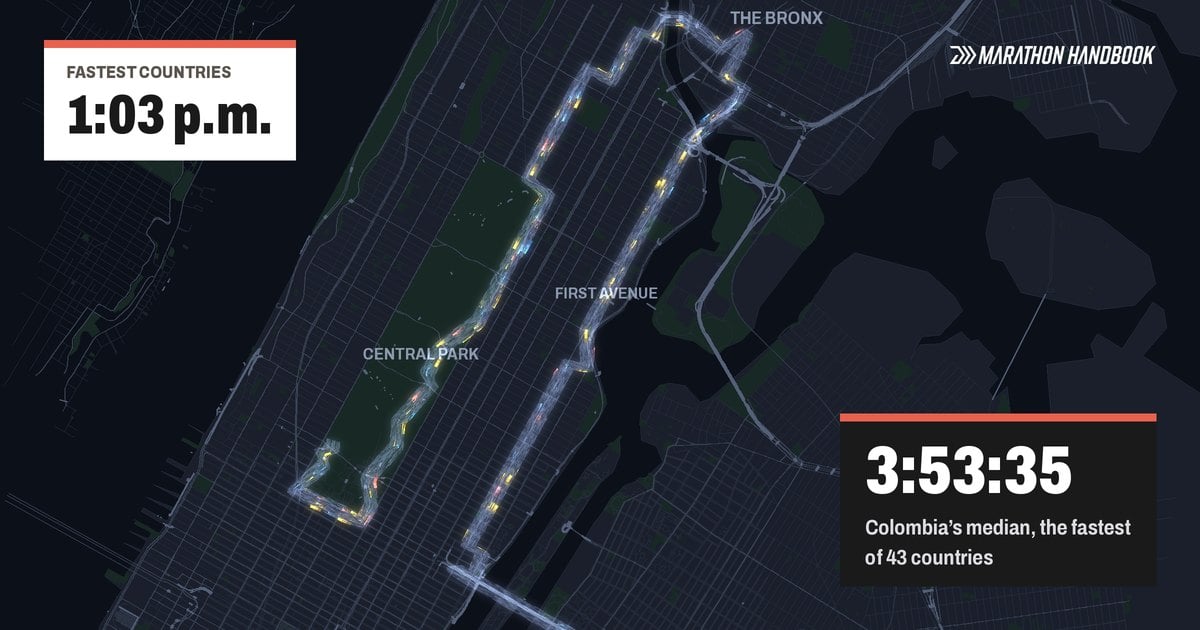
Tap a place on the map or in the list to see it at its worst, then press play to watch the jam form and clear.
CHOKE POINTS, RANKED BY PEAK CROWDING
QUEENSBORO BRIDGE
RunClub
Get more running stories — join RunClub
Daily running news, a community of 300,000+ runners, free training plans for every distance, and a daily running game. Free to join — no card.
Already a member? Log in →


Start the conversation