


Where Runners’ Pace Broke at the 2026 New York City Marathon
Based on 61,018 of the 61,060 official finishers, including the professional fields and the early starts for athletes with disabilities. The 42 not shown had incomplete splits or no matching bib number.
A runner breaks, for the purposes of this analysis, when their pace falls more than 10 percent below their own typical pace over miles 3 to 13 and stays there for at least three miles. By that measure, 60 percent of finishers broke.
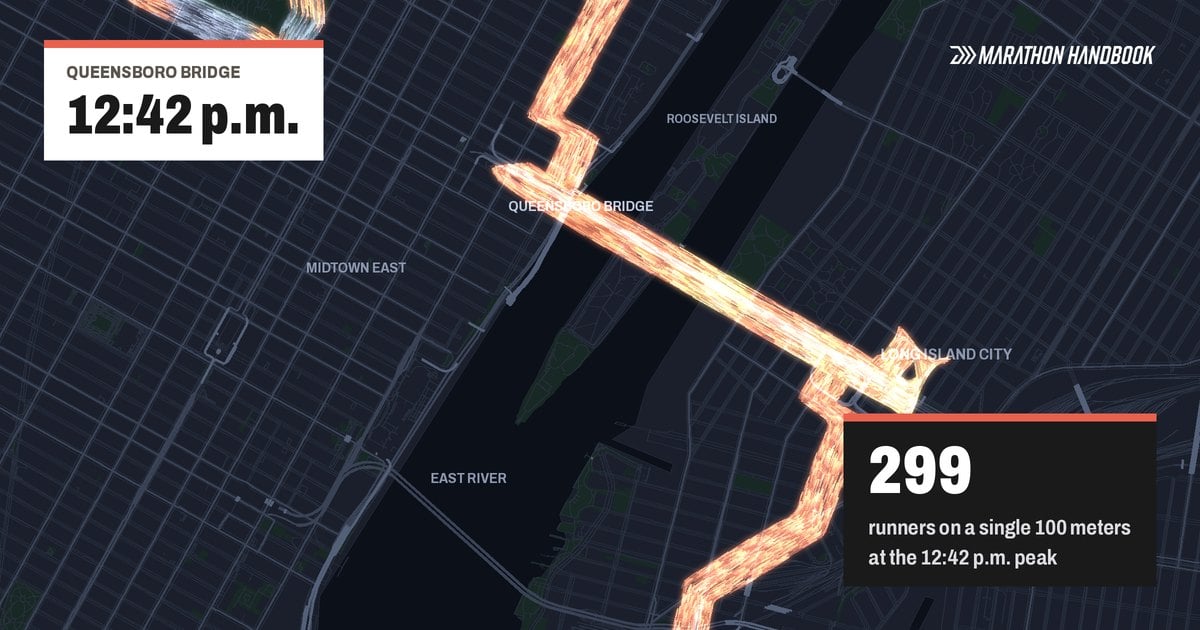
The breaks came in two waves. The first arrived at halfway: mile 13, over the Pulaski Bridge into Long Island City, was the single most common place to break, followed closely by mile 14. Because the measure only starts counting after halfway, that cluster also captures runners whose pace had already begun to slip in Brooklyn. The second wave came on First Avenue, at miles 18 and 19, in the long run toward the Willis Avenue Bridge and the Bronx. Between the two sits a lull on the Queensboro Bridge itself, where few runners broke for the first time.
Faster runners broke less often and later. Among those finishing under three hours, 27 percent broke, at a median of mile 21. Among those finishing after five hours, 73 percent did, at a median of mile 14. Men broke more often than women, 67 percent against 52. Once a runner broke, the median cost by the finish was about 19 minutes against the pace they had held through halfway.
At the other end, 8.3 percent of finishers, about 5,000 runners, ran the second half faster than the first. Among runners who finished in under four hours, about 13 percent did; among those who finished after five hours, fewer than 4 percent. Women managed it more often than men, 9.5 percent against 7.2. Switch on “Faster second half” in the panel to see them on the map in blue.
As the race plays, each break flashes on the road and leaves a mark, so the course slowly shows where people came apart. Ahead of every runner who has broken, a fading trail stretches to where they would be had they held their earlier pace: the ground they have lost, growing mile by mile. Filter by finish time, gender or age to compare.
Rings mark the spot where each runner’s pace broke. The fading coral trail ahead of a runner reaches to where they would be had they kept their earlier pace, so its length is the ground they have lost.
FILTER RUNNERS
WHERE THEY BROKE, BY MILE
FASTER SECOND HALF
RunClub
Get more running stories — join RunClub
Daily running news, a community of 300,000+ runners, free training plans for every distance, and a daily running game. Free to join — no card.
Already a member? Log in →


Start the conversation