


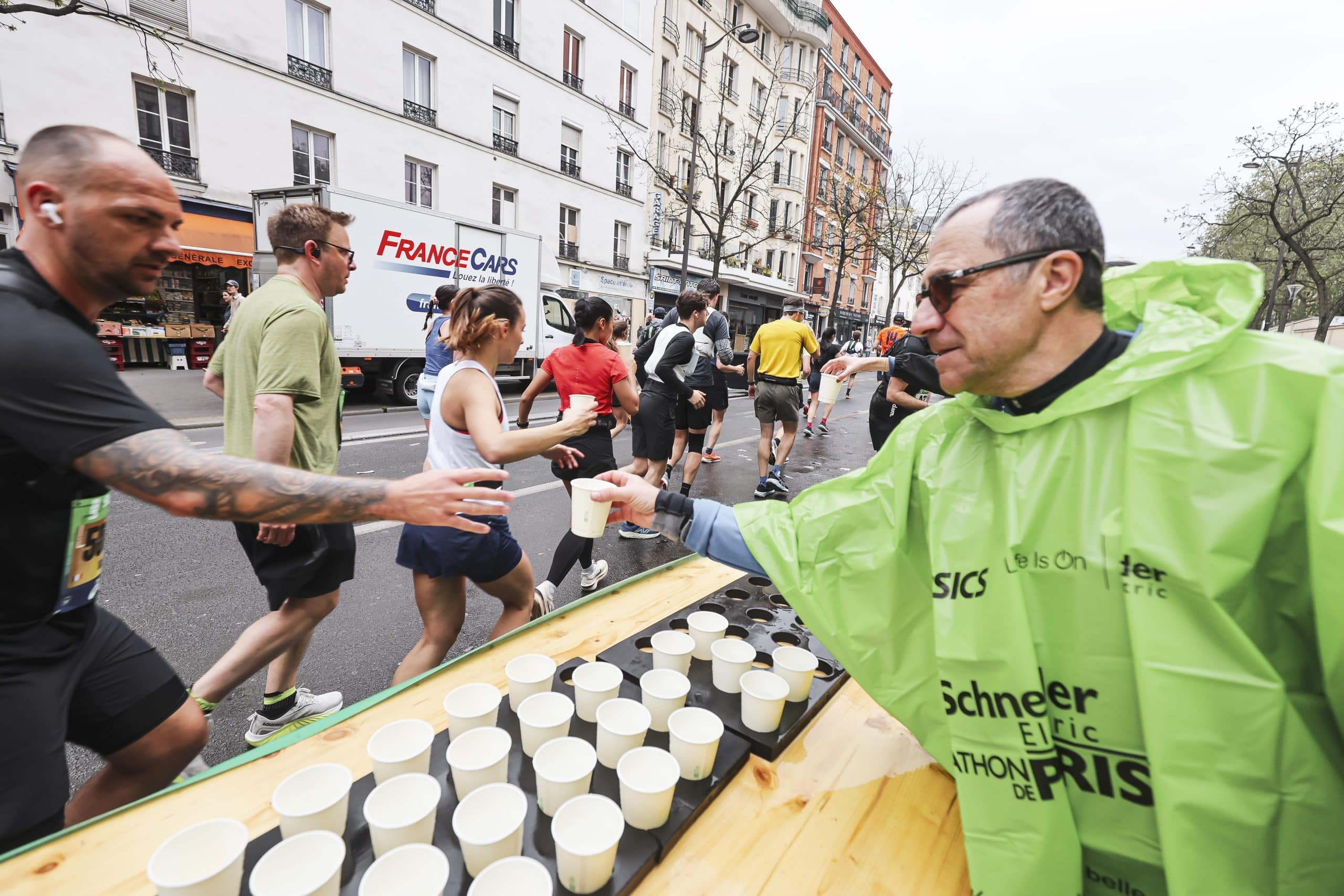
The Paris Marathon’s brazen decision to remove water cups from its course to reduce its carbon footprint was horribly misguided.
In an effort to be more sustainable this year, the race required runners to carry their own water containers; which they could fill at volunteer-run dispensers along the course.
Runners had to decide which part of this new model sounded most dreadful: lugging a flask for 26 miles and braving potential mid-race lineups just to hydrate; or going full-Sahara and risking dehydration to avoid the awkwardness of carrying water; or accepting that all of it — however virtuous it may appear on Instagram — had next to no impact on the race’s footprint anyway. Yes, the Paris Marathon jeopardized the performance and safety of its runners for negligible, if not symbolic, sustainability gains.
Water cups on the course are a built-in part of many runners’ race plans. They’re an insurance policy when the going gets tough. It’s on-demand hydration without the burden of carrying liquids.
By losing them, we relieve our atmosphere of 15 tons of carbon dioxide equivalent (or CO₂e: the universal unit of measurement used to express climate impact). It’s about the same as cancelling a 75-passenger return flight from London to Paris.
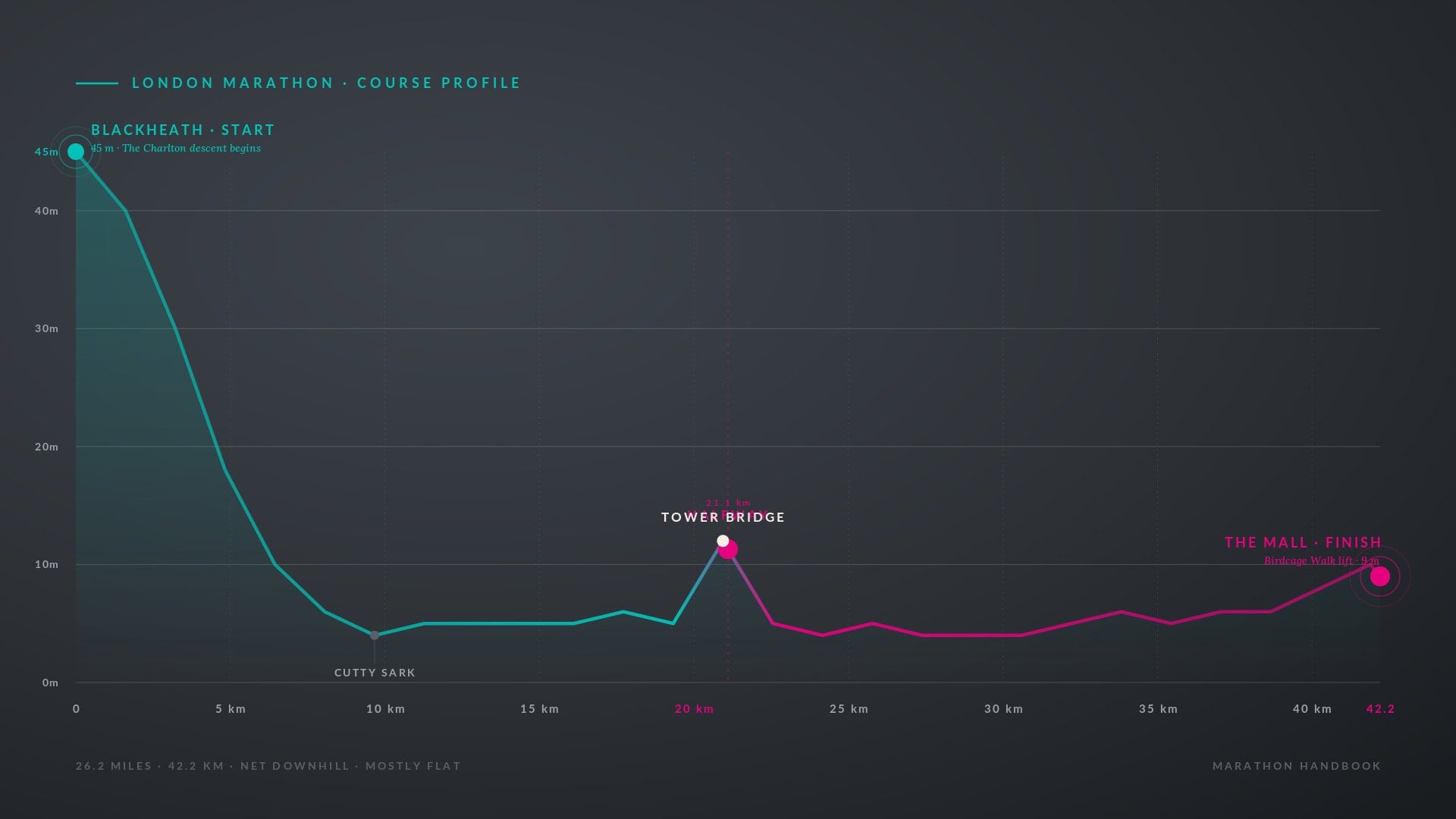
How does that compare to the marathon’s overall climate impact? The London Marathon, a similar-sized race, actually published its total carbon footprint in 2023: 54,300 tons of CO₂e. If we assume Paris’ output to be similar, removing paper cups from the course reduces its total carbon footprint by – drumroll – 0.027 per cent. A rounding error.
Right, because marathons are massive events. Nearly 60,000 runners raced in Paris; and half come from other countries. We would need 400 of those 75-passenger flights to shuttle everyone in. Now, assume that one spectator accompanies each runner. 400 more flights. And that’s just airfare – people will drive and train into the city, then there are the race expos, the course officiating, the city-wide logistics.
When you put it that way, it’s a wonder that we have marathons at all if they’re so detrimental to the planet. And yet, we still race them, because sustainability, when it comes to marathons, is a tertiary concern. A primary concern of a well-run marathon weekend is to create an atmosphere where runners can safely take on a difficult, physical, personal challenge.
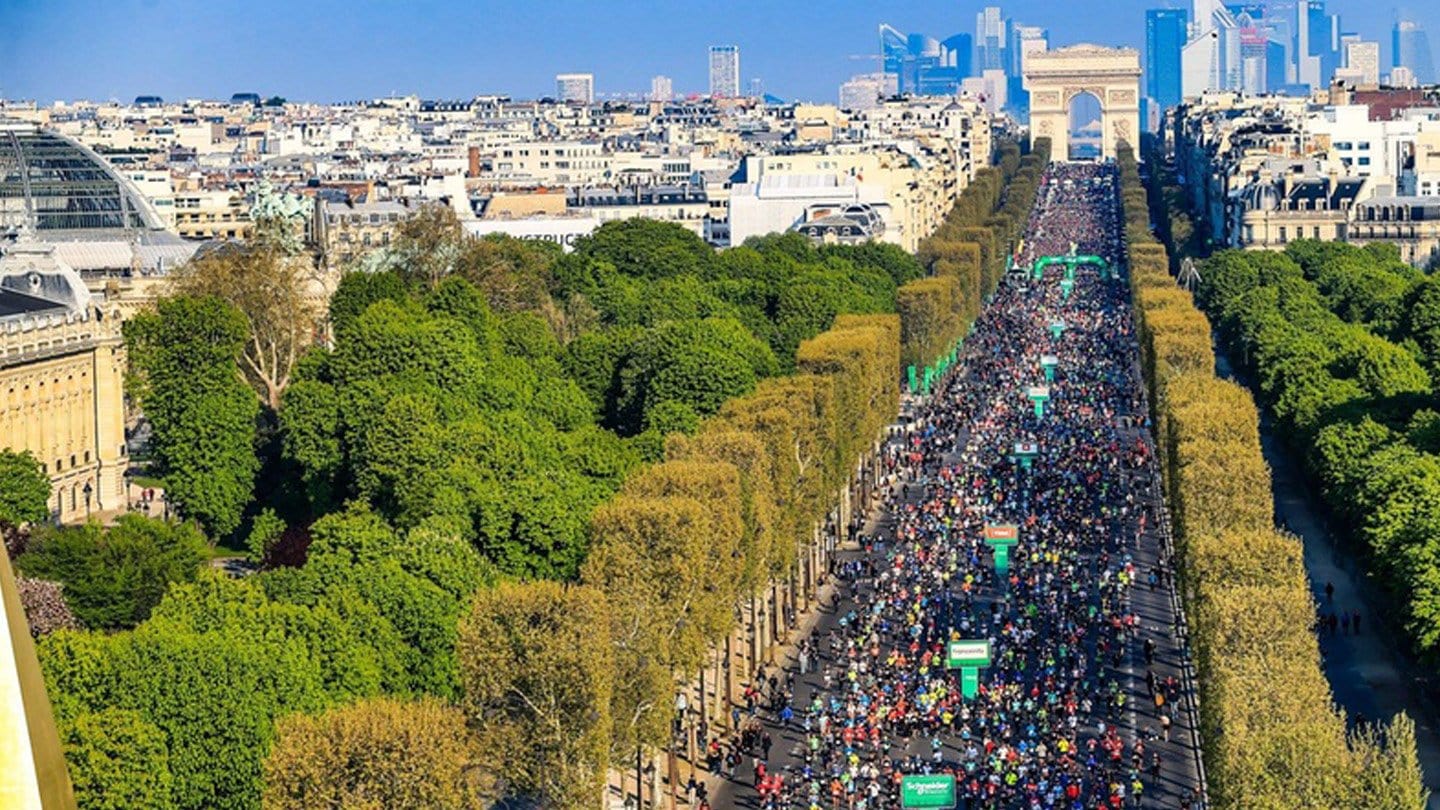
Of course, it’s absolutely worth trying to offset the footprint of an event this large. Climate change, over time, threatens marathons themselves (remember Hot Berlin last year?) Sustainability measures should be pursued as far as possible, right up to the point where they begin to compromise the race experience itself. There is already promising innovation, such as biodegradable water pearls that runners can consume and discard without environmental harm. The goal should be to develop and adopt solutions like these, rather than cutting into essential parts of the race in ways that make the experience noticeably worse.
And until we get there, runners should not be expected to carry their own water. Full stop. If we adopt cup-carrying as the new norm, the negative impact will be threefold.
First, runners chasing a time, whatever it may be, will be frustrated by having to slosh extra fluid and material around, and potentially wait in line for refills and jeopardize their race. Just the idea of it has already driven runners away from Paris. To the race’s credit, they at least implemented a special bottle service for runners faster than 2:50; but that still does not account for the majority of runners who care about time, as there are more runners out there dead-set on breaking four hours than 2:50.
Second, this setup invites logistical quagmires. A friend of mine who raced Paris had her sister spot her on the course and slip her throwaway water bottles. That’s what I tell people I would have done had I been running Paris. But what if everyone does that? Imagine if thousands of runners each had a spectator trying to meet them on the course with a water bottle, or toss them a flask from the crowd? That’s both a legitimate safety risk and a littering hazard.
Third, and worst of all, runners who are especially results-focused may just scrap water altogether. This is what I actually would have done had I been running Paris. Luckily, the forecast that day was mild, cloudy, and reached a high of 59 F (15 C). Had the race been three days earlier, runners would have been flirting with dehydration and heat exhaustion in a balmy 80 F.
It’s been a weird month for marathoning. On one side of the world, the LA Marathon was so worried about runner safety (and potential lawsuits) in the heat that they gave participants the option of collecting their medals and going home eight whole miles before the finish. And across the pond, we’re complicating water access. We’ve properly lost the plot.
Because who truly thinks this is a good idea? Do the influencers supporting it understand that their transport to Paris completely dwarfs the emissions they create by dropping a few cups to the ground? And is it worse to think that they simply do not get that? Or that they do get it, and are leveraging a social movement to buttress their follower count?
And in any case, will they, and everybody else, accept that this is a bad idea only when the reports of runners with heat stroke come out? How much CO₂e is a single hospital visit worth?
I hope we never have to find out.






I just completed a half marathon in Bend, OR and this race for both half and full runners encouraged runners to go cupless. They still had water and electrolyte cups available for those that wanted it and then had the big tanks with spout fillups for folks that had a handheld. I chose to carry a handheld and actually preferred this to the cups. I train with a handheld so it didn’t feel all the different to me. I filled up three times (one was prior to race start and twice on the course) and it was pretty fast. Almost felt comparable the time I waste getting a tiny cup at each stop to squeeze and spill on myself and try to locate the trash can. I do think the big difference here was that it was optional. I mean we all have strong opinions about what works best. I think you’re right in that there are much bigger things to look such as fossil fuels to fly to a marathon, etc. But looking at this one thing wasn’t all that bad and I would choose the handheld option again. I am also acknowledging that this was a half, it might feel like a lot more for the full.
I just did the Paris marathon- I was back of the pack but access to water wasn’t a problem for me. There was always a water spout available even in the busiest areas. Problem was that the spouts were high pressure – people who put powder electrolytes in their bottle got a frothy mess.
Just ran Paris. I had family meet me with fluids at different points on the course and had a water belt with 2 bottles. The fact that it was cool meant my consumption was definitely lower. Was probably more stressful on them having to get to meeting spots on time. Course was cleaner without cups but it added a level of complication and stress that was not needed. I am used to a belt in training but under race conditions would have preferred to not be lugging extra weight. Had it been a day like Tuesday there would have definitely been issues. Also it was water only so no electrolyte fluids which could have caused issues for some. I also think Europeans are more used to wearing hydration vests and there were A LOT of them. In theory the idea is laudable but practically I just think it is more performative.
Virtue signaling alive and well even at the expense of health and safety. As much as I can’t stand this decision, as an average runner who barely made sub 4, I would have no problem with elites continuing bottle service and the rest of us carrying our own water in hydro packs or in hand held bottles. I have to carry 5 gels anyway, why not water as well. But let’s be honest… it’s spitting in the ocean when it comes to making a difference.
My wife ran Paris on Sunday. She’s a serious runner — serious enough to have won her age group. She had had misgivings about the no-cup policy, but said it actually worked out brilliantly. What you didn’t mention was that each runner was provided with a small collapsible, reusable cup as part of their race packet. My wife was pleasantly surprised at how much easier it was to get water. Runners had the option of filling their cups and water bottles themselves at one of the many water spigots available, or having a smiling volunteer replenish the water using a hose with a nozzle like you’d find at a soda counter. She found it much less crowded than folks knocking each other over to grab cups. Maybe it’s less about the carbon footprint than the huge mess the paper cups make (calling it “dropping a few cups to the ground” seems disingenuous) and the effort in time and money required to clean it all up. And to say that the policy “has already driven runners away from Paris” doesn’t comport with the reality of the 57,000+ runners I saw running along the Seine and the smiles on the faces of my wife and her running buddies as they drank champagne well into the night. We should give Paris props for making this innovative effort.
This is why we pay for entry tickets- so that the organizers have the money to clean the cups and everything else with it. The event is very well organized – I was running a 32km at 5am in Paris on Sunday, some streets close to the route were closing only around 5-6am to minimize traffic disruptions.
I ran the Paris marathon twice and I refuse to run it again till the bring paper cups back because the whole initiative has nothing to do with carbon footprint – as article mentions the impact is negligible. It’s about cutting costs and at the same time raising the prices for the tickets = more profits for the organizers.
So I signed up for a smaller marathon close by in May – water aplenty for everyone.
Wasn’t planning to run Paris (too close to Boston) but this definitely confirms that. I’m not an elite runner but still care about my time and my race experience.
I ran the Paris marathon and I think the situation was more complicated (and perhaps more stupid) than described here. The absence of paper cups was communicated beforehand, and I certainly wasn’t looking forward to the logistics of having to carry my own. So I spent quite a lot of time researching and purchased some collapsible plastic bottles small enough to fit in my pocket between the filling stations. What wasn’t communicated was that the organizers would be giving both a running vest for storing water bottles AND a reusable silicone cup to every participant as part of the bib pack. I have to think that the manufacture and transportation of 60000 vests and cups would create similar amounts of CO2 as the paper cups they were made to replace. Given the wasted expense I and probably many others made of purchasing our own solutions ahead of the race, I would guess that overall the CO2 cost was higher than if they’d just stuck with the usual paper cups.
All that being said, in terms of logistics I found it fine carrying the silicone cup in my pocket, and didn’t encounter any congestion or slowdown at the filling stations more than you would get with paper cups. So I think it’s perfectly viable to have a cup-free race and for it to have a positive environmental impact. But the bungled implementation and communication at Paris makes it feel little more than a PR stunt.
This article has misrepresented the reason and the affect the no cups policy during Paris Marathon. I just ran the Paris Marathon on Sunday and in my experience, it was the most seamless water station experience compared to cups & bottle based water station. Even the water spouts/taps at the finish area meant the runners could help themselves to the hydration stations. The distribution of collapsible cups during the expo was a nice touch.
Bravo to Parisians for an innovative and leading the charge with a less messy marathon logistics.
The article doesn’t seem to be based on facts from the ground.
I ran Paris last year when they were trialling this system and it worked really well. I had my own soft flask, filled twice, super quick to fill, no lines. I actually found I saved a lot of time not stopping at every station and had better overall access to hydration throughout the distance. Well done to Paris for trying something new.
The estimated 0.027% is the ceiling. Add the unnecessary emissions from giving every runner a reusable cup during bib pickup although most runners either:
1. Possess a cup, bottle and/or bag
2. Already bought a cup, bottle and/or bag
Also consider all the water wasted from the water sprays since getting the pressure right to fill a cup without spilling is hard.
Overall, a symbolic rule that is neither good for the planet or most runners.
I ran Paris on Sunday and was not aware of the ‘no paper cups’ policy until the day before (must pay more attention)! I used the silicon cup provided in the race pack and I found the process was much smoother than previous marathons where people were banging into each other, runners are being slowed down by queues etc. to grab cups/bottles. Previously I have been injured (in Paris), and witnessed injuries, mid-marathon by irresponsible runners throwing plastic bottles and cups to the ground with little regard for others. Paper cups certainly improved the situation. The perfect solution to runners hydration and well-being on the course has still to be found but I say ‘bravo Paris’ for looking at something new.
Whoever came with that stupid idea, has no clue what running a marathon is all about.
What is the logic behind this? A heat stroke or two can’t be OK, regardless of how much carbon it may save.
I ran Paris marathon on Sunday and my personal opinion is that it was an utter disaster and I really hope that Paris Marathon will reverse course and no other race tries it in the future.
I should disclaim that I was (at least for most of the race) among those attempting a sub-2:50 for which the organizers had provided ready filled hard plastic bottles. This distinction is not only an own admission by the organizers that the no cup system doesn’t work, certainly not for all, but it is also discriminatory against slower runners (slower but not slow at all) and in particular towards female athletes for whom 2:50 is a semi elite time. In addition: 1) the ready filled bottles station were too small compared to the field of runners and at every station it was pure mayhem; and 2) the were no Michael Jordan in the group and many missed the designated bins for the bottles; the many hard plastic bottles on the ground created a very dangerous hazard and I personally witnessed 2 runners tripping over them.
At the end of the race, unfortunately, I saw many athletes showing sign of dehydration, especially in the sub-3 / 3:15 group. I spoke with some of them and was told that many skipped one or more water stations “not to break the pace” (understandably, at least for people who have run a marathon, the main issue it is not only the “10 seconds lost” at every station but it is the breaking of pace that kills your race).
I’m all for sustainability and understand the spirit of such initiative (even the message is important), but sustainability requires balance and I wish that the organizers of the Paris marathon and those pushing for initiatives like this would prioritize the health and safety (and equity) of the athletes.
I didn’t run Paris this year, but I did watch the live broadcast on YouTube and I’ve watch a few participant video’s on YouTube. I was paying close attention to the water stations. With the elites it wasn’t an issue and I didn’t even notice any water stations. Watching the participants video who were running 4 hour marathons, I was surprised that the stations were not jammed up and runners were not tripping over each other. I saw the volunteers fill cups quickly and it appeared very seamless. Though you couldn’t grab and go and had to come to a complete stop for a few seconds. That would not have bothered me, but I could see someone chasing a BQ get frustration with it.