


The 2026 TCS London Marathon runs Sunday, April 26. Between the wheelchair start at 8:50 a.m. and the final runners crossing The Mall in the early afternoon, it is the most watched running event in the world, with roughly 750,000 spectators on the streets and tens of millions more tuning in on TV and streaming. This is the complete guide to following the race live, whether you are in London and want to see the runners in person, watching from home in the UK, or logging in from the US, Canada, Australia, or Kenya.
For the full elite breakdown and race-day storylines, see our 2026 London Marathon preview.
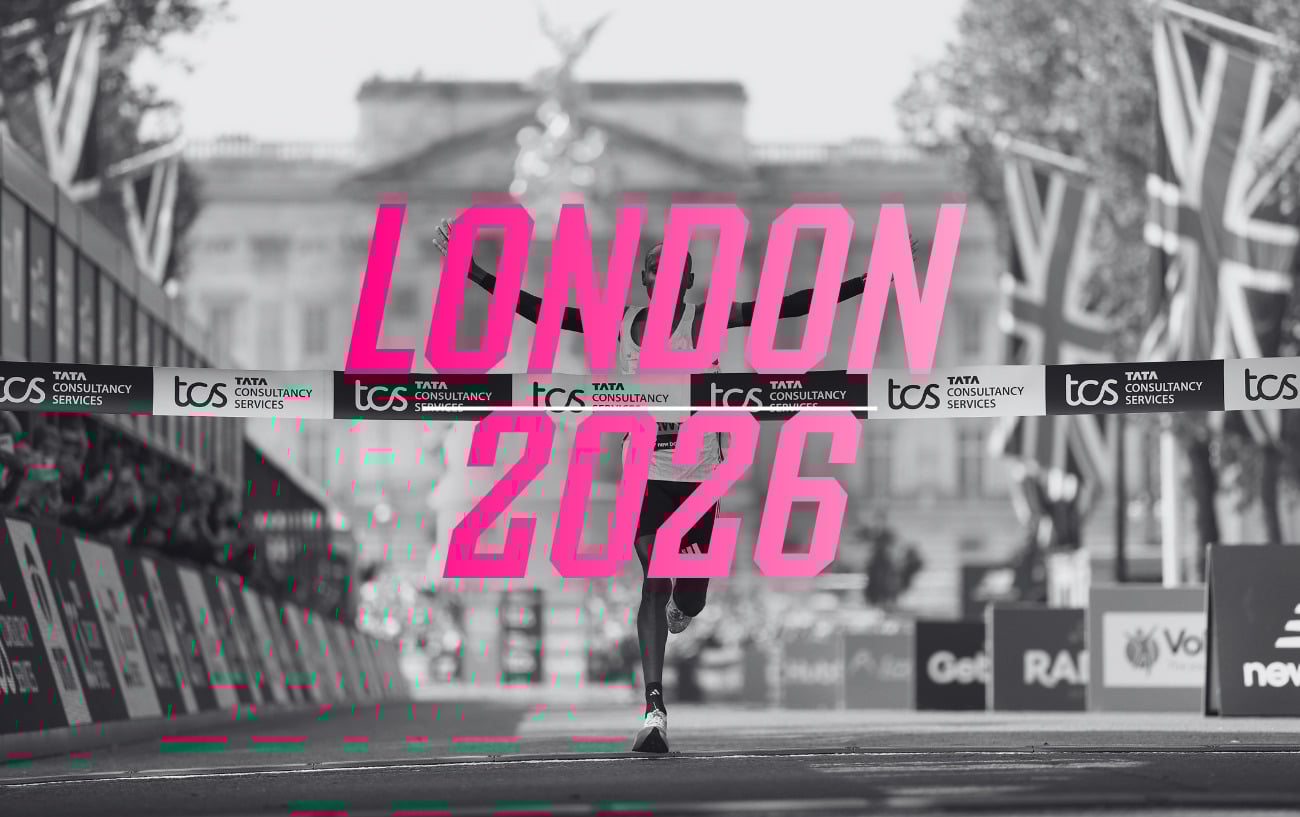
TV coverage (UK)
Live coverage on the BBC begins at 8:30 a.m. UK time on Sunday, April 26. The race runs on BBC One and BBC iPlayer for most of the morning, covering the elite wheelchair, elite women, and elite men races along with the first hours of the mass race. Coverage moves to BBC Two around 2 p.m. to carry the tail of the mass field and the final course cut-off.
Evening highlights air on BBC Two around 6 p.m. for anyone who missed the morning broadcast, and the full race is available on BBC iPlayer for catch-up viewing through the week.
The BBC commentary team is anchored by Gabby Logan and Jeanette Kwakye, with Paula Radcliffe and Steve Cram providing the analysis and course-side reporting. For UK viewers, no subscription is required. The BBC’s stream is free with a TV license.
Live streaming (international)
United States, Canada, Australia, New Zealand. The live feed is carried on FloTrack (subscription required). Coverage begins around 3:30 a.m. Eastern, 12:30 a.m. Pacific, in North America. In Australia and New Zealand, the race runs in the late-evening Sunday local time.
Kenya. Citizen TV has traditionally carried the race live, with Kenyan talent at the front of the men’s and women’s fields ensuring strong broadcast demand. Check the Citizen TV listings on race day for local start-time confirmation.
Everywhere else. BBC iPlayer is geo-restricted to the UK, but London Marathon Events typically publishes a list of international broadcast partners in the week before the race. World Athletics and the London Marathon social accounts carry key race moments and post-race highlights for viewers in regions without a dedicated broadcaster.
If you are also planning to follow the other spring major, our Boston Marathon watch guide covers the US-side broadcast and streaming options.
Start times
All times are UK local (BST):
- 8:50 a.m. — Elite wheelchair race
- 9:05 a.m. — Elite women
- 9:35 a.m. — Elite men, followed by the first mass wave
- 11:30 a.m. — Course cut-off
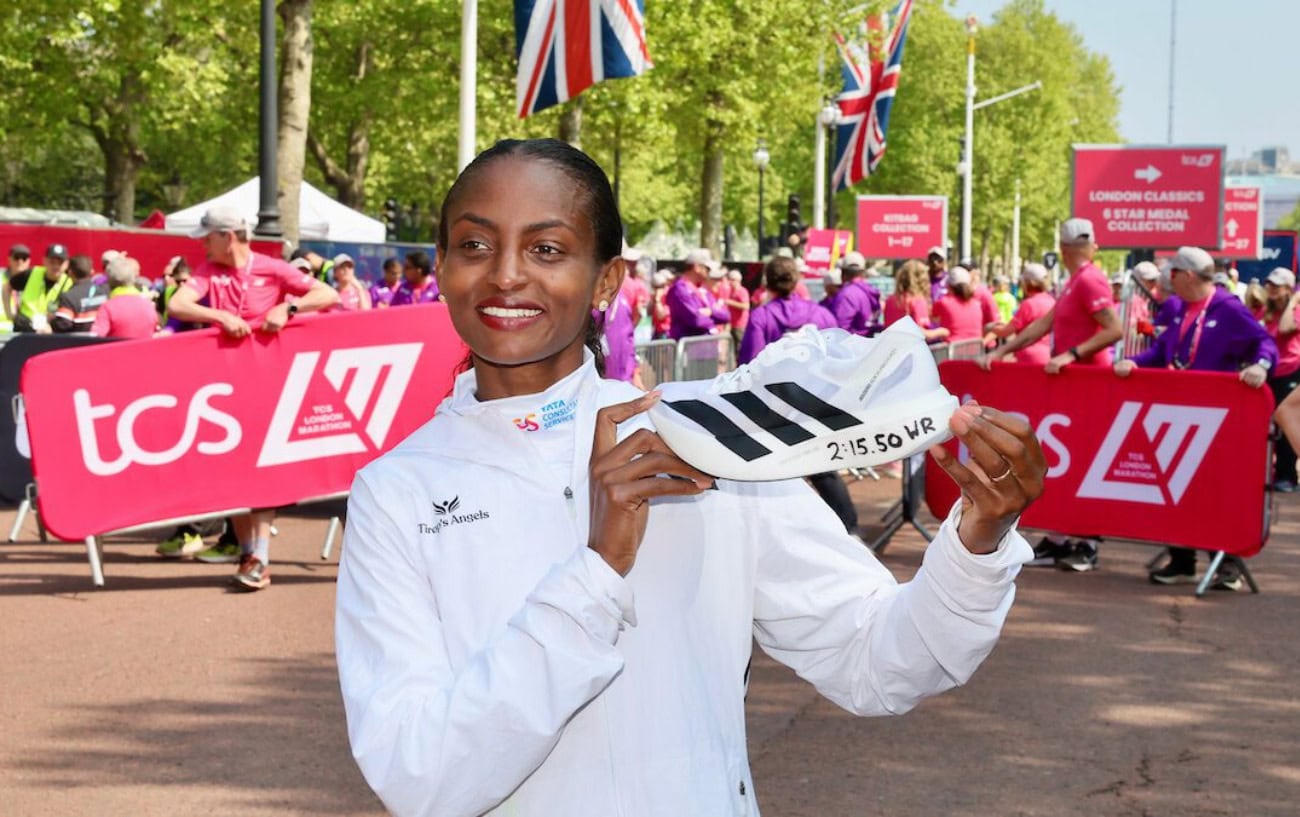
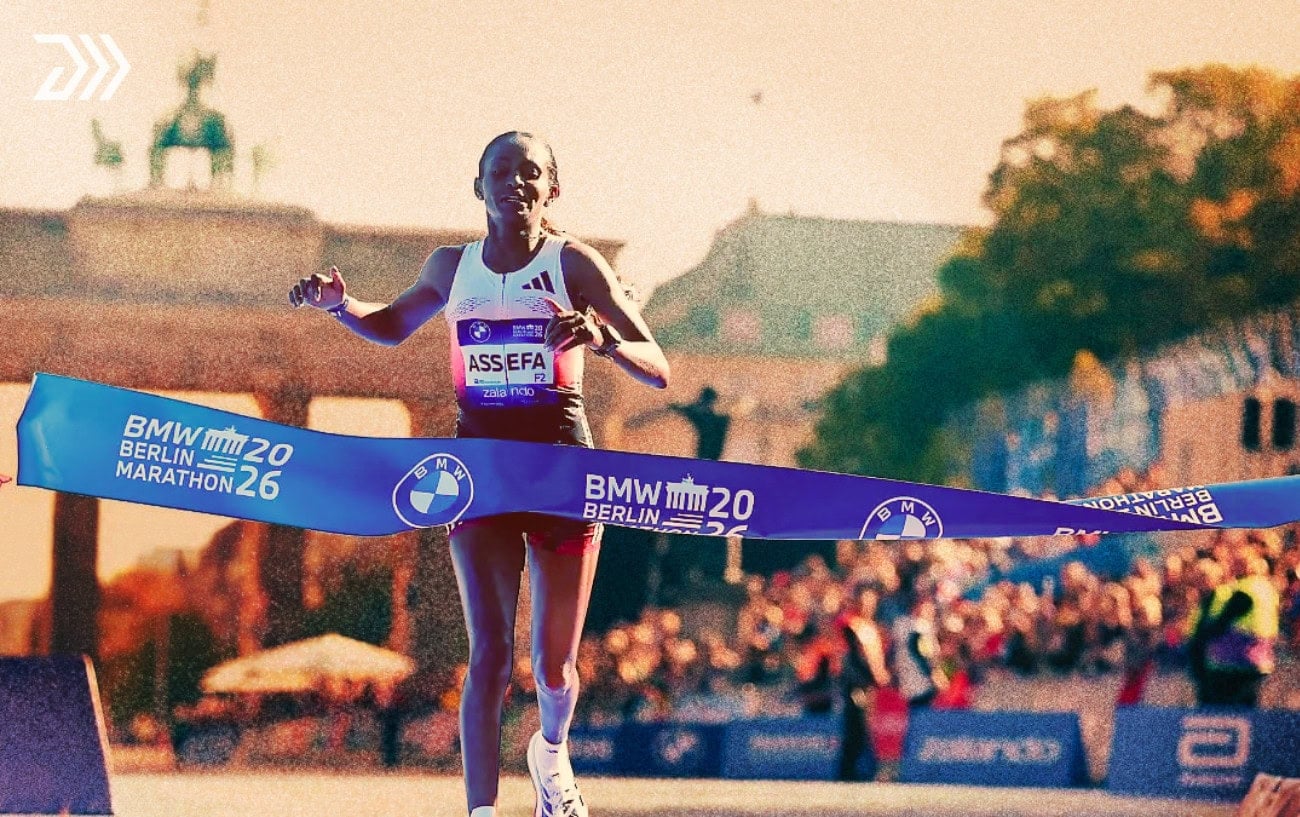
The elite women run in a no-pacer, women’s-only field, which is what makes London’s women’s-only world record (Tigst Assefa’s 2:15:50 from 2025) the fastest legal mark for women racing without male pacers. The elite men start thirty minutes later alongside the first mass wave, which means the fastest mass runners share the course with the professional men for the opening miles.
Track a specific runner
The official London Marathon app (free on iOS and Android) is the best way to follow a specific runner in real time. Enter a bib number and the app pushes 5K split notifications as the runner clears each timing mat, plus an estimated finish time based on current pace. You can track up to 10 runners at once.
Additional options:
- Live tracking on tcslondonmarathon.com mirrors the app’s functionality in a browser, with a map view showing each runner’s last confirmed split location.
- SMS updates (UK only) are available via the London Marathon text service, with one message sent per 5K mat.
- Social media. Most runners post a bib number to their Instagram or Strava the morning of the race. Cheer squads along the course coordinate on WhatsApp and Strava to time their positioning.

The best places to watch in person
London’s course is a 26.2-mile loop through east, south, and central London, which means you can catch a single runner at multiple points along the route by planning ahead and using the tube strategically. These are the highest-impact spectator spots, from the start in Greenwich through to the finish on The Mall.
Cutty Sark, Greenwich (mile 6.5)
The course’s first major landmark, and one of the loudest crowd sections of the day. Runners pass the 10K mark just before arriving at the famous clipper ship. The closest station is Cutty Sark DLR, but it gets overwhelmed quickly. Arrive via Greenwich Station instead, or walk from Deptford Bridge DLR and find space further along Creek Road.
Best for: a guaranteed first sighting of a specific runner early in the race.
Surrey Quays and Canada Water (miles 9 to 10)
Often overlooked in the guides, but one of the best spots in terms of crowd density and transport access. Runners are past the euphoria of the start but still running strong. Both Surrey Quays and Canada Water are on the Overground and Jubilee Line respectively, which means you can reach the spot without battling Greenwich or Tower Bridge crowds.
Best for: a moderate crowd and easy travel in and out.
Tower Bridge (mile 12.5)
The emotional high point of the mass race. Sound reflects off the bridge structure from both ends, and the river setting is iconic. Arrive early. Charity cheer groups set up from 6 a.m., and the crowd on the bridge runs five to ten deep by 9 a.m. The closest stations are London Bridge and Tower Hill, both of which will be extremely busy on race morning.
Best for: atmosphere, TV-worthy scenery, and seeing runners at the halfway mark.
Canary Wharf (miles 18 to 20)
The most practical spot on the course, because the route loops through the area. Spectators can see runners twice from the same position: once heading into the Isle of Dogs and again coming back out. The crowds thin here compared to Tower Bridge, making it easier to get close to the barriers. This is also the section where runners are starting to hurt, so crowd support matters more.
Best for: seeing your runner twice, fewer crowds, and a great cheer point.
Embankment (miles 24 to 25)
The single best stretch of crowd support anywhere in marathon racing. The river on one side, Big Ben in the distance, and a wall of spectators packed along the road. Tube access is Embankment, Temple, or Waterloo, all of which can be reached easily before the runners arrive. This is where most runners describe the magic of London kicking in.
Best for: the full London atmosphere and seeing runners in their final push.
The Mall (finish line)
The finish itself is on The Mall, in front of Buckingham Palace. Access is managed and tightly controlled, and the area fills up early. Use St James’s Park or Green Park stations. Ticketed finish-line grandstand seats are available through the London Marathon Club and charity packages.
Best for: meeting your runner after the finish and getting the finish-line photograph.
Some of the spectators lining these spots will be watching friends and family among the 56,640 finishers who made London 2025 the biggest marathon ever staged, a record the 2026 field is expected to push higher again.

Photo: Jed Leicester for London Marathon Events
For further information: media@londonmarathonevents.co.uk
Multi-point spectating
If you want to catch one runner at multiple points, the Tube makes the following combinations realistic:
- Cutty Sark (mile 6.5) → Tower Bridge (mile 12.5). DLR to Bank, then Central Line or Circle Line east to Tower Hill. Tight, but doable if you leave the Cutty Sark as soon as your runner passes.
- Canary Wharf (mile 18) → Embankment (mile 24). Jubilee Line west to Westminster, short walk. Comfortable timing.
- Canary Wharf (mile 18) → The Mall (finish). Jubilee Line to Westminster, walk through the park. Easiest triple if you started at Cutty Sark.
Travel and road closures
Expect significant road closures across south, east, and central London from early Sunday morning through mid-afternoon. TfL runs additional services on tube lines, but some stations close temporarily at peak race times due to crowd control. Blackheath, Greenwich, and Cutty Sark DLR are the stations most likely to see delays or temporary closure. Plan to be in position at your chosen spectator spot at least 30 minutes before your runner is expected to pass.
Useful resources on race morning:
- The TfL travel tool (tfl.gov.uk) updates live with closures and delays.
- Citymapper is the fastest way to re-route when a station is temporarily shut.
- The London Marathon spectator guide at londonmarathonevents.co.uk lists every road closure with timings.
If you are spectating without a runner of your own, you might recognize a few of the notable faces lining up in the 2026 field, from Olympic medalists to first-time marathoners.

Marathon Handbook watchalong at Knees Up, Hackney
If you are in London but not lining the course, join Marathon Handbook for a live watchalong at Knees Up, the running-and-coffee space at 455 Hackney Road in east London. Doors at 8:35 a.m., thirty minutes before the elite women’s gun. Coverage on the big screen from the elite women’s start through the men’s finish, with cortados, Brunswick East bakes, and a room full of people who know who to cheer for at each 5K split.
Knees Up was founded by Matt and Oli, two runners who built the space around the idea that a cafe and a running store can share a room. On marathon morning it becomes the closest thing London has to a clubhouse for runners watching the race they could not get into the ballot for.
RunClub
Get more running stories — join RunClub
Daily running news, a community of 300,000+ runners, free training plans for every distance, and a daily running game. Free to join — no card.
Already a member? Log in →





Start the conversation