


For most office workers, the path to a bigger paycheck runs through spreadsheets, sales targets, and annual reviews. At Guangdong Dongpo Paper Co., it runs through the streets.
The Guangdong-based paper company has scrapped its traditional performance-based bonus system entirely, replacing it with one built around a single metric: how many kilometers its roughly 100 employees log on foot each month.
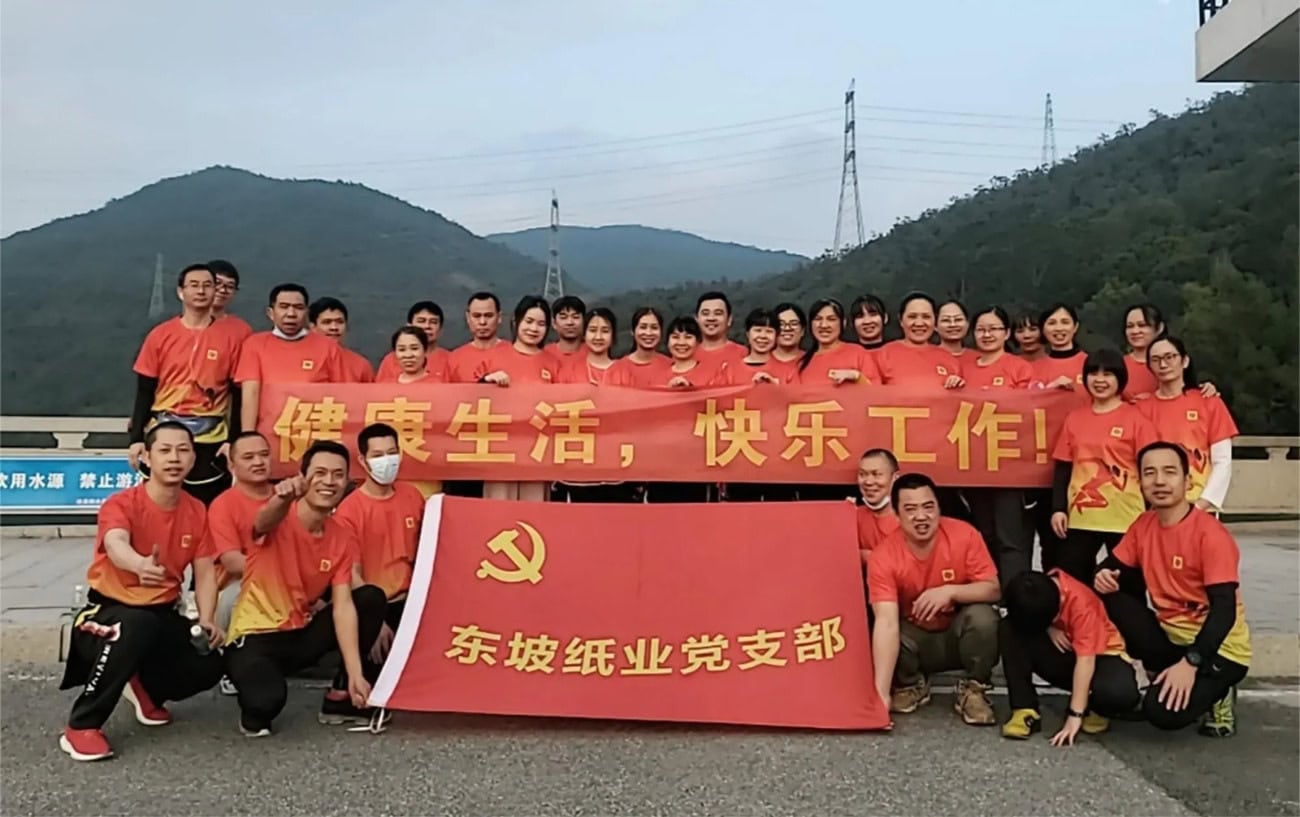
How the Bonus System Works
The structure is straightforward. Employees who run 50 kilometers a month — just over 31 miles — receive a bonus equal to their full monthly salary. Push that to 100 kilometers, and the bonus climbs to 130% of monthly pay. Fall short? The payout shrinks accordingly: 40 kilometers earns 60%, and 30 kilometers earns 30%.
Running isn’t the only option. Mountain hiking counts toward 60% of the required distance, and brisk walking covers 30%. All activity is tracked through a fitness app on employees’ phones — so no, you can’t just claim you “basically” ran 50k.
For dedicated runners who hit 50 kilometers every month for six consecutive months, the company throws in a free pair of running shoes. Which, at that mileage, you’ll probably need.
Chairman Lin Zhiyong says he spent more than three years trying to get his employees interested in fitness before landing on the bonus idea. He’s also climbed Mount Everest twice — once in 2022 and again in 2023 — which perhaps explains why his baseline for “reasonable physical effort” is a little different from most people’s.

Workers Are Running With It
By Lin’s own account, the program is working. He told reporters that virtually all of his employees are qualifying for the full monthly bonus. One worker, Zhou Jian, had been logging 90 kilometers a month and credited the scheme with helping him lower his blood sugar.
Others summed up the appeal with the kind of enthusiasm you’d expect from people who are suddenly being paid to exercise. “Not only do we get to keep fit, we also get paid for it,” one unnamed employee said. “That’s killing two birds with one stone.”
To be fair, for anyone already running regularly, this bonus structure is genuinely attractive. Fifty kilometers a month works out to roughly 12 kilometers per week — a comfortable base load for anyone with half-marathon ambitions. You’d essentially be getting paid to do your long run.

Not Everyone Is Lacing Up
On Weibo, China’s equivalent of Twitter, the reaction has been rather less enthusiastic.
“You’d have to run two miles a day to meet the monthly target of 62 miles,” one commenter pointed out. “So the company wants their staff to be track athletes?”
Others raised more serious concerns about physical risk, noting that mandatory high-mileage targets don’t account for age, fitness level, or existing health conditions. “These requirements would be considered excessive even for sporting school students,” read one post. “It will hurt their knees.”
A fair point. The running community knows better than anyone that ramping up mileage too fast is a reliable path to the physio’s waiting room. Injury risk is real when mileage targets are imposed rather than built gradually.
The deeper fairness question is harder to dismiss: employees with physical limitations, chronic conditions, or simply a different body type are penalized under a system that makes no distinction between ability levels. Several critics argued the company should offer fitness bonuses on top of existing pay, rather than dangling baseline compensation behind a physical performance gate.
One Weibo user went full doomsday: “Everybody, please keep a lookout for the future of this company. I believe it will go bust within the next five years.”

A Growing Trend in Corporate Fitness
The policy isn’t entirely without precedent. In 2019, a Beijing university canteen rewarded students who walked more than 10,000 steps a day with free crayfish — a prize that is, objectively, more motivating than most corporate wellness perks.
What sets Guangdong Dongpo Paper apart is the financial weight behind it. Tying a meaningful chunk of annual income to physical performance is a long way from a step-count challenge or a subsidized gym membership. This has real money attached to it.
For runners, the numbers are actually pretty approachable. 12 kilometers a week is a modest ask for anyone who’s been running for more than a few months. The health benefits of consistent running — improved cardiovascular fitness, better blood sugar regulation, lower stress — are well documented, and Lin’s logic isn’t entirely wrong.
Whether his experiment proves visionary or legally complicated may depend on how the policy holds up as his workforce ages and as scrutiny of workplace wellness mandates grows across China. Consistency in running is a virtue — but it works best when it’s a choice, not a condition of your paycheck.
For now, the gun has fired. The employees are running. And somewhere on a mountain, their Everest-summiting boss is probably wondering why 50 kilometers a month even seemed like a bold ask.
RunClub
Get more running stories — join RunClub
Daily running news, a community of 300,000+ runners, free training plans for every distance, and a daily running game. Free to join — no card.
Already a member? Log in →











Start the conversation