


Marathons unravel in all kinds of ways. Sometimes it’s the weather, or a nutrition mistake, or a hill you didn’t respect until it was too late. But it’s rare for more than a hundred runners to lose their race because the race itself lost its bearings.
That’s what happened at the Seattle Marathon this year.
More than a hundred runners crossed the line, medals around their necks, only to learn later that the course they’d followed had quietly veered off its intended path. They stopped their watches, believing they had finished a marathon. The official results told a different story.
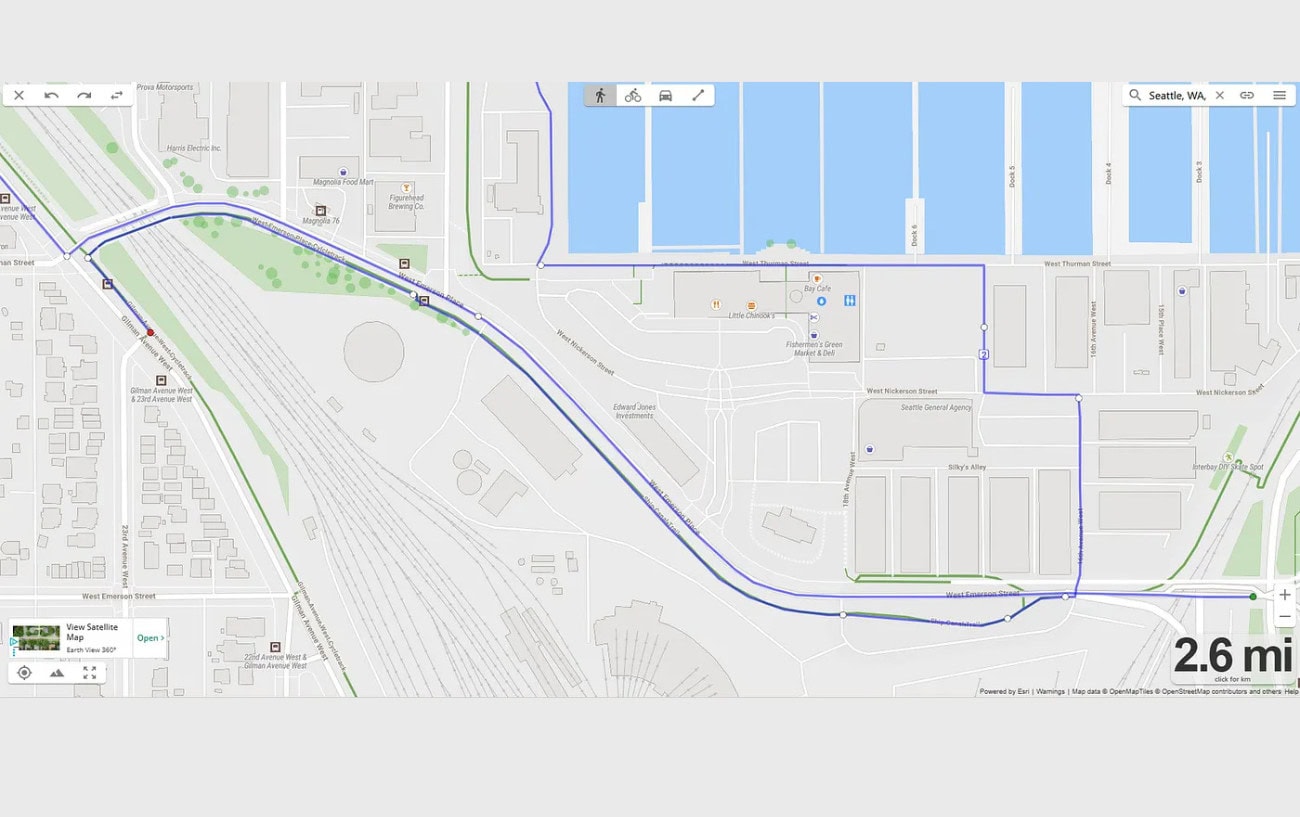
The mistake happened in Magnolia, around mile 19, where the course looped back on itself. On paper, it looked straightforward. In person, it turned out to be the kind of split that doesn’t reveal its intentions unless the signage and barriers are crystal clear. They weren’t.
The road and the multi-use trail run close together there, only a thin patch of grass separating them. Runners were supposed to stay on the road the first time through, then use the trail the second time.
But with traffic nearby and no hard physical separation, plenty drifted onto the trail early without realizing anything was actually off at all. Once on that side, the turn at Gilman almost directed itself, that left turn felt natural.
For some, a volunteer even pointed that way. Others followed whoever was in front of them and assumed the group knew where it was going (seems pretty logical if you ask me).
But apparently that’s how you end up with more than a hundred DNFs clustered around the same missing two miles.
What stood out, once the dust settled, was who was affected. Not just first-timers. Not the back of the pack. Not the folks who sign up on a whim in October. The runners who lost their race looked a lot like the rest of the field.
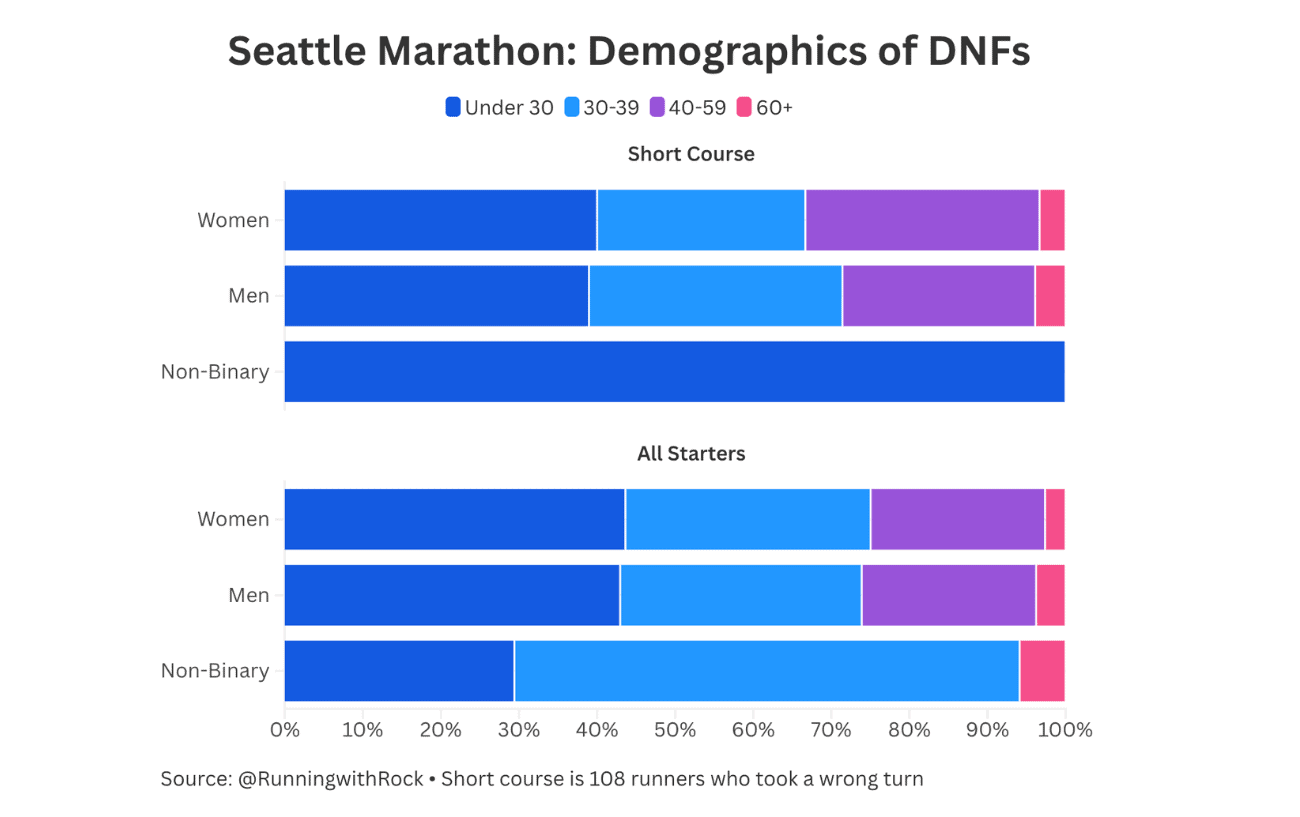
Fast ones, middle-of-the-pack runners, those in their twenties and some twice that age. One man had been on pace for a time that would have placed him near the front. Others were shooting for Boston qualifiers or personal bests. They didn’t have much in common other than finding themselves on the wrong side of an unclear split.
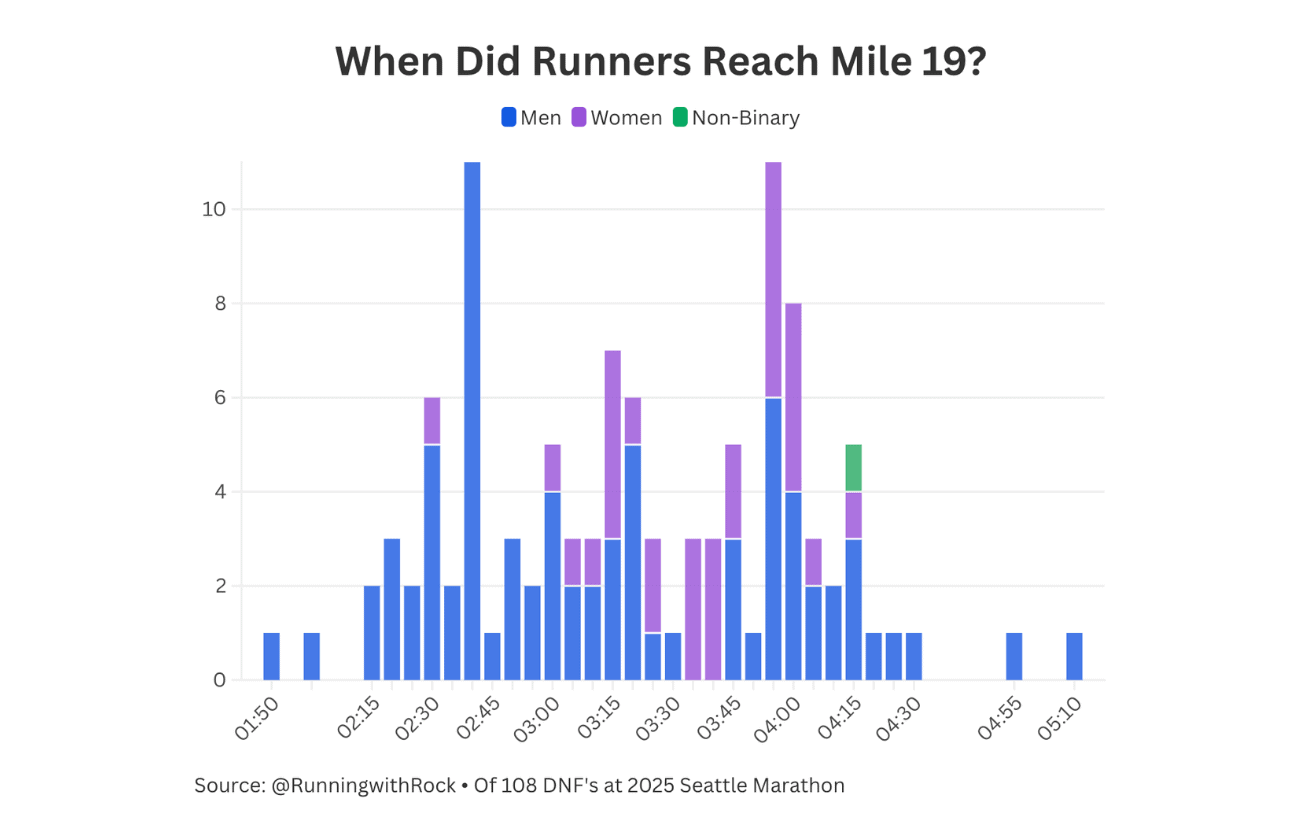
For anyone who has run enough road races, the pattern rings familiar.
At a certain point in a marathon, your brain shuts off, you stop thinking, and start following the cues in front of you. The cones. The chalk. The volunteers’ arms slicing the air. The line of jerseys bobbing in a direction that seems right.
But sadly, the Seattle course didn’t offer enough of those cues at the exact point where they were most needed.
The Seattle Marathon Association didn’t deny the scale of the problem.
The number of DNFs was so far beyond normal that there was nothing to argue. They reclassified the affected runners and tried to project what their finish times would have been. They removed the DNF stamps from their results. They sent out discount codes.
Steps in the right direction, but unevenly satisfying depending on what people had on the line.
Some runners shrugged and moved on. Others had a harder time. A runner who had been chasing a qualifying mark suddenly didn’t have anything to submit. Someone who’d trained all year for their first marathon now had a result they weren’t sure they could even show anyone. And then there were those who simply felt deflated by the idea that they had done their job and the course hadn’t held up its end.
The race says next year’s course will be different. The Magnolia loop was, in many ways, a compromise forced by World Cup construction around the city, and the organizers expect to restore a cleaner, more intuitive layout once that work is finished. More signs, more volunteers, better separation between lanes. All reasonable fixes.
But there’s a quieter issue lingering underneath.
Runners remember when a race doesn’t steer them well. They talk about it. They hesitate the next time registration opens. One person told us Seattle had been their Thanksgiving tradition for years, and that they’re sitting out 2026 until they see how the race handles things from here.
Every marathon is built on a simple agreement. The runner shows up prepared to cover the distance. The event shows them where that distance actually is. Seattle’s problem this year wasn’t a lack of effort from its participants. It was a small flaw in the map that grew into something much larger by the time it reached their legs.
The fixes may come quickly. The trust won’t. Not immediately, anyway.
RunClub
Get more running stories — join RunClub
Daily running news, a community of 300,000+ runners, free training plans for every distance, and a daily running game. Free to join — no card.
Already a member? Log in →





Start the conversation