


As the Boston Marathon prepares for its 130th running on April 20, 2026, Jack Fleming is thinking less about history and more about people. “I get anxious about everyone’s expectations,” the Boston Athletic Association CEO said. “I so dearly want everyone coming to Boston to have a wonderful experience.”
At Boston, expectations are not just high, they are inherited. They come from decades of runners who have treated this race as something more than just another marathon. Fleming has been part of that responsibility for more than three decades.
He arrived in Boston from New Orleans to attend Boston College, drawn to a city that felt familiar.
“Boston shares a lot of similarities, I think, with New Orleans, in that they are older, European-influenced cities,” he said. “So, it felt very comfortable.”
At the time, he knew Boston as a sports town. What he didn’t yet understand was how deeply the marathon was woven into it. “There was this thing called the Boston Marathon, which I didn’t know much about,” he said.
That changed quickly. Boston College sits along the course, and Fleming tried out for the cross-country team, training on terrain that would later define the race itself. “I was very fortunate to be able to literally work out on Heartbreak Hill every day,” he said. “I think my first workout was on Heartbreak Hill.”
He joined the B.A.A. as an intern in 1991 and started full-time in 1992. At the time, the organization was small. “I think I was the seventh or eighth staff member, and now we have 42,” he said. “I think the growth of our organization very much mirrors the growth of the sport.”
There was no fundraising department, no operations team, no marketing structure. Today, Boston is a global event supported by a year-round organization. Still, Fleming is careful about how the race is defined. He pushes back on the idea that Boston is simply a race rooted in tradition. “I don’t like to be called the grandfather,” he said. “It suggests being stuck in tradition and not able to move forward. That is not the way I feel.”
Instead, he frames Boston in terms of responsibility. “We feel the responsibility that we are the stewards of today,” he said.
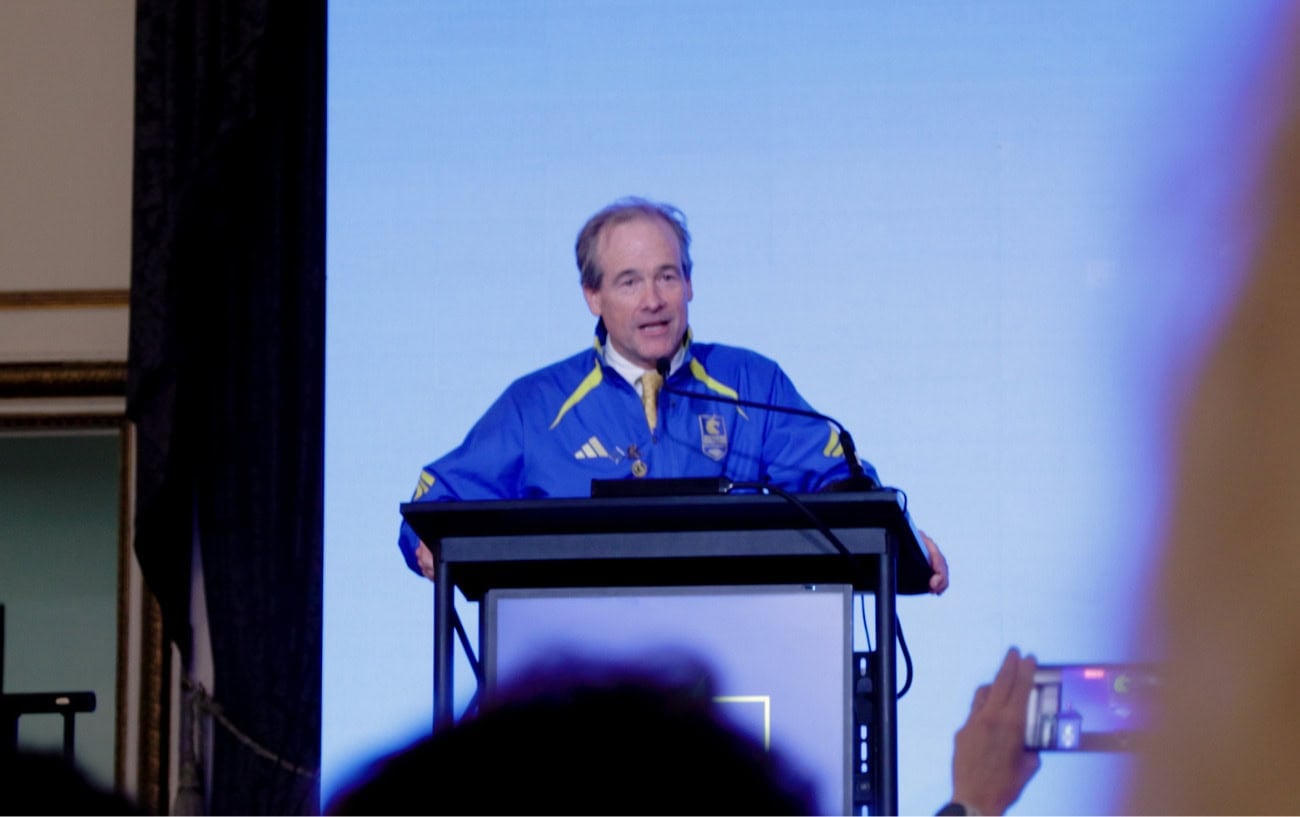
The network behind the race
That stewardship is no longer carried in isolation. One of the biggest shifts in recent years, Fleming said, is how closely the leaders of the Abbott World Marathon Majors now work together. What was once more siloed has become collaborative and, at times, deeply personal.
Across the Abbott World Marathon Majors, that network has created an informal but powerful exchange of ideas, support, and shared responsibility for shaping the future of the sport.
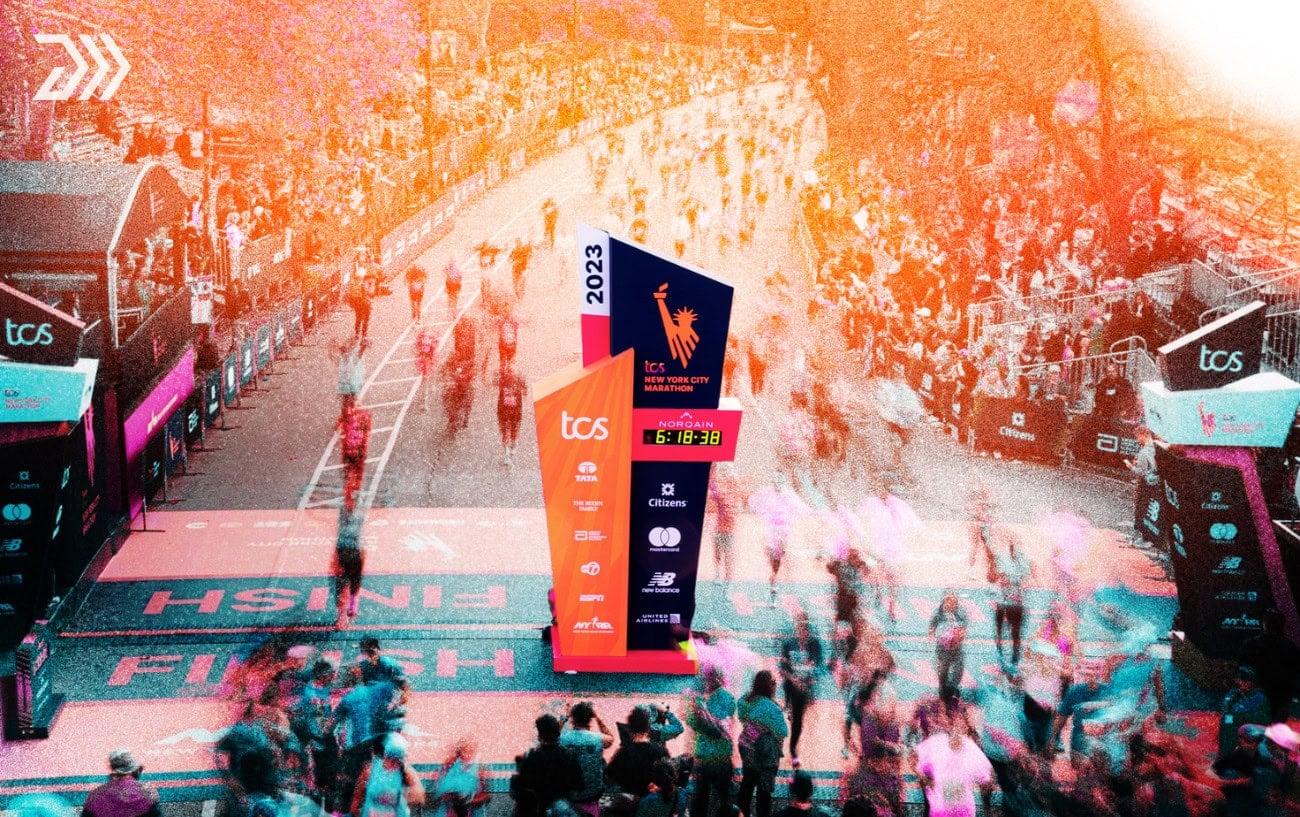
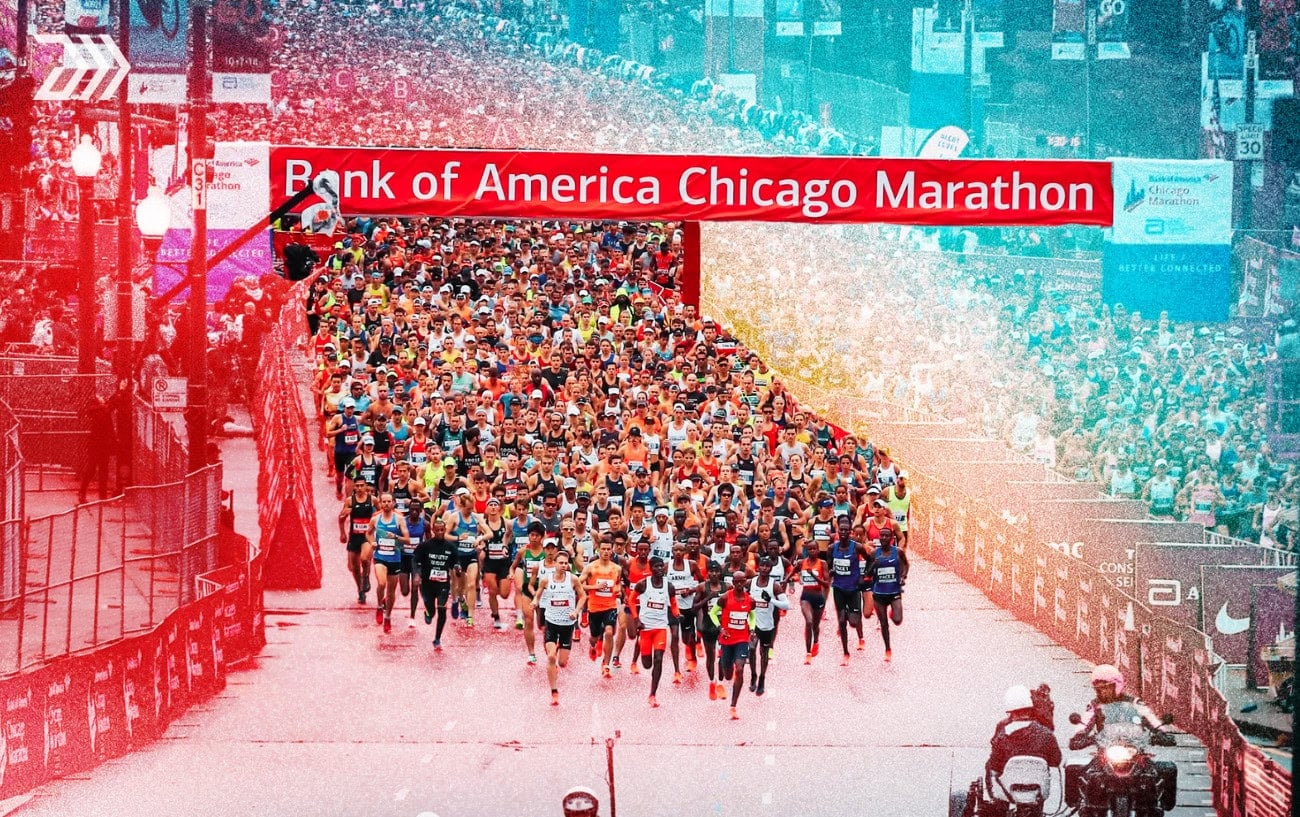
He pointed to relationships with leaders like Ted Metellus, race director of the TCS New York City Marathon, and Carey Pinkowski, executive race director of the Bank of America Chicago Marathon. “He is a very special human being,” Fleming said of Metellus. “He’s a compassionate leader. He knows how to lead. He has all the time in the world for you.”
During race week, those relationships take on even more meaning. “He sends me texts almost every day,” Fleming said. “The one this morning was, ‘This is your week. We’re here for you. Give a ring. Let us know. Take time for yourself.’”
Pinkowski, he added, offers that same support in his own way. Very few people, Fleming said, truly understand the pressure of race week. That shared experience creates a level of trust and empathy that extends beyond competition. “That sharing of information does drive us all forward,” he said.
Still, he is clear about one thing. “Let’s continue to be ourselves. Let’s continue to be Boston,” he said. “New York has to be New York. Chicago has to be Chicago. We cannot be those cities.”
Why Boston Starts Small — and Stays That Way
What makes Boston different, Fleming said, starts with the course. For many first-time runners, especially those coming from abroad, the biggest surprise is not the crowds or the prestige. It is the start line.
“This is not the Verrazzano-Narrows Bridge,” he said. “This is a quintessential New England town with a two-lane road.”
From there, the race unfolds through eight cities and towns, building gradually toward Boston. “It grows as you get closer mile by mile toward the finish,” he said. “And then there’s a crescendo.” That progression is part of what defines Boston. It is also why the race has resisted becoming larger. “It’s small,” Fleming said. “There are narrow roads. They are small cities and towns, and we’re okay with that.”
What defines a Boston runner
Few topics spark more debate than the balance between qualifying runners and charity runners. Fleming does not see a divide. “With the qualifiers, the event was really built on the hard work of qualifiers,” he said. “We want to honor the qualifying route.”
But Boston has evolved into something broader. This year, the race includes 193 nonprofit partners, with fundraising expected to exceed $50 million again. “That money does not touch the B.A.A.,” Fleming said. “It goes directly to those nonprofits. We are the stage that enables the nonprofits to do their thing.”
To him, both paths require commitment and deserve recognition. “Everyone’s working hard,” he said. “Those fundraisers are working every bit as hard as a qualifier or a would-be qualifier.”
That same sense of fairness extends to runners at the back of the pack. “It is 5:30 PM,” Fleming said of the course cutoff. “We’re still going to be there for you, cheering you on Boylston Street. We’re going to give you a medal. But there comes a point when Boston needs to stop the timing and begin reopening the course to the city.” The goal, he said, is not perfection, but fairness to runners, residents, and the city itself.
The weight of leadership
For Fleming, the hardest part of the job is not the easy decisions. “I don’t like to disappoint people,” he said. But leadership often means making decisions where not everyone agrees. It means slowing things down, resisting the urge to do too much, and staying focused on what matters most. “I would frequently caution us to do our 10 things very well rather than try to do 100 things,” he said.
The moments that Belong To The City
When asked what moments have stayed with him most, Fleming pointed to two that go beyond results and into what the race has meant at specific moments in time.
“It’s hard to beat those feelings of Meb Keflezighi coming down Boylston Street,” he said. Keflezighi’s 2014 victory came just one year after the Boston Marathon bombing.
For Fleming, it was not just a win, but a moment that belonged to the city. “What he did for the city of Boston, we still say thank you for what he did,” Fleming said. “And we mean it.”
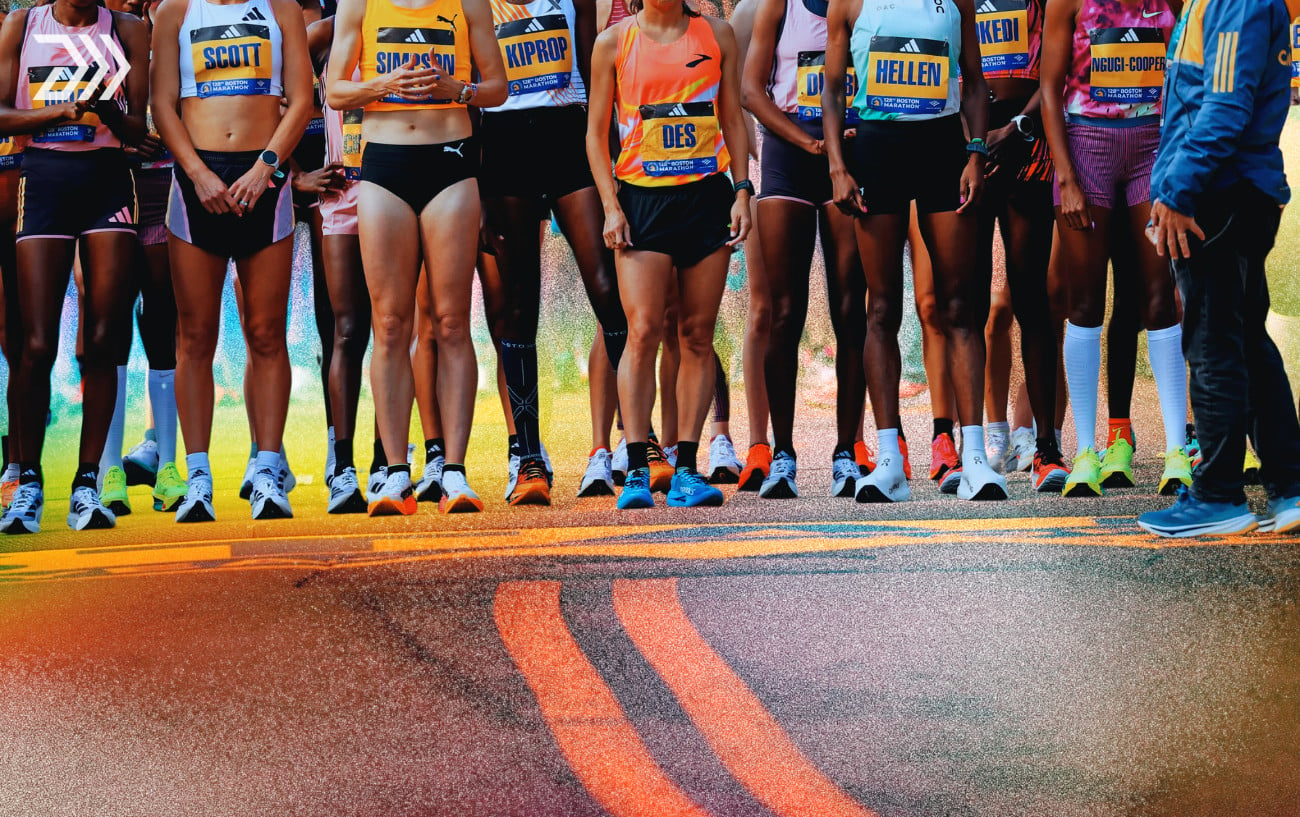
He then pointed to Des Linden’s 2018 victory, a very different kind of moment shaped by persistence and extreme conditions. “That long journey for her to ultimately win,” he said. Fleming had given Linden one of her first course tours years earlier. Watching her finally win, after years of coming close and in brutal weather, added another layer of meaning.
Both moments endure, he said, not just because of the performances, but because of the people behind them and what they represented at the time.
“Freedom”
When asked to describe the Boston Marathon in one word, Fleming paused before answering. “Freedom.”
Unlike many major sporting events, Boston unfolds entirely in public, across city streets and neighborhoods, open to anyone who wants to watch. “There is no ticket sold,” he said. “Anyone can walk right up to the course and cheer, support, and be inspired.”
In a year that also leads into America’s 250th anniversary, that meaning carries even more weight. “I think it’s the ultimate expression of freedom,” Fleming said.
After more than three decades with the race, he still feels the responsibility of delivering it, not perfectly, but in a way that lives up to what Boston represents. It is shaped by the people who line the course, the runners chasing something personal, and the moments that stay long after the race is over.
Because at Boston, the finish line is not the end. It is part of something larger. Something runners carry with them long after they leave Boylston Street.
RunClub
Get more running stories — join RunClub
Daily running news, a community of 300,000+ runners, free training plans for every distance, and a daily running game. Free to join — no card.
Already a member? Log in →

Start the conversation