


Update — 27 April 2026: Since this article was published, Sabastian Sawe became the first man to officially run a marathon under two hours, clocking 1:59:30 at the 2026 London Marathon to break Kelvin Kiptum’s previous men’s world record (2:00:35) by 65 seconds.
As reported in an exclusive story by PEOPLE Magazine, Texas runner Carrie Bradshaw spent sleepless nights in 2021 searching Google for one question: “Can I run marathons after hip replacements?” Most surgeons weren’t giving her the answer she needed. Most told her to forget racing entirely.
Three years later, she has a Guinness World Record on her wall.
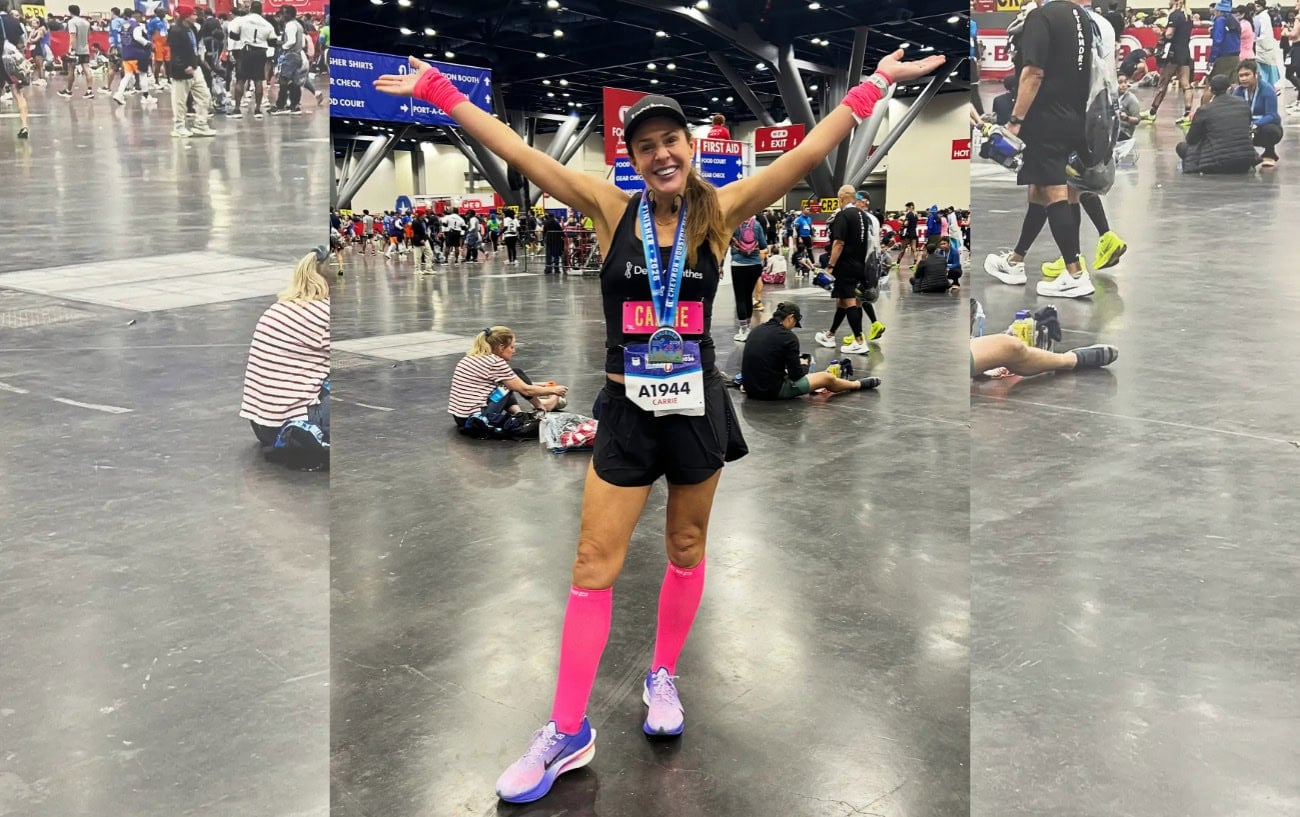
Bradshaw, a 44-year-old Houston native who goes by “Bionic Runner Babe” online, crossed the finish line at the 2026 Houston Marathon in 3 hours, 42 minutes and 31 seconds — the fastest marathon ever run by a female athlete with bilateral hip replacements. Guinness officially certified the record on March 9, 2026.
The Road Back
Bradshaw was diagnosed with congenital bilateral hip dysplasia in 2021. She had her first hip replaced in 2022, the second in 2023. Both are titanium. Before the surgeries, she had run more than 60 half marathons and 10 full marathons, with a personal best of 3:09.
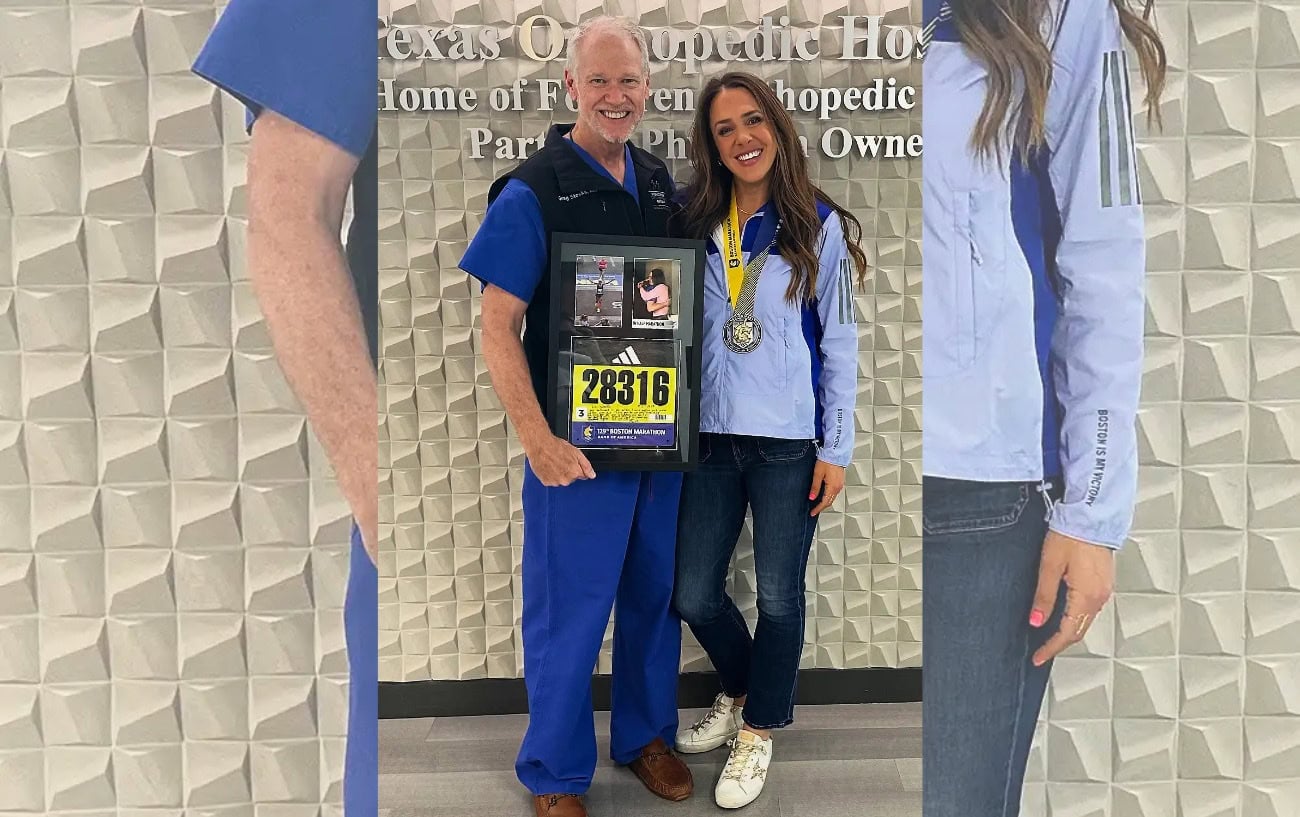
If you’ve ever wondered whether you can run after a hip replacement, Bradshaw’s story is about as clear an answer as you’ll find. The turning point came when she found Dr. Gregory Stocks of the Fondren Orthopedic Group at Texas Orthopedic Hospital — the one surgeon willing to back her return to racing.
“He is the only doctor who believed I would run again and encouraged me to chase my dreams,” Bradshaw told PEOPLE magazine, which first reported the story. “I remember him saying to me after my second surgery, ‘Carrie, we’ve got to get you back to running.’ He saw that I was in a dark place and that getting me back to doing what I love would help me find myself again. He changed my life.”
Dr. Stocks was on the course at Houston to watch her break the record, alongside Johnson & Johnson/DePuy Synthes orthopedics team members, family, and friends.
More Than a Finishing Time
When the official Guinness confirmation landed in her inbox, Bradshaw wasn’t thinking about the clock.
“When I walk past that framed Guinness World Record on the wall, I don’t really see a finish time or one defining moment,” she told PEOPLE. “I see four years of fighting to get a piece of my soul back and a doctor who believed in me before I believed in myself.”
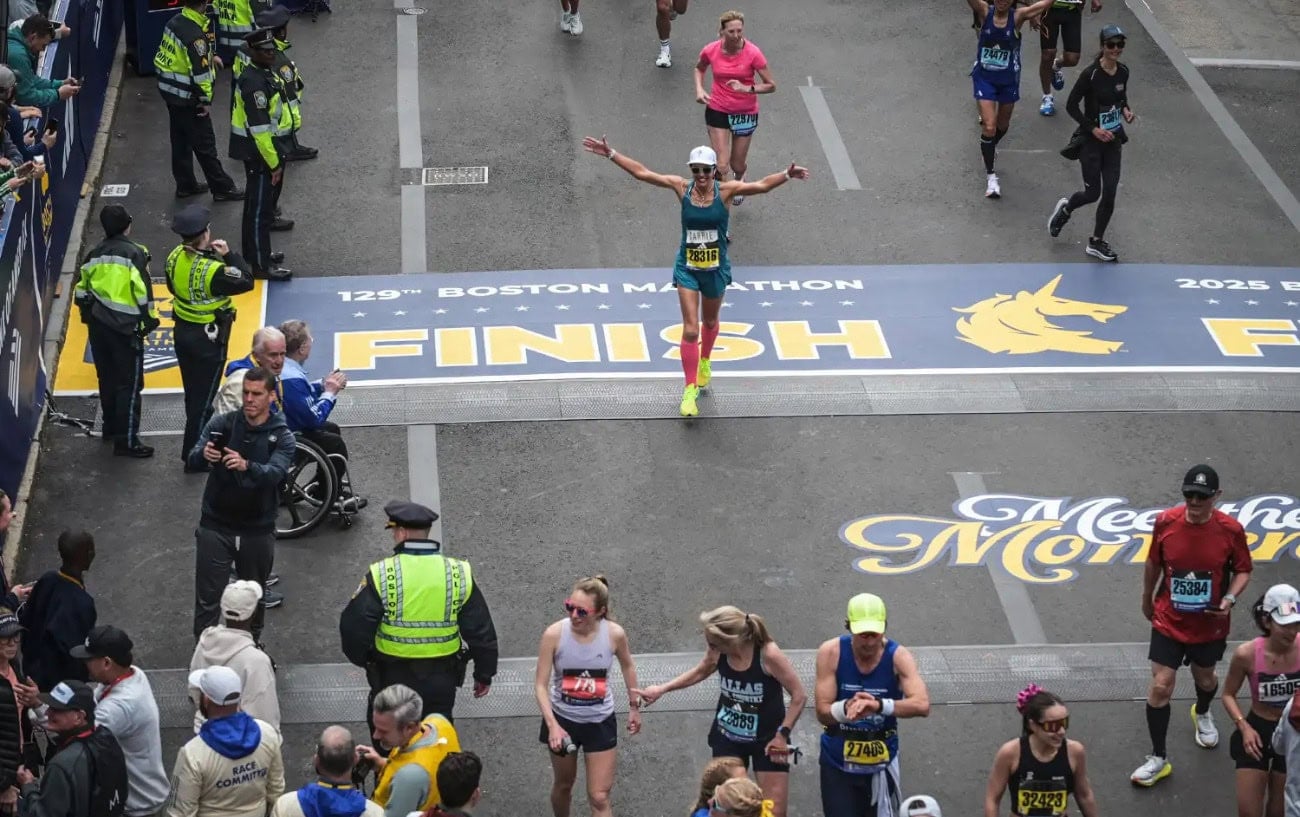
Her Houston time also qualified her for the 2027 Boston Marathon. She had already run Boston in 2025, just two years after her second surgery. “Boston was my victory lap,” she said. “Now I plan on gradually increasing my mileage and intensity as I train for Boston 2027.”
She’s also eyeing her old PR. “I am excited to see if I can chase down that old PR with my new hips on my side — pun intended.”
The Team Behind the Record
Bradshaw trained under Olympic marathon medalist and 2014 Boston Marathon champion Meb Keflezighi. This November, she’ll run the New York City Marathon as part of his foundation, Team Meb. For those curious about what elite-level marathon training and recovery looks like, Bradshaw’s comeback under an Olympic coach is a compelling case study.
During the toughest miles in Houston — around miles 20 and 21 — she drew on something a fellow hip replacement community member had told her: that she was their “messenger of strength and hope.”
“Getting to reclaim this part of myself has been an incredible gift and a second chance to do what I love,” Bradshaw told PEOPLE. “Dr. Stocks gave me the key to unlock this second chapter of my running story. I think the second chapter is going to be better than the first, too.”
For any runner staring down a hip replacement and wondering if their race days are behind them, Bradshaw’s record-breaking time offers a clear answer. And for those managing hip pain from running, it’s a reminder that the road back — while hard — is rarely completely closed.
RunClub
Get more running stories — join RunClub
Daily running news, a community of 300,000+ runners, free training plans for every distance, and a daily running game. Free to join — no card.
Already a member? Log in →







Start the conversation