


In the fall of 2024, the day before racing a half-marathon, I broke two of my most important running rules at once: don’t race in brand new running shoes, and don’t race in sneakers that aren’t your size.
I was skulking around the Adidas store in Toronto’s biggest mall, twelve hours before race start, when I saw them: the Adizero Pro Evo; the white, nearly translucent shoes that Tigst Assefa had worn to set an otherworldly women’s marathon record of 2:11:53 the fall prior. Their aura torpedoed my common sense. I dropped $500 USD on the last pair available, without even caring that they were a half-size too large.
I wasn’t purchasing shoes, I was spending against my own FOMO: buying into this feeling that a shoe so pricey just HAD to be better than the others out there. And, on some level, they totally were: the Evos elicited oohs and aahs from my competitors at the start line, and then delivered me a personal best. Three months later I used them again for an even faster half-marathon. And then, the ultra-light midsole foam lost its pop and they were toast. The Faustian pact of super-duper shoes (let’s call them hypershoes), at least in 2024, was that they barely made it to 30 total miles before disintegrating.
But is that still the case? The newer iteration, the Pro Evo 2 (and now 3) of these $500 shoes now apparently last much longer than a single marathon, according to Adidas, and are forcing more than just Toronto mall-lurking running geeks to pay attention.
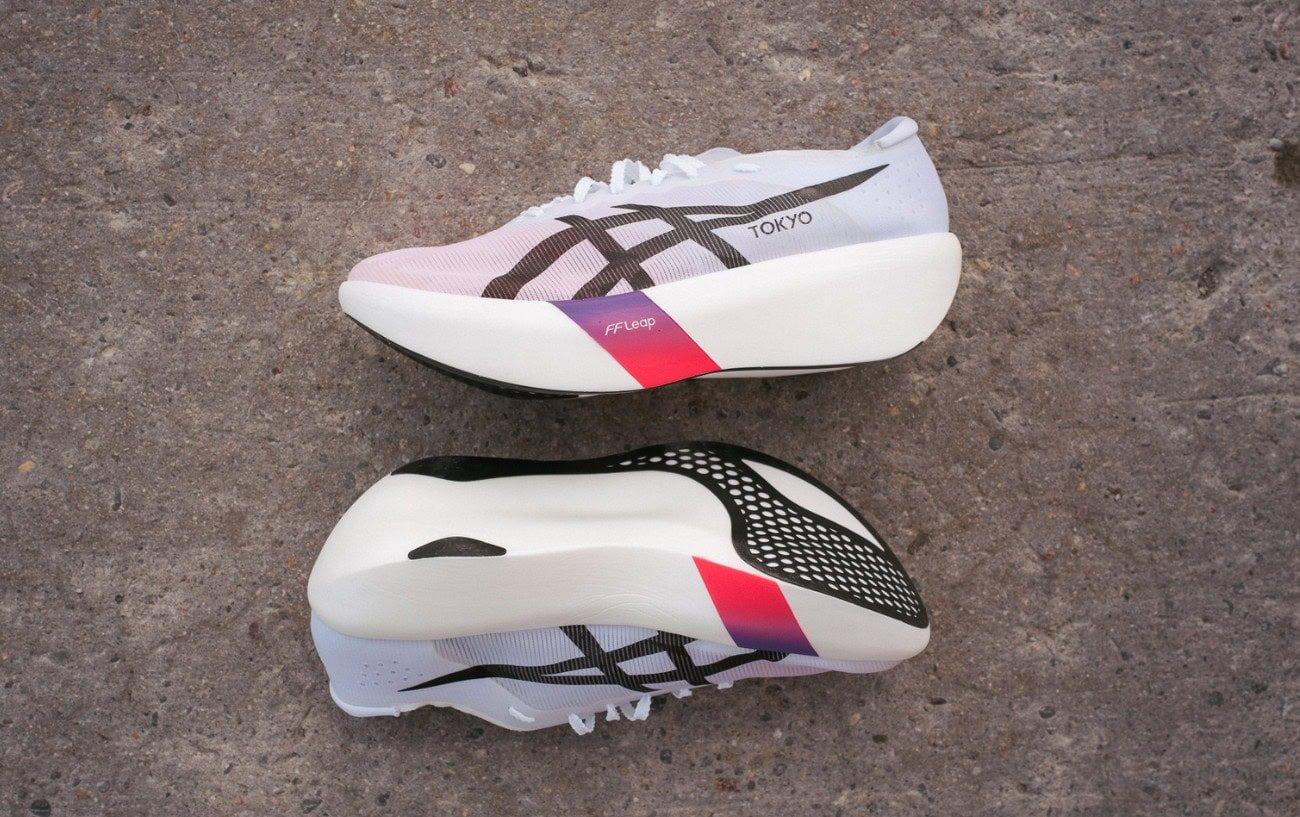
We’ve established years ago that, no matter their speed, a runner can benefit greatly from wearing super shoes: carbon-plated sneakers such as the Nike Alphafly 3 or the Asics Metaspeed Tokyo that cost between $250 and $300, and that retain their performance pop for at least a few marathons.
But might runners benefit significantly more from a hypershoe: an even better, tip-top-of-the-spear marvel of running tech? Are slightly lighter foams and more aggressive rock-forward profiles worth the extra dollars in 2026? Let’s break that down before you encounter one in the wild, because that might happen soon.
The Adidas Pro Evo 2 will certainly be on full display at the race expo of the 2026 Boston Marathon, as it was last year. The Evo 2 is the lighter and more durable successor to the shoe I bought at the Toronto mall. Its price remains $500 USD. Given that Boston is an Adidas event, I suspect that the brand will also have the Evo 2’s successor in tow, the Evo 3.
The Adidas Pro Evo 3 has thus far only been seen on the feet of elites at the Tokyo Marathon, where it was informally introduced to the world. It weighs a minuscule 3.4 ounces (a record low for modern era racing shoes). We still know next to nothing about its durability, midsole construction, or price.
The Evo 3 will probably be available in extremely short supply, if at all, at the Boston and London marathon race expos. Scarcity defines the Evo line even more than speed; they are rarely available online and appear in extremely limited numbers at major running events. The fact that they are available to non-professional athletes at all is because of a rule put in place after Nike snuck the very first super shoes onto the feet of Eliud Kipchoge and others back in 2016. Because of this, one of the fun caveats to World Athletics’ competition rules for super shoes is that each model must be made at least notionally available to the pubic if the brand wants to use a prototype on the feet of its elite athletes in a major marathon. That means that a lucky (and deep pocketed) few will be able to buy these shoes at exclusive drops throughout the year. Think: 10-20 pairs per World Marathon Major, total. They tend not to be advertised, and yet sell out nearly instantly.
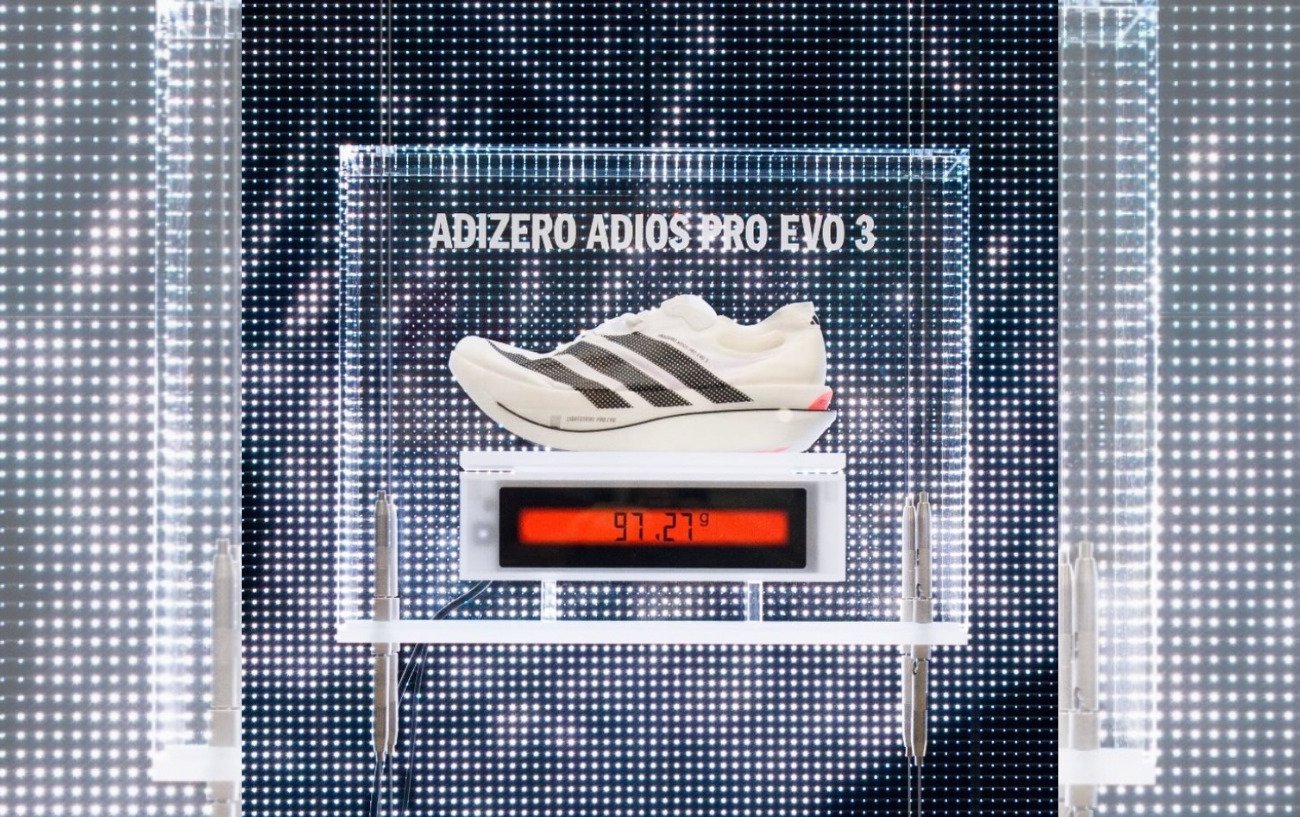
But, if you are met with the opportunity to buy the Evo 2 or 3 in the near future, in your size, and have $500 to spend: should you do it? What will you get out of that premium?
Performance-wise, I am unconvinced that the Pro Evo 2 can deliver an advantage that other top supershoes (like the Puma Fast-R Nitro Elite 3 or the Asics Metaspeed Ray, which both retail for a measely $300) cannot. Yes, it’s been the most successful running shoe at major marathons in 2025, but that’s partly because Adidas may have the most talented stable of athletes in the world.
Might the Pro Evo 3 be a cut above anything we’ve ever seen? Will that shoe warrant a few extra hundred dollars spent? Maybe.
The Evo 3 has something to prove. Right now, the best bangs for your buck are not hypershoes, but classic supershoes: the Alphafly 3 is a great buy because it lasts the longest. The Fast-R Nitro Elite 3 is a great buy because it’s probably the fastest of all super shoes priced at around $300 or less. The Asics Metaspeed Sky and Edge Tokyo are great buys because they best combine top-end speed and comfort. I recommend those three shoes to people long before I recommend an Evo.
And yet, there is a growing market for hypershoes, and it’s driven by the equally powerful forces of performance and trend hunting. That’s the concerning part: when they figure out how to do it, will every brand come out with a super-expensive hypershoe that costs $500 (or more)? And then what happens? Does Adidas release a mega-hyper shoe (still workshopping that name) at $750? Where does it stop? It’s not unforeseeable to imagine the super shoe wars raging on, but with a new dimension: most ridiculously expensive shoe. A one-thousand dollar racing shoe feels inevitable in this context.
For now, and before it becomes your turn to blow your mortgage payment on whichever sexy hypershoe you encounter in the wild, let’s put the actual benefit into perspective. The jump in performance from regular running shoe to super shoe is much greater than the jump from super shoe to hypershoe. In other words, that extra $150 you spent when choosing to buy a Nike Alphafly instead of the Nike Pegasus will go a longer way than the extra $200 you’ll spend to buy the Evos as opposed to another pair of Alphaflys.
The Adidas Evo lineup exists at a point of diminishing returns: and I suspsect we’re buying it more for clout than a true performance boost. If we were to create a formula that would calculate seconds per the dollar, it’s probably not worth it.
And as for the bleeding edge performance specifics of the Adidas Evo 3? We will update our channels as soon as we have a chance to test and review it. I suppose that, for the sake of science, I’ll volunteer. And, hopefully, get a pair in my size this time.
RunClub
Get more running stories — join RunClub
Daily running news, a community of 300,000+ runners, free training plans for every distance, and a daily running game. Free to join — no card.
Already a member? Log in →









Join the conversation
I’ve run 4 marathons in my Pro Evo 1s and can still use them for non A races. Still not technically “good value” but a far cry from Adidas “1 marathon” marketing hype. I think the useful life of them is about 200kms.