


By the time we finally sat down to record our podcast at The Running Event in San Antonio, our brains were fried in a very specific way.
Not tired, exactly. Overloaded.
TRE is a strange place if you take it seriously. It’s not a consumer expo, and it’s not just a gear preview. It’s an industry-wide confession booth.
Shoe designers talking a little too honestly after their fourth meeting of the day. Brand leads hinting at what they’re worried about. Small companies desperately trying to be seen. Big companies quietly trying to pivot without admitting they’re pivoting.
If you want to know what running will actually look like in 2026, this is where the tells show up.
After two long days walking the floor, sitting in closed-door meetings, poking at unreleased shoes we’re not allowed to photograph, and having way too many candid conversations that started with “off the record, but…”, a few trends kept surfacing again and again.
Some obvious. Some uncomfortable. Some genuinely exciting.
So, here are the trends we see coming to the running world in 2026.
Trend #1: Gravel Shoes Are Here
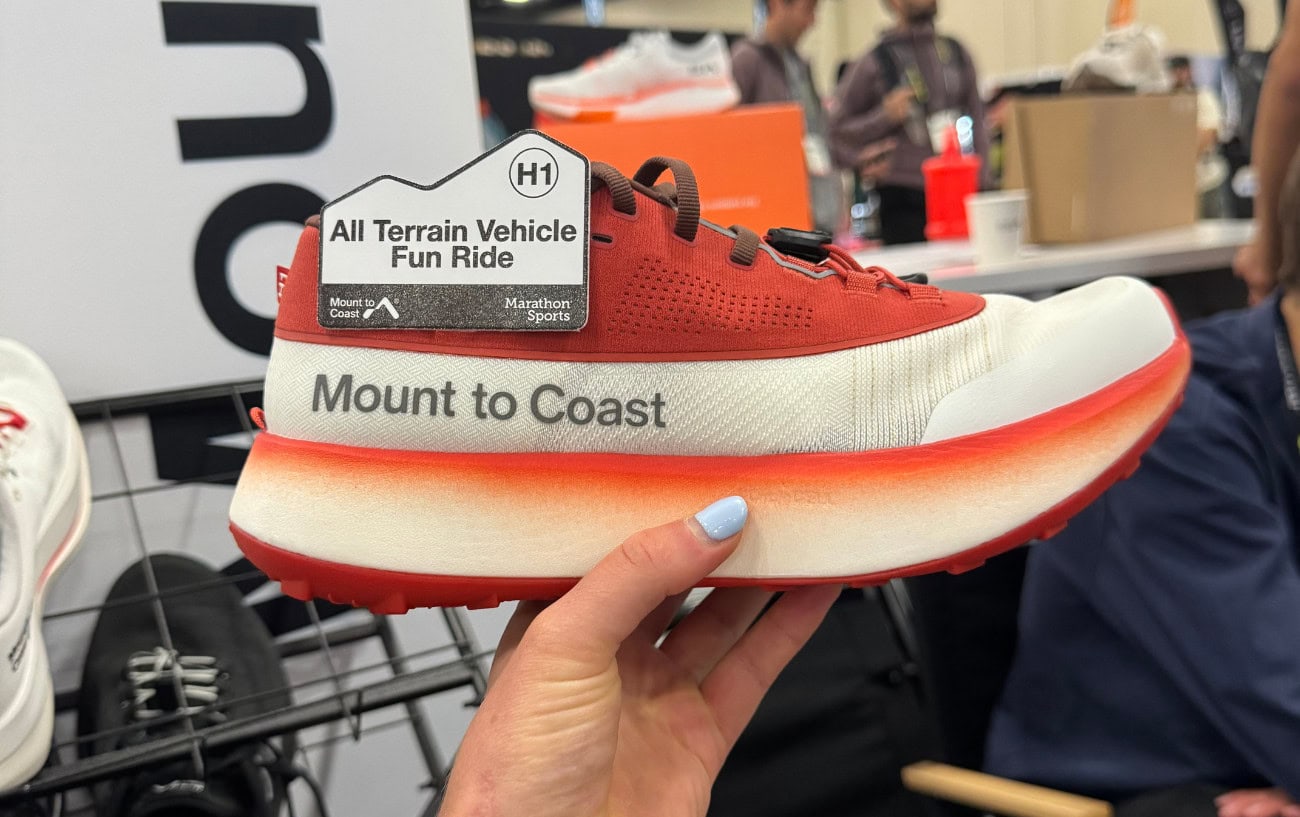
Gravel running shoes didn’t show up at TRE as a novelty. They showed up as a coordinated effort from brands, and even a main focus for some.
Salomon was leading the charge, which makes sense. Gravel is a clean extension of what they already do well: trail-leaning performance shoes that don’t look completely feral on pavement. But what raised eyebrows was who else was suddenly involved.
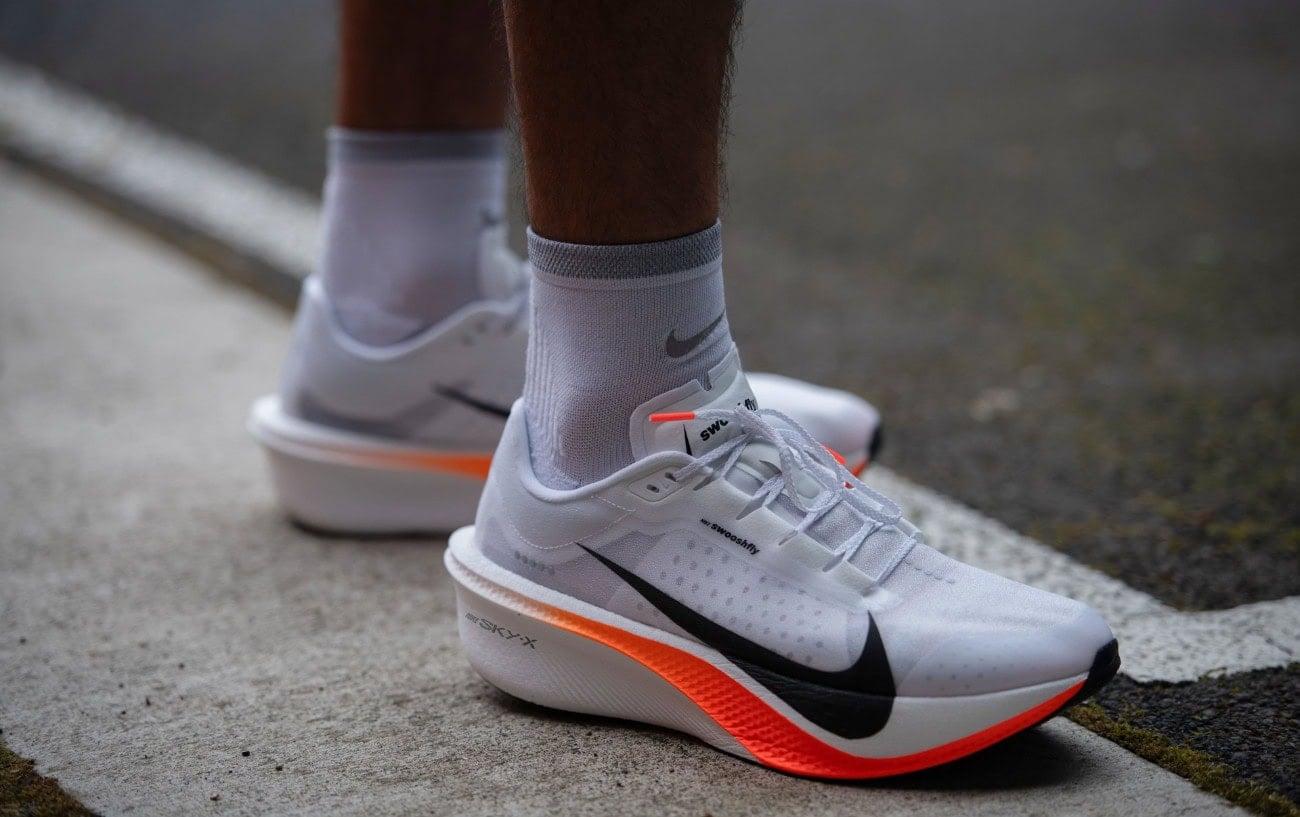
Adidas, of all brands, previewing a gravel-friendly Evo SL ATR with subtle lugs and a surprisingly clean silhouette. Other brands, including Mount to Coast, quietly slotting “gravel” into product decks where the word “hybrid” used to live.
This isn’t just a new outsole pattern. It’s brands trying to carve out new terrain, literally and figuratively.
There are two truths happening at once here.
The first: Gravel shoes actually make sense for a lot of runners.
If you live somewhere with mixed terrain, winter grime, dirt paths, park loops, crushed limestone trails, or roads that aren’t always kind, a light-grip, road-adjacent shoe is genuinely useful. You don’t need 5 mm lugs. You don’t want a stiff trail plate. You just want a little forgiveness when conditions aren’t perfect.
The second: Brands are running out of clean growth lanes.
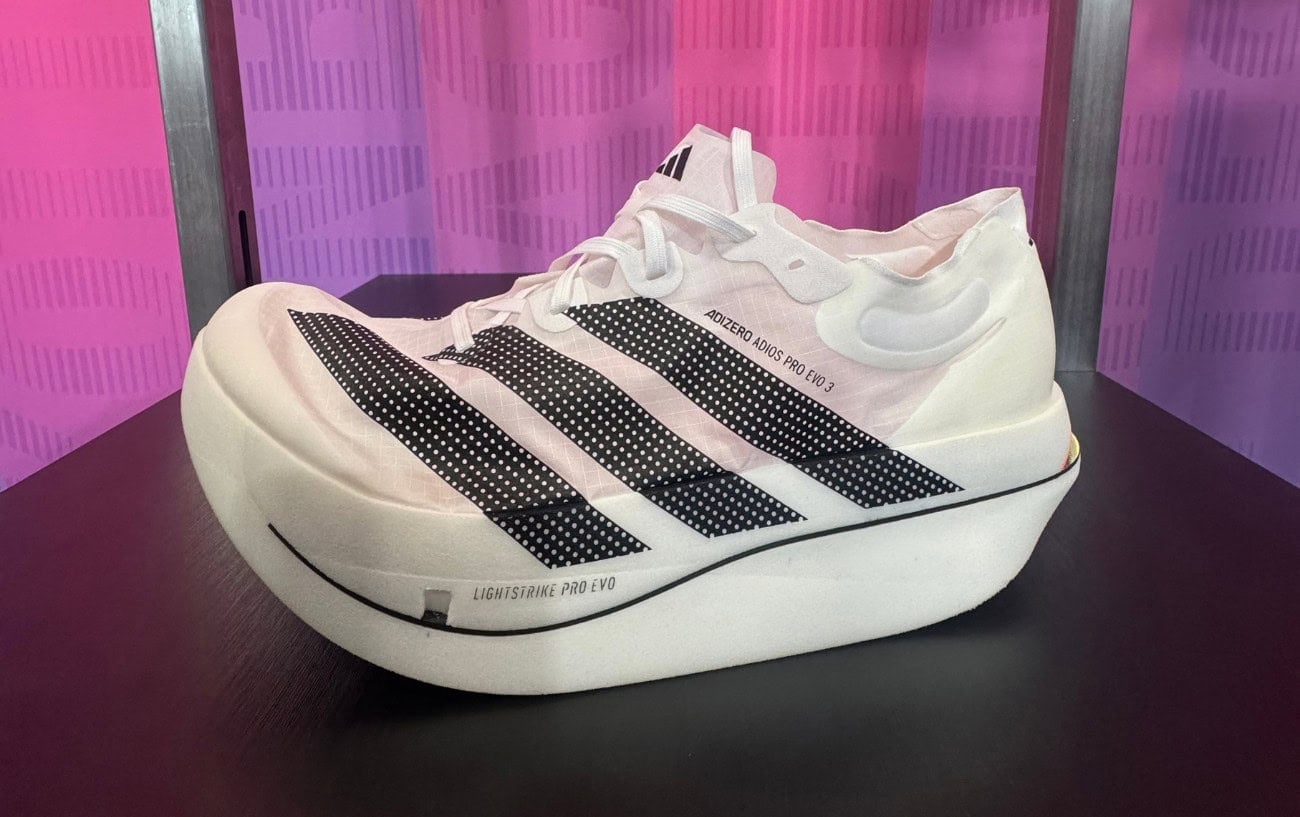
Super shoes are plateauing. The current best models are very, very good, and meaningful gains are getting harder. Easy trainers are crowded. Trail is competitive. Gravel offers a new category to sell into, and that’s not accidental.
Whether gravel becomes a lasting category or just a renamed version of the hybrid shoes we already own depends on execution. But what we can say is that by 2026, you’ll see more of these shoes on shop walls, and they won’t be positioned as niche anymore.

Trend #2: Durability Is Becoming a Selling Point Again
For the past few years, running shoes have lived in a strange contradiction. We’ve been sold foams that promise record-breaking performance, paired with the quiet understanding that they might last one marathon and a few workouts before turning into very expensive slippers.
At TRE, that tone shifted.
We heard the word “durability” everywhere. From big brands. From small brands. From designers who were clearly tired of explaining why a $300 shoe felt cooked after less than 200 miles.
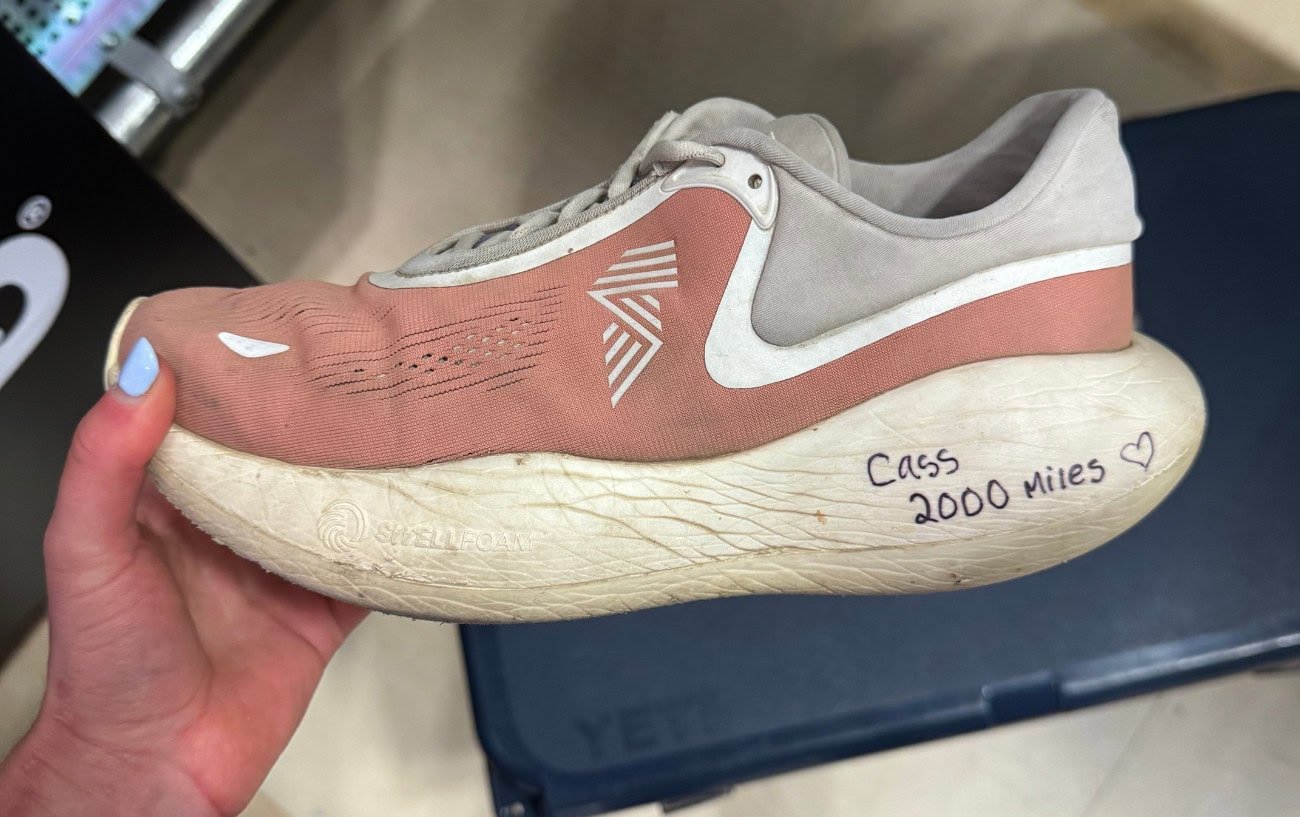
One of the clearest examples came from a smaller brand called Rad. They showed us a non-plated super trainer and then casually mentioned that the pair in their hands had over 2,000 miles on it. Not marketing miles. Real miles. The shoe looked worn, sure, but it wasn’t collapsing under itself.
That conversation echoed what we heard elsewhere. There’s growing acknowledgment that ultra-light, ultra-soft foams come with tradeoffs, and that most runners don’t want to replace shoes at race-shoe frequency. Especially not when prices keep climbing.
This doesn’t mean maximalism is dead. It means it’s changing. Slightly firmer compounds. More resilient midsoles. Shoes that still feel good at mile 500.
Trend #3: Fashion and Performance Are Fully Entangled (For Better or Worse)
One of the more honest moments we had at TRE came from a Salomon rep who flat-out said their biggest buying group isn’t performance-driven. It’s fashion-driven.
That wouldn’t have sounded believable five years ago. Now it’s obvious.
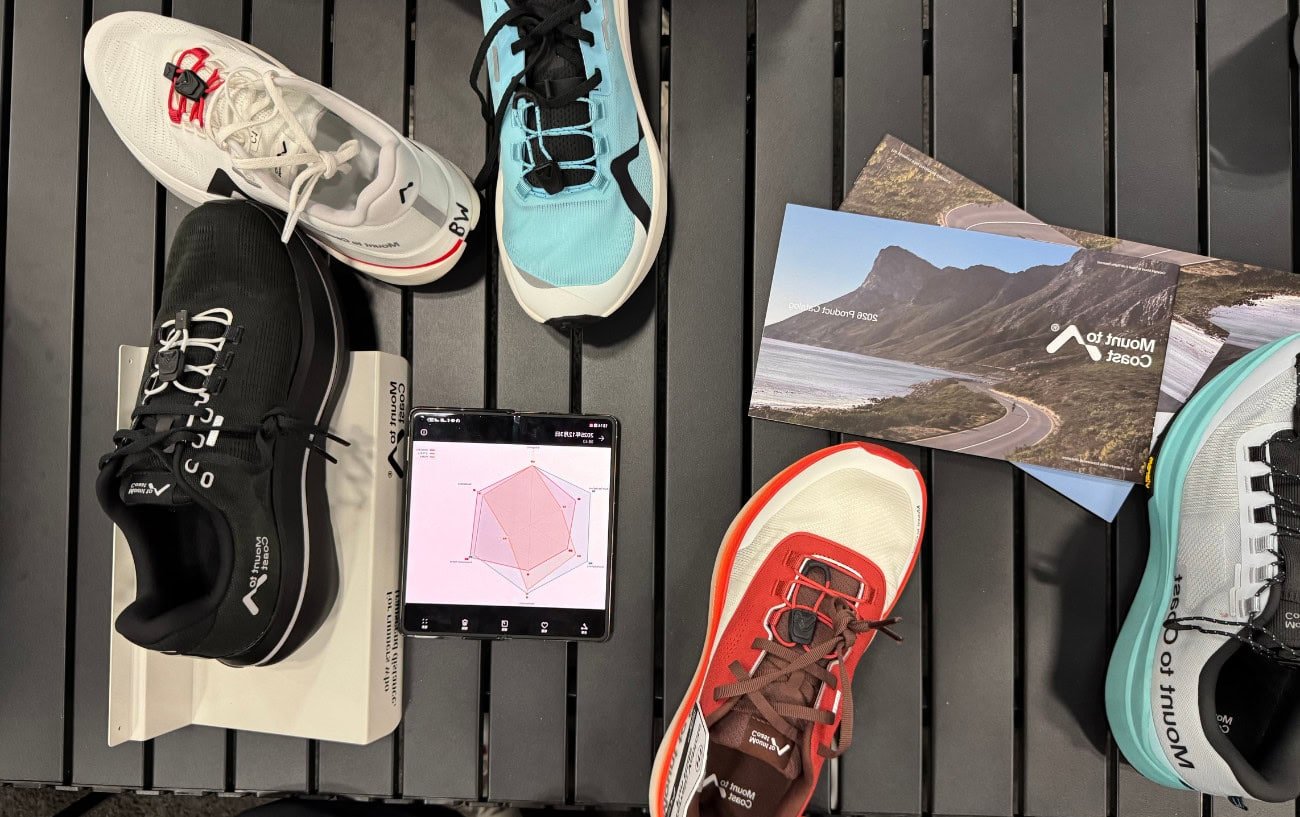
Trail shoes have crossed over hard into lifestyle. Salomon, HOKA, and others are designing silhouettes that look just as at home on Instagram as they do on dirt. Gravel shoes sit right at that intersection: functional enough to justify the tech, clean enough to be worn casually.
This is where things get tricky.
On one hand, fashion crossover has brought more people into running spaces. On the other, it muddies intent. When a shoe is designed to satisfy runners and influencers at the same time, you start asking hard questions about who it’s really for.
In 2026, we’re going to see more shoes that live in that gray zone. Some will work brilliantly. Some will feel like lifestyle shoes cosplaying as performance gear. Runners are going to have to get better at reading between the lines.
Trend #4: Small Brands Are Doing Some Of the Most Interesting Work
TRE always feels a bit like a film festival. The blockbusters draw the crowds, but the most interesting conversations happen in smaller rooms.
This year, those rooms were packed with brands quietly doing things the giants can’t move fast enough to attempt.
Swift Running is building entry-level plated race shoes that don’t require a second mortgage. Avelo is embedding sensor tech directly into shoes to track biomechanics, fatigue, and injury risk, essentially a power meter for runners. Mount to Coast is experimenting with new midsole polymers inspired by automotive coatings and building super trainers without plates because that’s what their customers asked for.
Even outside footwear, the innovation was real. Portable hydration testing that reads saliva. Fully customizable nutrition mixes that let you choose carb ratios, viscosity, and electrolytes. Socks so thoughtfully engineered that grown adults were hoarding pairs like rare collectibles.
Not all of these brands will survive. Some won’t make it to the next TRE. But this is where the future keeps leaking out first.

If there’s one unifying theme from TRE, it’s this: the running industry feels like it’s between chapters.
The easy wins are gone. The next breakthroughs are harder. Brands are testing new lanes, reassessing old assumptions, and trying to figure out how to sell shoes to a much broader audience than elite racers.
Some of what we saw will stick. Some of it won’t. But by the end of 2026, the running world will look slightly less obsessed with raw performance numbers and a little more focused on longevity, versatility, and identity.
And honestly? That might not be a bad thing.
RunClub
Get more running stories — join RunClub
Daily running news, a community of 300,000+ runners, free training plans for every distance, and a daily running game. Free to join — no card.
Already a member? Log in →


Start the conversation