


When Letsile Tebogo crossed the finish line in Paris to win Olympic gold in the men’s 200 meters, the roar that followed wasn’t just for him. It was for Botswana, for Africa, and for the next generation of sprinters reshaping the global track and field hierarchy.
Tebogo, 21, has become one of the sport’s brightest stars, and the new World Athletics+ documentary Built for Speed tells the story of how he got here, from a tough neighborhood in Gaborone to Olympic gold, with heartbreak, resilience, and a little Bolt-inspired swagger along the way.
In the two-part series, released this week, Tebogo reflects on his childhood, the friends he lost to the streets, the moment he nearly walked away from the sport, and what it means to carry a continent’s hope on his shoulders.
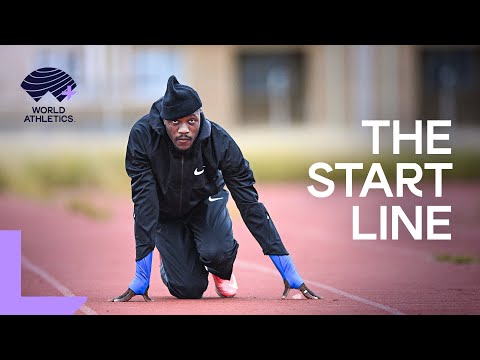
“The Olympic gold, it means a lot to the country, it means a lot to the African continent,” Tebogo says. “Because Africa is no longer known for the long-distance races, it is known for the short sprints now, which was the initial goal when I came into athletics.”
That shift is no exaggeration. For years, African dominance in track and field has largely been confined to middle- and long-distance events. Tebogo has helped disrupt that. His 19.50s personal best in the 200m ranks among the fastest in history. He’s also the African record holder in the 100m at 9.88s, a mark that put him on the radar of sprinting’s elite, if he wasn’t already.
And he’s done it all without relocating to the U.S. or Europe, unlike many African athletes who leave in search of better facilities or visibility. Tebogo stayed home, trained under Botswana’s national program, and became a symbol of what’s possible when talent meets opportunity, without leaving the continent.
His rise wasn’t always smooth. In 2024, just months before the Paris Games, Tebogo’s mother passed away. He shut down. Stopped training. “I stayed more than three weeks doing nothing, just home sleeping,” he says in the film. “I didn’t have the motivation to even start training.”
It was his teammates who pulled him out of that spiral. They brought him to practice, not to run, just to watch. “And I thought to myself, would she be happy if I left the sport?” he remembers. “Only when I get onto the track, I become somebody different.”
That “different” version of Tebogo now ranks among the world’s most exciting athletes, praised even by the man whose shadow he once raced in.

“I’ve seen him through the junior days, coming up and dominating,” Usain Bolt says in the film. “Now he’s here and he won his first Olympic medal already at this young age, which is just outstanding. The talent is there, the confidence is there also.”
Indeed, confidence has never been in short supply. At the 2022 World U20 Championships in Cali, Tebogo famously waved at his competitors while coasting across the line in 9.91s, a move that drew both criticism and awe. For some, it felt premature. For others, it was a glimpse of what was to come.
Since then, he’s proven himself on the biggest stages. A silver medal in the 100m and bronze in the 200m at the 2023 World Championships in Budapest showed he wasn’t just a viral clip, he was a real contender. In Paris, he confirmed it.
Now, all eyes turn to Tokyo 2025, where Tebogo is expected to challenge for global titles again, this time as a defending Olympic champion. He’ll likely face off against U.S. stars Noah Lyles and Erriyon Knighton, as well as Jamaica’s Oblique Seville and Britain’s Zharnel Hughes, in what’s shaping up to be one of the most competitive sprint eras in recent memory.
But Tebogo isn’t just running for medals. He’s running for something far bigger.
“I’m doing it for my country, I’m doing it for Africa, and I’m doing it for my mother,” he says.
RunClub
Get more running stories — join RunClub
Daily running news, a community of 300,000+ runners, free training plans for every distance, and a daily running game. Free to join — no card.
Already a member? Log in →


Start the conversation