


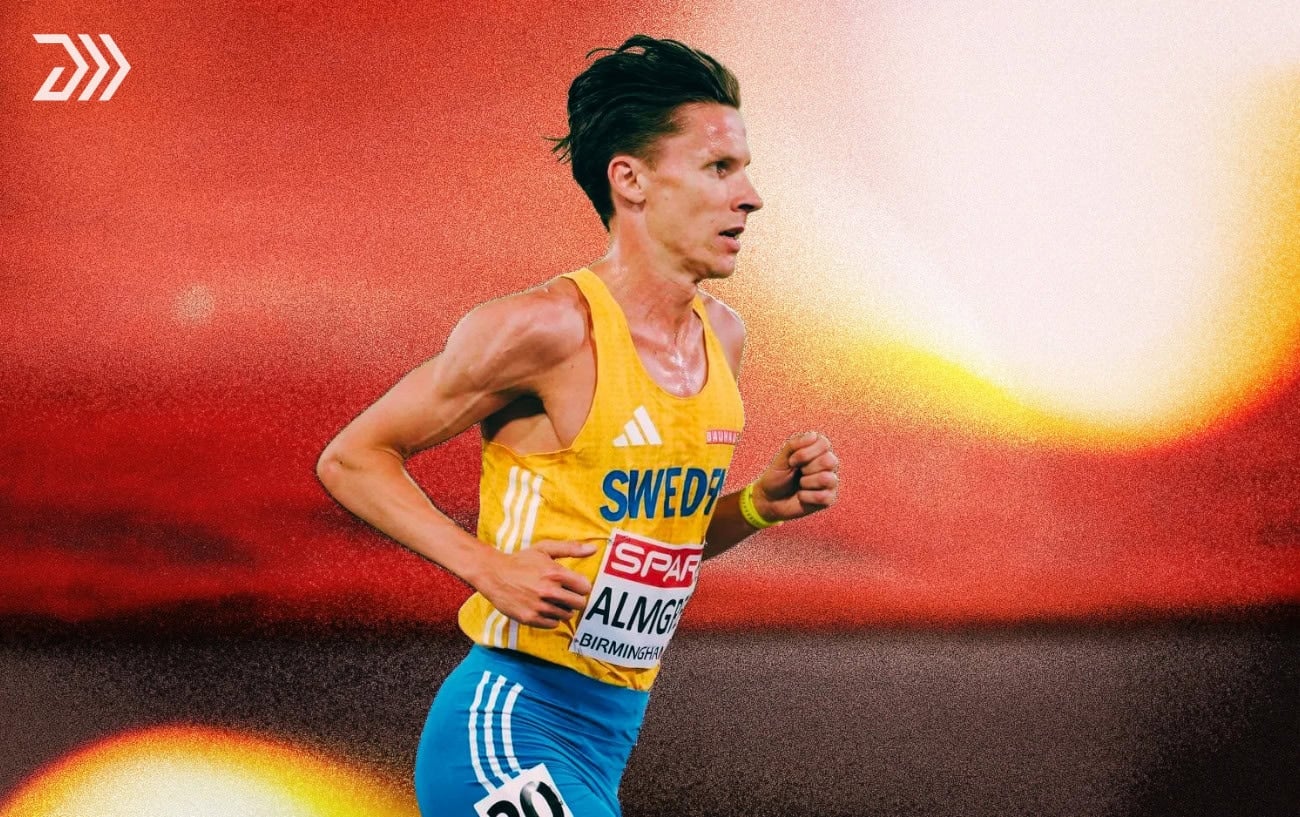
If you put Andreas Almgren’s 58:06 from the world half-marathon championships into a race time calculator, it predicts a marathon of around 2:01. That would be almost four minutes under the New York City Marathon course record, and New York is where the 31-year-old Swede will run his first marathon on Nov. 1.
We first reported his plans to debut in New York in August, and a lot has happened since. He won the world half-marathon title in Copenhagen on Sept. 20, lowering his own European record from 58:41 to 58:06, and he has spent the final weeks of his build training at altitude in Flagstaff, Ariz. He also holds the European 5,000m record at 12:44.27.

Faster Every Year on the Road
Almgren ran his first half-marathon in Barcelona in February 2024, and he has raced the Valencia 10K every January since then. He has run faster at both distances every year.
| Year | 10K, Valencia (January) | Half-marathon best | Half pace per km |
|---|---|---|---|
| 2024 | 27:20 | 59:23 (Barcelona, Feb.) | 2:48.9 |
| 2025 | 26:53 | 58:41 (Valencia, Oct.) | 2:46.9 |
| 2026 | 26:45 | 58:06 (Copenhagen, Sept.) | 2:45.2 |
His 10K times are still coming down, but by less each year: 27 seconds from 2024 to 2025, then just eight seconds this January. His half-marathon times have dropped by more, 42 seconds and then another 35, and he now runs the distance 3.6 seconds a kilometer faster than he did in his debut. The 58:06 came at a championship race with no pacemakers, which is exactly the kind of race he will face in New York.
He also brings more track speed than most marathon debutants:
- 800m: 1:45.59 (2015)
- 1,500m: 3:32.00 (2023)
- 3,000m: 7:26.48 (2026, Swedish record)
- 5,000m: 12:44.27 (2025, European record)
- 10,000m: 26:52.87 (2024, Swedish record)
What the Formulas Say
The two prediction methods most runners know are Pete Riegel’s formula and Jack Daniels’ VDOT tables, and anyone who has used a race time calculator has probably come across one of them. Riegel’s formula takes a race time and adds a set amount of slowdown for the longer distance. Daniels’ method turns a race time into a fitness score, called VDOT, and works out what that score is worth at other distances.
| Race used | Riegel | Daniels VDOT |
|---|---|---|
| 58:06 half (Copenhagen, 2026) | 2:01:08 | 2:01:46 |
| 26:45 10K (Valencia, 2026) | 2:03:03 | 2:03:16 |
| 59:23 half (Barcelona, 2024) | 2:03:49 | 2:04:27 |
Both methods say his half-marathon is worth a faster marathon than his 10K, by nearly two minutes. Put simply, he looks stronger the longer the race gets, which is a good sign for a runner who started out in the 800m.
The formulas do assume the runner has trained as specifically for the marathon as for the shorter race. They can’t account for it being a first marathon, for getting the fueling right, or for the climb up the Queensboro Bridge at mile 15. Our marathon time predictor explains more about what they miss.
How Other Half-Marathon Stars Did in Their Debuts
Another way to estimate it is to look at runners who came into their first marathon with a fast half-marathon. For each of them, we divided their debut marathon time by their half-marathon best, then applied that same ratio to Almgren’s 58:06.
| Runner | Half best before debut | Debut | Ratio | Almgren at the same ratio |
|---|---|---|---|---|
| Kelvin Kiptum | 58:42 | 2:01:53, Valencia 2022 (1st) | 2.076 | 2:00:38 |
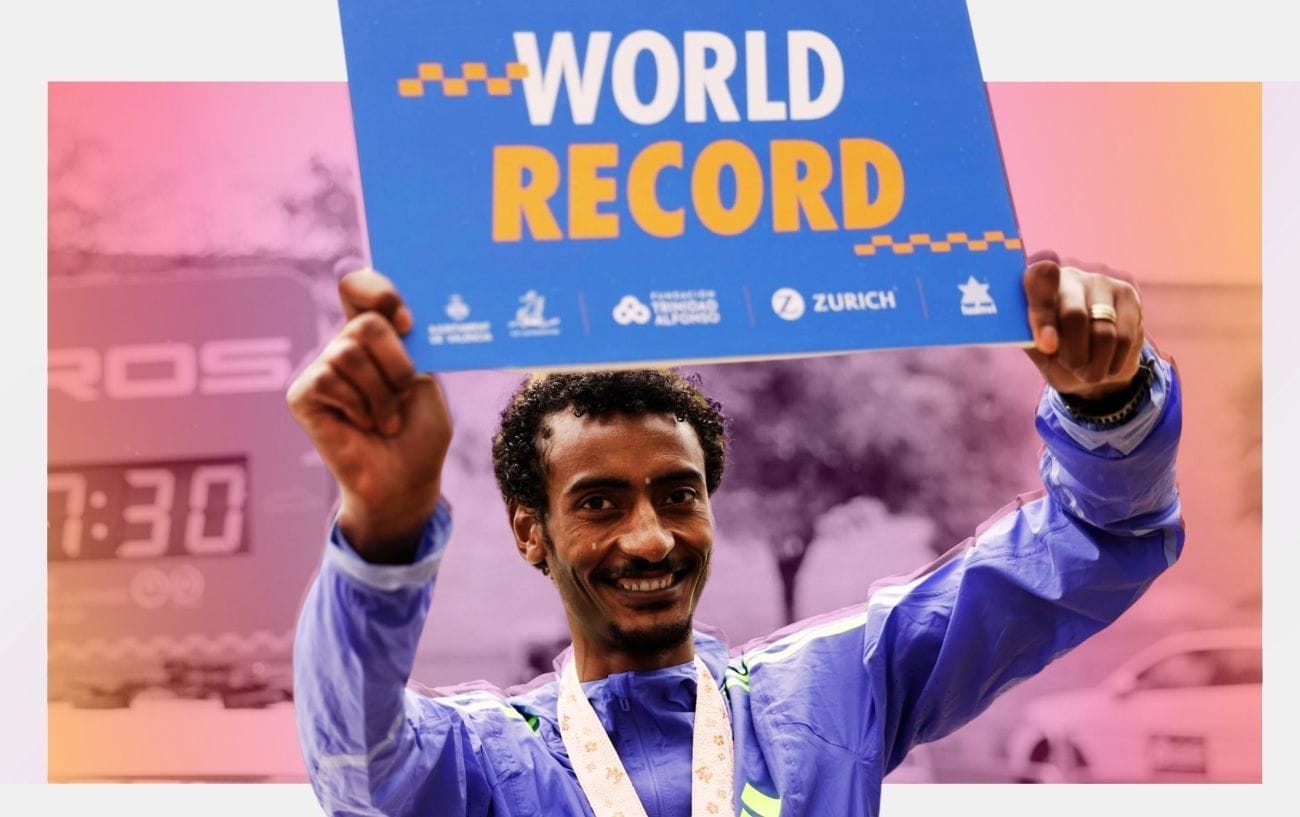
| Yomif Kejelcha | 57:30 | 1:59:41, London 2026 (2nd) | 2.081 | 2:00:56 |
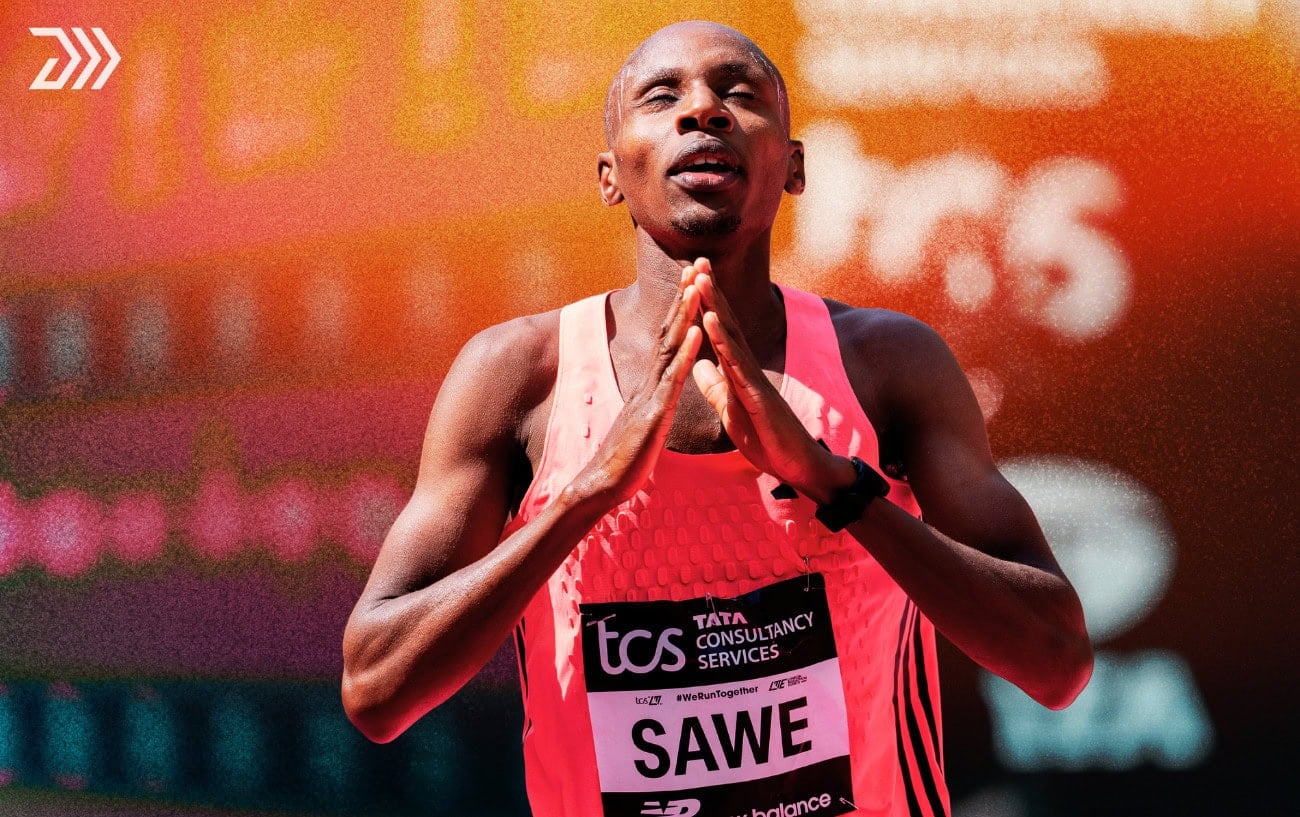
| Sabastian Sawe | 58:02 | 2:02:05, Valencia 2024 (1st) | 2.104 | 2:02:13 |
| Joshua Cheptegei | 59:21 | 2:08:59, Valencia 2023 (37th) | 2.173 | 2:06:16 |
| Jacob Kiplimo | 56:42* | 2:03:37, London 2025 (2nd) | 2.180 | 2:06:40 |
*Run in Barcelona in February 2025 but not ratified as a world record because of how the race was paced. Using his ratified best at the time, 57:31, the ratio is 2.149, which would put Almgren at 2:04:52.
[EDITOR: insert chart image almgren-marathon-conversions-chart.png here]
Depending on whose debut you use, Almgren’s 58:06 works out to anything from 2:00:38 to 2:06:40. Kejelcha broke two hours in his first marathon in London this year and still finished second, 11 seconds behind Sawe’s world record. Cheptegei’s debut in Valencia in 2023 shows how it can go wrong: he went through halfway in 60:36 and then needed 68:23 for the second half. He finished 20 seconds behind Almgren in Copenhagen in September.
All five ran their debuts in Valencia or London, on fast courses with pacemakers, and New York has neither.

New York Is a Slower Race
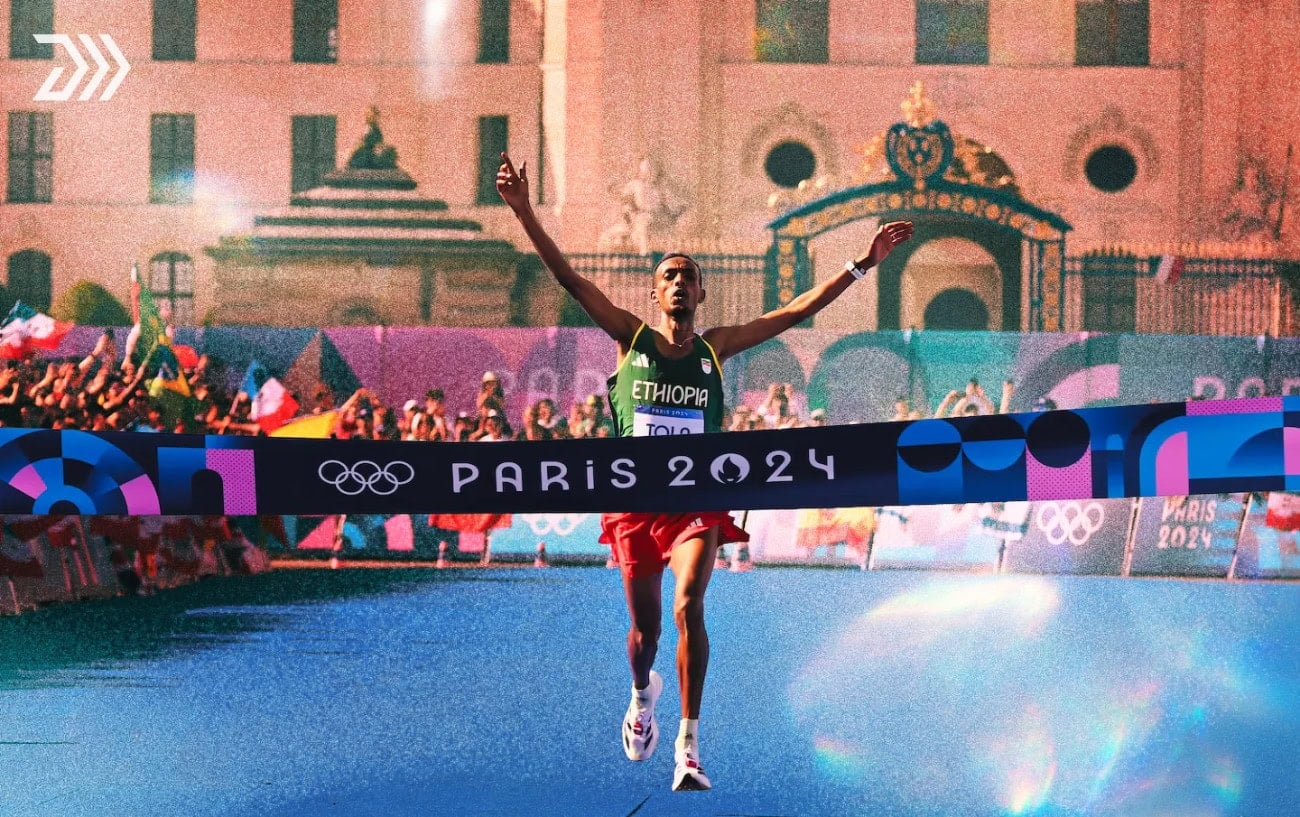
There have been no pacemakers in New York’s elite race since 2007, and the course crosses five bridges, which goes a long way to explaining why its winning times look so different from Valencia or London. Tamirat Tola’s course record of 2:04:58 from 2023 is 5:28 slower than the world record. Over the last 10 races, the winners have averaged 2:08:08, and only four of them broke 2:08.
| Year | Winner | Time |
|---|---|---|
| 2025 | Benson Kipruto | 2:08:09 |
| 2024 | Abdi Nageeye | 2:07:39 |
| 2023 | Tamirat Tola | 2:04:58 |
| 2022 | Evans Chebet | 2:08:41 |
| 2021 | Albert Korir | 2:08:22 |
| 2019 | Geoffrey Kamworor | 2:08:13 |
| 2018 | Lelisa Desisa | 2:05:59 |
| 2017 | Geoffrey Kamworor | 2:10:53 |
| 2016 | Ghirmay Ghebreslassie | 2:07:51 |
| 2015 | Stanley Biwott | 2:10:34 |
No race was held in 2020.
Here’s what those times work out to per kilometer and per mile, compared with the 2:45.2 per kilometer he ran in Copenhagen.
| Marathon time | Per km | Per mile | Slower than his 58:06 pace, per km |
|---|---|---|---|
| 2:01:08 (Riegel prediction) | 2:52.2 | 4:37.2 | 7.0 seconds |
| 2:04:58 (course record) | 2:57.7 | 4:46.0 | 12.5 seconds |
| 2:07:39 (2024 winner) | 3:01.5 | 4:52.1 | 16.3 seconds |
| 2:08:09 (2025 winner) | 3:02.2 | 4:53.3 | 17.0 seconds |
To win in a typical New York time of around 2:08, Almgren would need to run about 17 seconds per kilometer slower than he did in Copenhagen, but for twice the distance. The last man to win New York on his marathon debut was Ethiopia’s Gebre Gebremariam, who ran 2:08:14 in 2010.

His Training and His Finishing Speed
Almgren has talked openly about his preparation. He told Runner’s World Sweden in August that his longest runs would be about 40K, getting faster as they go and finishing at marathon pace or quicker. One session was a 35K run that ended with 10 x 1K, alternating hard and easier kilometers, and he has been practicing taking in around 120 grams of carbohydrate an hour on his long runs, close to 130 grams on that day.
In an interview with the Swedish news agency TT, carried by TV4 on Oct. 21, he said he had run 200K the previous week in Flagstaff, a bit less than the 225K he had planned. Soon after a hard long run, he went out for 25K at just under 4:00 per kilometer on hilly roads at around 2,100 meters of altitude. He said his biggest worry going into the build was how tired he would be after running 35K to 40K at a fairly hard effort. “What has surprised me is how well I’ve responded to the training,” he told TT (translated from Swedish).
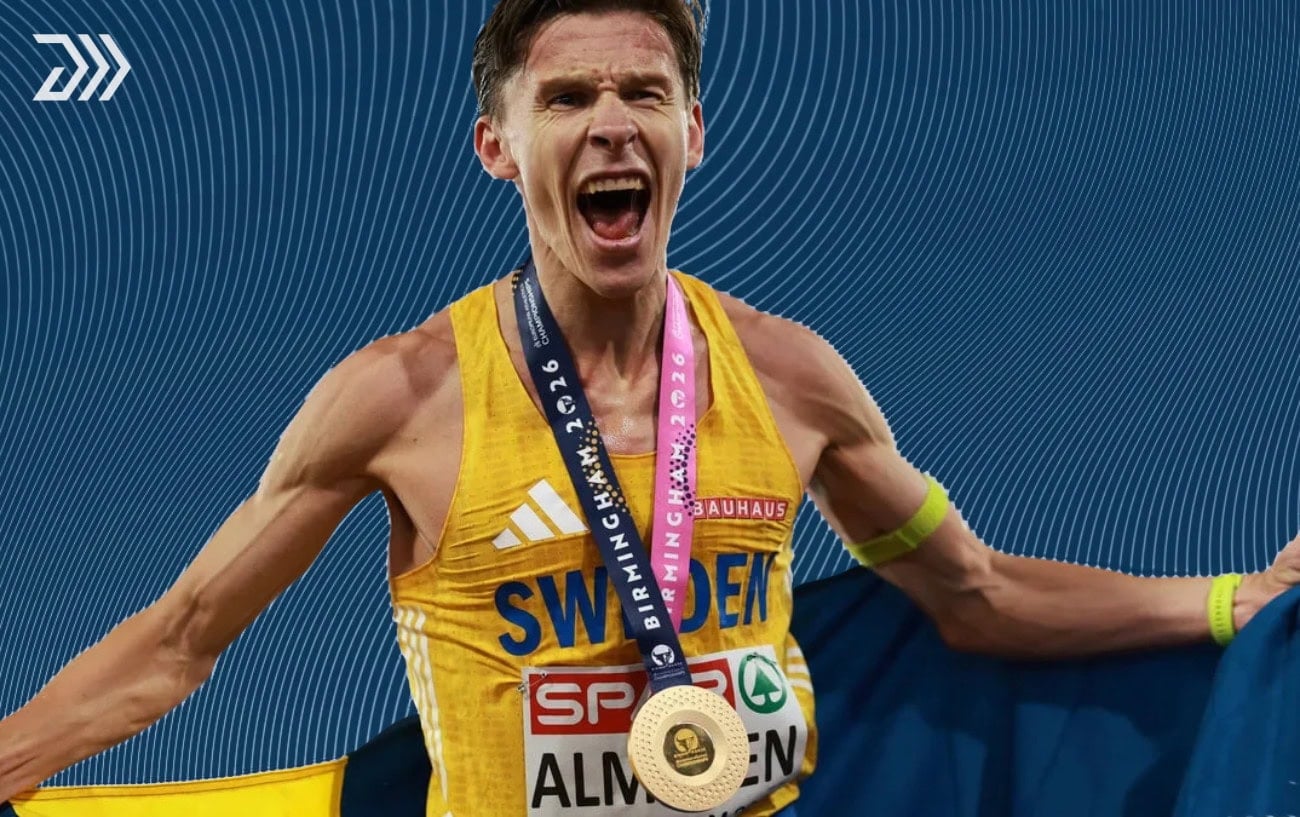
If the race in New York comes down to a sprint, Almgren showed in Copenhagen that he has one. He was in the group of three that reached 20K in 55:20, and he covered the last 1.1K in about 2:46, quicker than 2:32 per kilometer, to pull away from Nicholas Kipkorir and win by five seconds.
He will race defending champion Benson Kipruto, 2024 winner Abdi Nageeye and Conner Mantz, who set the American record of 2:04:43 in Chicago last year.
RunClub
Get more running stories — join RunClub
Daily running news, a community of 300,000+ runners, free training plans for every distance, and a daily running game. Free to join — no card.
Already a member? Log in →



Start the conversation