


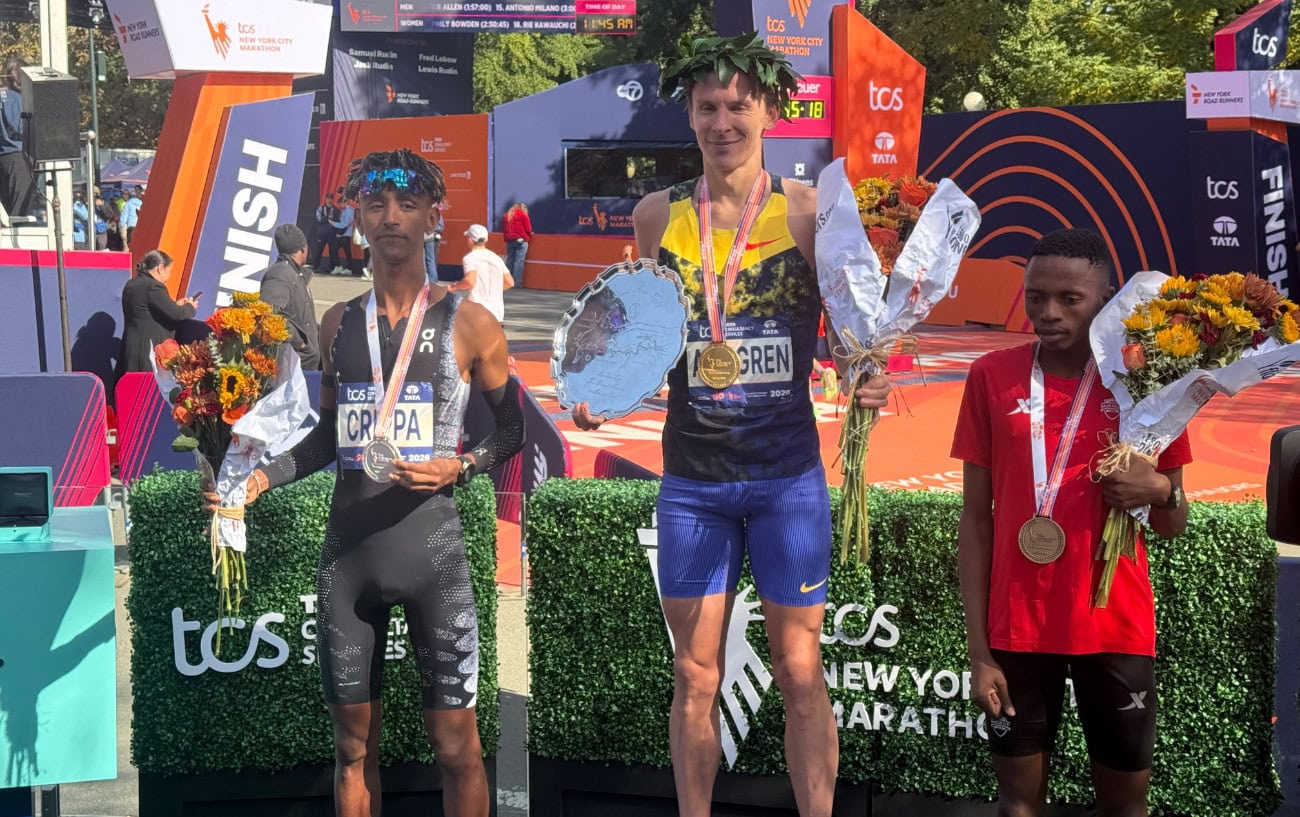
Andreas Almgren won the New York City Marathon on Sunday in his first race at the distance, running 2:06:01 to finish 13 seconds ahead of Italy’s Yemaneberhan Crippa. We covered the result and the full top 10 on race day, and the week before, we put his 58:06 half-marathon through the standard prediction formulas to see what it might be worth over 26.2 miles.
Since then, COROS, whose watch Almgren raced in, has shared his heart rate, cadence and ground contact data with Marathon Handbook, and New York Road Runners has posted official splits for every man in the lead pack. Read together, they show a race that was settled in its final two kilometers, by a runner who was still getting quicker when he got there.
Ten Men at 35K and Two at 25 Miles
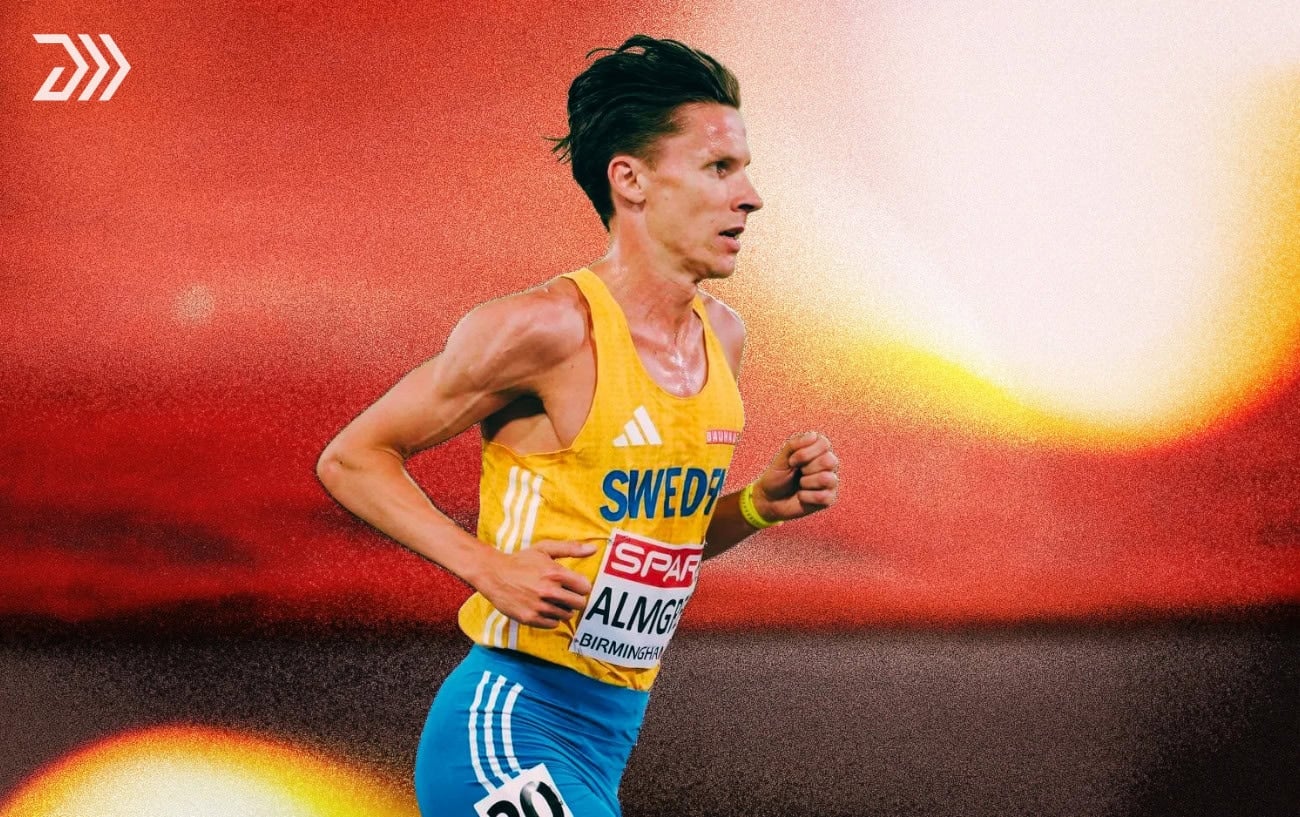
Almgren went through halfway in 1:04:04 with the lead pack all around him, running 4:53 per mile, and his mile splits stayed within half a minute of each other all the way to the 22nd. Ten men went through 35K within a second of each other, with Conner Mantz, who would finish 11th, at the front in 1:45:33.
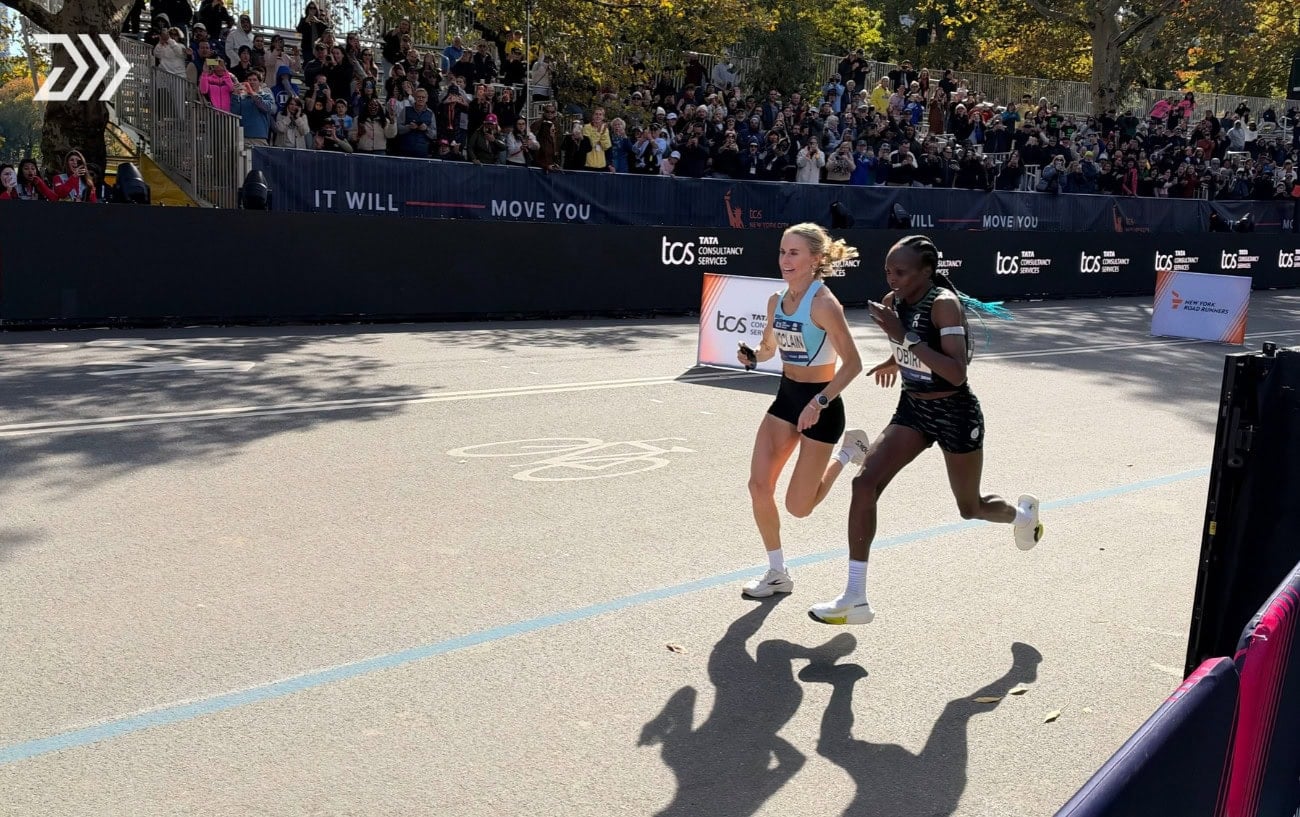
The group started to come apart on the long drag up Fifth Avenue toward Central Park. Almgren ran the 23rd and 24th miles in 4:39 and 4:41 and the 25th in 4:32, and by 40K only Crippa and defending champion Benson Kipruto were still with him, each one second back in 2:00:01. At the 25-mile mark, Almgren and Crippa were given the same time, 2:00:40.
Almgren then ran the 26th mile in 4:25 to Crippa’s 4:32 and covered the last 352 meters in 56 seconds, six quicker than the Italian, so the whole of his 13-second margin was built after the 25-mile mark. Behind them, Kamohelo Mofolo of Lesotho had been nine seconds down on Kipruto at 40K and still caught him after the 26-mile mark, taking third by just over half a second on his 21st birthday.
| Runner | 35K | 40K | 25 miles | 26 miles | Finish |
|---|---|---|---|---|---|
| Andreas Almgren | 1:45:34 | 2:00:00 | 2:00:40 | 2:05:05 | 2:06:01 |
| Yemaneberhan Crippa | 1:45:34 | 2:00:01 | 2:00:40 | 2:05:12 | 2:06:14 |
| Kamohelo Mofolo | 1:45:35 | 2:00:10 | 2:00:51 | 2:05:27 | 2:06:26 |
| Benson Kipruto | 1:45:35 | 2:00:01 | 2:00:41 | 2:05:25 | 2:06:27 |
The Fastest Second Half by a New York Winner Since 2014
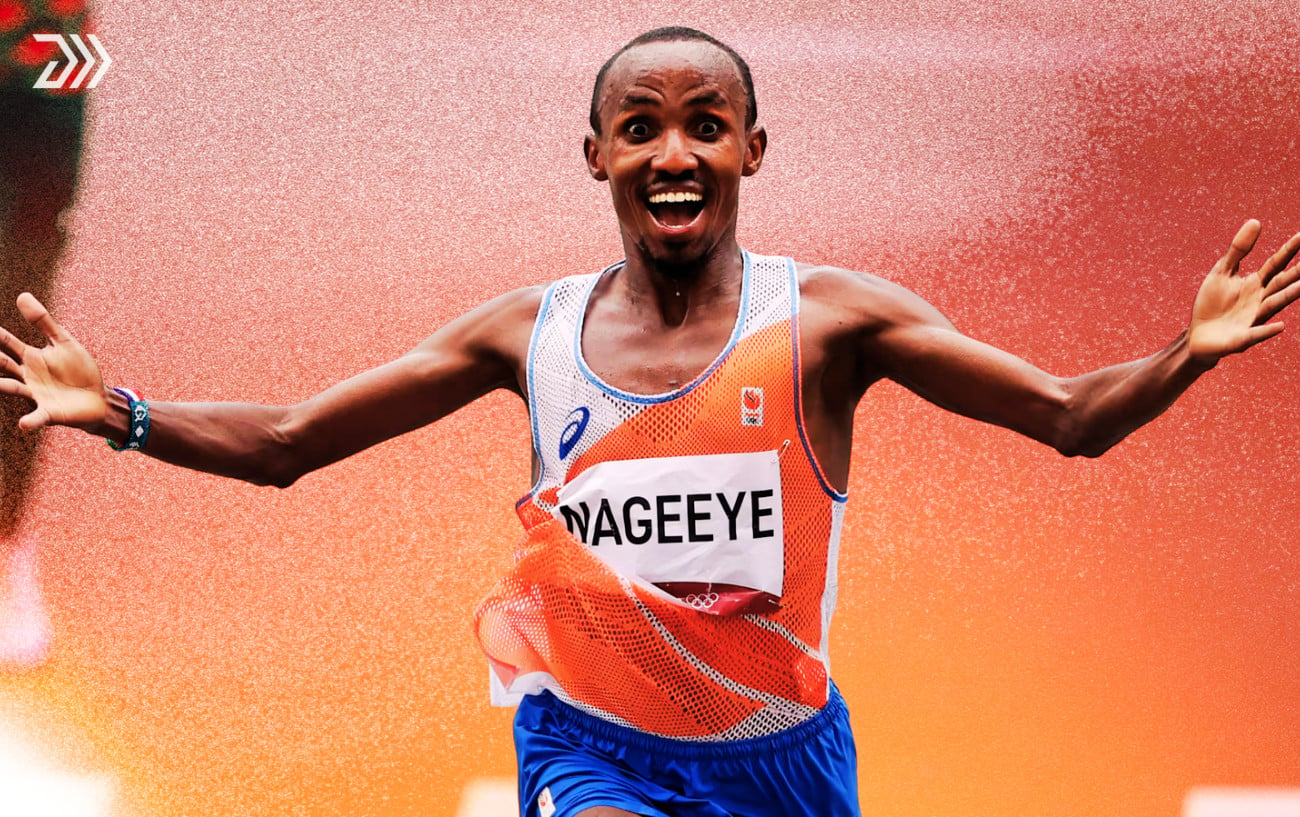
Almgren’s second half took 1:01:57, a negative split of 2:07. We went back through NYRR’s splits for every men’s winner from 2014 onward, and none of them came home faster. Lelisa Desisa was closest with 1:02:02 in 2018, then Abdi Nageeye with 1:02:04 in 2024. Tamirat Tola needed 1:02:13 for his second half when he set the 2:04:58 course record in 2023, but he had gone through halfway in 1:02:45, well over a minute ahead of where Almgren was.
His 6:01 from 40K to the line is the quickest closing stretch of any winner in that period too, eight seconds better than Wilson Kipsang in 2014 and 10 better than Kipruto managed on his way to winning last year. Four of those winners ran the 5K from 35K to 40K faster than Almgren’s 14:26, with Geoffrey Kamworor’s 14:14 in 2019 the best of them, which fits a race where Almgren had company until the final mile and only needed to be quickest at the very end.
Our pre-race numbers had the formulas putting his 58:06 at around 2:01, and the debuts of five half-marathon stars gave a range from 2:00:38 to 2:06:40. His 2:06:01 works out to 2.17 times his half-marathon best, almost exactly the ratio from Joshua Cheptegei’s debut in Valencia in 2023, though the two races were run very differently. Cheptegei went out in 60:36 and needed 68:23 to get home, while Almgren ran the second half of his marathon two minutes faster than the first.
What His Watch Recorded
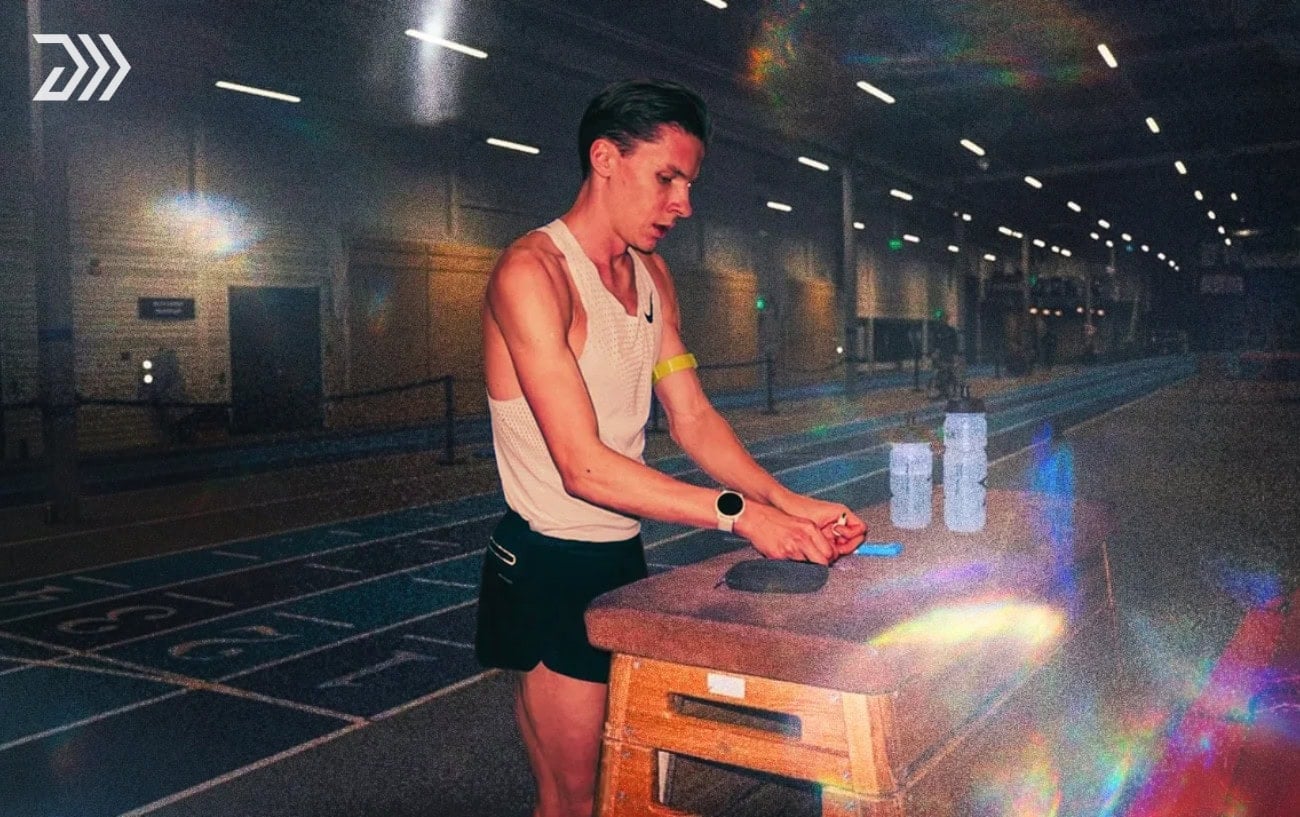
His heart rate averaged 156 beats per minute through halfway, according to the COROS data, and peaked at 171 in that first half. Over the second half it averaged 163, seven beats higher, while his pace came down from 3:02 per kilometer to 2:56 (4:53 to 4:43 per mile).
Cadence went from an average of 178 steps a minute in the first half to 183 in the second, and his ground contact time dropped from 147 milliseconds to 141. Over the last 600 meters, which COROS timed at 1:34, his cadence rose to 195, his ground contact time fell to 120 milliseconds, about 18 percent less than in the first half, and his heart rate reached its highest reading of the day, 178.
That final 600 meters works out to 2:37 per kilometer. When he won the world half-marathon title in Copenhagen in September, his 58:06 European record averaged 2:45 per kilometer. A watch measures its own distance, so a 600-meter reading carries some margin, but the official splits point the same way: from 40K to the finish he averaged 2:44.5 per kilometer, a little faster than his best half-marathon pace, with 40 kilometers already behind him.
The time left Almgren four seconds outside Suldan Hassan’s Swedish record of 2:05:57, and made him the first man to win New York on his marathon debut since Ethiopia’s Gebre Gebremariam in 2010.
RunClub
Get more running stories — join RunClub
Daily running news, a community of 300,000+ runners, free training plans for every distance, and a daily running game. Free to join — no card.
Already a member? Log in →




Start the conversation