


Mosisa Siyoum, a 27-year-old Ethiopian middle-distance runner, has been banned for eight years by the Athletics Integrity Unit in a decision dated Thursday, after he did not contest the charges. Four years are for EPO found in a urine sample he gave after winning the mile at the Al Sharqiyah International Race in Al Khobar, Saudi Arabia, last December. The other four are for tampering, because the AIU concluded that the medical records Siyoum produced to explain the positive were forged or manipulated, and World Athletics rules make a tampering ban run after the doping ban instead of at the same time.
The AIU has banned Mosisa Siyoum (Ethiopia) for 8 years from 5 May 2026 for Presence/Use of a Prohibited Substance (EPO), & Tampering or Attempted Tampering with any part of Doping Control. DQ results since 13 December 2025 Details here: https://t.co/FS1rzQ5qby https://t.co/hnK4B0sCwL
— Athletics Integrity Unit (@aiu_athletics) October 29, 2026
Siyoum gave his account at an interview with AIU investigators in May. He said he had collapsed at home four or five days before the race, and that his wife took him to a health center in Sebeta, Ethiopia, where he was told he was anemic and given an injection. About a week later he sent documents to back that up: an admission report dated Dec. 3, 2025, a blood test from the same day and a prescription, with the report listing “Erythropoietin 4000 Iu subcutaneous injection” as part of his treatment.
The Ethiopian Anti-Doping Authority took those papers to the Sebeta Health Centre on the AIU’s behalf, and in June the center wrote back that the record number on the report was not one of its own. Its patient numbers have five or six digits, and the one on Siyoum’s report had four. The name beside the signature, it said, matched nobody on its staff. Siyoum held to his story at a second interview in July. His theory was that the center was denying the paperwork to cover for having injected him with a banned drug. In August the center sent another letter stating that he had not been there on Dec. 3 at all.
When the Doha lab flagged the EPO on March 1, the sample code on its report did not match the one on Siyoum’s doping control form. The doping control officer explained the discrepancy, and the AIU also had the Lausanne laboratory compare the sample’s DNA against blood and urine Siyoum had given in Torun, Poland, the weekend of the Copernicus Cup in February. All three profiles matched.
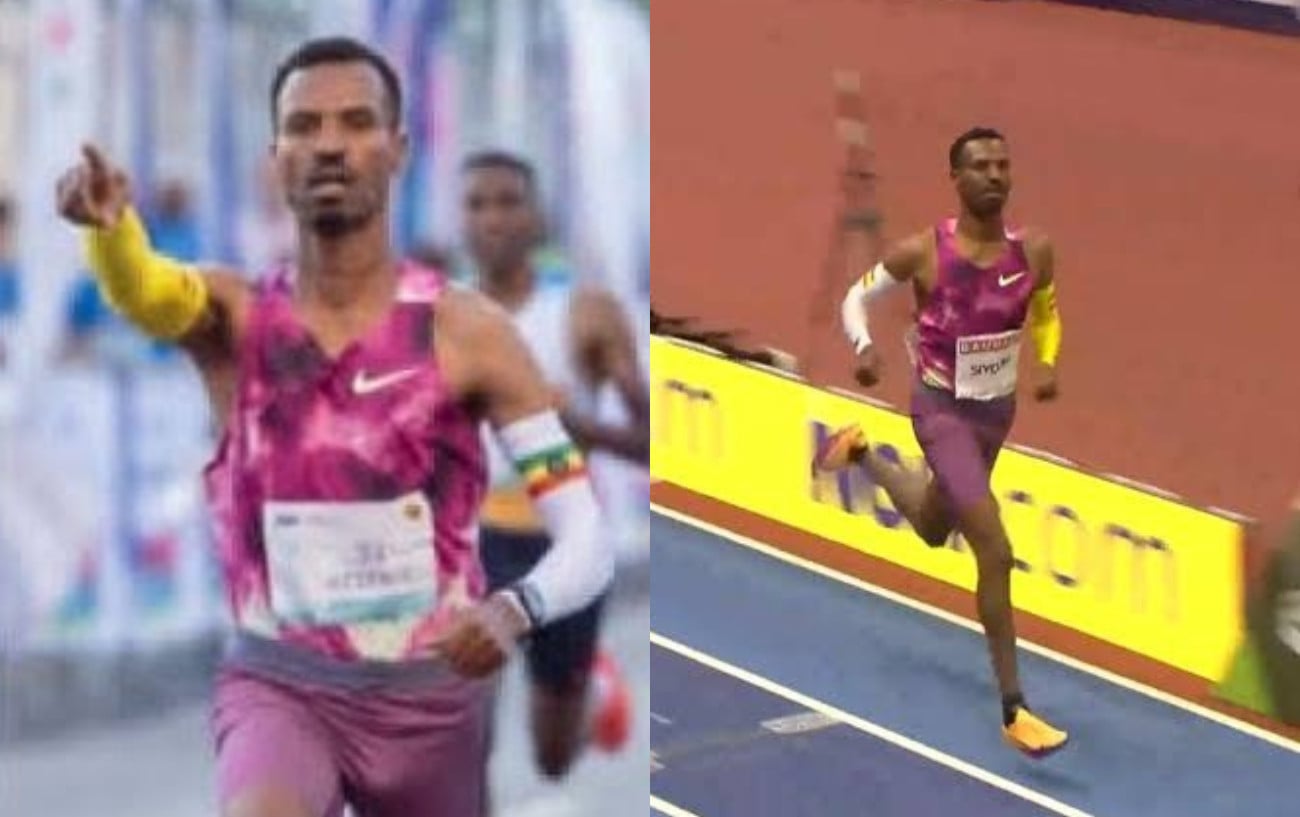
Siyoum ran a personal best of 3:34.28 at that meeting on Feb. 22, finishing fourth in the 1,500m once the first man across the line, Botswana’s Tshepiso Masalela, was disqualified for a gesture toward Azeddine Habz. The decision strips that result along with everything else he has run since Dec. 13, 2025, and whatever he earned in prizes and appearance fees. His ban runs from his provisional suspension on May 5, 2026, to May 2034.
He is the second Ethiopian in a week to have a doping ban extended for tampering. On Oct. 22 the AIU banned Ruti Aga, the 2019 Tokyo Marathon champion, for six years, two for a positive test for methylprednisolone and four for tampering, after finding that the prescription she submitted named a clinic that does not exist and had been signed by a relative. A day after Aga’s ban, the AIU provisionally suspended world marathon champion Peres Jepchirchir over an EPO finding.
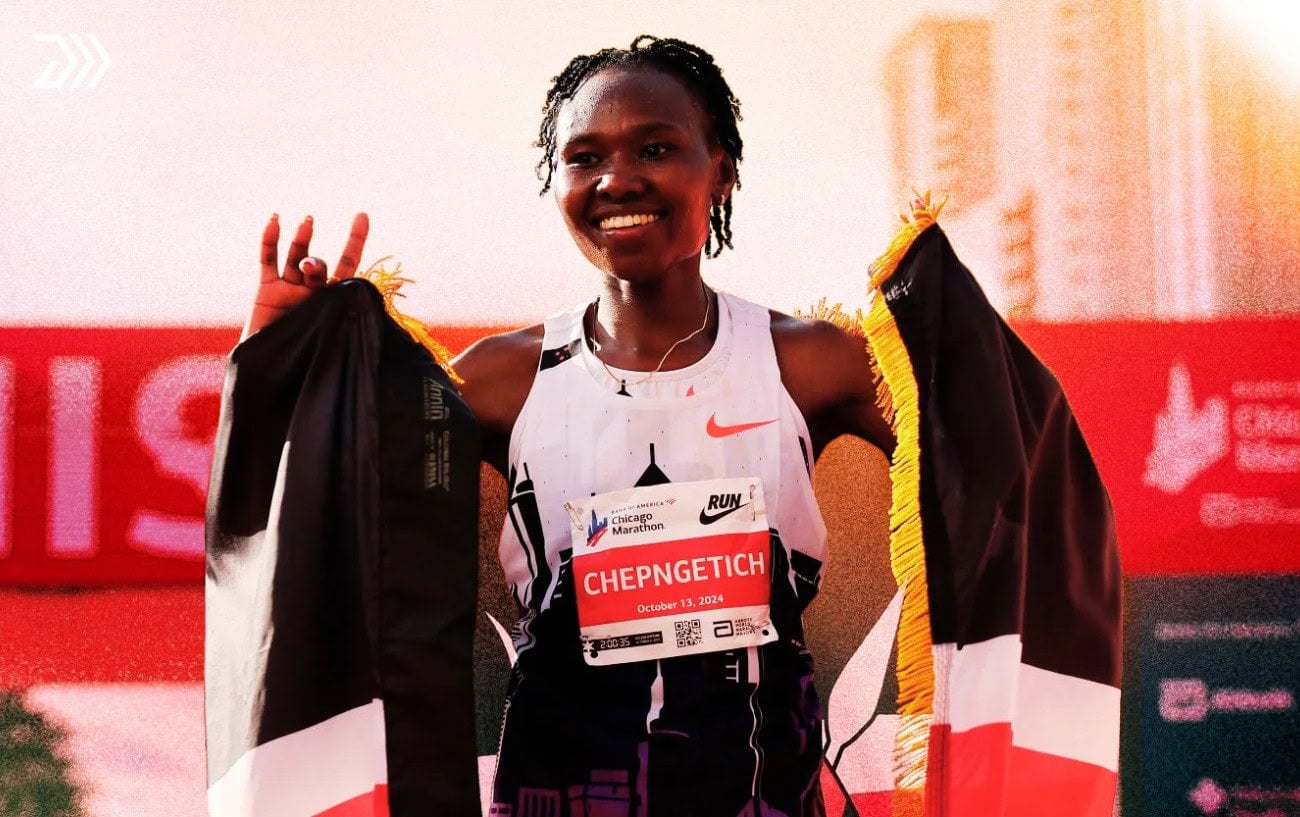
The AIU charged Siyoum on Oct. 1 and gave him until Oct. 8 to ask for a hearing, or to admit the violations and become eligible to have a year taken off, the route Ruth Chepng’etich took to a three-year ban last year. He never replied, so under the rules he is treated as having admitted the violations and accepted the sanction. Siyoum, WADA and the Ethiopian Anti-Doping Authority can still appeal to the Court of Arbitration for Sport.
RunClub
Get more running stories — join RunClub
Daily running news, a community of 300,000+ runners, free training plans for every distance, and a daily running game. Free to join — no card.
Already a member? Log in →










Start the conversation