


Sabastian Sawe ran 1:59:30 in London in April, the first sub-two-hour marathon in an ordinary race, and he was supposed to headline Berlin on Sunday to see if he could do it again… or even more. He withdrew on Aug. 27 with an injury, and with such big shoes to fill, organizers named nobody in his place. The marathon world record has fallen in Berlin 13 times, more than at any other marathon, and this year the race reaches the start line without the man who holds it.
Follow the race with us on Sunday: our live coverage begins at 2:15 a.m. ET.
What is left is a men’s field with no obvious winner, a former champion added little more than a week out at the age of 44, and the one genuinely outsized ambition of the weekend, which belongs to Tigst Assefa.

Tigst Assefa Is Chasing a Record Almost Two Minutes Faster Than Her Best
Assefa ran 2:11:53 on this course in 2023. For just over a year that was the world record, and it is still the third-fastest marathon any woman has run. She has been completely open about why she is back. “I am excited to once again try to break the world record,” she said in the organizers’ elite field announcement.
The record she wants is the mixed-race mark, 2:09:56, run by Ruth Chepngetich in Chicago in October 2024. Assefa would have to take 1:57 off her own personal best to get it, which is a large ask even of a 29-year-old who has already run four marathons inside 2:16. Only one woman has come close in two years. Fotyen Tesfay ran 2:10:51 on her marathon debut in Barcelona in March, reported by World Athletics as the second-fastest women’s marathon ever run, and she still finished 55 seconds outside it.
There is a complication, and it is not a small one. Chepngetich was banned for three years after testing positive for the diuretic hydrochlorothiazide in a sample collected on March 14, 2025. Her world record in Chicago came five months before that sample, so the Athletics Integrity Unit left the record where it was. “All Chepngetich’s achievements and records pre-dating the 14 March 2025 sample stand,” AIU head Brett Clothier said. The number on the books is the number Assefa has to beat, whatever anyone thinks of it.
She also already owns the women-only record, 2:15:41 from the 2026 London Marathon in April.

The Men’s Race Has No Clear Favorite for the First Time in Years
One of the quickest men entered is Gabriel Geay, whose 2:03:00 came at Valencia back in 2022. Getaneh Molla’s 2:03:34 is older still, from Dubai in 2019. Guye Adola, now 35, ran 2:03:46 finishing second here to Eliud Kipchoge in 2017, and he won the race outright in 2021 in 2:05:45.
Shura Kitata arrives with the freshest form of the four. He won Seville in February in 2:03:59, in a finish so tight that he and Asrar Abderehman were given the same time and the judges had to go to the photograph to separate them.
Then there is Selemon Barega, who is still working out what kind of marathoner he is. The Tokyo Olympic 10,000m champion won Seville on debut in 2025 in 2:05:15, then ran 2:05:00 for seventh in Tokyo in March, which is quicker and, in a race where the first four were inside 2:03:45, considerably less satisfying.
The rest of the elite field is where this gets interesting. Fourteen Japanese men are entered, every one of them between 2:05:59 and 2:07:56, which is the sort of block that runs honest splits and drags a race along faster than the front of it intended. Sawe, for the record, won here last year in 2:02:16 in warm weather, alone for the final 17K.

Kenenisa Bekele Is Back in Berlin at 44
Bekele was added to the field little more than a week before the race. He has won in Berlin twice, and it is the second of those, in 2019, that people still bring up: 2:01:41, two seconds outside Kipchoge’s world record.
Everything since has been harder. He was third here in 2021 in 2:06:47. He was second at London in April 2024 in 2:04:15, still the fastest marathon anyone over 40 has run, and four months after that he finished 39th at the Paris Olympics. He withdrew from London in 2025 and has not finished a marathon since Paris. Berlin will be his first race of any kind this year. He is not going to win it, and nobody is pretending otherwise. The thing to watch is whether a man of 44 can still get within touching distance of what he ran at 41.
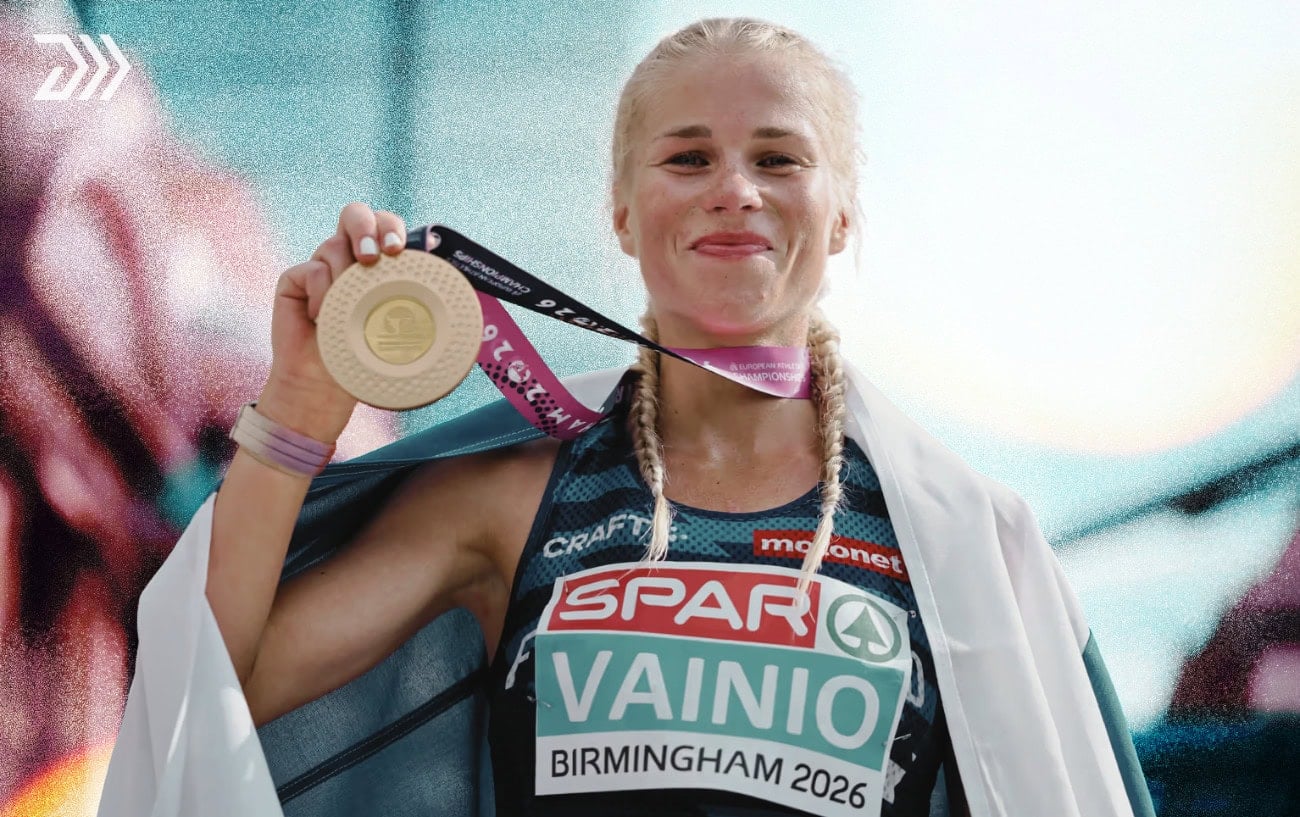
Alisa Vainio Is Running Berlin 15 Days After a National Title
Vainio was added on the same day as Bekele, and she has been unusually straight about what Berlin is for. She won the Finnish title in Jyväskylä on Sept. 12 in 2:27:47, running it as the long session already written into her week, four weeks after taking the European title in Birmingham with a championship record of 2:22:26.
“I’ll run Berlin a bit on the remnants of my Birmingham European Championships fitness,” she told Yle. “There hasn’t been time for a proper recovery and training block. I still expect a good run there. I’m not going there to take it easy.”
Her best is the 2:20:39 she ran winning Seville in February, the Finnish record, set on the same morning Kitata and Abderehman were being separated by a photograph. Valencia on Dec. 6, not Berlin, is what the autumn has been built around.

Esther Pfeiffer Is Going After a German Record That Has Stood 18 Years
Pfeiffer has run exactly one marathon, a 2:37:00 in Cologne in 2023, and it tells you almost nothing about the runner she is now. She went 67:25 for the half-marathon in Berlin this year, and she told organizers that if the training held she would aim at the German record. That record is 2:19:19. Irina Mikitenko set it on these same streets in September 2008, and no German woman has run faster in the 18 years since.
Rosemary Wanjiru, meanwhile, comes back to defend a title she won by only three seconds last September, in 2:21:05. Dera Dida, the woman she held off, is entered again, along with Bedatu Hirpa, Zeineba Yimer and three more women with bests inside 2:20.
RunClub
Get more running stories — join RunClub
Daily running news, a community of 300,000+ runners, free training plans for every distance, and a daily running game. Free to join — no card.
Already a member? Log in →






Start the conversation