


Glasgow’s Commonwealth Games program did two things to distance running that reveal an event going in opposite directions at the same time.
The Games, which opened in Glasgow last Thursday, gather more than 70 UK Commonwealth-affliated nations and territories every four years, and for many of their athletes they are the biggest stage outside the Olympics.
This edition brought back the mile, which last appeared at the Games in 1966, and it dropped the marathon, which had been contested at every Commonwealth Games since the first one in 1930. The mile returned because, in the words of World Athletics president Sebastian Coe, it is the distance that ordinary people understand. The marathon was cut even though it is the race ordinary people actually run, and the distance driving the largest, most profitable running boom in history. But the cut was entirely avoidable, nobody in a position to avoid it tried, and the Games are already facing the same choice again for 2030. What’s even more shameful is that there was a profitable and exciting new proposal for the marathon that could have revolutionized the Games (along with presenting a blueprint for other major championships), but it was instead ignored.
Instead of closing with the marathon, these Games will close with track cycling, netball, judo and lawn bowling.
To be fair to the organizers, two things should be said up front. The mile is a real gift to these Games: Josh Kerr arrives as the world record holder after running 3:42.66 in London, and Saturday’s final is the most anticipated event of the week, and may become the only event to gain actual international media attention.
And the budget case for a smaller Games is understandable. Glasgow rescued 2026 on roughly £150 million (about $200 million USD) after the Australian state of Victoria, the original host, quit in 2023 over cost projections that had reached A$6.9 billion (about $4.8 billion USD). The program shrank to 10 sports from 19 in Birmingham four years ago. Staging a marathon is also not cheap: 26.2 miles of road closures, police, and medical coverage across a city. Without cuts of some kind there would be no 2026 Games at all.
None of that explains why the one concrete and rather innovative proposal for keeping the marathon in the Games was seemingly ignored.
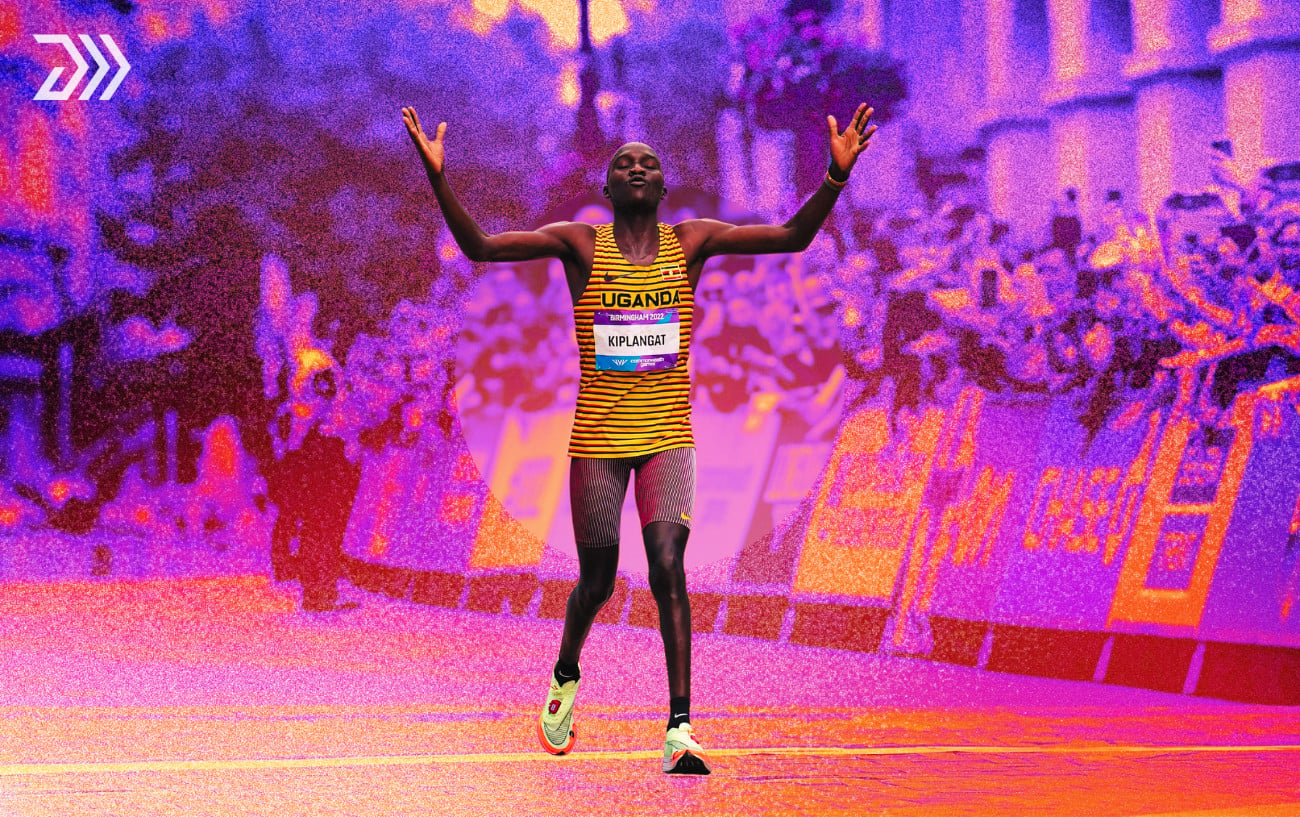
In April 2025, Paul Sweeney, a member of the Scottish Parliament for Glasgow, proposed running the Commonwealth marathon as a public event: the national teams starting at the front, thousands of paying amateurs behind them, and the entry fees covering the road closures and the policing. The idea was never costed, never debated, and never rejected. The parliamentary session ended before it was taken up, and no one revived it. The organizers have never published figures showing a public marathon would lose money. So a race that had survived 96 years of Games ended without anyone making a decision that can be examined. It was also, at Birmingham 2022, one of only five events the public could watch without a ticket. Glasgow opted to keep several less popular ticketed events that may very well lose money, and cut a free one at the peak of its popularity.
The timing is what makes the decision hard to believe. Running is in the middle of the largest participation boom it has ever had. The London Marathon’s ballot drew a world record 1,338,544 applicants for 2027, after 1.1 million for 2026, and the demand is so far beyond what one race can hold that the 2027 edition will run across two days with a field of 100,000. The New York City Marathon received a record 240,000 lottery entries for 2026 and accepted about 1 percent of them, months after its 2025 race became the largest marathon ever run, with 59,226 finishers, before being surpassed by London this year. Mid-sized races that once took months to fill now sell out in days or hold lotteries of their own. The marathon traditionally closes the Olympic Games. It is the most recognizable endurance event in the world, at the moment of its greatest popularity, and Glasgow is the first Commonwealth Games without one.
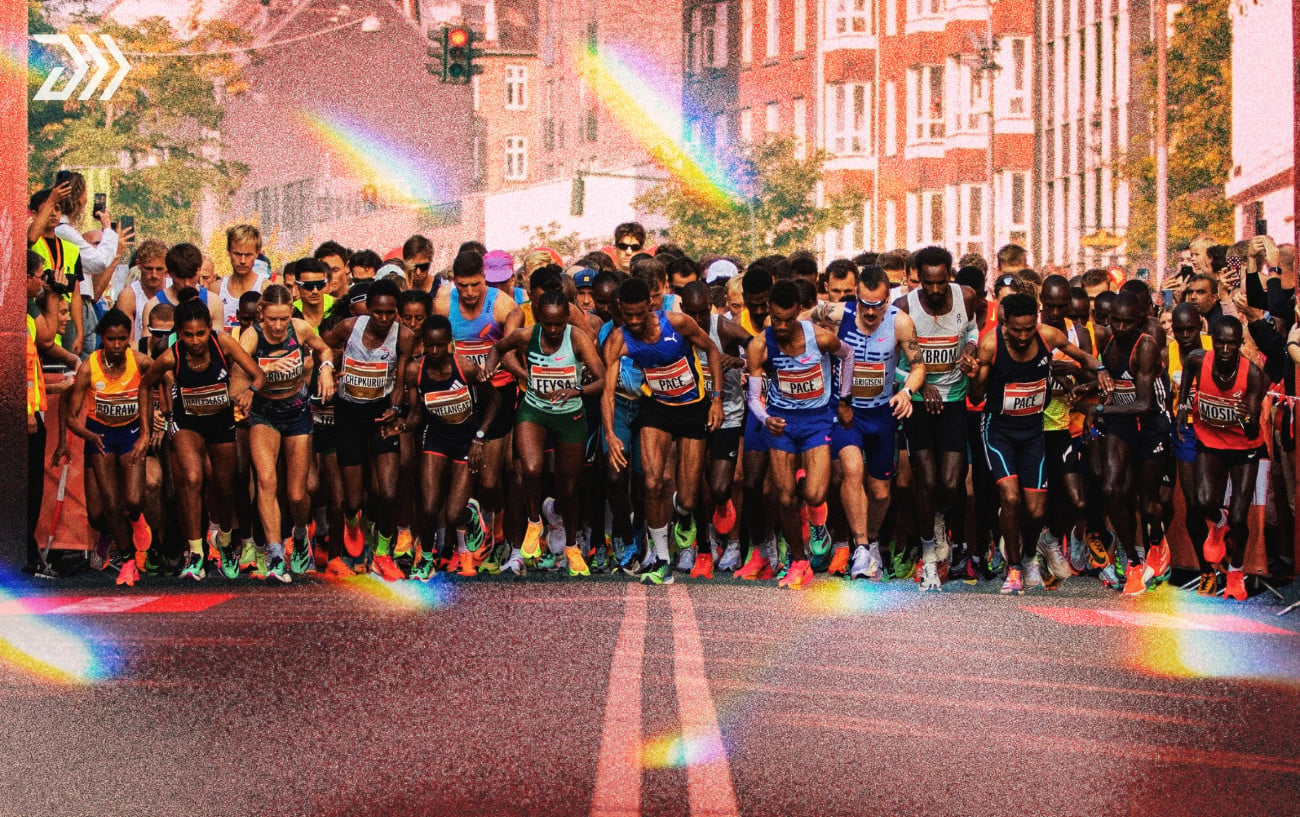
The model Sweeney described has already been tested at the biggest Games there is. On the night between the two Olympic marathons in 2024, Paris put 20,024 amateurs on the full Olympic course, with another 20,024 running a 10K version, and called it the Marathon Pour Tous. Demand far exceeded the places available, and the night race became one of the signature images of those Olympics. Kenya is a Commonwealth nation. Perhaps Eliud Kipchoge, the greatest marathoner of all-time, could have been lured to Glasgow to run in the public race as a part of his world tour?
The finances are not exotic. Big-city marathons pay for road closures and policing out of entry fees and sponsorship as a matter of routine, and the chance to race a Commonwealth Games course behind the national teams would have filled a Glasgow field quickly and allowed the community to be a part of history, raising the profile and building the legacy of a once-great but now flailing franchise. A Games that has spent a decade fighting for relevance and then survival had the chance to go a step past Paris and make a medal event public. It chose to play it safe and cut the event instead.

The cut is not the only sign of a Games losing its grip on the sport’s biggest names. Eilish McColgan, the defending 10,000m champion and Scotland’s biggest hometown star, withdrew with a toe injury she picked up at April’s London Marathon. Katarina Johnson-Thompson, a two-time Commonwealth heptathlon champion, pulled out to give herself, in her words, “the best chance of being ready for the European Championships.” Keely Hodgkinson, the Olympic 800m champion, never pursued selection at all.
Each withdrawal is defensible on its own, but together they read differently. Sky Sports reported nine Team England athletics withdrawals on the day of the opening ceremony, and the European Championships open in Birmingham on Aug. 10, eight days after Glasgow’s closing ceremony. When two championships land that close together athletes are forced to make tough decisions, and the above drop-outs should be read as a brutal referendum on the state of the Commonwealth Games. The question is now whether the event is dying or perhaps evolving into something more honest, like a development meet and a second-chance stage for athletes one tier below the marquee names. The latter path would be the best case scenario for the future of the Games.
The next immediate decision as to the future of the Commonwealth Games is already on the calendar. Commonwealth Sport, the governing body that owns the Games and picks its hosts, confirmed Amdavad, India, as host of the 2030 centenary Games in November, with a program of 15 to 17 sports, up from Glasgow’s 10.
No host could be better suited to the experiment. India is in a running boom of its own: January’s Mumbai Marathon drew a record field of 69,100, and Amdavad itself, the city most of the world knows as Ahmedabad, had more than 24,000 runners on its streets at its own marathon in 2025. A public Commonwealth marathon there would be novel, would pay for itself, and would produce the kind of spectacle that spreads on social media.
The centenary falls 100 years after Duncan Wright of Scotland won the first Commonwealth marathon in the Canadian city of Hamilton. Whether anyone runs one in Amdavad is being decided now, by people watching how much Glasgow misses its marathon this week. Hopefully, these decision makers have the vision, courage and enterprising spirit that was lacking in Glasgow. Otherwise, the Commonwealth will no doubt continue its drift towards total irrelevance.
RunClub
Get more running stories — join RunClub
Daily running news, a community of 300,000+ runners, free training plans for every distance, and a daily running game. Free to join — no card.
Already a member? Log in →



Join the conversation
Well said. Forty years ago, my colleagues and I at Runner\'s World magazine often discussed how the Olympics, World Championship, Olympic Marathon Trials and other championship events would benefit with a public marathon that accompanied the elite marathon. The Paris Olympics and several recent U.S. Olympic Marathon Trials have shown that this is possible and popular. There doesn\'t need to be an exact boilerplate like the nighttime race in Paris. Let local initiative and creativity dictate the exact format. The marathon is indeed booming; track and field, not so much, and it can\'t solve its problems through shrinkage. It needs big ideas.