


When David Goggins pulled out of the Across Florida 200 around mile 40 last week, the drop felt strangely abrupt.
He had started the race at a controlled, confident pace, his tracker showing clean, consistent splits through the opening aid stations, and he was even playing with the lead at times.
For someone attempting his third 200-mile race in four months, it was hard not to read his early efficiency as a sign that the familiar Goggins engine was humming again.
But the sudden stillness of his dot raised eyebrows early.
When the tracking platform quietly switched his status to retired (the race’s way of saying DNF), speculation filled the gap.
Some fans wondered if he’d battled GI trouble or dehydration. Others pointed to the punishing Florida terrain: long, sandy corridors along the Cross Florida Greenway that sap strength faster than their flat profiles suggest.
And some guessed the issue had to be residual damage from Moab 240, where Goggins battled through brutal conditions in October (spoiler alert, they were right).
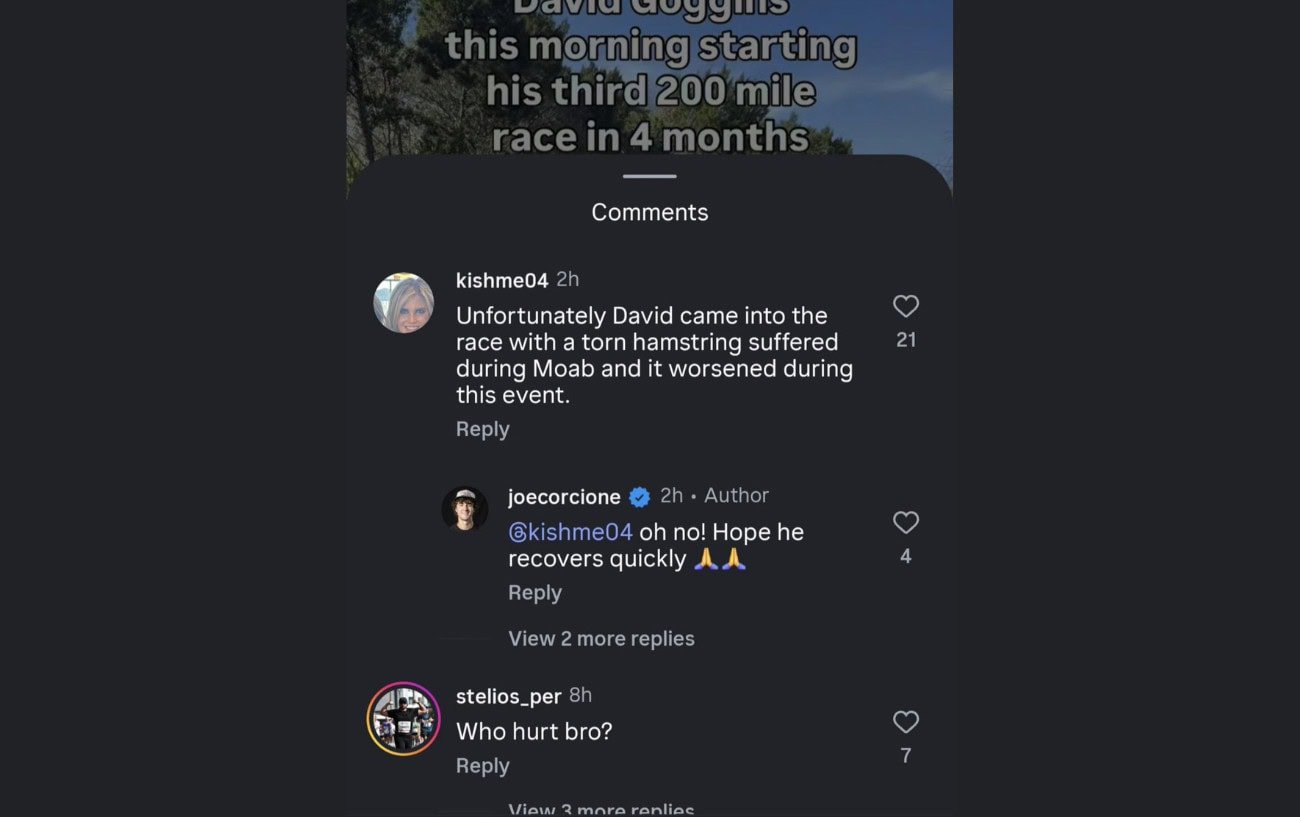
This week, the answer emerged from an unexpected place: the comment section of an Instagram video.
Under a reel from coach and podcaster Joe Corcione, Goggins’ wife, Jennifer Kish, responded to a follower asking what happened. Her reply was straightforward: Goggins started the AF200 with a torn hamstring he suffered at Moab, and it worsened during the race.
A Familiar Route, A Different Body
The Across Florida 200 is not a high-profile ultra yet, but Goggins has history with the route.
Years before organizers turned it into a formal event, he held the FKT across the state.
In typical Goggins fashion, he did it in the shadow of another race, running the entire route only a week after completing the Tahoe 200. That sort of double would cripple most runners, but for him, it became part of the lore.
This year’s edition was the first time the AF200 was staged as a true in-person race.
The route is deceptively tough: a patchwork of pine forest, sugar sand, roots, flat doubletrack, and long, quiet miles where a runner’s mind becomes more of a threat than the terrain. Even without significant elevation gain, it can feel like a slow grind, and pacing the early miles correctly is essential.
Goggins appeared to do exactly that.
Through AS1 (2:11), AS2 (4:11), and AS3 (10:31), his pacing was measured and methodical. Runners tracking him on Reddit and Instagram noted how composed his splits looked, almost like a veteran trail racer. No big hero charging or crazy moves you might expect from such a big personality.
And then came the stall. His tracker hit AS4 at 19:17 on Nov. 12, and shortly after, went still. By early morning, the race dashboard declared him out.
At the time, the silence left more questions than answers.
Knowing now that he was carrying a torn hamstring into the race changes everything. A torn hamstring isn’t an injury you tape up and hope away. It’s not a sore quad or tender foot.
It’s central to propulsion, stability, stride control, and downhill braking. Running even five miles on a tear can be painful; running 40 miles is unimaginable for most.
The Reality of His 200-Mile Streak
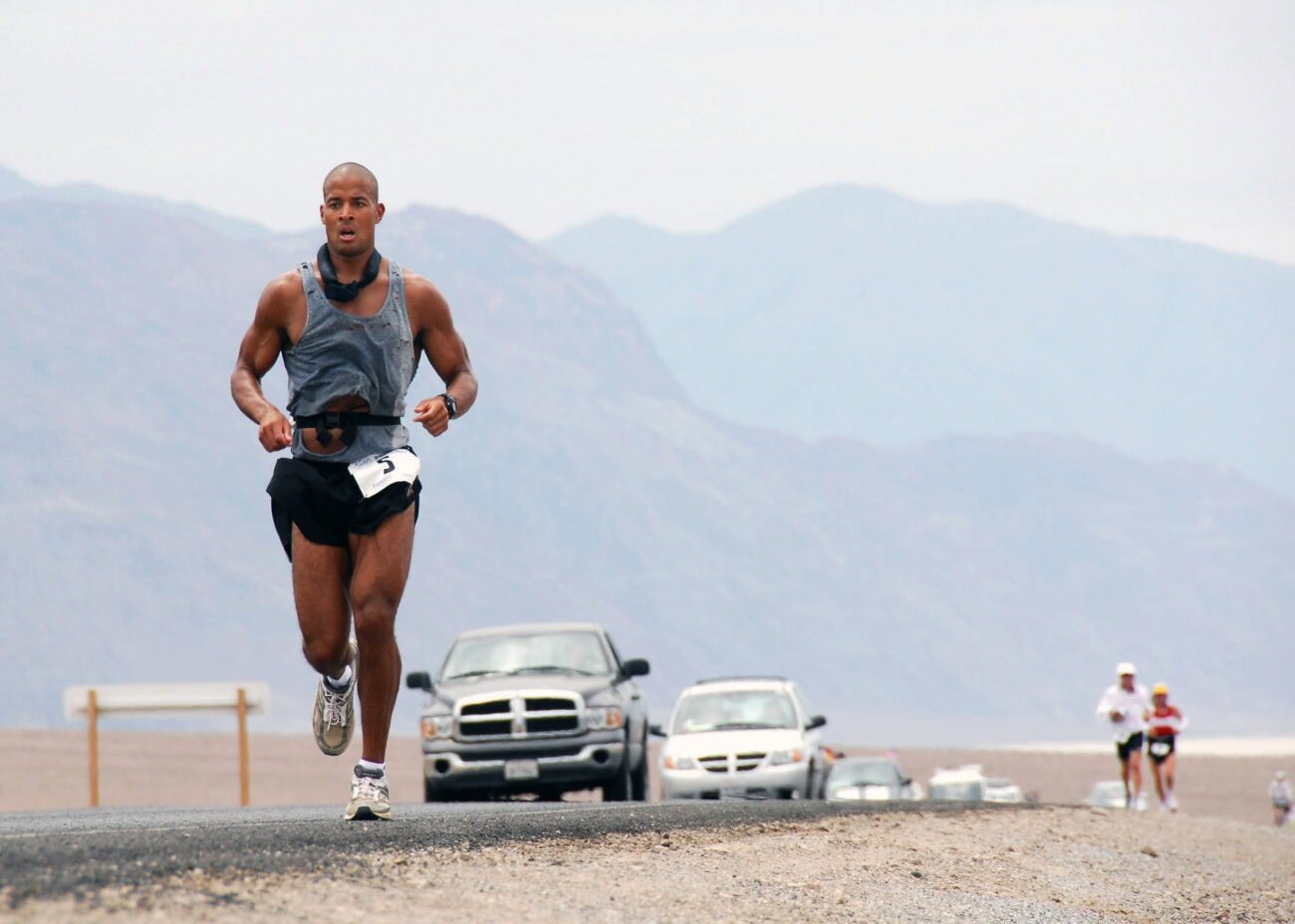
To understand why he started, you have to look at the bigger picture: this was Goggins’ third 200-mile race since late summer.
The schedule alone is eyebrow-raising. Even the most durable ultrarunners typically space 200-mile races months apart, not weeks. Recovery from one can take almost as long as training for it.
The musculoskeletal load of a race that lasts a day and a half (or more) isn’t something even elite bodies absorb easily.
Goggins’ appeal has always been tied to this extremity.
He doesn’t race to build a conventional season; he races as part of a personal philosophy, one where he seeks that breaking point rather than avoiding it.
That approach has created some of the standout moments of his ultrarunning career, but it has also led to a history of injury: stress fractures, kidney failure, rhabdomyolysis, and now a torn hamstring.
Goggins has always courted the edge, and that edge has always been unpredictable. Some years, he has disappeared entirely from racing. Other years, this one included, he arrives in bursts, stacking frighteningly long events back-to-back and pushing his recovery, or lack thereof, to its absolute limit.
What happened in Florida is what eventually happens to almost everyone in ultrarunning: the body had its say. The AF200 course didn’t beat him; his own body did.
Now, he faces something he doesn’t often publicize: the quiet part. Rehab, rest, and rebuilding. A torn hamstring doesn’t care about willpower. It doesn’t negotiate. It follows the body’s timelines, not motivational ones.
RunClub
Get more running stories — join RunClub
Daily running news, a community of 300,000+ runners, free training plans for every distance, and a daily running game. Free to join — no card.
Already a member? Log in →








Start the conversation