


The International Testing Agency now has peer-reviewed evidence that a drone can get anti-doping samples to a laboratory faster than a car, and that the trip leaves intact the blood and urine markers testers use to catch dopers.
The ITA, which has run the anti-doping program at the Olympic Games on the IOC’s behalf since 2018 and is responsible for every edition, including the marathons at the Los Angeles Games, announced the results on Nov. 16. The paper had appeared online in Drug Testing and Analysis on Sept. 24 and is free to read. It covers test flights the agency ran in Doha in March 2022 with the Anti-Doping Laboratory Qatar and the Swiss drone company RigiTech.
The research is based on test flights conducted in Doha, Qatar, and forms the first scientific phase of the International Testing Agency’s (ITA) wider “Integrity in Flight” project. 🚁✨ 🔗read more on our website: https://t.co/5Uzg3n3dhy #KeepingSportReal #IntegrityinFlight https://t.co/A3xc1RJ7Dn
— International Testing Agency (@IntTestAgency) November 16, 2026
Researchers took blood, urine and dried blood spot samples from healthy volunteers and split them three ways. One set flew, one went by car, and one stayed in the lab as a control, with the transported sets covering either 5 kilometers (3.1 miles) or 20 kilometers (12.4 miles). The drone beat the car over both distances, and it made no difference to the drone whether the temperature sat at 29 C or 32 C (84 F or 90 F), or whether the wind was blowing at 12 km/h or 20 km/h.
Haematological values used in the Athlete Biological Passport, the urinary steroid profile and routine clinical chemistry markers all came back statistically the same whether the samples had flown or been driven, at both distances. The dried blood spots got the closest look of all. The lab picked up 664 metabolites in them, and 92.3 percent were classed as equivalent between the two modes over 5 kilometers, with 88 percent equivalent over 20 kilometers. No metabolite moved one way after the flight and the opposite way after the drive.
“This gives us a stronger scientific basis to continue exploring where drone technology could provide a practical additional solution for anti-doping, particularly when speed, distance or geography create transport challenges,” said Benjamin Cohen, the ITA’s director general.

A passport blood sample is only usable for a limited time after it leaves the athlete’s arm. Under WADA’s International Standard for Testing and Investigations, it stays valid while its Blood Stability Score, a figure that adds the hours since collection to three times the average storage temperature, remains below 85. For a sample kept at 4 C, that allows about 60 hours to reach the lab, and just 27 hours if it averages 15 C.
Kenya’s distance runners have lived with the consequences of that clock. In 2016, when the limit was a flat 36 hours and the country had no laboratory cleared to analyze passport blood, the Associated Press reported from Eldoret that samples were couriered to labs in Europe and Qatar for about €2,000 ($2,200) a trip, and that the IAAF, now World Athletics, had given athletes advance notice for “the majority” of its passport collections in Kenya since 2013. A Nairobi laboratory won WADA approval to do that analysis in August 2018, the first in East Africa.
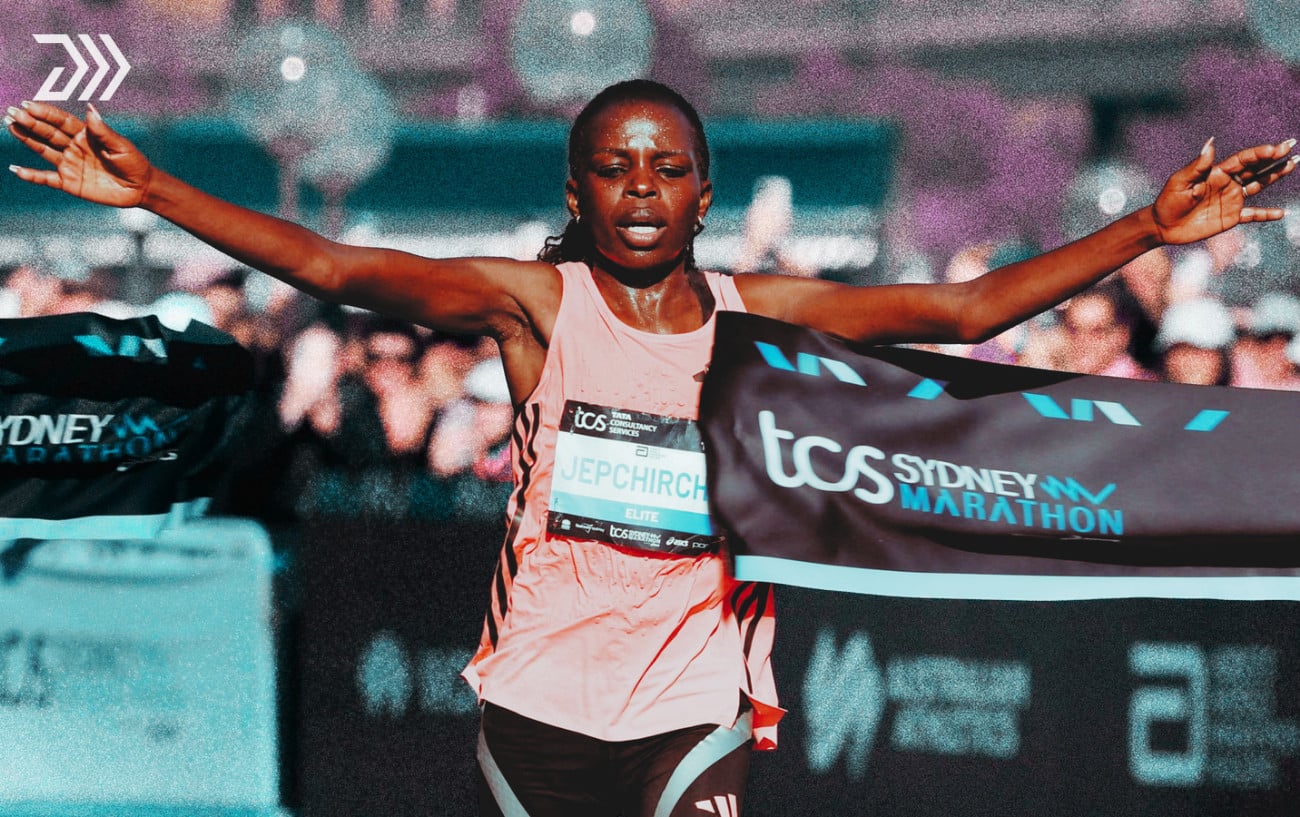
Testing in Kenya still produces the sport’s biggest cases. Peres Jepchirchir’s three-year ban, handed down this week, began with an out-of-competition test in Kenya, and abnormal passport values were what cost Jonah Koech his U.S. 1,500m title this year. A few athletes have gone the other way and asked for more of it: Sabastian Sawe, then the reigning London Marathon champion, signed up for a voluntary protocol with the Athletics Integrity Unit that year.
The authors describe the Doha trial as a proof of concept, and want it tried on longer routes and in different operating conditions before it goes into wider use. Cyclingnews, which reported the study the day it was announced, noted that RigiTech’s Eiger carries only 3 kilograms, which caps how many samples fit on a single flight. The ITA says it sees drones as an extra option at major events, in crowded city centers, in the mountains and in remote areas, alongside road transport and not in place of it.
A Windracers heavy-lift aircraft has already flown the longer version. On Aug. 19 it carried split blood samples 1,000 kilometers (621 miles) from Nenana Municipal Airport in interior Alaska, and both sets were analyzed side by side in a temporary laboratory set up in a hangar there. The agency plans to submit those results to a peer-reviewed journal once its evaluation is finished.
RunClub
Get more running stories — join RunClub
Daily running news, a community of 300,000+ runners, free training plans for every distance, and a daily running game. Free to join — no card.
Already a member? Log in →




Start the conversation