


There are marathons runners pick for the scenery, and others they pick because the course lets them see what’s really inside their legs. Valencia is one of the rare races that gives them both.
The city leans into its identity as a running capital, and in the weeks leading up to the Trinidad Alfonso Zurich Marathon, you can feel that pride everywhere, on the metro posters, across bridges that glow after dark, even in conversations at cafés where locals talk about the elites the way others talk about celebrities.
The 2025 edition lands on Sunday, December 7, and the anticipation this year is sharper than usual. Not because the race is changing, it’s more that Valencia has become the place where athletes go when they want to test the limits of the marathon.
It’s the fourth-fastest course ever raced (2:01:48). The weather trends are uncannily stable. And the organization is obsessive about every detail that affects pacing, surface, wind, and crowd flow.
This guide brings together everything a runner, spectator, or fan needs for race week: start times, transport, logistics, expo details, course strategy, aid stations, the deep elite fields, and the broader context of why this marathon has become such a gravitational force.
Race Day at a Glance
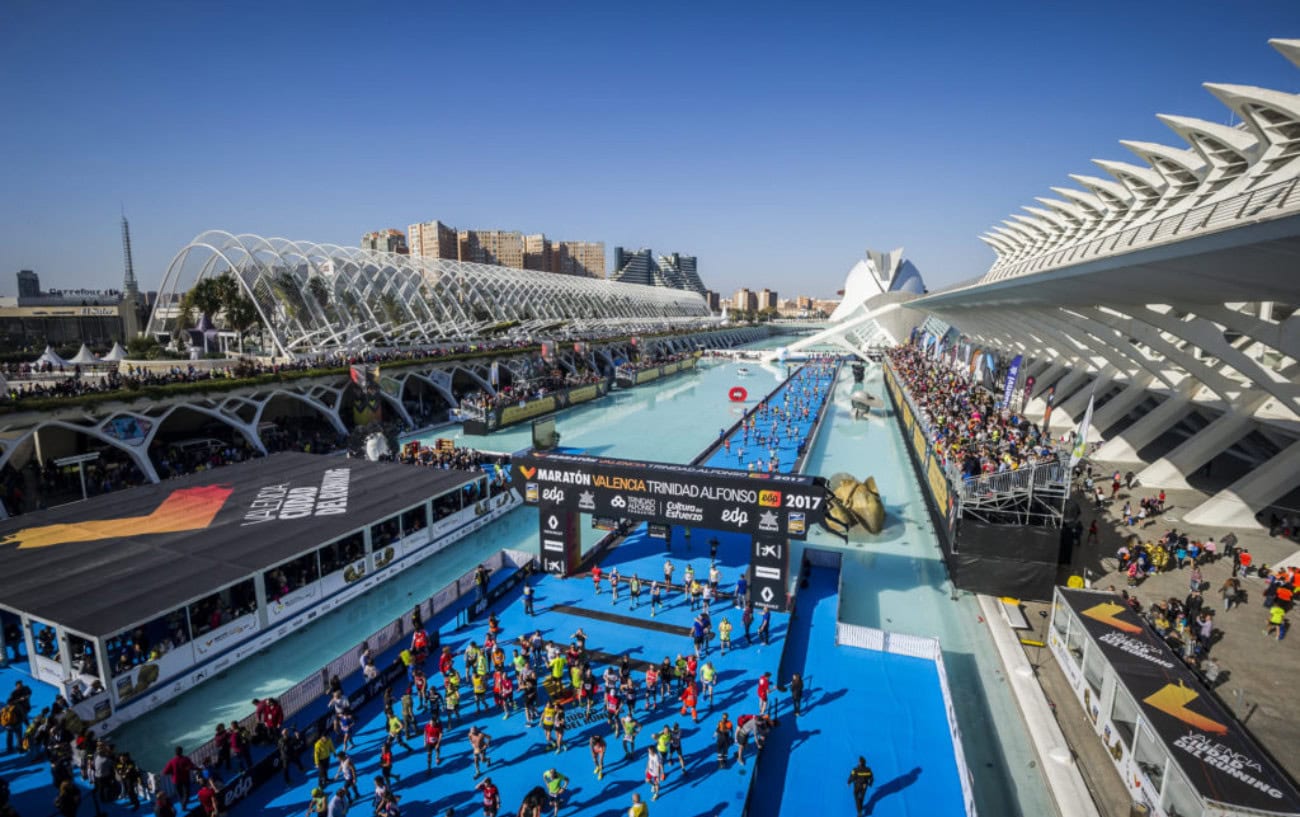
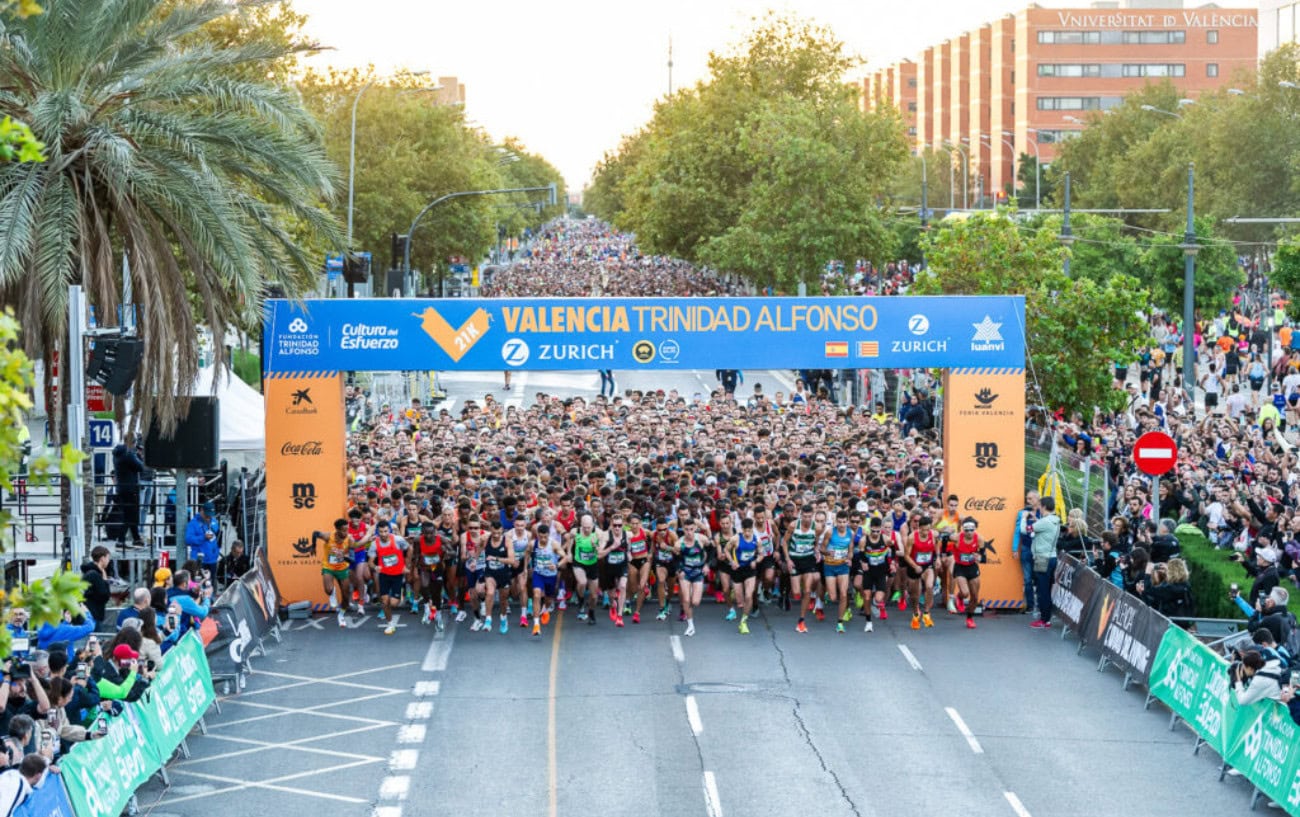
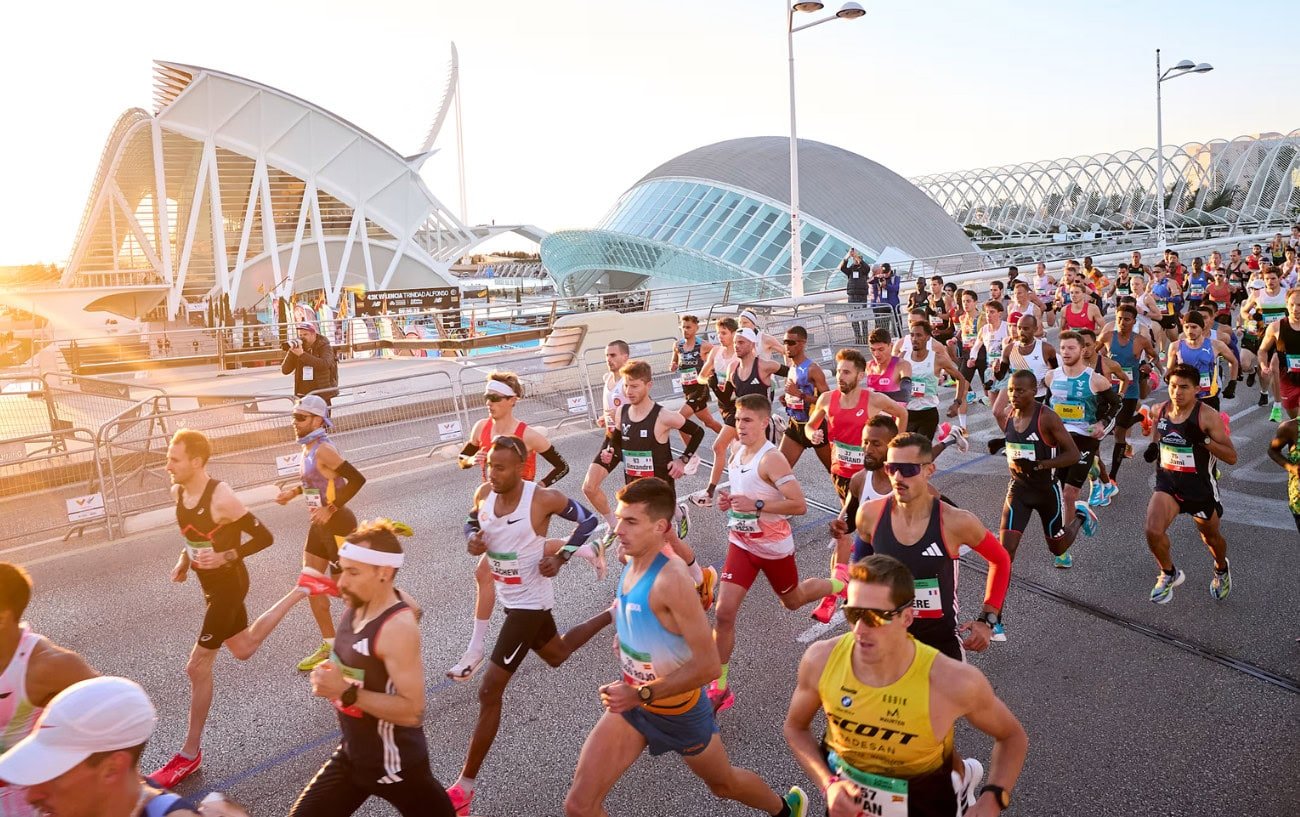
The marathon begins in the wide plaza outside the City of Arts and Sciences, the Plaça de la Marató, with the first wave stepping off at 8:15 a.m. The final wave leaves at 9:35 a.m., and every runner, regardless of wave, has until 3:15 p.m. to finish, which works out to a 5 hour 30 minute cutoff.
The weather is one of the city’s biggest selling points.
Early December in Valencia typically means 12–17°C (low-mid 50s Fahrenheit), dry air, and the kind of consistent mildness that makes even seasoned marathoners feel like they’re being given a quiet gift.
Wave Start Breakdown
Valencia uses nine waves, organized by projected finishing time. They go as follows:
- 8:15 – Sub-2:50
- 8:25 – 2:50–2:59
- 8:35 – 3:00–3:12
- 8:45 – 3:12–3:19
- 8:55 – 3:20–3:32
- 9:05 – 3:32–3:43
- 9:15 – 3:43–3:56
- 9:25 – 3:56–4:10
- 9:35 – 4:10+
Wheelchair and visually impaired athletes may opt to start at 8:35.
The waves are unusually precise by international standards, which is a long-running Valencia quirk; the organizers genuinely care about rhythm and flow, and these micro-corrals are one of the ways they protect the course’s speed.
Bib Pick-Up and the Expo
Bibs are collected at ExpoDeporte Valencia in Pavilion 5 at Feria Valencia.
Opening hours:
- Thursday, December 4
- Friday, December 5
- Saturday, December 6
There is no race-day bib pickup, which tends to be a relief more than a burden, the expo is easy to reach, and the city keeps metro service steady through the weekend.
International runners who book through Welcome to Valencia, the official travel partner, often receive late checkout benefits and small extras like welcome bags or transport assistance. For first-timers in Europe or newer marathoners, it’s a surprisingly low-stress option.
How to Get to the Start Line
On race morning, traffic is predictable in one way only: it will be messy. Luckily, runners don’t need to rely on cars.
- Metro: The closest stop is Alameda on Lines 3 and 5, an easy walk to the start corrals.
- Bus (EMT): Lines 35, 95, and 99 stop near the City of Arts and Sciences. The EMT usually publishes race-day alterations the week prior.
- Cycling: The city’s bike lanes are safe and extensive. There are racks scattered through the architectural complex, and the ride serves as a gentle warmup.
- Walking: If you’re staying within a kilometre or two, and many runners deliberately book in Ruzafa or the old town, walking is the simplest way to keep your nerves level and your blood moving.
Runners also receive free metro access with their race credentials, which tends to remove the last bit of logistical friction.
Course Overview: What the 42.195 km Actually Feels Like
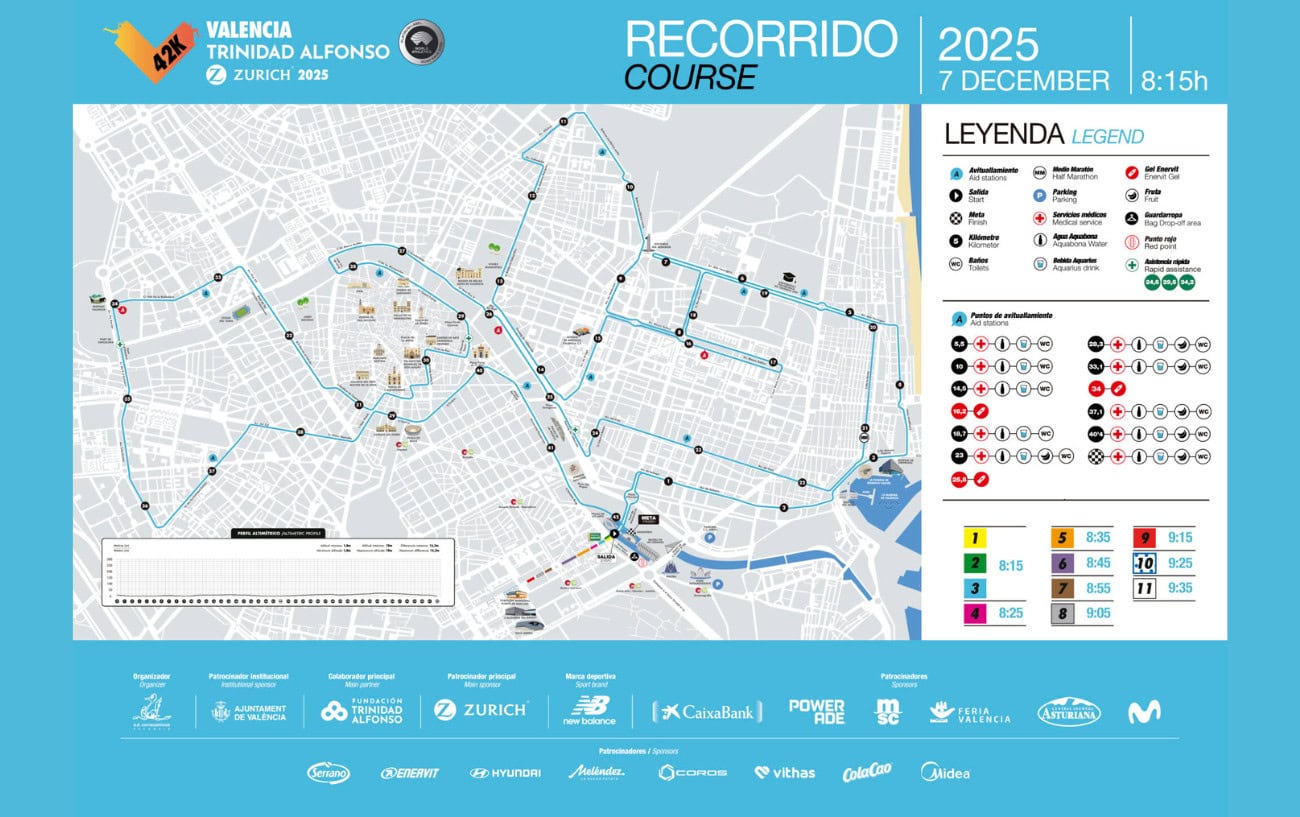
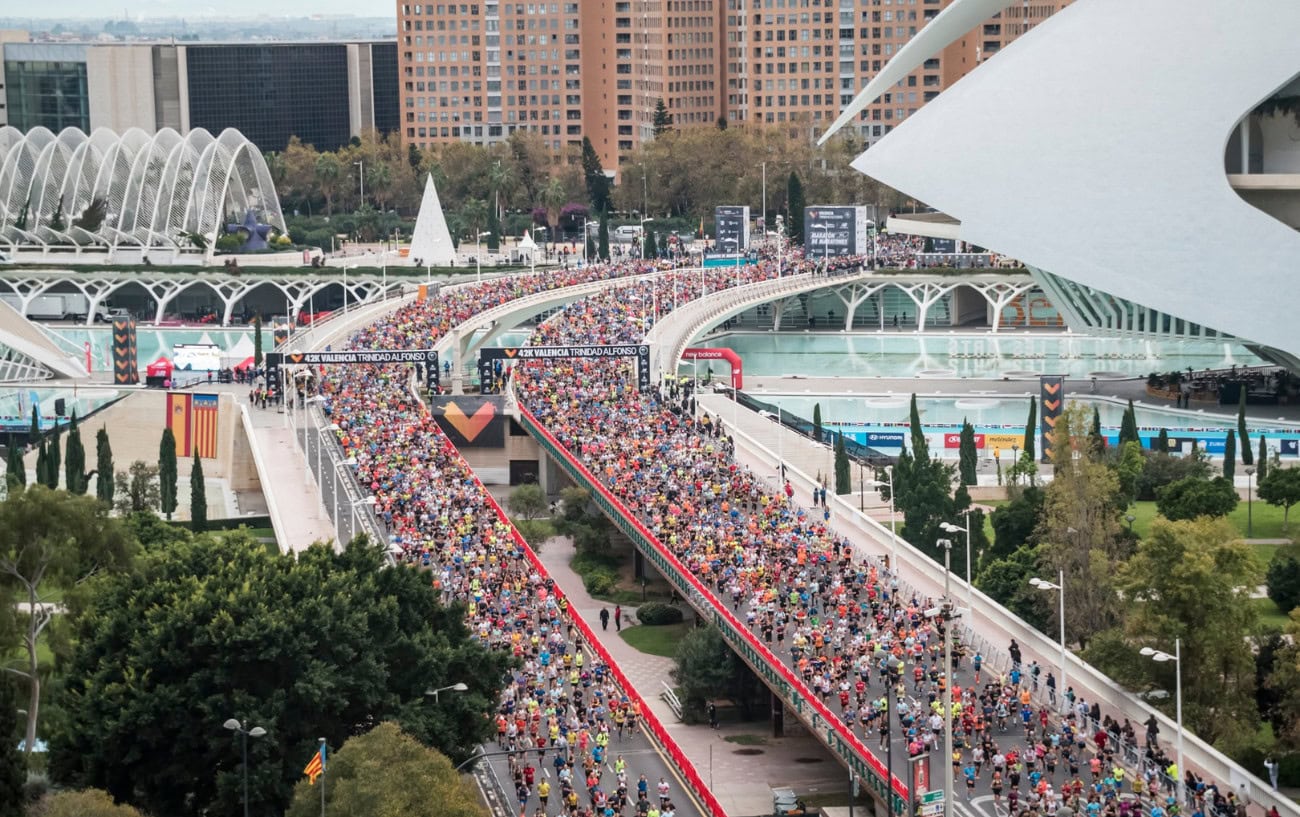
The marathon starts on the Monteolivete Bridge side of the City of Arts and Sciences, carries runners through the east side of the city toward the coast, loops through university districts and the northern neighborhoods, and eventually steers into the historic center before rejoining the broad avenues that lead to the finish.
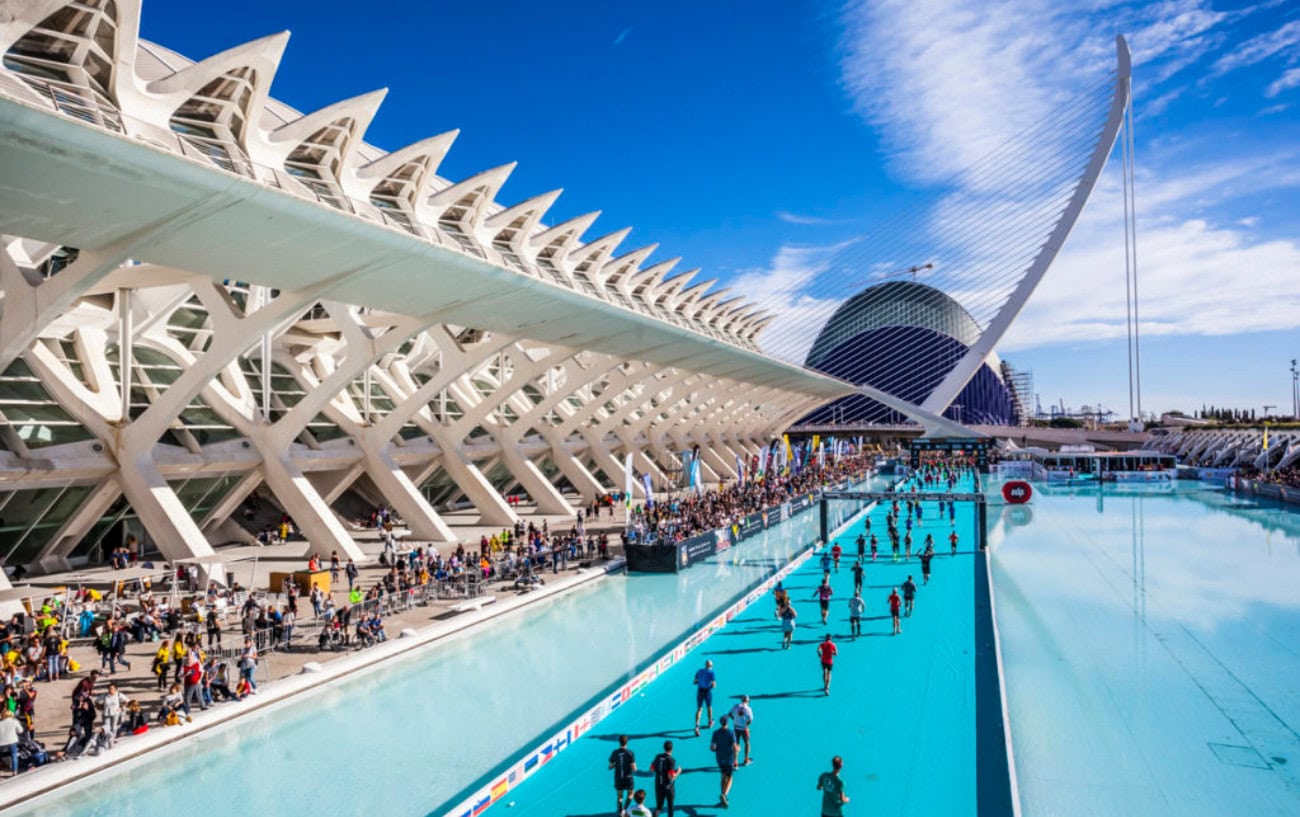
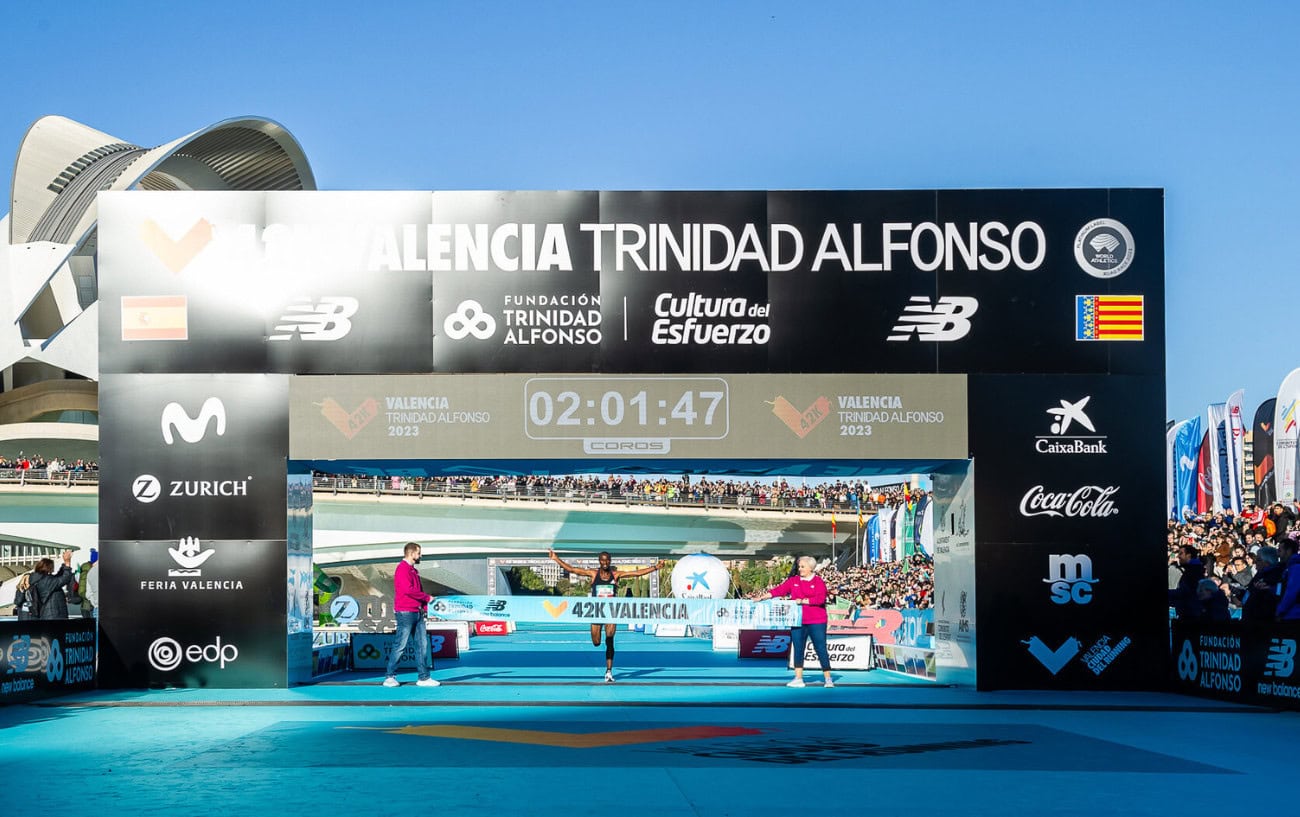
The finish is unlike anything else in road running: a long blue platform set on water in front of the Hemisfèric, with crowds stacked on the surrounding ramps and balconies. Even people who swear they don’t care about finish-line theatrics tend to soften a little when they see it.
Section-by-Section Breakdown
Start to 2.5 km: Opening the Legs Carefully
The Monteolivete Bridge funnels a massive field into its first few hundred metres. Once you clear the roundabout at Plaza Europa, the course opens up. The one hazard here is the bike-lane dividers on Padre Tomás Montañana; runners who aren’t paying attention occasionally clip them.
After one kilometre, the road widens, and the field begins to settle.
2.5 km to 8.7 km: Toward Cabanyal and the Avenues Near the Sea
These are long, straight, easy segments, visually plain, but functionally ideal.
Av. de los Naranjos and the parallel streets allow runners to lock into pace early.
Wind can creep in near the eastern edge of the city. The stretch closest to the sea, around the Eugenia Vinyes area, is the likeliest place to feel a headwind or crosswind. Crowds are thinner, but supporters often cluster at the turnaround points.
8.7 km to 15.3 km: Benimaclet, the Polytechnic, and the First Taste of Atmosphere
The northern loop combines quiet stretches with some of the loudest support on the course. The Boulevard Periférico Norte is exposed, especially if there’s a northern breeze, but once the route turns back toward Dolores Marqués and the tram rail crossings, you get a lively jolt from the crowds.
Then comes the first passage down the Passeig de l’Alameda, a moment that usually surprises first-timers. The noise rises sharply, and the contrast with the previous kilometres is dramatic.
15.3 km to 20 km: Blasco Ibáñez and Naranjos Again
This is the psychological dip. Not physically hard, not technically tricky, but repetitive enough to test a runner’s focus. The back-and-forth nature of these long, wide avenues can feel draining if your mind wanders.
Training plans that emphasize metronomic pacing tend to pay off here.
20 km to 24.5 km: Toward the Port, Slightly Sheltered, Slightly Rising
The course revisits part of the early stretch without going all the way back to the coast.
Av. del Port introduces a gentle false flat, nothing dramatic, but unmistakable if you’re running by feel. In 2023, the organizers re-routed a portion here, sending athletes through Eduard Boscà instead of connecting directly to Alameda. It’s a smoother transition than the old version.
Wind can still matter in this part of the race, though far less than in the early kilometres.
24.5 km to 29 km: Along the Turia, Valencia at Its Best
This is where the race often begins to show its charm. The Turia riverbed park runs below, and the avenue above is lined with spectators who seem to multiply every year. Between km 27 and the turnaround, there’s a subtle rise, but most runners don’t feel it unless they’re already under strain.
After the turnaround, the profile tips very gently downward.
29 km to 31 km: Into the Heart of the City
The marathon threads into Ciutat Vella, passing the Torres de Serranos and moving through stretches that feel intimate compared to the broad avenues of the earlier miles. The turns are tighter, the roads narrower, and the acoustic effect of enclosed streets makes the cheering sound louder than it is.
31 km to 34 km: Toward the Bioparc, The Only “Test” Section
This is the part veterans warn new runners about. The incline is mild, roughly 1% at its worst, but it arrives at a fragile moment. The long straight toward General Avilés is honest and unforgiving, and because crowds thin slightly here, the mental load increases.
The goal is simple: hold form, avoid big pace changes, and stay patient.
34 km to 38.5 km: Gently Back Toward the Center
If you’ve kept something in reserve, this is where the race offers it back. The opening kilometres of this stretch dip gently downhill before flattening out. Some runners regain 10–20 seconds here without increasing effort, which is why so many PBs are set in Valencia.
The road is wide again. The horizon is clear. The focus shifts from survival to execution.
38.5 km to 41.8 km: Crowds Return, Legs Protest
The marathon steers toward the City of Arts and Sciences again, and each kilometre grows louder. Spectators cluster on sidewalks, balconies, bridges, even on walls above the water features. Fatigue is a given at this point, but the atmosphere does part of the work.
41.8 km to the Finish: The Blue Platform
There are only a handful of places in world marathoning where the final 300 metres become visceral memory. Valencia is one of them. You drop down the ramp, reach the floating blue pathway, and run the final straight with the water on both sides and the Hemisfèric ahead.
Even runners who swore they would not look up usually do.
Aid Stations
Valencia’s aid stations are known for their length and duplication on both sides of the road.
- Water, Aquabona water, first aid, and toilets: Miles: 3, 6, 9, 11, 14, 17, 20, 23, 25, 26
- Enervit gel stations: Miles: 10 and 16 (approx. km 16.2 and 25.8)
- Fruit: Miles: 14, 17, 20, 23, 25, 26
Additional liquid stations at km 30, 32, 35, 37.5, and 40, plus a complete spread after the finish.
Spectator Guide and Key Landmarks
Supporters who want to track the race without sprinting across the city have a few reliable spots:
- Veles e Vents in the harbor (km 3)
- Vivers Gardens (km 13)
- Estadio de Mestalla (km 15)
- Torres de Serranos (km 28)
- Plaça de l’Ajuntament (km 30)
- City of Arts and Sciences (finish)
Because the course loops back on itself several times in the first half, spectators can catch runners repeatedly with very little travel.
Pacing Strategy for Runners Who Want a Personal Best
Runners often describe Valencia as a “metronome marathon.”
The ideal approach is to run even splits through at least 30 km. The only adjustments worth considering:
- Slightly relax effort in the windy eastern sections (km 2–8).
- Expect a mental lull in the long back-and-forth stretches (km 15–20).
- Hold back slightly on the incline toward the Bioparc (km 31–33).
- Lean into the gentle decline from km 34–37 to recover and reset.
If you reach km 34 without breaking form, Valencia will usually give you the last 8 km you trained for.
What to Do After Your Race
Valencia is one of the easiest European cities to enjoy on foot, even on sore legs.
Most runners make their way to the Turia Gardens, where the soft paths are kinder on battered knees. Others head straight for a bowl of paella or a table of tapas near the Mercado de Colón.
The old town stays lively long into the evening on marathon day, and the atmosphere tends to oscillate between exhausted relief and the kind of giddy optimism that only a PB can produce.
If you have time, the Palau de les Arts Reina Sofía, La Lonja, and the neighborhoods of El Carmen and Ruzafa are worth the slow wander. Many runners stretch the trip into a long weekend because the city makes it hard not to.
A Prize Purse Unlike Anything in the Sport
Valencia’s most brazen feature is the incentive behind the world-record chase.
A €1 million bonus is on the table for breaking the world record, funded by billionaire Juan Roig through the Trinidad Alfonso Foundation. No other marathon offers anything close to this. The previous high-water mark, Nagoya’s $250,000 for the women’s champion, looks quaint by comparison.
Valencia also scales prize money to finishing times. Running fast gets rewarded more than running tactically, which shapes everything about how the race unfolds. If you want a conservative, cagey marathon, Valencia is not where you go.
Why Valencia Has Become the Sport’s December Showpiece
It feels strange to call a marathon “engineered,” but that’s what Valencia is.
The course sits at sea level. It has almost no elevation gain. The city has redesigned multiple sections over the years, sometimes for construction, sometimes purely in the name of speed, and each iteration has shaved away small inefficiencies.
The marathon was first held in 1981, but its modern identity didn’t crystallize until the 2010s, when a period of strategic investment, civic pride, and sharp-eyed course design turned it from a pleasant local race into a global benchmark.
Since 2017, Valencia has hosted nine world records across its various races. The marathon itself now holds a World Athletics Platinum Label, the highest designation available, and remains Spain’s only race with that status.
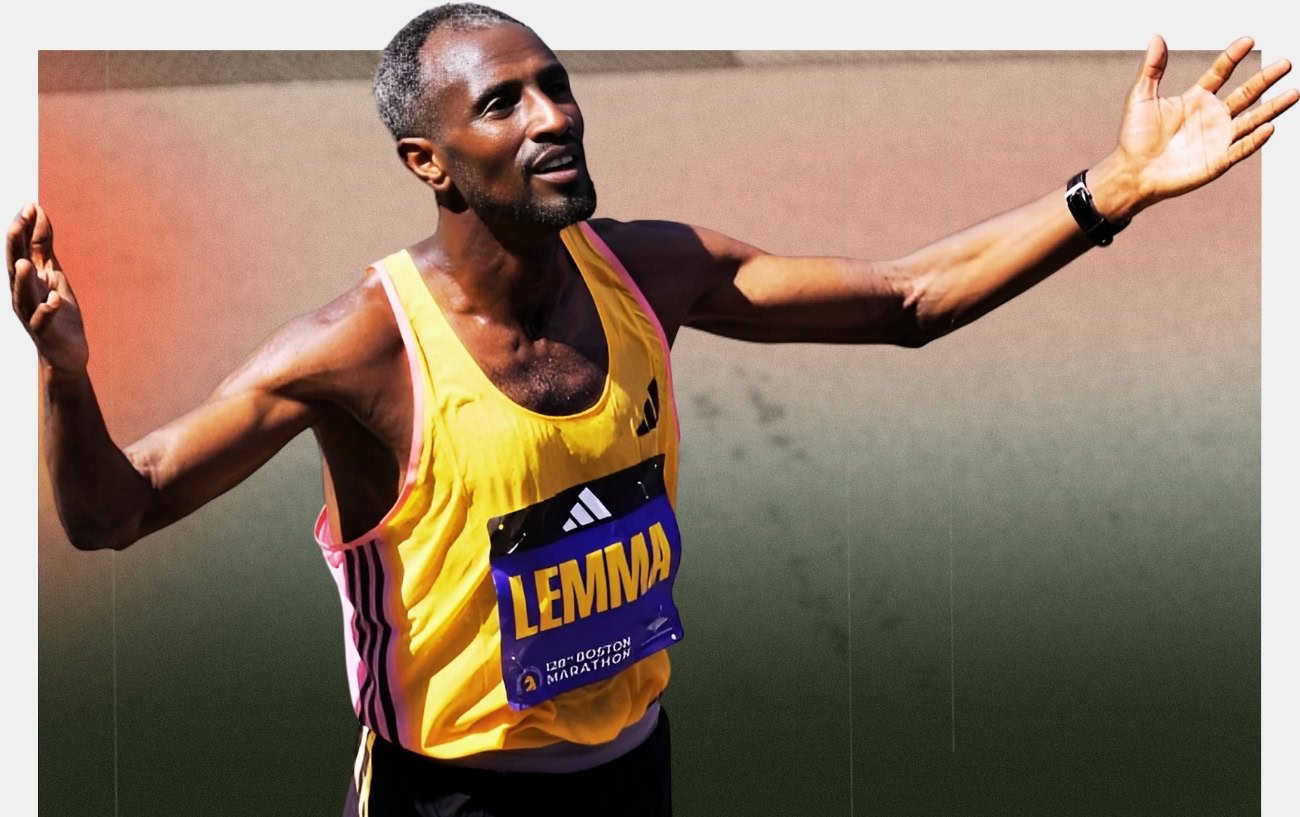
The course records come from two Ethiopians: Sisay Lemma, whose 2:01:48 in 2023 remains the fourth-fastest marathon in history, and Amane Beriso, who ran 2:14:58 in 2022, still one of the fastest women’s performances ever recorded.
The 2025 Elite Storylines
The Men
Valencia’s organizers have built the deepest men’s field in their history.
Sisay Lemma returns, which always signals aggressive pacing. He knows the rhythm of this course intimately: long straight segments, few breaks in cadence, and a predictable sequence of subtle turns that don’t fracture packs.
Behind him is a dense wall of talent:
- Hailemariam Kiros (ETH) – 2:04:35
- Hillary Kipkoech (KEN) – 2:04:45
- Amanal Petros (GER) – European record holder, 2:04:58
- Samuel Fitwi (GER) – 2:04:56
- Yohei Ikeda (JPN) – 2:05:12
- Edward Cheserek (KEN) – 2:05:24, still gaining experience and improving sharply
- Two Kenyan debutants, Vinicent Nyageo and Patrick Mosin, both rumored to have frighteningly strong long-run credentials
Pacing groups are expected to target 60:00–60:10 through halfway — the kind of setup that produces chaos in the final kilometres and frequently turns Valencia into an unofficial championship of the 2:03–2:05 men.

The Women
The women’s field may be the strongest Valencia has ever assembled.
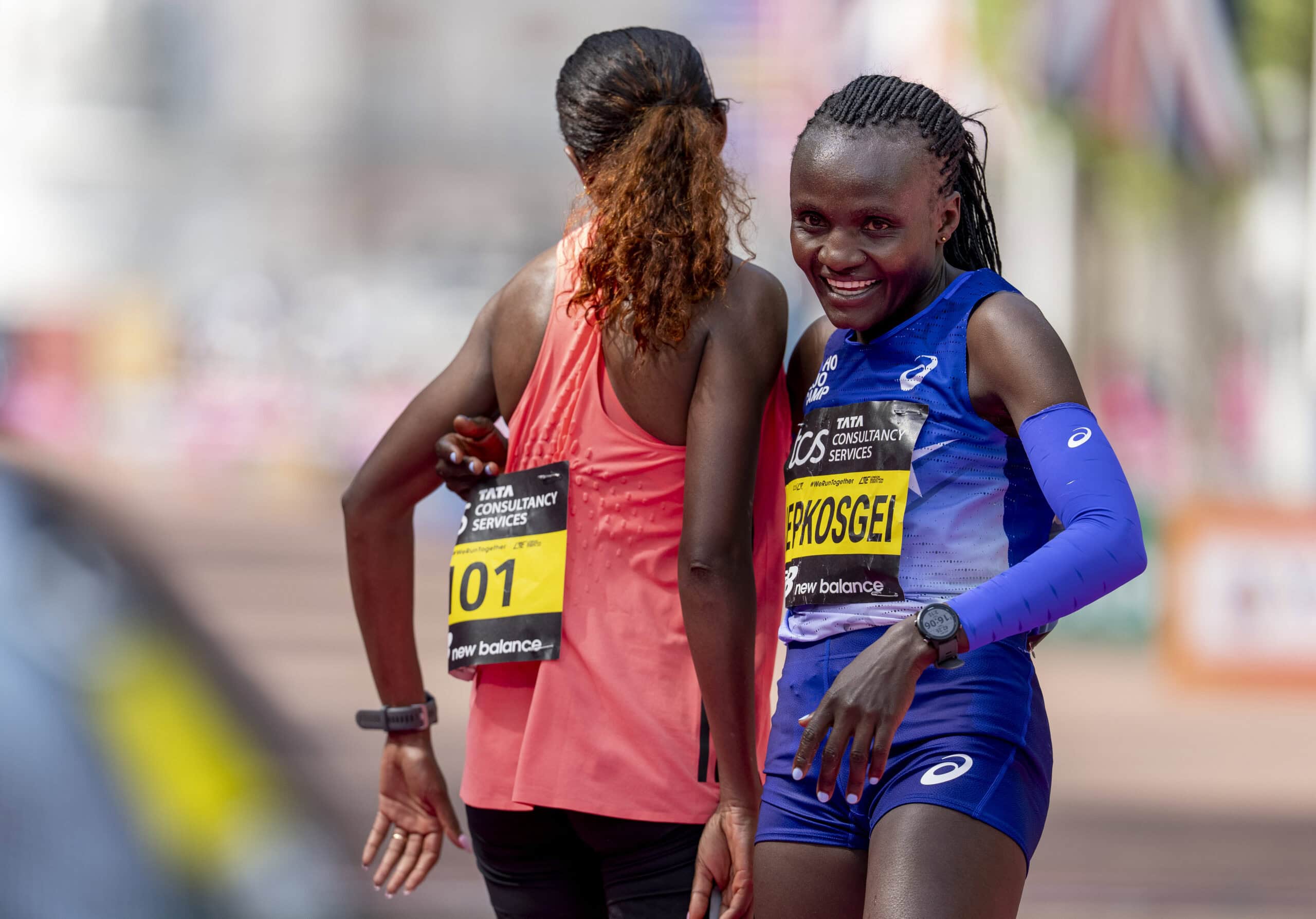
Amane Beriso, the course-record holder, is back. So is Peres Jepchirchir, the reigning world champion, whose racing intelligence is legendary. Add Joyciline Jepkosgei, whose curriculum vitae includes wins in London and New York, and you already have a podium trio that could pass for a World Championships lineup.
The depth beneath them is startling:
- Fikirte Wereta – 2:21:32
- Charlotte Purdue – 2:22:17
- Glenrose Xaba – 2:22:22
- Jessica Stenson – 2:22:56
- Isobel Batt-Doyle – 2:22:59
- Genevieve Gregson – 2:23:08
- Rose Harvey – 2:23:21
- Fabienne Schlumpf – 2:24:30
- And Gesa Krause, the steeplechase star, making her marathon debut
If the weather behaves, Valencia could see several women under 2:18, and a genuine attempt on Beriso’s course record would not be surprising.
The Americans
There’s a quiet subplot here, too: four Americans lining up in very different career moments.
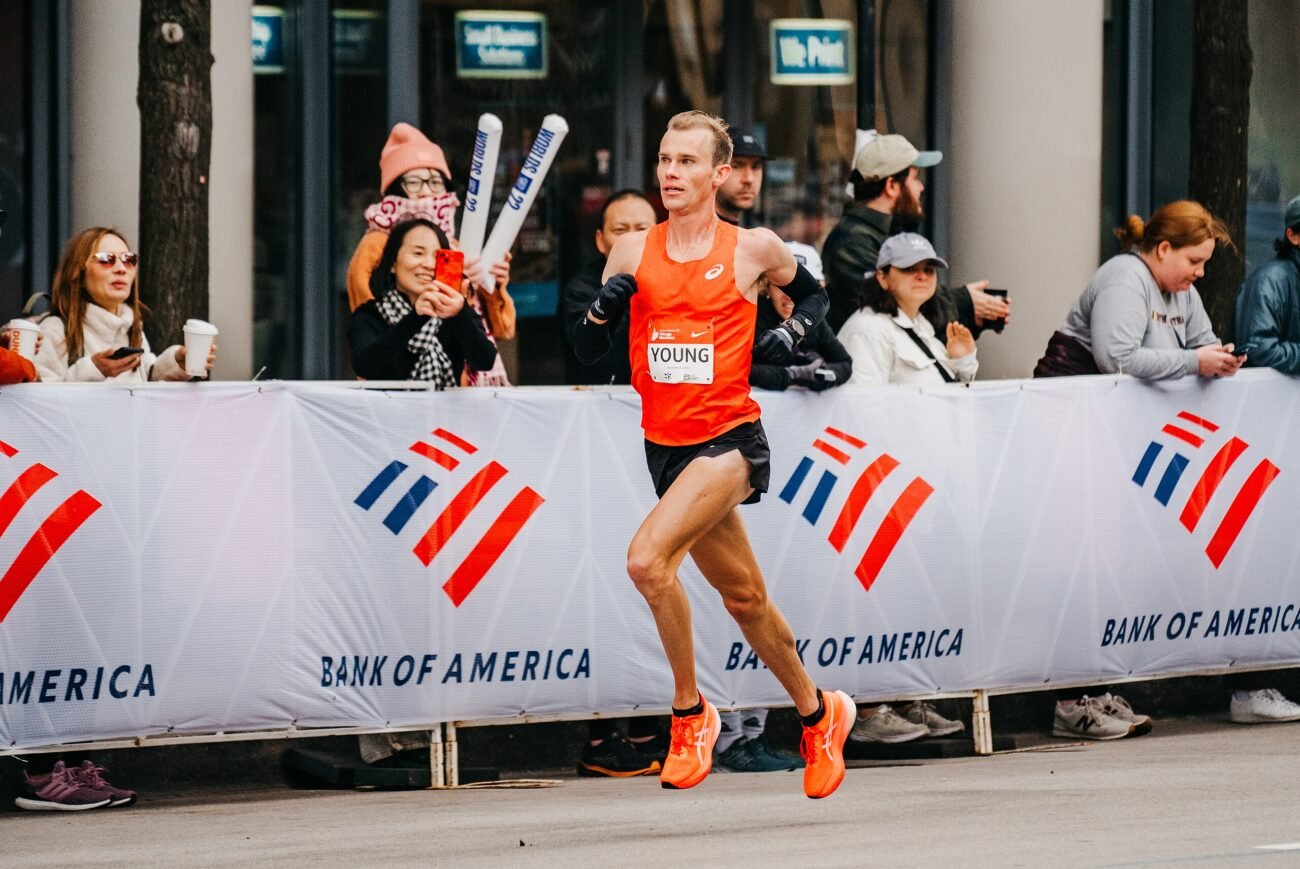
Clayton Young arrives after a season that finally reflected the potential he’d flashed for years. His 2:07:04 in Boston and his gutsy ninth-place finish at the Tokyo World Championships set him up for a potentially transformative December.
Emma Bates has been open about wanting something in the 2:18 territory. Valencia offers the kind of environment where that ambition stops sounding provocative.
Keira D’Amato seems to be coming out of the turbulence of 2024. Her 1:09:07 half in Copenhagen and U.S. Masters 10,000m record were the first real signs she’s back in her groove.
Lindsay Flanagan returns from a hamstring tear and hasn’t raced a marathon since her 2:23:31 PB in Chicago 2024. Valencia gives her a reset button and, potentially, a slingshot.
RunClub
Get more running stories — join RunClub
Daily running news, a community of 300,000+ runners, free training plans for every distance, and a daily running game. Free to join — no card.
Already a member? Log in →


Start the conversation