


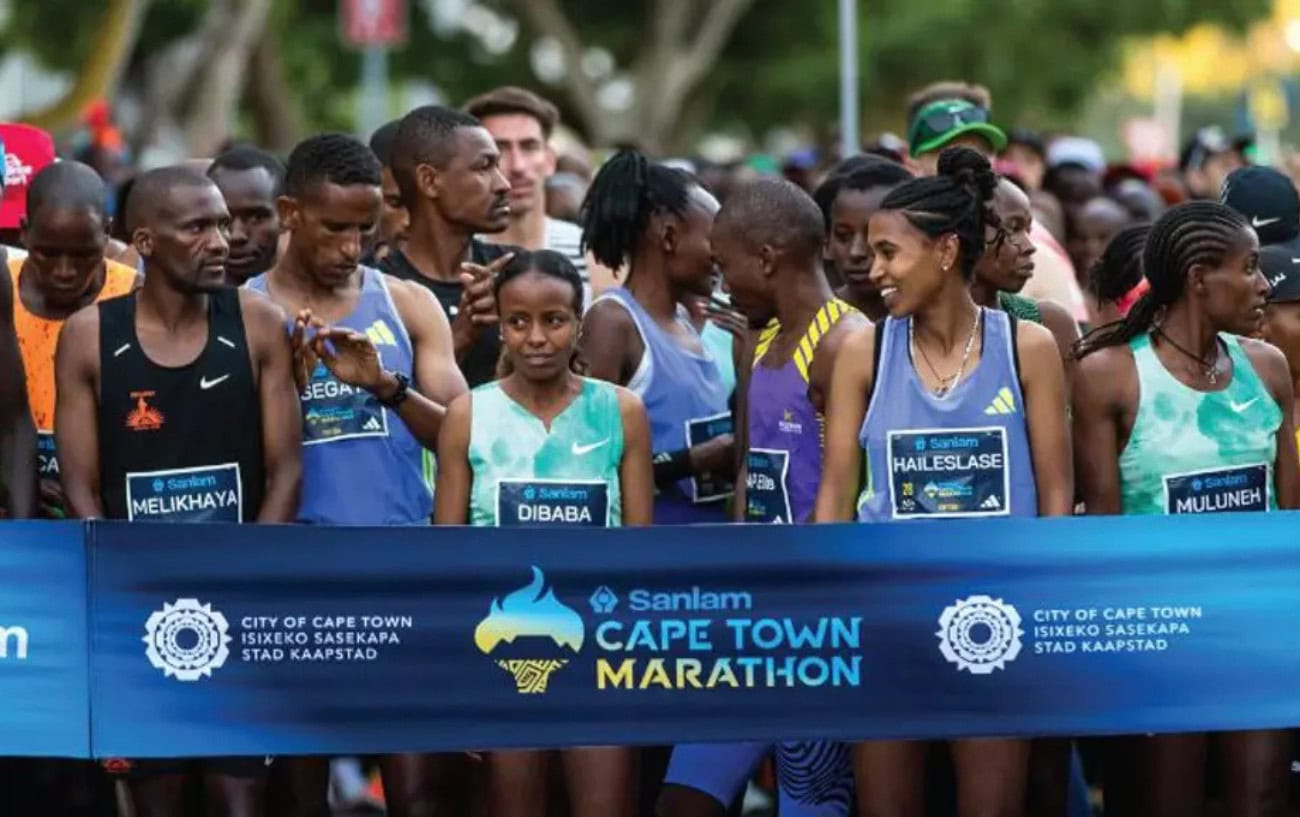
Sunday, 24 May, on the lawns alongside DHL Stadium, the 2026 Sanlam Cape Town Marathon gets its first true elite-field test as an Abbott World Marathon Majors candidate race. Race organisers had assembled what they described, with reasonable cause, as the deepest elite line-up ever staged on the African continent — fourteen men with sub-2:08 personal bests, three of them under 2:05, and nine women under 2:22.
Then the withdrawals started.

Inside the final ten days, the Cape Town field has lost Stephen Kiprop, Elroy Gelant, Emma Pallant-Browne, Kane Reilly, Nadeel Wildschutt, Precious Mashele, Shuko Genemo and Thabang Mosiako — a list that meaningfully reshapes both the men’s race at the front and the South African contingent across the board. The race that remains is still extraordinary by Cape Town standards. It is also, for several reasons we will get into below, more wide-open than the field that was announced in March.
A note on context. This is the first major elite marathon since Sabastian Sawe ran 1:59:30 at the 2026 London Marathon to become the first man to officially break two hours over 42.2 kilometres. Sawe is not racing Cape Town. But the gravitational pull of his London performance — the new ceiling it has set, the questions it has raised about what every elite marathoner is now capable of, the conversation it has restarted around Kipchoge’s own legacy — is the backdrop against which Cape Town runs.
The Withdrawals That Reshape The Race
The single most consequential withdrawal is Stephen Kiprop. The 26-year-old Kenyan was the second-fastest man in the field on entry, with a 2:03:37 personal best set at Berlin in 2024 and a body of work that pointed to him being the runner most likely to push Kipchoge across the closing kilometres. His withdrawal — reported via the South African media in the final week — removes the cleanest sub-2:04 threat in the field.
Elroy Gelant is the second-biggest loss. The South African veteran and 2024 Olympic marathoner holds the SA national record at 2:05:36 from Hamburg last year, and he was the home crowd’s headline storyline going in. His withdrawal with a calf injury is the second consecutive major South African race he has missed and reshapes the home-soil narrative considerably.
Emma Pallant-Browne, the three-time World Duathlon Champion and now SA-based long-distance runner, was the women’s debut storyline. Her withdrawal with illness pulls one of the more unusual entries out of the field — Cape Town as a marathon debut on home soil for a triathlete who had been quietly building toward 42.2 kilometres for two years.
The remaining withdrawals — Kane Reilly, Nadeel Wildschutt, Precious Mashele, Thabang Mosiako on the men’s side, Shuko Genemo on the women’s — combine to gut the South African contingent and remove a useful Ethiopian sub-2:22 runner. Reilly, Wildschutt and Mashele had all been on track to make their first or second major marathon appearance. Mosiako was a 2:10 runner on a track-to-road conversion. Their absences will be felt most acutely in the local-finisher table behind the elites.
The field that remains is still the strongest African marathon line-up of all time. It is also a field that, on paper, has lost a meaningful share of the runners who looked likely to challenge for the men’s and women’s podiums.
Men’s Elite Race
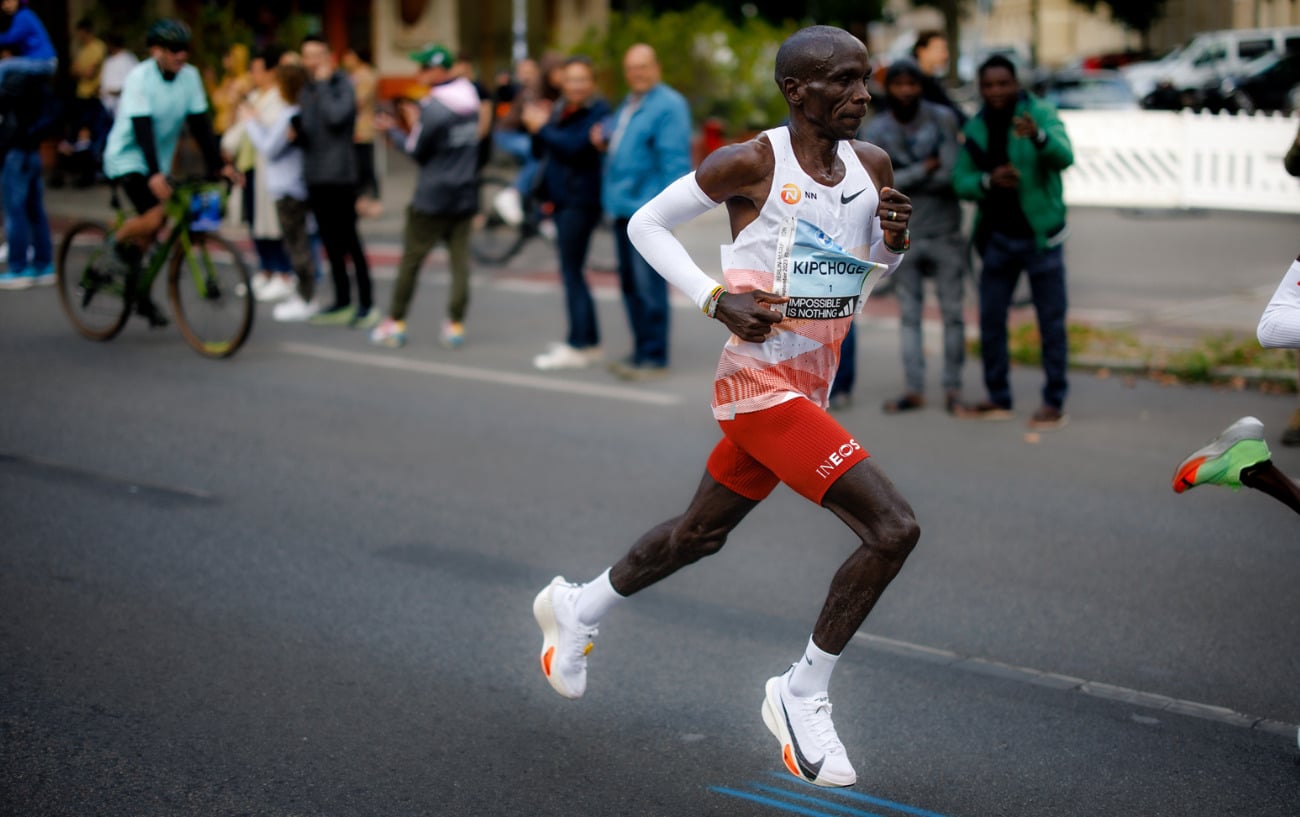
Eliud Kipchoge is the headline, and the question is whether the headline matches the result.
The 41-year-old Kenyan has chosen Cape Town for the first marathon of his self-organised World Tour — a seven-marathon, seven-continent project he announced in March. Cape Town is the first stop and his first ever marathon on African soil. Speaking ahead of the race, Kipchoge has framed Sunday as an inspirational appearance rather than a time trial. “I am training normally, preparing my mind like any other race. But it is a different race,” he told media. “It’s more for inspiration and to reach more people than in the past marathons. I am not giving a stipulated time that I need to run in Cape Town.”
That is, on its face, a careful statement. It is also a statement consistent with the form of a runner who has not won a Major since 2023 and whose most recent marathon — London 2025 — produced a 2:05:25 finish. At 41, on a course with 260 metres of elevation gain, against a field of eight sub-2:06 runners who have something to prove, Kipchoge is the headline name but not, on the numbers, the runaway favourite he would have been five years ago.
With Stephen Kiprop out, the man best positioned to challenge him is Maru Teferi of Israel. The 32-year-old holds a 2:04:44 national record from Valencia 2024, and although his most recent marathon (Brussels 2025, 2:09:17) was a step backward, his championship racing instincts and his ability to grind a flat or rolling course suit Cape Town better than they suit a true time-trial venue. Teferi is the runner who is most likely to be sitting on Kipchoge’s shoulder at 30 kilometres.
The Kenyan sub-2:06 contingent is deep. Benard Biwott ran 2:05:25 at Paris 2025 — the same time as Kipchoge’s former world record — and arrives in the form of his career. Justus Kangogo (2:05:57 PB, Berlin 2023; 2:06:10 SB at Valencia 2025) is the experienced operator of the group, a runner who knows how to close a marathon when the front group cracks.
The Ethiopian three-man front of Yihunilign Adane, Mulugeta Asefa Uma, and Boki Kebede Asefa has the strongest collective claim on the podium. Adane ran 2:05:33 at Osaka in early 2026 — the freshest sub-2:06 time in the field. Asefa Uma matched that 2:05:33 at Paris in 2024 and ran 2:05:46 at Tokyo a year later. Boki Kebede Asefa, runner-up at Cape Town last year and winner here in 2023, is the one with the most direct course knowledge — a 2:05:40 PB, a 2:05:55 SB at Doha in 2026, and the local-knowledge advantage that comes from racing the same course three times.
Behind the sub-2:06 group, a strong sub-2:08 chase pack includes Jemal Yimer Mekonen (ETH, 2:06:08), Adane Gebre Kebede (ETH, 2:06:16, Houston 2026), Stephen Mokoka (RSA, 2:06:42), Isaac Mpofu (ZIM, 2:06:48 NR), and Leonard Langat (KEN, 2:06:59). Any of them on the right day is a podium possibility, particularly if the front group goes out too quickly through the city section and pays for it through the climbing miles between 15 and 17.
The course record of 2:08:15, set by Abdisa Tola in 2024, is going to fall on Sunday. The question is by how much, and to whom.
Women’s Elite Race
The women’s race has been less affected by the withdrawals (Pallant-Browne and Genemo aside) and remains the deepest women’s marathon field ever assembled on the African continent.
Lonah Salpeter of Israel is the fastest in the field by personal best — 2:17:45, set when she won Tokyo in 2020. The 37-year-old has been a fixture of the global marathon scene for the better part of a decade, with the championship racing instinct that often decides marathons run on rolling courses rather than flat ones. Her 2025 season produced a 2:23:45 at Valencia — solid form, not personal-best form. Cape Town is her chance to reset.
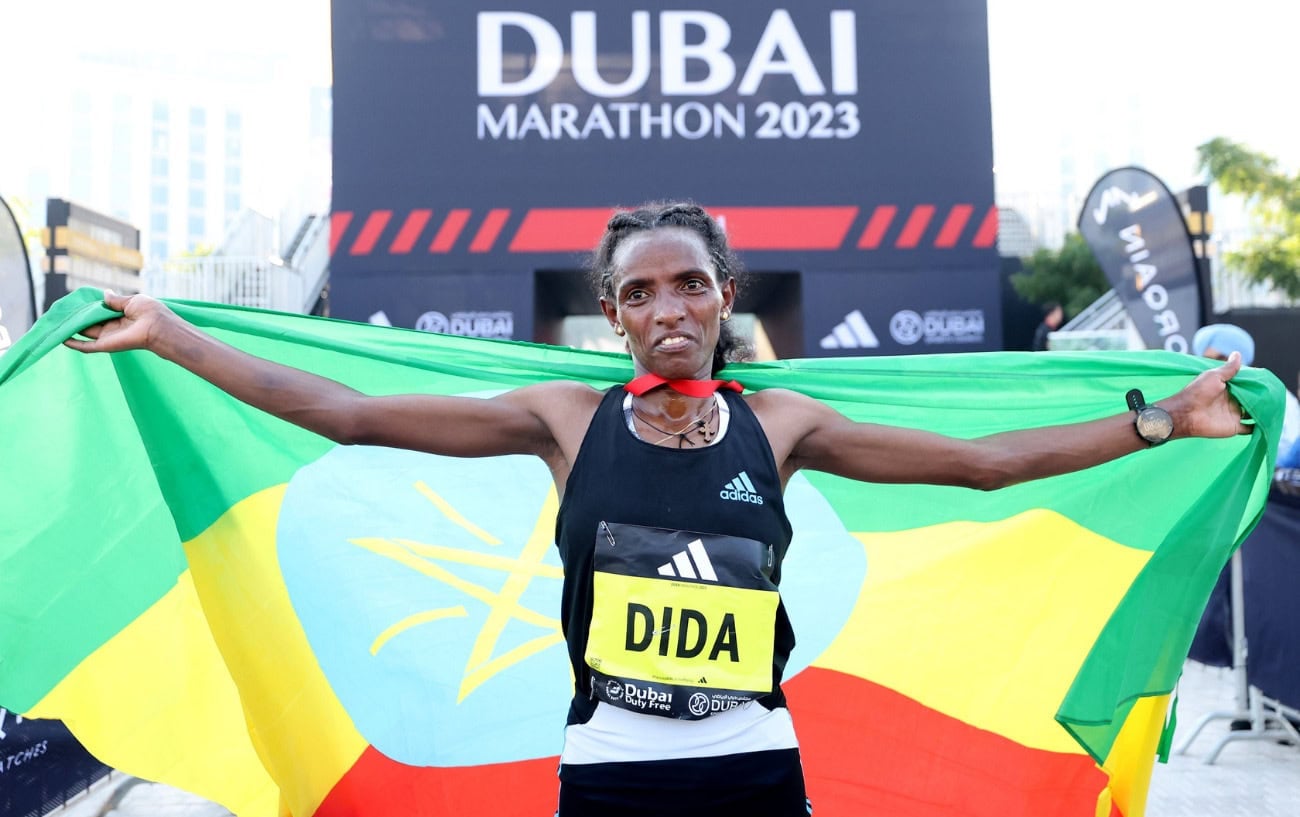
The Ethiopian front of Ruti Aga, Dera Dida and Mestawat Fikir is what makes the race interesting. Aga (2:18:09 PB) ran 2:22:45 at Xiamen in early 2026, the freshest fast time in the women’s field. Dida (2:18:32 PB) set her best at Dubai last year — flat, fast, and the kind of result that suggests she has more to give on a slightly more demanding course. Fikir (2:18:48 PB) ran 2:20:00 at Tokyo earlier this year.
Any of the three Ethiopians can win this race.
The storybook line in the women’s race belongs to Edna Kiplagat. The Kenyan is 47. Her personal best of 2:19:50 was set at London in 2012. She is a two-time World Marathon Champion (2011, 2013) and the 2017 Boston champion. Her 2025 season produced a 2:25:07 at Abu Dhabi — a remarkable time for a 47-year-old, and one that puts her firmly in the top-ten conversation on Sunday. A podium finish for Kiplagat would be the single most extraordinary individual performance of any marathon weekend this year.
Behind the top five, the women’s field has serious depth. Desi Jisa Mokonin of Bahrain (2:20:07 PB at Tokyo 2025) is in the form of her career. Waganesh Mekasha of Ethiopia ran 2:20:26 at Amsterdam 2025 — a personal best at age 33. Vibian Chepkirui, the 2021 Vienna Marathon champion, brings a 2:20:59 PB and the experience of having raced both flat-and-fast and lumpy-and-cool courses. Mercy Kwambai (KEN, 2:23:58), Gojjam Tsegaye (ETH, 2:24:02), Leah Cheruto (KEN, 2:24:33), Cynthia Limo (KEN, 2:24:43 from Boston 2025) and Emebet Mamo Niguse (ETH, 2:25:25) round out a top-ten field with realistic 2:22-or-better potential on a good day.
The course record of 2:22:22, set by Glenrose Xaba in 2024, looks soft against this field. We expect four — and possibly five — women to break it on Sunday.
RunClub
Get more running stories — join RunClub
Daily running news, a community of 300,000+ runners, free training plans for every distance, and a daily running game. Free to join — no card.
Already a member? Log in →





Start the conversation