


Asked at the European Athletics Championships in Birmingham, England, on Sunday whether Grand Slam Track had paid what he was owed, Matthew Hudson-Smith did not have an answer. “Grand Slam, I don’t know if I’ve been paid, to be honest with you, and you can quote that,” the Olympic 400m silver medalist told reporters, in remarks reported by The Associated Press. A United States bankruptcy filing lists him as owed $147,500.
His uncertainty came a day after Michael Johnson, the four-time Olympic champion who founded the league, told The Telegraph that its athletes had been paid in full. “Everybody’s been paid,” Johnson said. The managers and agencies that represent the athletes have since told the BBC the money still has not arrived, with no word on when it will.

His representatives, speaking to the BBC, acknowledged that the athletes have not received the money, and said Johnson had not meant to give a false impression when he described them as paid. The BBC put the amount in limbo at about $11 million (£8.1 million), money the league owes to the athletes and its other creditors, and said an American firm is now holding it. The firm did not respond to the broadcaster, and no timetable has been set for paying the athletes.
The dispute turns on the gap between money a court has approved and money an athlete has actually received. Under the bankruptcy plan approved in April, the athletes the league failed to pay are recovering about $4.9 million of the roughly $7 million they were owed, close to 70 cents on the dollar, a settlement they voted to accept even though it fell short of what they had been promised.
Two $11 million figures are in play here, and they are not the same money. The one Johnson cites is prize money: he says the league paid out about $11 million to athletes for racing across its three meets. The one the BBC describes is a debt: about $11 million the league has yet to pay out, money still due to athletes and other creditors and now sitting with the outside firm. The athletes are not disputing the prize money they raced for. What they say has not reached them is the settlement the bankruptcy awarded them to cover what the league still owed. Even the Telegraph noted, in a caption on its own interview video, that some of the funds remained in escrow.

Hudson-Smith is not the only name still waiting. Kerr, the British former world 1,500m champion, is among the athletes owed six-figure amounts, according to the BBC. The largest claims ran higher: court filings listed Sydney McLaughlin-Levrone as owed more than $355,000 and Gabby Thomas about $250,000.
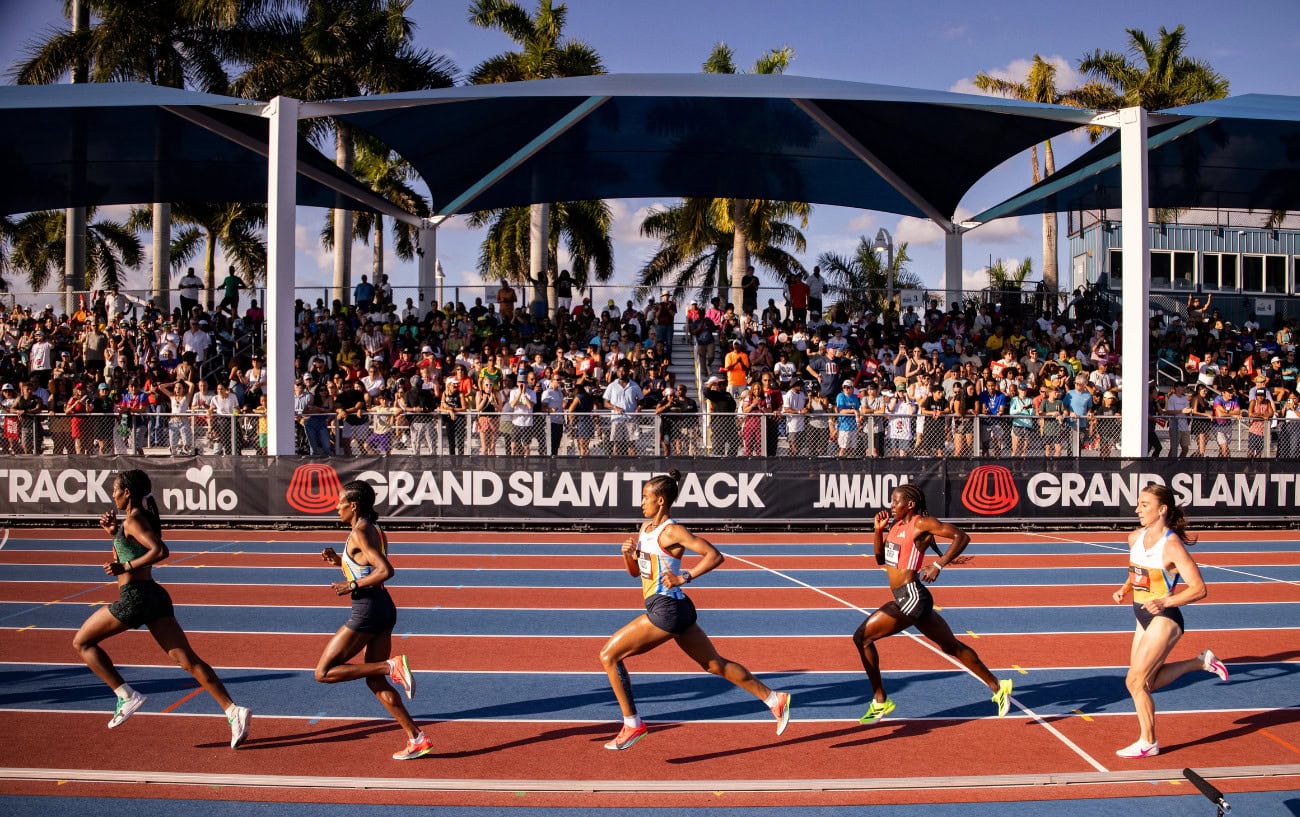
Grand Slam Track staged its first season in 2025 with a promise of salaries and prize money for many of the sport’s biggest names, holding meets in Kingston, Miami and Philadelphia before it canceled its Los Angeles finale and filed for Chapter 11 bankruptcy in the United States in December. Even after the filing, the league kept spending, running through more than half a million dollars in a single month at the start of this year. In a March court filing, the league’s creditors accused Johnson of quietly paying himself about $500,000 as the season came apart. He has denied any wrongdoing, describing the money as reimbursement for athlete and staff travel he had put on his own credit card, and he agreed to return the $500,000 for distribution to creditors under the approved plan.
When the money will actually move is still unresolved. The plan fixed the amounts but not a date the athletes could count on, and the funds sit with the firm the BBC could not get to explain the delay. Johnson, who joined the BBC’s coverage as a pundit in 2001, has not appeared for the network since the 2024 Olympics; he has said the league’s future depends on new investment, and its committed funding runs only through the end of the year. Hudson-Smith was left to guess. “You put your eggs in one basket,” he said in Birmingham, “and you hope that Grand Slam would keep their end.”
RunClub
Get more running stories — join RunClub
Daily running news, a community of 300,000+ runners, free training plans for every distance, and a daily running game. Free to join — no card.
Already a member? Log in →








Join the conversation
Fascinating stuff