


The Great Run Company confirmed on Monday that two men taking part in Sunday’s Great North Run collapsed during the race and later died. Both were 25 and lived in the North East of England, and no cause of death has been given for either.
Both men, the company said, “collapsed at the event, and despite the very best efforts of our medical teams later passed away.” It is continuing to support the two families, it said, and will not identify the men or say more, citing their privacy.
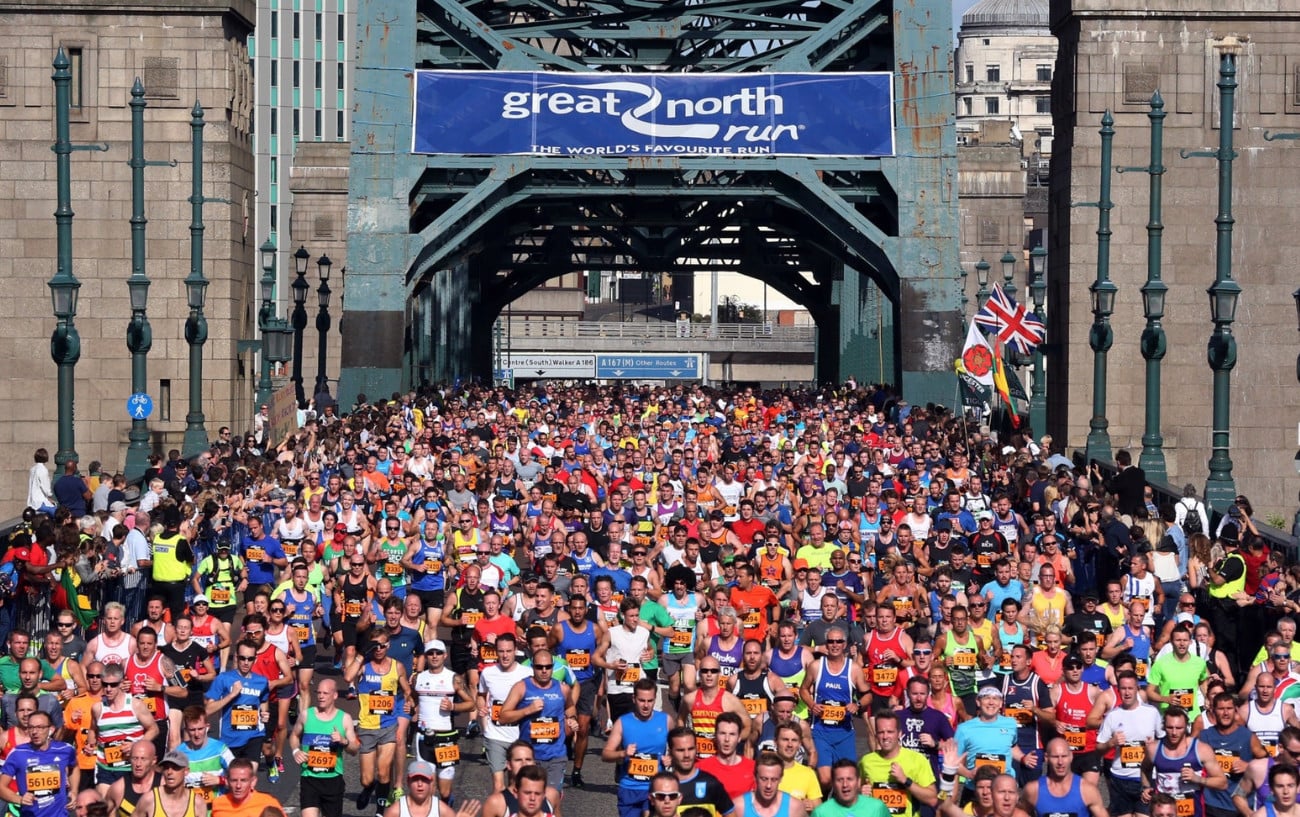
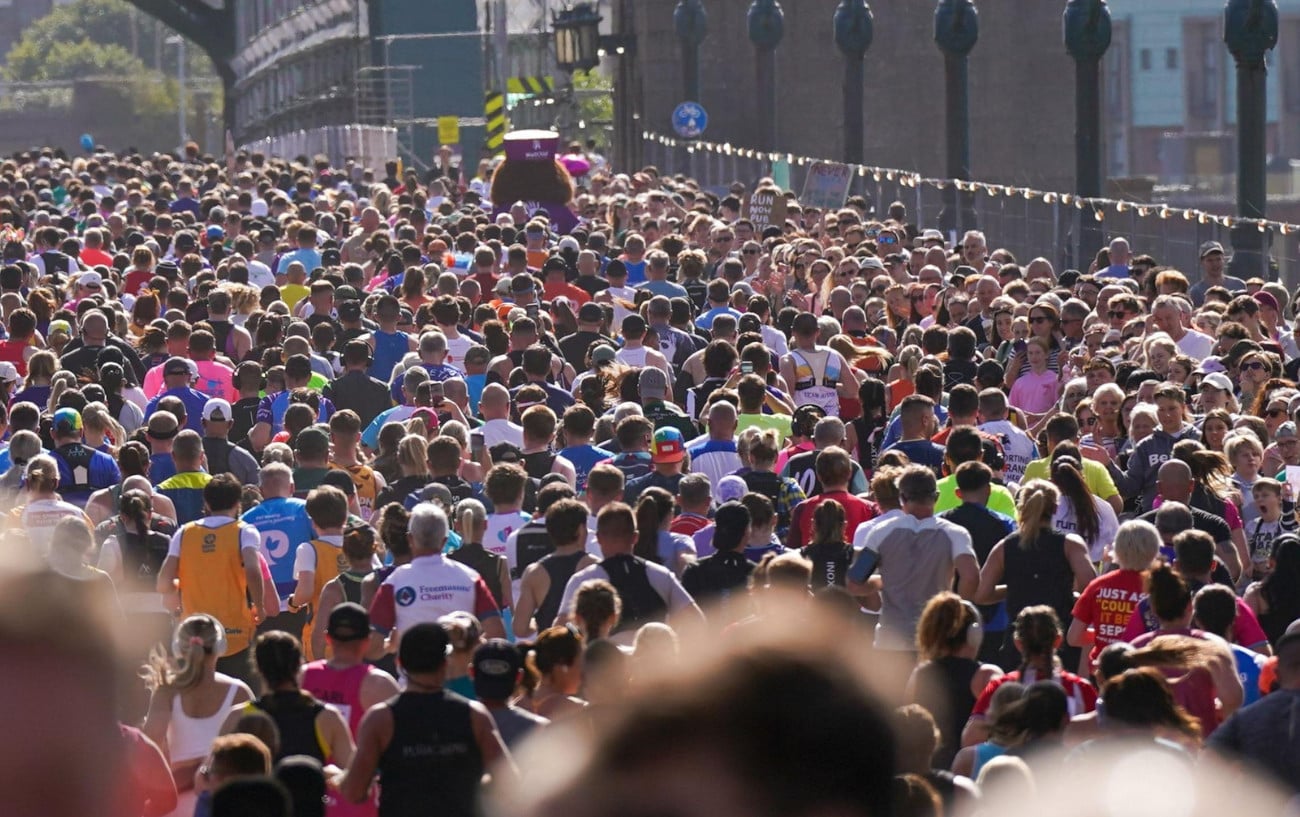
Sunday’s was the biggest Great North Run ever staged, with a record 63,000 runners on the 13.1 miles (21.1K) between Newcastle and the seafront at South Shields. Brendan Foster, who took 10,000m bronze at the 1976 Olympics, started the race 45 years ago, and 12,264 people ran the first one. Andy Burnham finished this one in 1:57:35, the first prime minister to run it while in office.
Cardiac Risk in the Young, the British charity that screens young people for undiagnosed heart problems, puts the number of people aged 35 and under who die suddenly of a cardiac condition in the UK at at least 12 every week, and reports that 1 in 300 of the people it screens turns out to have a condition capable of killing them. Conditions like those often give almost no warning first. Jenny Simpson was diagnosed with ARVC this summer, after a cardiac arrest in June, and it ended her running career. Neither death on Sunday has been attributed to a cardiac cause, and the organizers have released nothing about either man’s medical history or his preparation for the distance.
The largest study of cardiac arrest in road races, published in JAMA in March 2025, followed 29.3 million marathon and half-marathon finishers in the United States between 2010 and 2023 and counted 176 cardiac arrests, 59 of them fatal. Half-marathons produced 0.47 arrests per 100,000 finishers, well under half the marathon rate of 1.04. Most of them were men, 1.12 per 100,000 against 0.19 for women. The arrests that did happen were far less often fatal than they once were: roughly a third, where 71 percent had been fatal in the same researchers’ study of the decade from 2000. On American rates, a field of 63,000 would be expected to produce fewer than one cardiac arrest.
Sam Wealleans, 29, from Newbiggin-by-the-Sea in Northumberland, died after collapsing on the same course in 2024, while raising money for the mental health charity Mind in memory of his sister Carly and a family friend. The heaviest toll came in 2005, when four men died in a single edition, deaths attributed at the time to sudden adult death syndrome. The race’s communications director, David Hart, told Cardiac Risk in the Young the following year that the event had recorded eight deaths across its first 24 years, and that all 12 of the runners who had died by then were men, in a race whose entry was split evenly between men and women.
The cause of death in each case, the organizers said, “will be determined in due course.” The ballot for next year’s race, open since Sept. 7, closes on Sunday, with the draw the day after.
RunClub
Get more running stories — join RunClub
Daily running news, a community of 300,000+ runners, free training plans for every distance, and a daily running game. Free to join — no card.
Already a member? Log in →










Start the conversation