


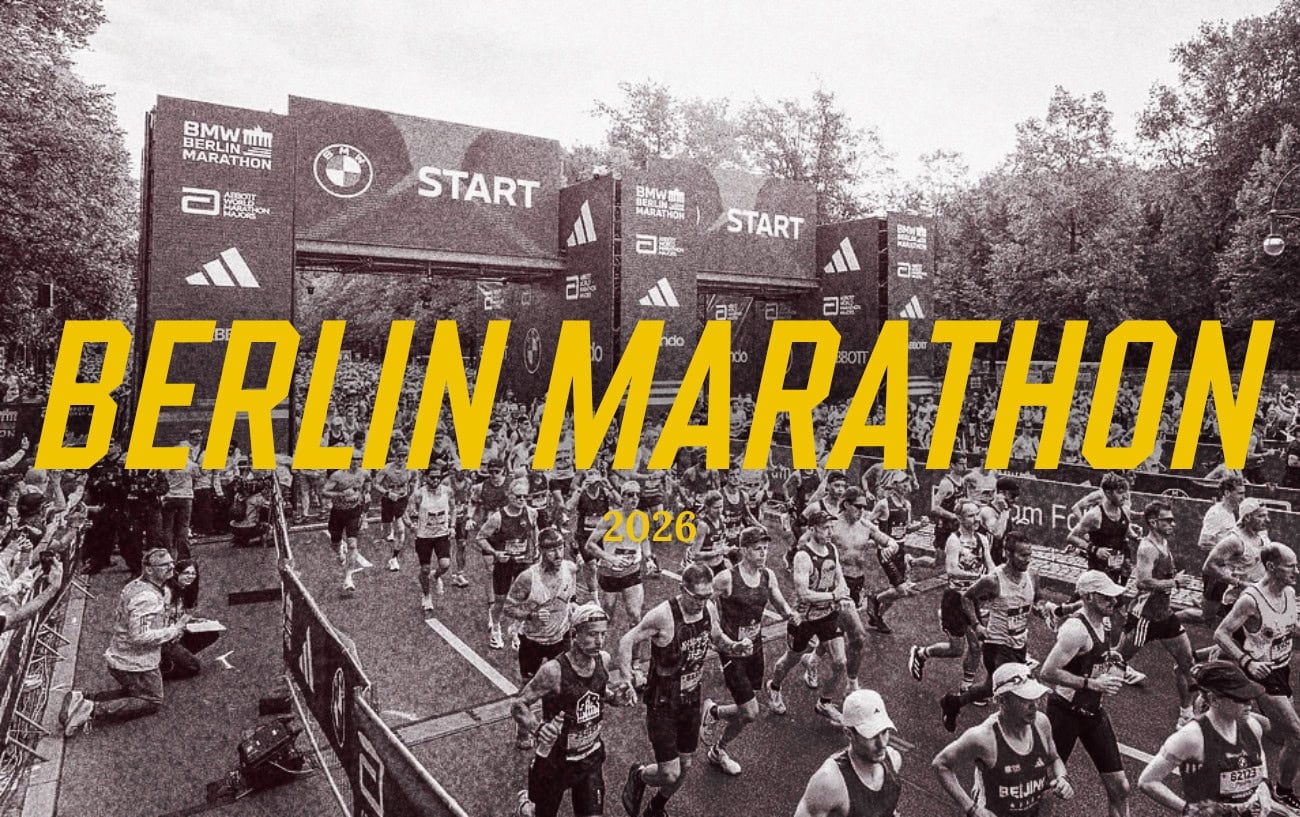
Guye Adola won the 2026 Berlin Marathon for a second time on Sunday, pulling clear of the lead group after 25K and holding on for a personal best of 2:02:50, almost three minutes quicker than the 2:05:45 that won him the title in 2021. Gemechu Dida, who was not part of the announced elite field, finished second in 2:03:19, and Gabriel Geay of Tanzania was third in 2:03:59.
Adola is 35, and the run took 56 seconds off a best that had stood for nine years, the 2:03:46 he ran on this course as a debutant in 2017, when only Eliud Kipchoge beat him. He had come within eight seconds of it in April, winning Rotterdam in 2:03:54. His training partner in Addis Ababa this year has been Yomif Kejelcha, who holds the half-marathon world record, and on Friday Adola had told the organizers he was “in the best shape of my life.”
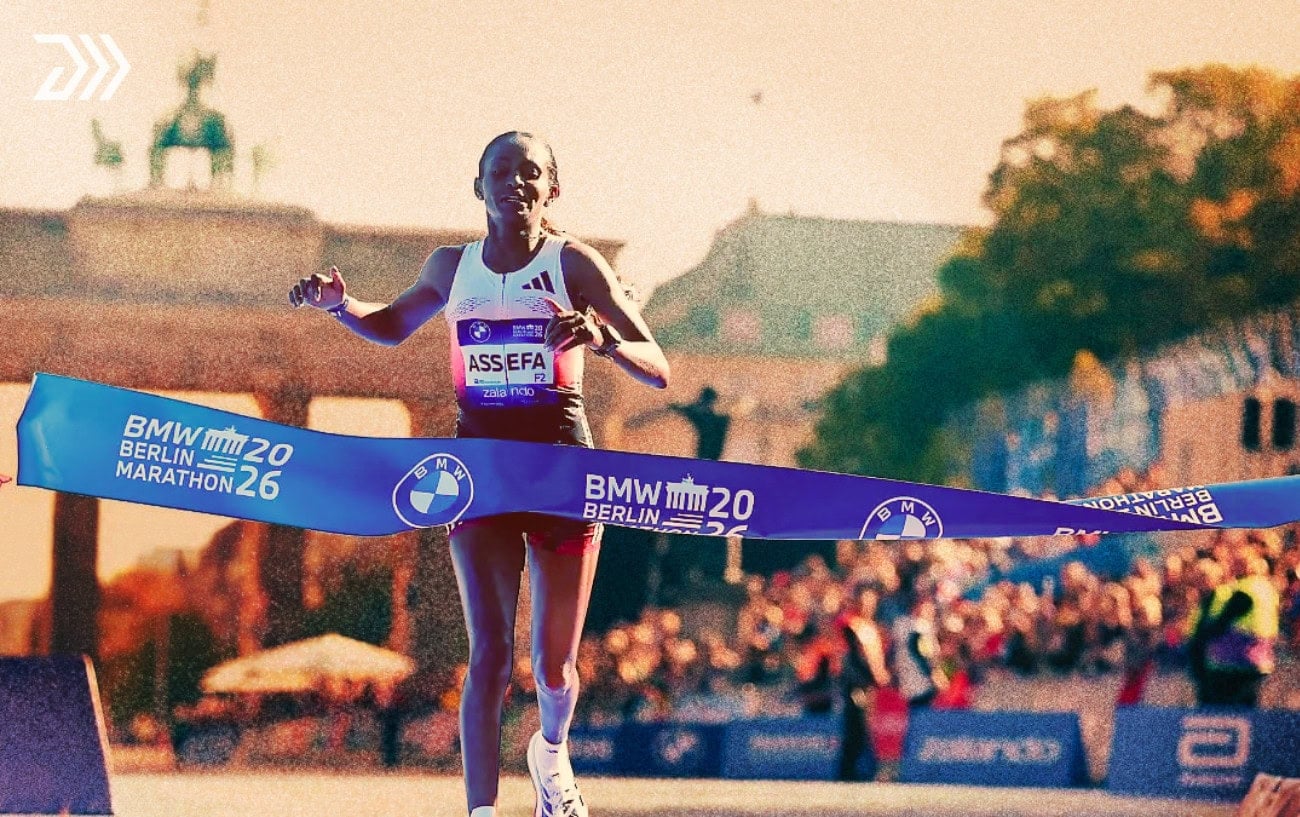
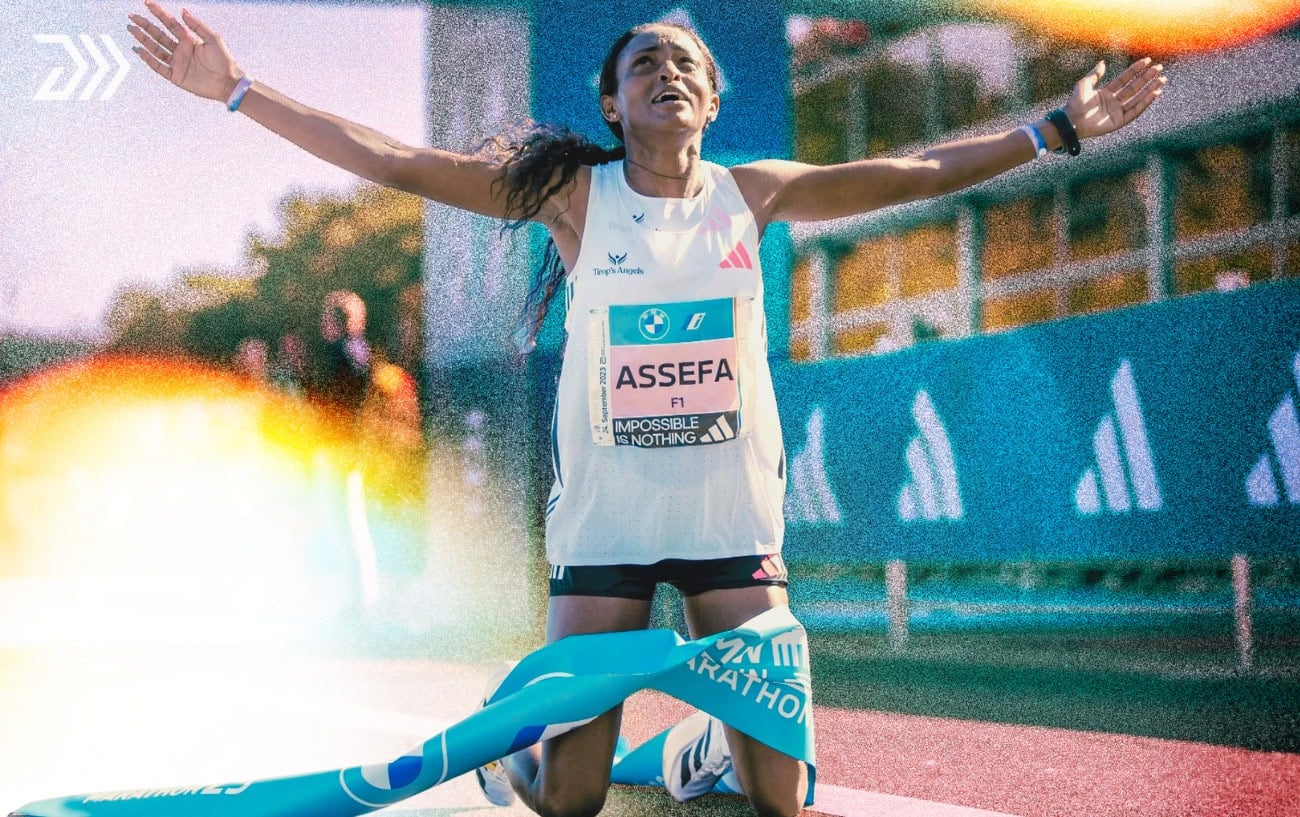
The women’s race was won by Tigst Assefa, who was on world record pace until about the 40K mark. Read our race report here.
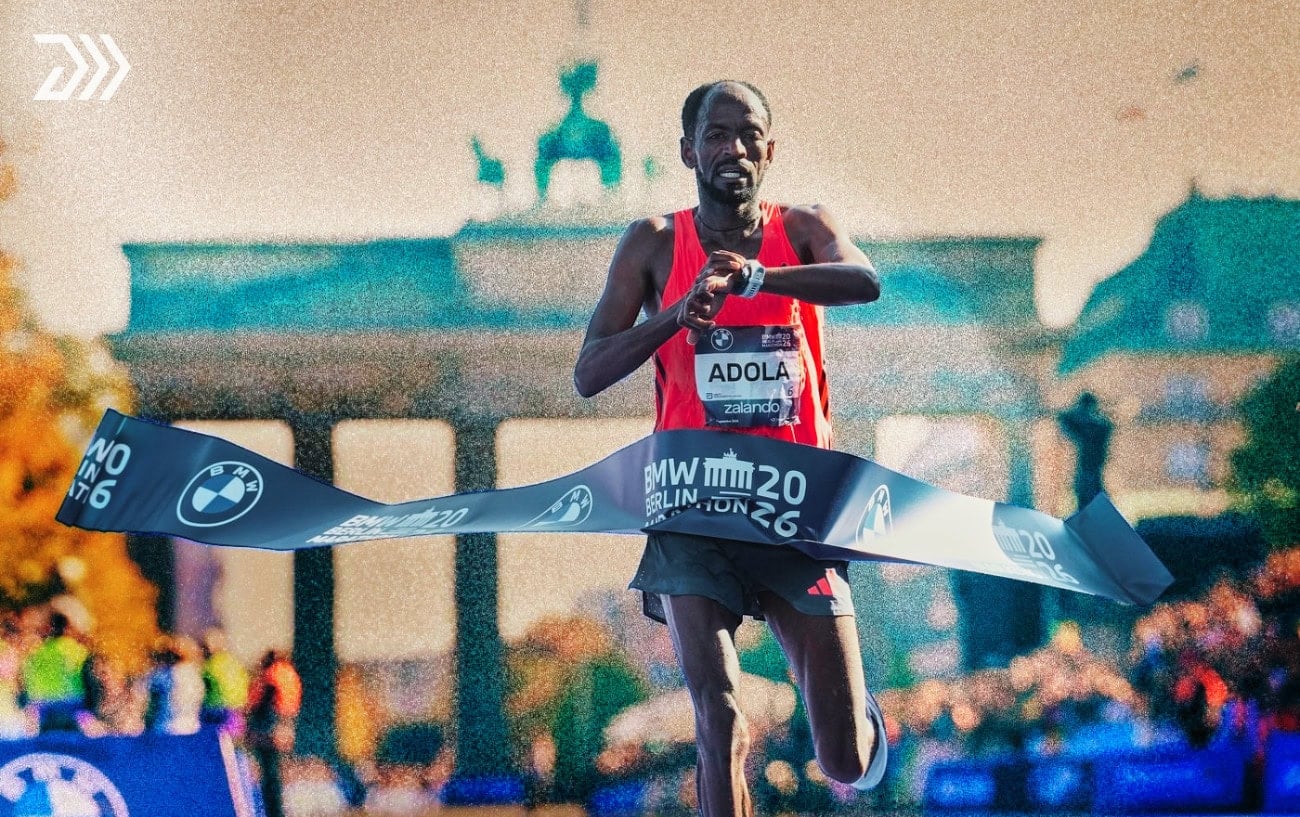
How Adola Won It
The organizers wanted the front group paced “towards 2:01,” Mark Milde, the race director, said on Friday, a plan that would have put Kipchoge’s 2:01:09 course record from 2022 in play. The leaders never got close to it. They reached 5K in 14:29 and then ran the next three 5K segments with almost metronomic regularity, each between 14:25 and 14:29, yet they were still 31 seconds down on an even 2:01 by halfway, which they passed in 1:01:01. From 20K to 25K the pace sagged to 14:33, and Adola spent that stretch three seconds off the front, running beside Geay and Getaneh Molla.
He made his move soon after. Adola covered the 10K from 25K to 35K in 28:53, and by 35K, reached in 1:41:18, he was nine seconds ahead of Dida and 13 ahead of Selemon Barega. Erick Sang, who had been at the front at halfway, was almost a minute behind by then, and Shura Kitata, the Seville winner in February, close to two.
The last 7K were hard on everybody. Adola needed 15:06 for the 5K from 35K to 40K, his slowest of the day, but those chasing him slowed more, and his lead doubled to 18 seconds at 40K and reached 29 seconds by the finish. His second half took 1:01:48, 46 seconds slower than his first.
Behind Adola
Geay started as the quickest man on paper, having run 2:03:00 in Valencia in 2022 for the Tanzanian record, and he was briefly in front at 10K. He was 32 seconds behind Adola at 35K before working his way past Barega for third. Twelve months ago he had failed to finish here, one of the casualties of the heat after following Sawe’s early pace.
Molla passed Barega in the final two kilometers to take fourth, 2:04:55 to 2:04:58. For Barega, the 2021 Olympic 10,000m champion, it was a personal best by only two seconds in his third marathon, after a morning spent at or near the front until 35K. Asefa Boki was sixth in 2:05:32, eight seconds under his previous best, and Kitata finished eighth in 2:06:04. Sang, who ran with the leaders through 25K, did not finish in the top 10.
Yuhei Urano was the first Japanese man home, ninth in 2:06:09, a personal best by 14 seconds but well short of Suguru Osako’s 2:04:55 national record.
The race went ahead without the two biggest names on its original start list. Sawe, the world record holder and defending champion, pulled out in August with a tibial stress fracture and came to Berlin as a guest of the organizers, and Bekele, 44, withdrew on Thursday because of an Achilles injury.
2026 Berlin Marathon Men’s Results
| Pos. | Athlete | Country | Time |
|---|---|---|---|
| 1 | Guye Adola | ETH | 2:02:50 |
| 2 | Gemechu Dida | ETH | 2:03:19 |
| 3 | Gabriel Geay | TAN | 2:03:59 |
| 4 | Getaneh Molla | ETH | 2:04:55 |
| 5 | Selemon Barega | ETH | 2:04:58 |
| 6 | Asefa Boki | ETH | 2:05:32 |
| 7 | Andamlak Belihu | ETH | 2:05:55 |
| 8 | Shura Kitata | ETH | 2:06:04 |
| 9 | Yuhei Urano | JPN | 2:06:09 |
| 10 | Tadu Abate | ETH | 2:07:16 |
RunClub
Get more running stories — join RunClub
Daily running news, a community of 300,000+ runners, free training plans for every distance, and a daily running game. Free to join — no card.
Already a member? Log in →


Start the conversation