


If you’ve never watched the Hakone Ekiden, it helps to start with the basics.
For two mornings in early January, the country more or less stops to watch a collegiate road relay race. Television ratings rival major professional events. Crowds line the streets for kilometers at a time. Universities treat it as the headliner competition of their season.
The Hakone Ekiden is a two-day, 217-kilometer road relay run by Japan’s top university teams between central Tokyo and the mountain resort town of Hakone, near Mount Fuji. Each team fields 10 runners, each covering one stage of roughly half-marathon length. Instead of a baton, runners pass a sash, called a tasuki, between teammates.
The race was first held in 1920. This year’s edition is the 102nd.
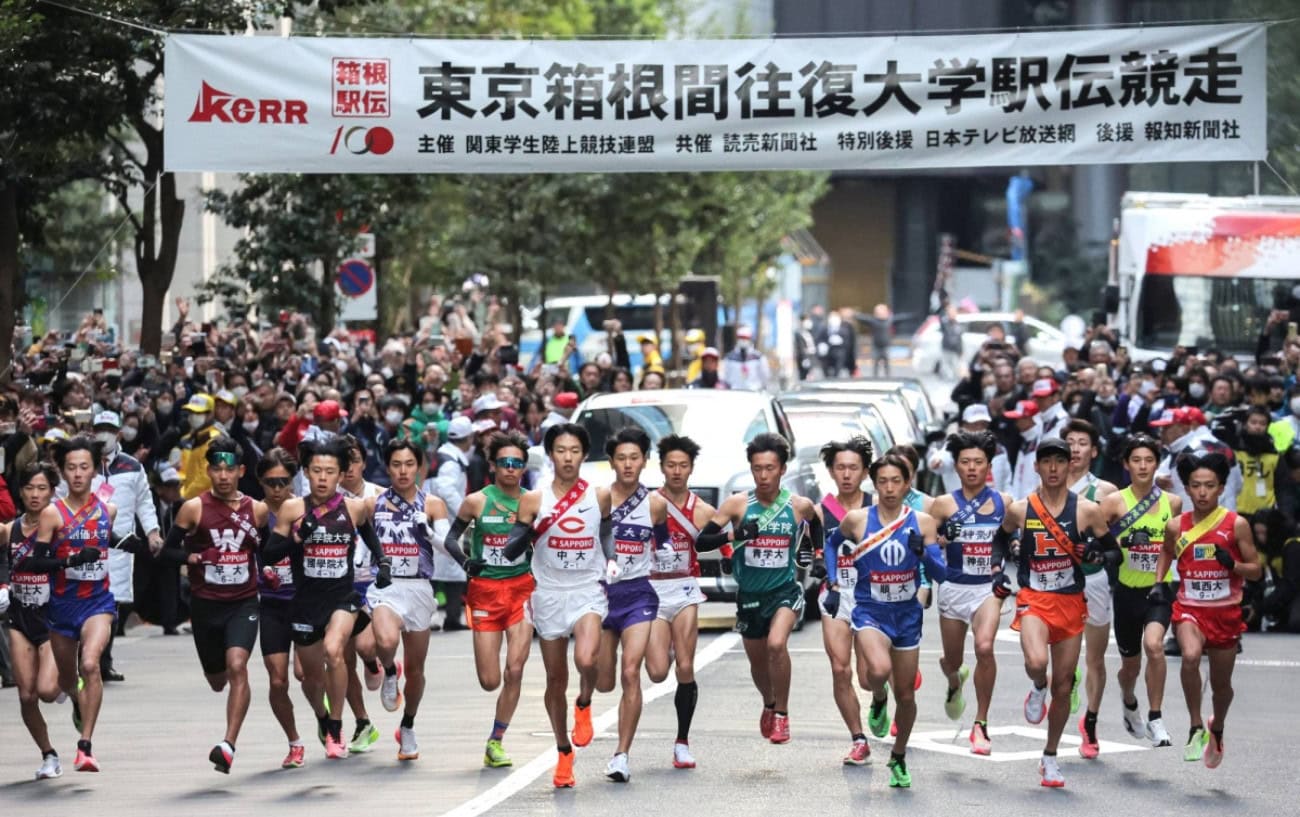
So you can see that Hakone isn’t just another meet on the calendar. It’s the event Japanese distance runners grow up watching, the one that shapes recruiting, coaching careers, and public reputations. A strong performance can really change a university program overnight. A bad one can send it back to qualifying races and relative obscurity.
Like the Tour de France in cycling, it’s not one race so much as a collection of them layered together.
There’s the battle for the win, usually involving a small group of powerhouse programs. There’s the fight for stage honors, especially on the famous mountain legs. And then there’s the cut line. Finishing in the top 10 guarantees automatic qualification for the following year’s Hakone Ekiden and an invitation to the Izumo Ekiden in the fall. Finish 11th or worse, and you’re sent back to the Yosenkai qualifying race.
That makes the fight for tenth place, late on Day Two, some of the most stressful, albeit exciting, racing of the entire event.
The course itself is, of course, also part of the show.
Day One runs west from Tokyo to Hakone and includes a 20.8-kilometer uphill fifth stage that regularly decides the race. Day Two begins with a steep downhill, followed by long, exposed roads back into the capital. Teams plan their lineups around these stages months in advance, often grooming specialists for a single run.
This year’s race has followed that familiar pattern.
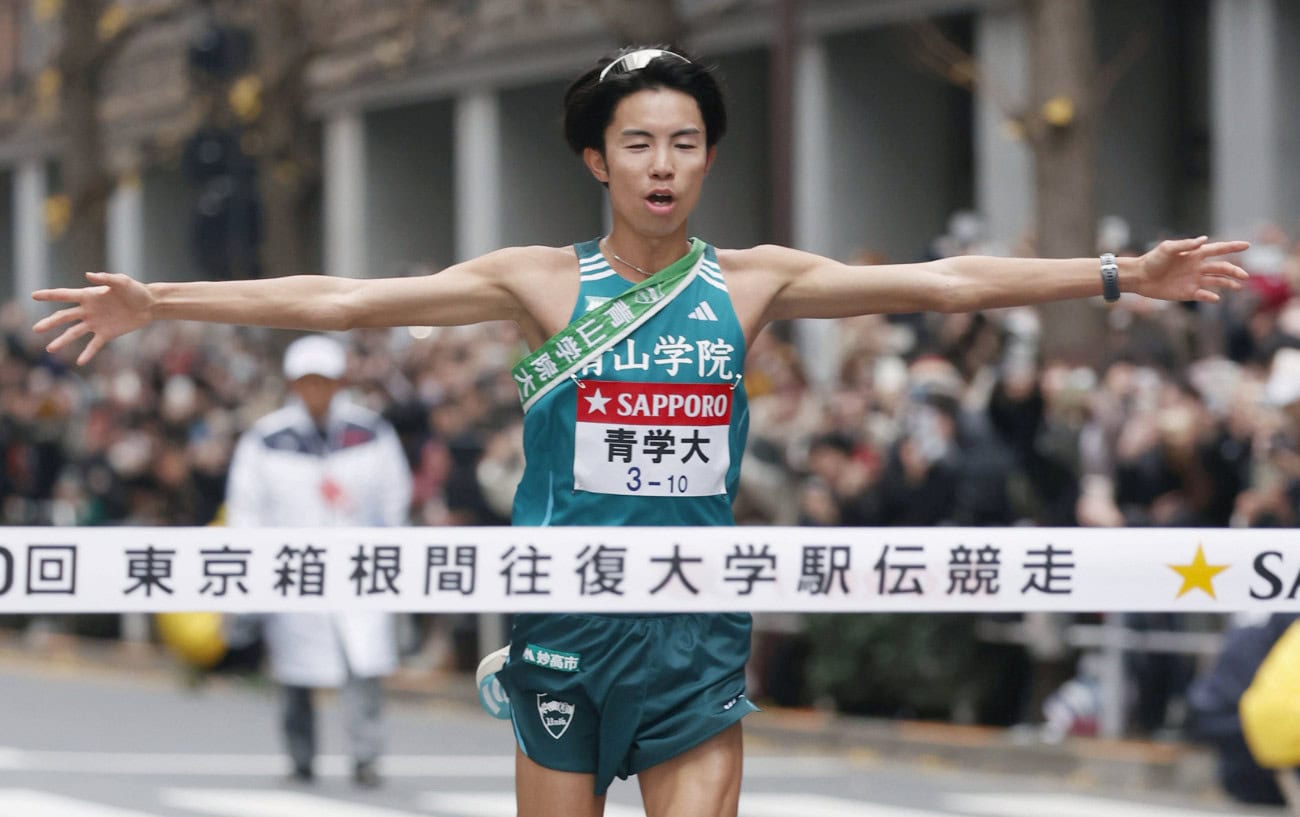
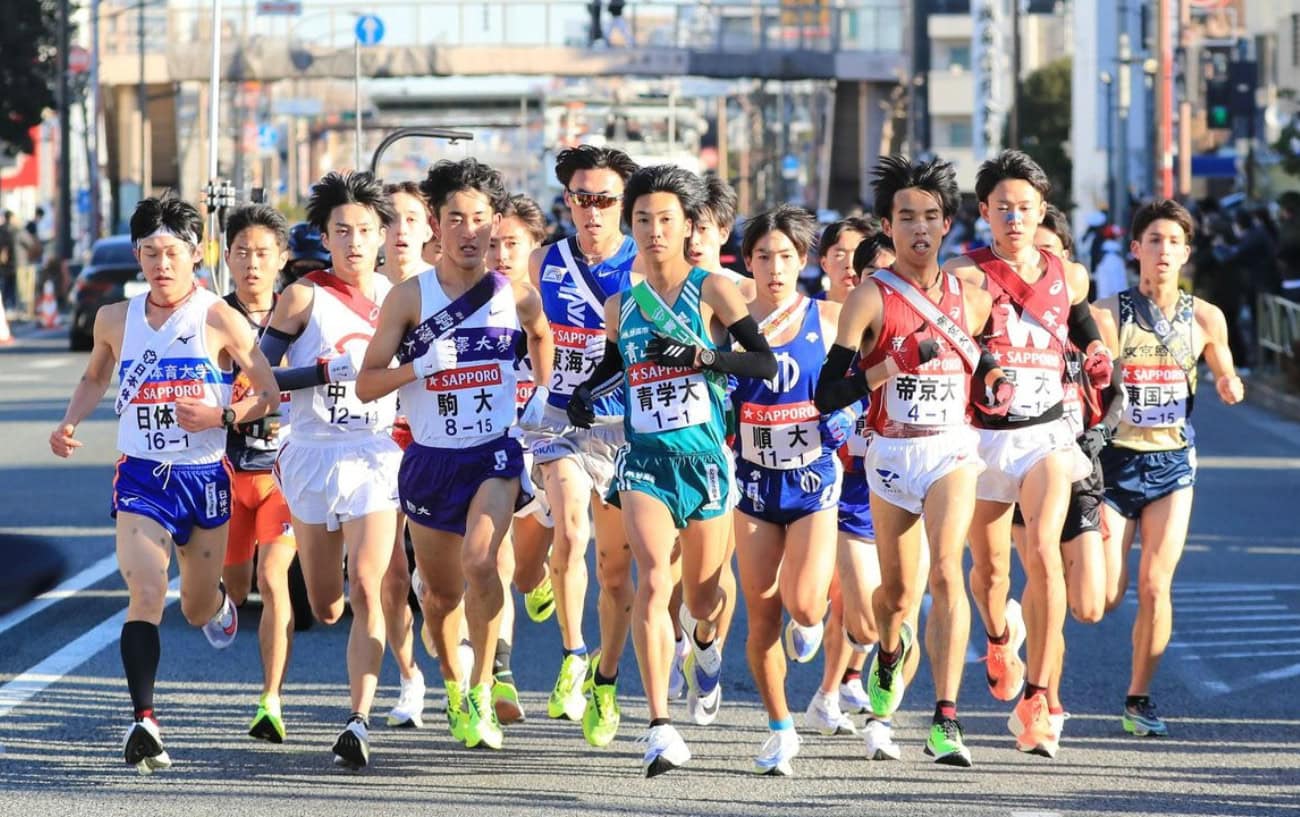
Chuo University controlled the early stages on Day One before the race turned on the climb into Hakone, where defending champions Aoyama Gakuin University made their move. Fourth-year Asahi Kuroda ran the fifth stage in 1:07:16, breaking the course record by nearly two minutes and pulling Aoyama Gakuin from fifth place into the lead by the halfway point.
From there, they did what experienced Hakone teams tend to do. They protected the lead on Day Two, avoided mistakes on the downhill, and extended their advantage steadily. Aoyama Gakuin went on to secure their third straight Hakone Ekiden title, becoming the first university to complete two separate three-peats in the race’s history.
But the appeal of Hakone isn’t limited to who wins.
What keeps people watching for hours at a time is that there’s a grueling story throughout the whole event. The slow reveal of time gaps. The pressure on runners that find themselves alone on long stretches of road. The sense that one decision, or one bad kilometer, can undo an entire year’s planning.
Like the Tour de France, it’s a race that unfolds over time, and how teams strategically work together to get the most out of their race.
That’s why it dominates Japanese sports coverage every January. And why, even if you’ve never watched an ekiden before, it’s worth knowing what you’re seeing when the streets of Tokyo fill with runners and sashes once again.
RunClub
Get more running stories — join RunClub
Daily running news, a community of 300,000+ runners, free training plans for every distance, and a daily running game. Free to join — no card.
Already a member? Log in →




Start the conversation