

In Search of the Perfect Marathon
Every marathoner hopes someday to run the perfect marathon—that timeless race in which everything comes together in a symphony of athletic and spiritual fulfillment. The weather is perfect, the course is perfect, the training has been perfect, and the pacing is perfect. Everything is going so well you wish the finish line were still an hour away so you could savor the moment more profoundly. Ah, heaven. Ah, ecstasy. Ah, daydream?
Not really. Some marathoners have experienced that quintessential marathon. Consider Frank Shorter in Munich in 1972 and Joan Benoit in Los Angeles in 1984. While some runners have experienced marathoning nirvana, others have a vision of what a perfect marathon would be like and are resolved to run marathons until they experience one.
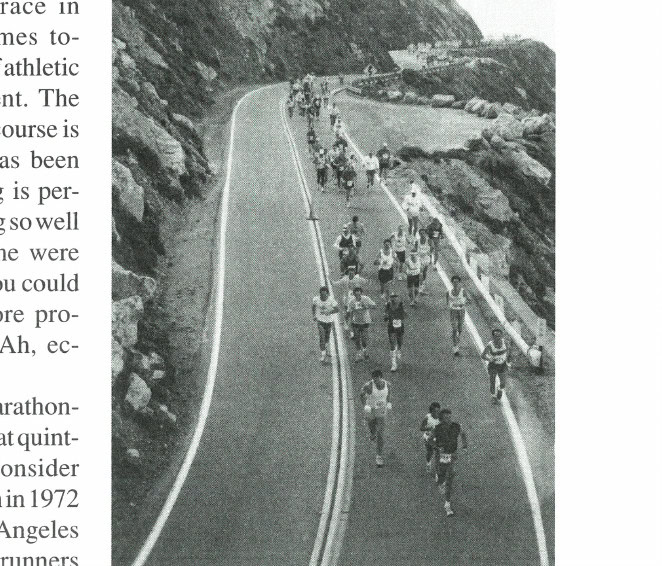
Certainly the backbone of a perfect marathon is perfect marathon training: hard work, dedication, sensible hard and easy workouts, delayed gratification, inner focus, and outer resolve.
A marathoner in search of the perfect race can do little about the weather beyond studying past weather patterns for specific races and knowing that the best marathon weather is in the spring and fall. What the marathoner does control completely, though, is the size and style of the race to enter. The race committee and the race location determine the style of each marathon. But the size of a race can profoundly affect the event as well. For a runner to feel comfortable—and confident—in a marathon, the size of the race must fit the runner’s personality.
Some runners who move up to the marathon seek the inspiration and sensory overload of a megamarathon to tap into the raw and wired energy of thousands and thousands of other runners. Others go in the opposite direction, seeking a marathon that seeps serenity and solitude, where the course provides a link to the music of the spheres.
Seasoned marathoners have experimented with small marathons (fewer than 2,000 entrants), large marathons (2,000 to 10,000 entrants), and megamarathons (more than 10,000 entrants). Some runners can see the benefit of each type of marathon while others have become more firm believers that one or the other is the right size for them.
To give our readers—from novice marathoners to grizzled marathon veterans—a perspective on the benefits and shortcomings of small, large, and megamarathons, we solicited articles from a fan of each type of race and told them to throw objectivity right out the window.
Tim Martin lives in northern California and trains on the Avenue of the Giants and the Humboldt Redwoods marathon courses. A former winner of the Russian River Marathon and a staunch supporter of small marathons, Tim makes a case for serenity.
Scott Keenan is the race director of the reasonably large-sized and famed Grandma’s Marathon in Duluth, Minnesota. Scott provides a view from inside his race to show how it is structured to do what it does so well.
And Sarah Lorge is a member and staffer of the New York City Road Runners Club. We didn’t need to hire detectives to uncover her prejudices on behalf of megamarathons.
As you will see, each advocate exudes passion for his or her favorite style and size of marathon. One underlying fact becomes clear from all three pieces, though: We live in a golden age of marathoning, where there is not one but scores of marathons, something for every marathoner’s taste—a smorgasbord waiting to be sampled. Bon appétit!
This article originally appeared in Marathon & Beyond, Vol. 1, No. 3 (1997).
← Browse the full M&B Archive1,000+ stories from 19 years of Marathon & Beyond
The complete archive of the legendary long-distance journal — digitized and free to read.
