

On THE Mark
1. GOING EXTRA LONG. After a 10-year layoff, I’ve returned to running and want to do marathons again. I’m 45, with a 3:27 PR. My job makes it difficult for me to train more than two weekdays each week. Can I make up for this shortcoming by running extra long on Saturdays and Sundays?
Will Cummins, Seattle, Wash.
THE MOST important training session in preparing for a marathon is your long training run. However, this session imposes a stress on your muscles and joints, and, as a result, places you at risk for injury. Therefore, long runs should only be attempted after you have a sufficient background of base training. It is not clear from your letter how much background training you have completed.
However, assuming that you can run 10 miles continuously, I would suggest that you gradually increase this distance by one mile per week until you are able to run 15 miles. At this stage you can start experimenting with your back-to-back training sessions. Start by running 10 miles followed by 8 miles the next day. If you are able to build this session up to 18 miles followed by 12 miles the next day, you will be adequately prepared for the marathon. Preferably you need to peak your training about four weeks before the race and then start your taper.
There are physiological reasons supporting long back-to-back runs. By starting the second run with low muscle glycogen concentrations, the muscles “learn” to produce energy from other sources, such as fat. This is a favorable adaptation and one that helps you resist fatigue in the marathon.
One word of caution: Don’t get stuck in the mindset of trying to achieve what you did 10 years ago. Instead, start afresh and set new goals that are compatible with your age and your training status.
—Michael Lambert, PhD, is with the Department of Physiology at the Sports Science Institute of South Africa and a member of the M&B Science Advisory Board.
DEPENDING ON your time goal, you can successfully complete a marathon on three days a week. I would focus on gradually increasing the pace and tempo of your two weekday runs, eventually getting them to your lactate threshold pace (10-mile race pace).
Do this by building up with fartlek runs (e.g., 3 minutes at 10-mile race pace, followed by 3 minutes easy, building up to eight repetitions). Then you can eventually run 4- to 6-milers at this pace.
Also build up your weekend long run to two-plus hours three weeks prior to the marathon. Run relaxed on the long run, only picking up the pace if you feel extra good on that day. Don’t set too lofty a time goal; otherwise, your three-days-a-week training plan might leave you short of the time.
—Mark Conover was a U.S. Olympic marathoner, and coaches runners of all abilities. His e-mail address is mconover@slonet.org.
“THE PAST is never dead; it is not even past,” wrote William Faulkner. If you ran marathons previously, I don’t see any reason why you cannot begin running them again—and running them well. The heart, however, is more demanding and will ask you, “What have you done for me today, and yesterday, and every day that you have not run in all these years?” If during this 10-year hiatus, you haven’t been able to run at least three days a week for 30 to 40 minutes, I would recommend a visit to your doctor for an evaluation of your cardiovascular health before you reach a decision to begin training for the marathon.
Regarding running a marathon with a training schedule of three or four days per week, it depends very much on what your aim is. If you aim to finish in 4 to 5 hours, including walking intervals, and enjoy the atmosphere of a marathon as a “fun run,” you will probably be able to do it, even with low mileage.
For a more serious race, however, you would probably need to train more than 40 miles per week, and this could be achieved by one long-distance run on the weekend (starting with 15 miles and going up until 20 miles) with the additional 20 miles divided among the other three training days, according to the time that you have at your disposal.
Remember that regularity and a progressive increase in your mileage are essential to avoid the “burned out” syndrome (too much too fast) and muscular-skeletal injuries.
Start with 10K races to check your body’s response and recovery time and later increase to half-marathons before taking on a full marathon. But do talk to your doctor first.
—Pedro Pujol, MD, works at the Olympic Training Center in Barcelona and was a member of the Olympic Medical Team at Atlanta in 1996.
WORKING A full-time job while training for a marathon can be tough. But judging from the increasing number of runners you see at the starting line of most marathons, it is not impossible. The trick, of course, is to create a life of balance and moderation as you train for your event.
Although you will be missing out on several days of training each week, you can still prepare for and run a successful marathon if you establish a solid running base, build on it carefully, and keep your running schedule flexible.
Since you are just returning from a 10-year layoff, I strongly recommend not breaking into your training with back-to-back weekend runs. Start out with an easy Saturday run and slowly increase the distance until you are running 10 to 15 miles. Once you feel comfortable with that, add a Sunday run and slowly step up your mileage in the same manner. Space in a few (very important) 20-mile runs prior to the marathon. Fill in the weekdays with short, easy workouts and, most importantly, plenty of rest. Add a long taper to the formula, and you should be ready to go the distance.
—Timothy Martin is a board member and past president of Six Rivers Running Club and the veteran of 40 marathons and several ultras.
JOHN J. KELLEY, aka “Johnny Kelley The Younger”—to differentiate him from his namesake, “John A. Kelley The Older” (no relation)—won the Boston Marathon in 1957. Like his namesake, John J. Kelley developed a penchant for finishing second at Boston, a feat he accomplished five times. The only American to win Boston in the 1950s, Johnny coached Amby Burfoot, the only American to win Boston in the 1960s (1968). A retired high school English teacher, Johnny makes his home in Mystic, Connecticut, from where he continues to turn out his “running memoirs” for readers of this magazine.

ADAM CHASE is a runner and snowshoer with a lawyering problem. He grew up and still lives in Boulder, Colorado, with his wife Julianna and newborn son Noah. When not running or practicing tax law, Adam serves as the chairperson of the Boulder American Civil Liberties Union, the chief counsel of the All-American Trail Running Association, and a product tester and reviewer for a number of outdoor sports shoe and apparel manufacturers. Adam has run competitively in more than 40 marathons and ultras during his 31 years, and he specializes in mountain trail adventure runs.
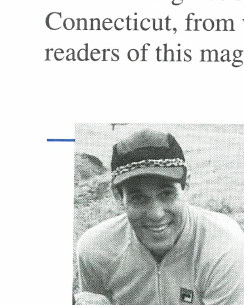
STEVE KNODE is a writer, researcher, and freelance communications consultant currently based in Kuala Lumpur, Malaysia. During his career, he has worked for various public relations agencies, both in New York and Asia. Born and raised in Japan but educated in the United States, Steve considers running the ultimate “portable sport” and has made a point of running in as many countries and locales as possible. Although the Hong Kong-Shenzhen race was his first marathon, Steve has run in nearly every corner of the world.
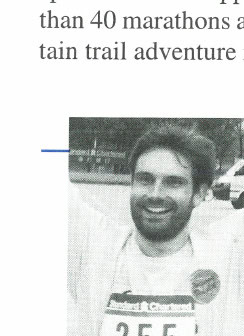
JOE OAKES has been running for 50 years and has raced in every event possible, from 200 meters on up. In August of 1990 he began an often-interrupted, multi-sport, around-the-world adventure—bicycling, running, swimming, kayaking, sailing, walking, and climbing. He began in Fairbanks, Alaska; rode a bike from there to New York; then sailed across the Atlantic to Portugal; went through Europe, Russia, Central Asia, and then to the Bering Straits, where he swam between the USSR and the United States. In March of 1997 he chopped off another 400 miles of his journey on a dogsled, going in the reverse direction of the Iditarod Trail from Nome to the Yukon River. Later this year he will bring his odyssey to closure by making a 500-mile journey between Fairbanks and Kaltag on the Yukon River in a canoe or a kayak, or on a pile of logs.

JOE HENDERSON is the West Coast Editor of Runner’s World magazine. He was that magazine’s first full-time editor (1970–1977). The author of 20 books on running, Joe is a frequent guest speaker at marathons throughout the United States and Canada. His experience with marathons spans decades. The excerpts appearing in this issue are from his latest book, Marathon Training.

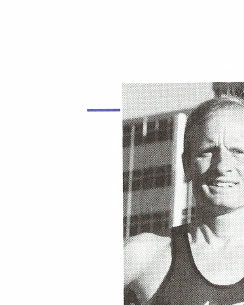
DOUG KURTIS is most well known for his marathon consistency and for his indestructibility. Over a 14-year span he ran 76 sub-2:20 marathons! In 1989, when all American men combined ran a total of 62 sub-2:20s, Doug accounted for 12 of them. He also holds a world’s record for the most marathons won in a career, 39. (Bill Rodgers is second with 21.)
This article originally appeared in Marathon & Beyond, Vol. 2, No. 1 (1998).
← Browse the full M&B ArchiveMore like this
1,000+ stories from 19 years of Marathon & Beyond
The complete archive of the legendary long-distance journal — digitized and free to read.
