Research At The Western States Endurance Run
2012 ‘ x Existing * Discontinued
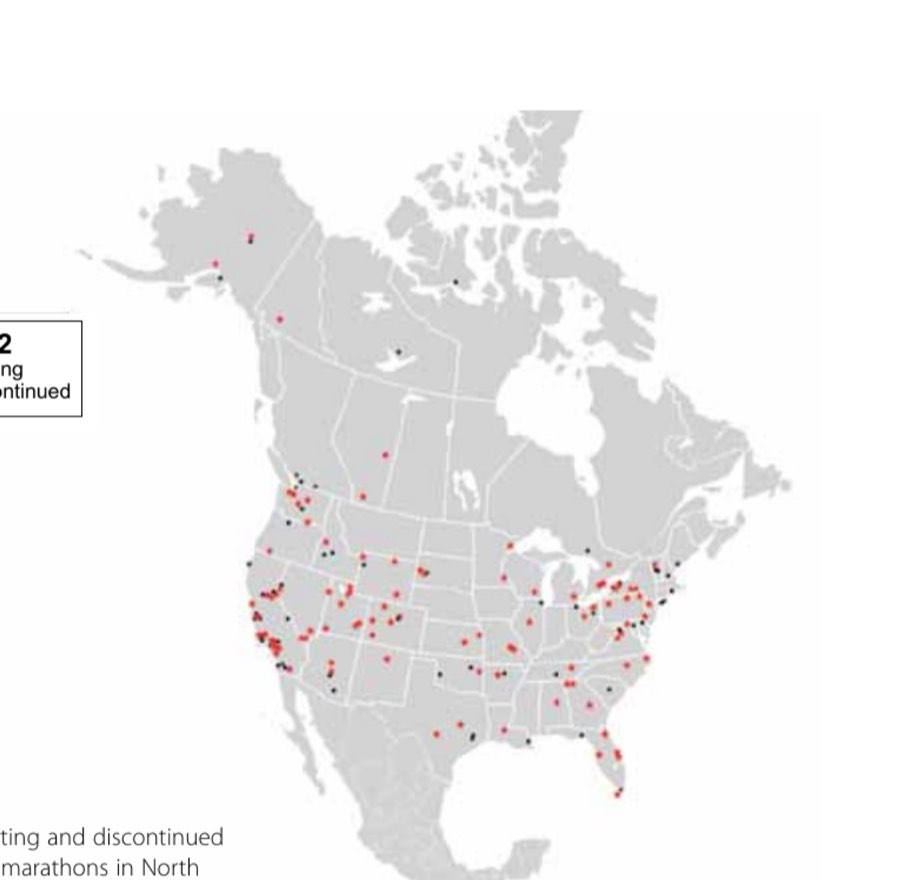
. ap) a= 2s s %; – . i ow ed ‘ + ais, Figure 1. Existing and discontinued 100-mile ultramarathons in North America as of 2012.
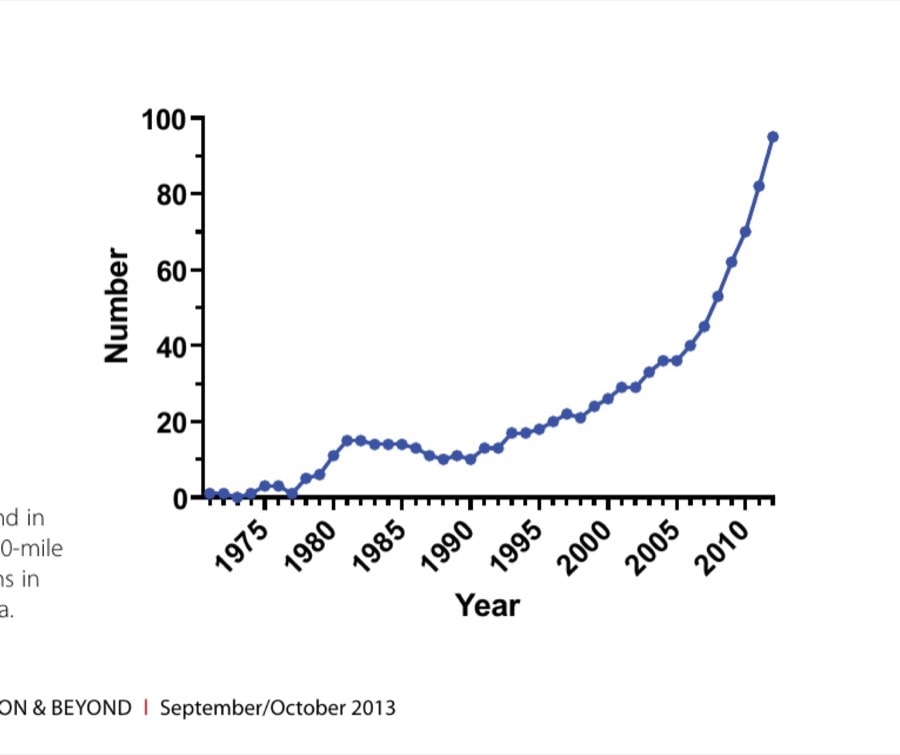
8 60 g z 40
Figure 2. Trend in 9 number of 100-mile ? ey x s S . N N N N N ultramarathons in North America. Year
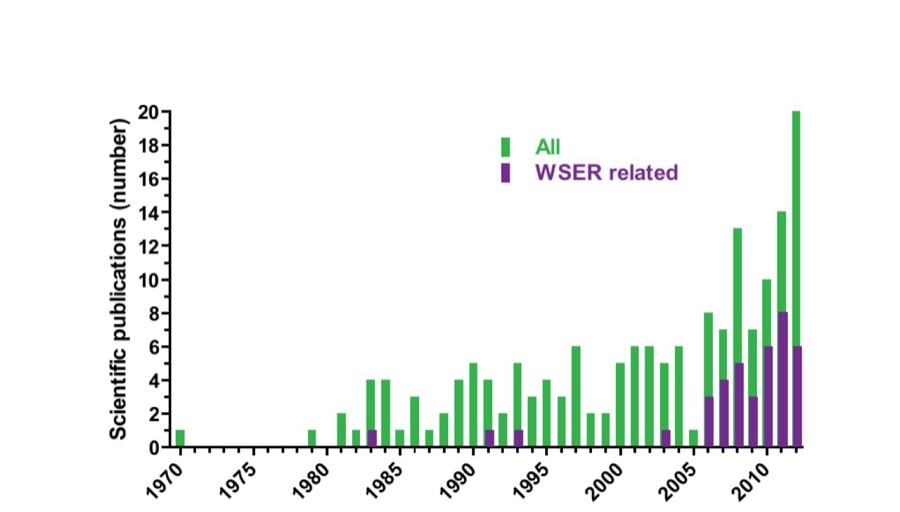
I All I WSER related
Scientific publications (number)
Figure 3. Trend in scientific publishing of work related to ultramarathon running as demonstrated from a PubMed search using the terms ultramarathon, ultrarunner, and ultrarunning. Note the relative importance of the WSER during the past several years.
attitude of scientific inquiry at the WSER. This tradition, along with the general interest among participants in this sport, has enhanced the likelihood of success for a formal research program at the WSER.
The WSER research program includes a research committee that reviews research proposals submitted to the WSER and opportunities for financial support of the research through the WSER Foundation. From 2007 through 2012, the WSER has provided more than $50,000 of research funding to investigators. In view of the extent and quality of work that has been accomplished from this support, the money has been well invested.
The primary areas of research focus at the WSER have included the following:
* immune and oxidative response
° characteristics of participants
* participation and performance trends * cardiac responses and adaptations
¢ fluid and nutritional requirements
* exercise-associated hyponatremia
° rhabdomyolysis
° acute kidney injury
© Michael Lebowitz/Long Run Pictures
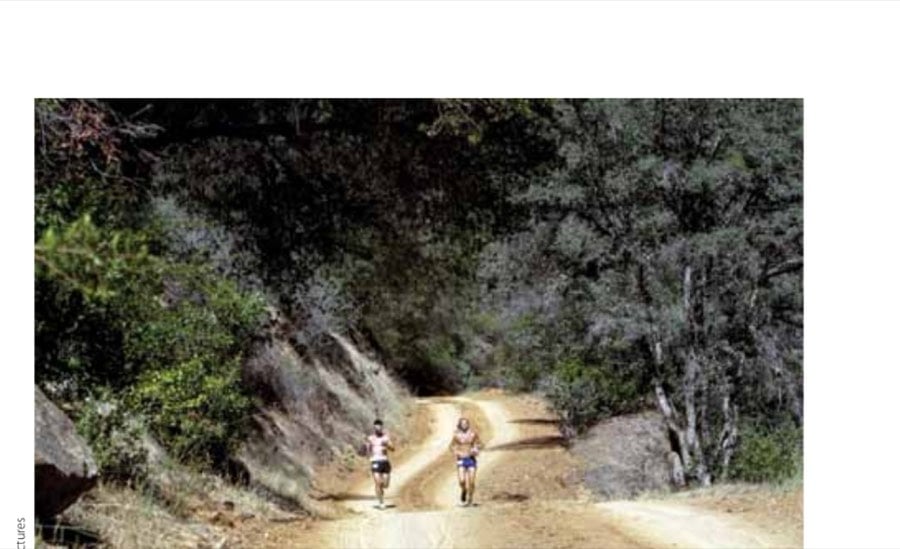
The WSER has proven to be a particularly good model for the study of responses to severe physiological stress, exercise-associated hyponatremia, rhabdomyolysis, and acute kidney injury. Notably absent from this list are psychological, biomechanical, and fatigue studies, which I hope to change in the future.
This special section of M&B highlights research performed at the WSER in most of the areas listed above. Each topic was part of a symposium titled “The Western States Endurance Run: Premier Mountain 100 Mile and Ultra Lab,” which we presented at the annual meeting of the American College of Sports Medicine on June 1, 2012.
Each of the scientific authors in this series of articles has performed research at the WSER for several years. As a group, their work accounts for 24 scientific publications related to the WSER between 2007 and 2012 and yet more in various stages of the publication process. These scientists have also presented this work at numerous scientific meetings and have provided this information to runners in informal lectures and through lay publication in various magazines. Since it is our mission to return the information we’ ve learned to those who will benefit, we have compiled the following series of articles for our running buddies, many of whom have selflessly participated in our studies. &

Who Are These Crazy People Running 100 Miles?
An analysis.
the adjective “crazy” in the title of this article makes perfect sense. But for us, high levels of regular aerobic exercise have become the norm, and it may seem odd to think of this behavior as being anything but normal, or at least what should be normal. Unfortunately, most of our society is sedentary. Indeed, many
| or many not associated with the world of endurance sports, the inclusion of
people often look at anyone who exercises beyond even the minimum amount suggested for maintaining health as being crazy. So since we are frequently subject to being referred to as crazy, I include that descriptor in the title with the clarification that even though I may be biased, I don’t think we’re necessarily crazy just because of our exercise behavior!
This article will cover some things we’ve learned about participation trends in ultramarathon running and basic characteristics of the participants. This article will not shed light on why we choose to run ultramarathons or whether such behavior has any potential adverse effects. Those topics require more exploration and may be answered in the future through the Ultrarunners Longitudinal TRAcking (ULTRA) Study or other research. The ULTRA Study is a longitudinal study, currently planned for 20 years, that was initiated at the end of 2011.
The participation trend in the Western States Endurance Run (WSER) is shown in figure 1 on page 31. This shows that the run rapidly became an important event during the late 1970s. Had it not been for congressional enactment of the California Wilderness Act in 1984 creating the Granite Chief Wilderness, the run would undoubtedly have continued to grow. But because the run crosses the Granite Chief Wilderness from about six to 10 miles, the US Forest Service has limited participation to a five-year running average of 369, the number of starters in 1984. Since interest in running this event has been so great, a lottery and qualifying event have been required to control the number of participants. There have been more than 2,000 applicants for the run in recent years. Interestingly, the participation among women has gradually increased and has been at 20 to 22 percent since 2001.
Participation in 100-mile ultramarathons in North America has increased exponentially (see figure 2 on page 31). In 2010, there were 3,991 finishes by 3,043 different individuals, and 1,312 people finished a 100-mile ultramarathon for the first time. The total number of 100-mile finishes in North America as of 2010 was 39,607, accounted for by 12,140 individuals. For perspective, the New York City Marathon now has over 45,000 finishers each year, so participation in 100-mile ultramarathons pales in comparison.
Despite the growth in the number of 100-mile events, the WSER remains an event that many seek the opportunity to run. In addition to the large number of applications for entry, the interest in this event is evident by the fact that in our analysis of data through 2008, roughly 35 percent of all 100-mile finishers in North America had completed the WSER. And although the WSER is no longer the largest 100-mile ultramarathon in North America, finishes at the run accounted for approximately 20 percent of all 100-mile finishes in the continent.
It should be noted that marathon participation and ultramarathon participation across all distances has increased. In 2010, there were around 507,000 marathon finishes and 50,000 ultramarathon finishes in the United States. Participation in 100-mile ultramarathons represents about 8 percent of ultramarathon participation whether considering the number of events or the number of finishes (see figure 3 on page 32). The 50K distance is by far the most popular distance, accounting for more than 50 percent of the participation, followed by the 50-mile distance at around 20 percent.
The message from this is that participation in 100-mile ultramarathons is relatively small—less than 1 percent compared with marathon participation. Relative to the general population, only one person out of around 174,000 will finish a 100-mile ultramarathon each year. But little is known about the group of people who voluntarily choose to run ultramarathons.
We have recently examined some of the characteristics of ultramarathon runners. One study examined North American 100-mile ultramarathon participants
Figure 1. Number of starters in the WSER, including the number of male and female starters once those data were available. Adapted from Hoffman and Wegelin (2009).
b S )
Number of Starters
1975 1980 1985 1990 1995 2000 2005 Year
4,000 Total finishes
3,000 Unique individuals
2,000
Number
New uniques 1,000
o S&S © S © © » © LPL HF LK SC SK gs
Figure 2. Trends in total number of 100-mile ultramarathon finishes, number of unique individuals finishing a 100-mile ultramarathon, and number of individuals finishing their first 100-mile ultramarathon in North America. Adapted from Hoffman et al. (2010).
from 1977 through 2008 (Hoffman et al. 2010). In that study, we found that the average age of finishers was 43 years for men and 41 years for women. The age range was from 15 to 75 for men and 18 to 75 for women. We also saw that the average age of finishers increased over this time period for both men and women (see figure 4 on page 32). The age groups showing proportional increases in finishes were the 30-39, 40-49, and 50-59 year age groups for women and the 50-59 and
Figure 3. Relative par- 60 ticipation by number
of events and number 50 | by events
of finishes at different . ultramarathon dis- 40 HS by finishes
tances in 2011. Source: John Medinger and UltraRunning (2012).
Percentage wo o
Event distance
Figure 4. Trend in average age of men (blue) and women (pink) who have finished 100-mile ultramarathons in North America. The brackets represent 1 standard deviation. Adapted from Hoffman et al. (2010).
Age (years)
1978 1983 1988 1993 1998 2003 2008 Year
over-60 age groups for men. There was also a linear increase in the proportion of finishes accounted for by women to around 19 percent.
In examining the number of 100-mile ultramarathons completed by each individual, we found that the average total number of finishes was 3.3. Nearly half (48 percent) of those who had finished a 100-mile ultramarathon had finished only one, and the number who had finished 10 or more 100-milers was only 687. The maximum number of 100-mile finishes at the end of 2008 was 102, but that number was up to 111 in 2012! We also found that the average annual number
of 100-mile ultramarathon finishes per individual increased from one in 1977 to around 1.3 in 2008. Perhaps not surprisingly, men over 60 years of age were the greatest contributors to the increase in the average number of annual 100-mile finishes. Along with that was a trend toward an increase in the highest number of 100-mile ultramarathons finished in a single year, which stands at 36 as of 2012.
In another study (Hoffman and Fogard 2012), we examined the characteristics of entrants in two of the largest 100-mile trail ultramarathon runs in North America in 2009—the WSER and the Vermont 100 Endurance Race (VT 100). Information was collected on 489 (72.6 percent) of 674 different runners. As a group, they were experienced ultramarathon runners, having been running such events an average of seven years and having finished an average of five 100-mile ultramarathon races. Since 90 percent had finished at least one 100-mile ultramarathon prior to taking the survey, the sample included nearly 5 percent of the individuals who had ever completed a 100-mile ultramarathon in North America and around 20 percent of the individuals who finished such events during the year of the study. Furthermore, the overall response rate was very high and is consistent with our observation that ultramarathoners are generally quite interested in helping advance science.
The ultramarathoners were found to be well educated compared with the general population. Only 19 percent had less than a bachelor’s degree, 43 percent had a bachelor’s degree, and 38 percent had a graduate degree (table 1). On the average, the number of years of education beyond high school was over five years. Compare that with 2008 US Census Bureau data (2008a) indicating that, among those 25 years of age and older, 71 percent of the general population had not received at least a bachelor’s degree and that the highest level of education attained was a bachelor’s degree for 19 percent and a graduate degree for approximately 10 percent.
The ultramarathoners also appeared to be more likely than the general population to be in a stable relationship since 70 percent reported being married or in a committed relationship, and only 10 percent were divorced or separated. Data
Education Level ice Cel) Table 1. Highest level of education attained
Less than high school diploma 1 by survey respondents who were at least 25
High school diploma 11 years of age. Associate’s degree 7 Bachelor’s degree 43 Master’s degree 24 Doctoral degree 14
Reese OF fi
WESTERN STATES 100-MILE 2 s. ENDURANCE RUN &. oe oN VALLEY TO AUBURN, CA 777%
© Joe McCladdie
from the US Census Bureau (2008b) indicates that, among 20- to 74-year-olds in 2008, 56 percent were married and 15 percent were divorced or separated.
We also found that ultramarathoners lose fewer work days due to illnesses or injuries than the general population. The US Department of Health and Human Services (2008) reported that the average number of workdays lost from illness or injury in 2008 was 4.4 among employed individuals 18 to 74 years of age. This is 1.6 days higher than the average of 2.8 days of work or school loss due to injury or illness in the previous 12 months among our group of ultramarathoners. Also noteworthy is that an average of only 0.7 days was reported to have been lost from work or school in the prior 12 months due to a running-related injury or illness. While small in absolute terms, this average of 0.7 days per year lost from work or school due to running-related injury or illness accounted for 25 percent of the total days lost due to any injury or illness.
Body mass index (BMD) is used to estimate whether an individual has a healthy body weight. Due to its ease of measurement and calculation, BMI is the most widely used diagnostic tool to identify weight problems within a population. BMI values between 18.5 and 25 kg/m? have been considered to be the optimal range. The US Department of Health and Human Services reports that, of adults aged 20 years and older, only 32 percent in the period 2003 to 2006 had BMI values below 25 (Health and Human Services 2008). Among those ultramarathoners completing our survey, 78 percent of the men had BMI values under 25, whereas 100 percent of the women had BMI values under 25 (see figure 5 on page 36). If the lower limit of the optimal BMI range is considered to be 18.5, then 7.2
Figure 5. Distribution > Women of body mass index 2 20 (BMI) for women (pink) g 40 and men (blue) who x entered the 2009 WSER 2 0 and Vermont 100 En- uw durance Run. Adapted ONS NO DPD gh Pag y qh P © fh qh 4 oD from Hoffman and 2: Fogard (2012). BMI (kg/m ) 70-, Men
g 5 40 s 5 30 i Ww
OKLA DAP AS Leh abe AP a of Pad
BMI (kg/m?)
percent of the women and 0.3 percent of the men were below this value. Also of importance was the finding that there was no significant relationship of BMI with age for men or women (see figure 6 on page 38). In other words, BMI did not increase with age, a finding that contrasts with the increase in prevalence of overweight and obesity with aging that is seen in the general population.
Of the ultramarathoners surveyed in this study, 75 percent reported vitamin and/or supplement use, which is higher than the 40 percent rate recently reported in the general population. The most common vitamin/mineral supplements consumed by the general population were multiple vitamins (26 percent), vitamin E (10 percent), vitamin C (9 percent), and calcium (9 percent). Only 2 percent used glucosamine. Strikingly different for the ultramarathon runners compared with the general population was the use of vitamins and supplements promoted for joint health and anti-inflammatory and antioxidant properties (table 2 on page 38). It was also interesting that we found that the use of supplements promoted for improving joint health and providing antioxidant properties increased with aging.
As a measure of training volume, we requested information about the greatest number of miles that were run in one week during the three months before the race.
Figure 6. Relationship of body mass index (BMI) with age for women (pink) and men (blue). Adapted from Hoffman and Fogard (2012).
So = )
BMI (kg/m?)
BMI (kg/m?)
Age (years)
Table 2. Reported Vitamin or Supplement Percentage vitamin and
supplement use Multiple vitamin 58 by the survey respondents.
Glucosamine/chondroitin sulfate 35
Fish oil (omega-3 fatty acid) 31
Antioxidants including vitamin C Calcium
Coenzyme Q10
B vitamins
Vitamin D
Quercetin
Vitamin E
Magnesium
N WwW PRU UO
Among the finishers, the relationship of finish time with the highest training-week distance is shown in figure 7. The averages were 76 and 85 miles for the VT 100 and WSER, respectively. We also found statistically significant relationships between finish time and highest training week, as would be expected. But interestingly, there were runners who managed to finish with their highest training week being 20 to 30 miles for the VT100 and 40 to 50 miles for the WSER. So especially high mileage weeks do not seem to be essential to finish one of these events.
In summary, this report provides some insight into the characteristics of ultramarathoners. The findings indicate that participants in these events are mostly middle-aged men who are more educated, more likely to be in a stable relationship, less likely to miss work due to illness or injury, and more likely to use vitamins and supplements than the general population. This cross-sectional examination also suggests that 100-mile ultramarathon participants generally
VT100
Finish time (hours)
0 50 100 150 200 Highest training week (miles)
Figure 7. Relationship of finish time with the highest running distance in one week during the three months before the Vermont 100 Endurance Run (VT100) and the Western States Endurance Run (WSER). Adapted from Hoffman and 0 50 100 150 200 Fogard (2011). Highest training week (miles)
Finish time (hours)
This article originally appeared in Marathon & Beyond, Vol. 17, No. 5 (2013).
← Browse the full M&B Archive