

The Importance of Race Diet During a 100-Mile Ultramarathon
“Eat like a horse, drink like a fish.” This was the title of an article in UltraRunning in August 2009 (Dudney 2009). What an ultrarunner eats and drinks during a race clearly is very important, yet little field research has systematically evaluated the race diets of ultrarunners. As a result, ultrarunners often rely on advice from food and drink manufacturers, other ultrarunners, and their own trial and error to determine what to eat and drink during an ultramarathon. For this reason, we did two studies related to race diet at two different ultramarathons.
At the 2009 Western States Endurance Run (WSER), we asked the question, “Is race diet associated with finishing a 100-mile ultramarathon?” (Stuempfle et al. 2011). Energy expenditure during the WSER has been estimated to range from 13,000 to 16,000 kcal (Cuddy et al. 2009; Dumke et al. 2006). Consumption of food and fluid during the race will help offset this energy expenditure and may contribute to a successful race. Carbohydrate, fat, and protein all can be used to generate energy during an ultradistance run. The relative contribution of each fuel depends on existing energy stores and race diet as well as exercise intensity and duration (Kreider 1991). Although fat and protein stores are virtually unlimited in the body, carbohydrate stores (glycogen) are limited to approximately 2,000 kcal. Therefore, it has been thought that it is particularly important for athletes to consume carbohydrates during exercise in order to maintain blood-glucose levels (Applegate 1991; Clark et al. 1992). The purpose of the race-diet study at the WSER was to determine whether the race diet of finishers was different from the race diet of nonfinishers.
At the 2009 Javelina Jundred, we asked the question, “Is race diet associated with gastrointestinal distress in a 100-mile ultramarathon?” (Stuempfle et al. 2013). Gastrointestinal (GI) distress is a pervasive problem in ultramarathons (Baska et al. 1990; Glace et al. 2002; Hoffman and Fogard 2011; Rehrer et al. 1992). Nausea and/or vomiting were reported to be the primary reasons for dropping out of 100-mile ultramarathons among nonfinishers and were the second most common problem affecting race performance among finishers (Hoffman and Fogard 2011). As Ann Trason (14-time women’s winner of WSER) said, “The hardest part about an ultrarun isn’t the running. It’s getting my stomach to cooperate.” (Eberle 2007). The pathophysiology of GI dysfunction in ultrarunners is likely multifactorial. The mechanical pounding and jostling associated with running is likely a direct cause of GI distress (de Oliveira and Burini 2009; Gil et al. 1998; Simons and Kennedy 2004; Simons and Shaskan 2005). Additionally, a decrease in blood flow to the GI tract during running likely contributes to GI distress as well (de Oliveira and Burini 2009; Gil et al. 1998). This decrease in blood flow is exacerbated by an increase in exercise intensity or duration (Gil et al. 1998; Peters et al. 1999; Pfeiffer et al. 2012) or by dehydration (de Oliveira and Burini 2009; Gil et al. 1998). The purpose of the study at the Javelina Jundred was to determine whether the race diet of runners who did not develop GI distress was different from the race diet of runners who did experience GI distress.
Is race diet associated with finishing a 100-mile ultramarathon?
To try to answer this question, we monitored body weight as well as food and fluid intake during the WSER. The race diets were analyzed using Nutritionist Pro software both overall and by race segment (segment 1: 0-30 miles, segment 2: 31-62 miles, segment 3: 63-100 miles). We compared the race diets of the finishers (38 percent of the subjects) to the nonfinishers (62 percent of the subjects).
Both the finishers and nonfinishers lost about 3 percent of their body weight during the race, indicating that they were essentially euhydrated (normally hydrated). If the runners had lost less than 3 percent of their body weight or had actually gained weight, they would have been considered overhydrated. If they had lost more than 3 percent of their body weight, they would have been considered dehydrated (Noakes et al. 2005). So both groups did a pretty good job of maintaining their fluid homeostasis.
Energy expenditure during the WSER was previously estimated to be 13,000 to 16,000 kcal (Cuddy et al. 2009; Dumke et al. 2006). The finishers consumed about 8,200 kcal, or 51 to 63 percent of estimated expenditure, so caloric needs during the race were partially met from existing energy stores (glycogen, fat, and/or protein).
Race-diet composition was similar for the finishers and the nonfinishers. Both groups consumed a carbohydrate-rich diet (82 to 88 percent), which is consistent with recommendations for ultrarunners (Applegate 1991; Clark et al. 1992). The percentage of fat ranged from 6 to 12 percent and protein from 5 to 7 percent.
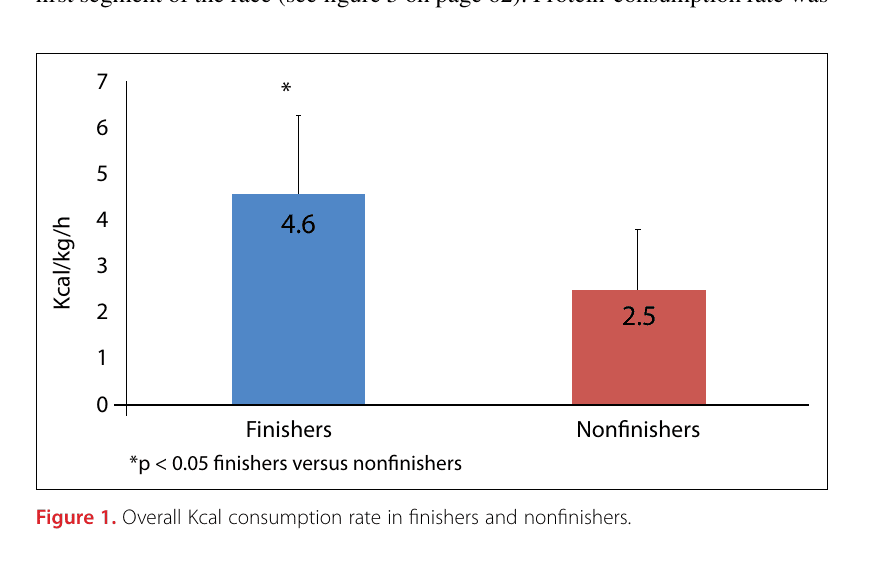
Finishers consumed energy at a higher rate (figure 1), and this difference was apparent in the first segment of the race (see figure 2 on page 61). Although it is difficult to establish guidelines for caloric consumption due to differences among events, environmental conditions, and individuals, it has been suggested that ultrarunners should consume 4 to 6 kcal/kg/h for optimal performance (Eberle 2007; Kreider 1991). The overall energy consumption rate for the finishers (4.6 kcal/kg/h) fell within these guidelines, whereas the nonfinishers (2.5 kcal/kg/h) fell short.
The overall carbohydrate consumption rate was higher in the finishers compared with the nonfinishers (see figure 3 on page 61). It has been recommended that ultrarunners consume 1.0 to 1.5 g/kg/h of carbohydrate for optimal performance (Clark et al. 1992; Kreider 1991). The finishers (0.98 g/kg/h) fell approximately within these guidelines, but the nonfinishers (0.56 g/kg/h) fell short. Fat-consumption rate was higher in the finishers both overall (see figure 4 on page 62) and in the first segment of the race (see figure 5 on page 62). Protein-consumption rate was
similar in both groups. Finally, overall consumption rate of fluid was similar for both groups, but the finishers consumed fluid at a higher rate in the first segment of the race (see figure 6 on page 63).
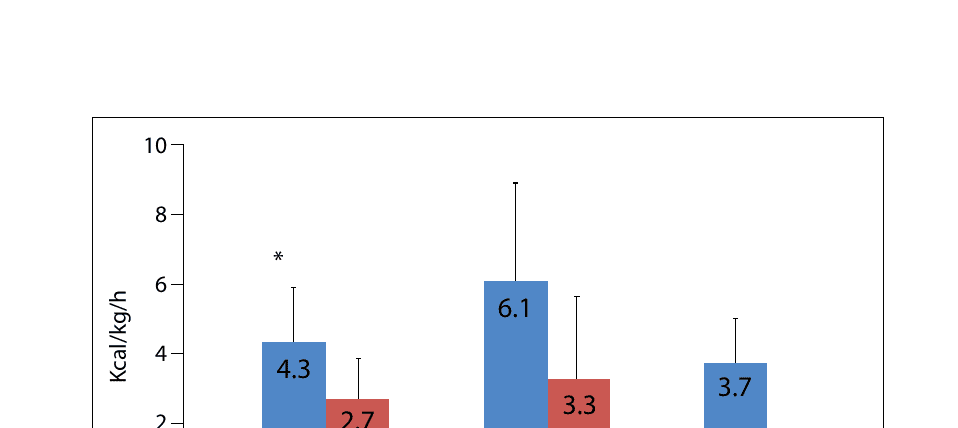
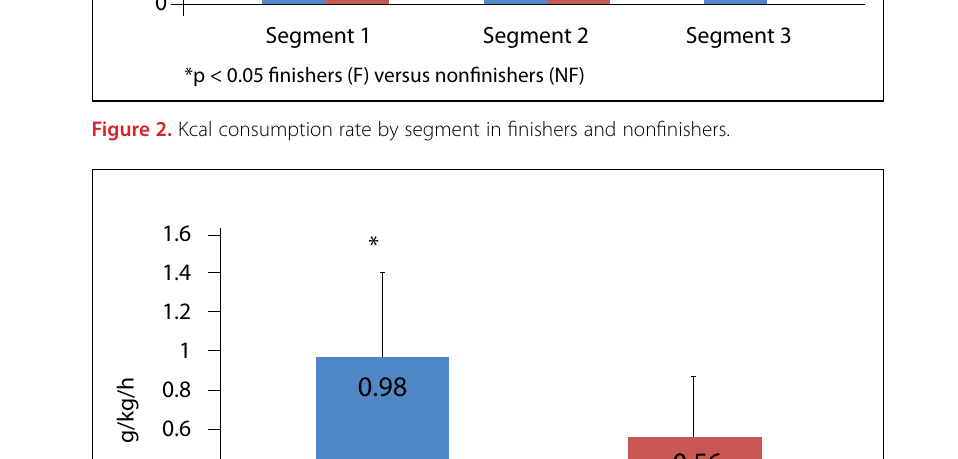
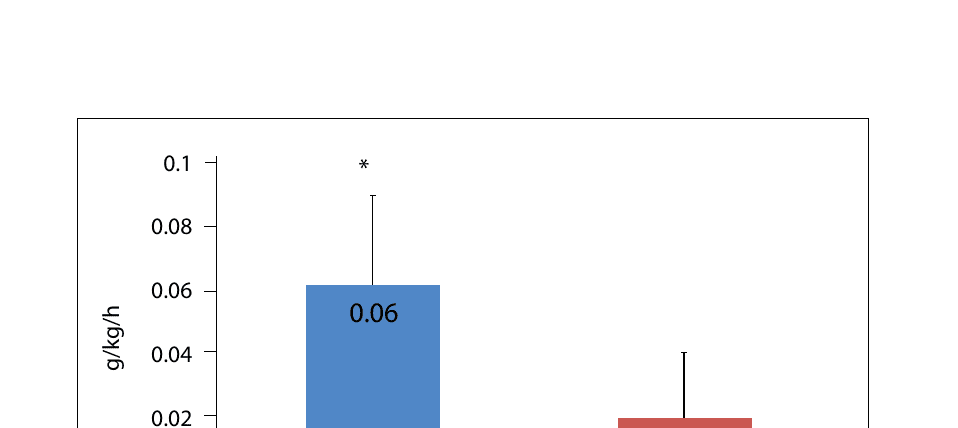
In summary, when the race diets of finishers and nonfinishers were compared, consumption rates for the finishers were greater for energy (kcal/kg/h; overall and in segment 1), carbohydrate (g/kg/h; overall), fat (g/kg/h; overall and in segment 1), and fluid (ml/kg/h; in segment 1). These data suggest that race diet may contribute to successful completion of a 100-mile ultramarathon. However, intake ranges for the finishers were large, and factors other than race diet clearly contribute to successful completion of the race. Additionally, it is important that ultrarunners avoid the overconsumption of fluid, which can lead to hyponatremia, a potentially life-threatening electrolyte imbalance that is prevalent in ultrarunning (Hew-Butler et al. 2008; Hoffman et al. 2013). Drinking to thirst is the best strategy for ultrarunners to avoid hyponatremia (Hew-Butler et al. 2006).
Is race diet associated with gastrointestinal distress in a 100-mile ultramarathon?
This question was addressed with a study at the Javelina Jundred. We monitored body weight as well as food and fluid intake during the race. The race diets were analyzed using Nutritionist Pro software both overall and by race loop (loop 1: 0-15 miles, loop 2: 16-31 miles, loop 3: 32-46 miles, loop 4: 47-62 miles, loop 5: 63-77 miles, loop 6: 78-92 miles, loop 7: 93-100 miles). We compared the race diets of the runners without GI distress (40 percent) to those with GI distress (60 percent). GI distress incidence was similar between finishers and nonfinishers.
This study confirmed that GI distress is common in ultrarunning. Nausea was the most common GI complaint (89 percent), followed by abdominal cramps (44 percent), diarrhea (44 percent), and vomiting (22 percent). GI symptoms began for most runners during loops 3 and 4.
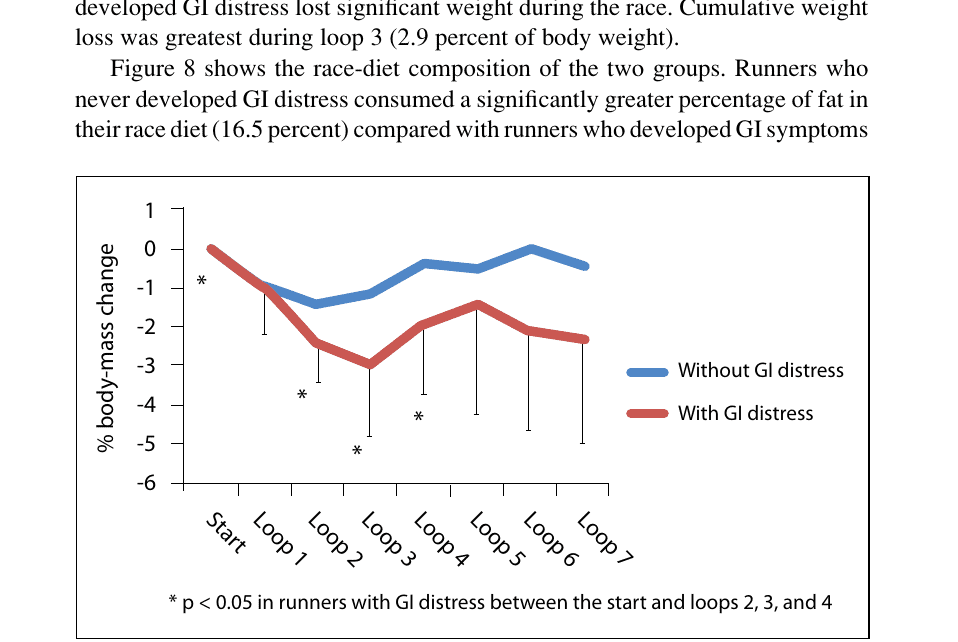
Figure 7 on page 64 shows the cumulative percent body-mass change for the runners without GI distress and those with GI distress. The runners who never developed GI distress maintained their weight during the race. The runners who developed GI distress lost significant weight during the race. Cumulative weight loss was greatest during loop 3 (2.9 percent of body weight).
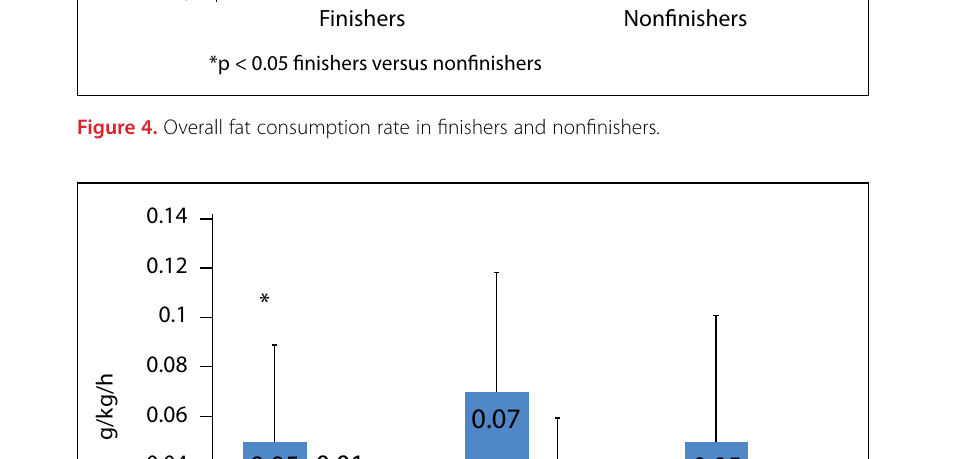
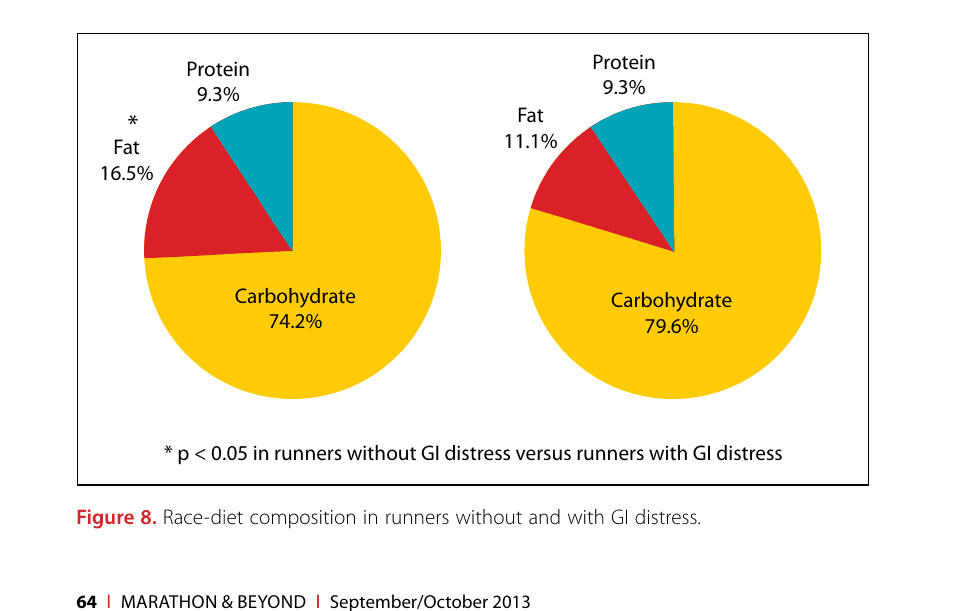
Figure 8 shows the race-diet composition of the two groups. Runners who never developed GI distress consumed a significantly greater percentage of fat in their race diet (16.5 percent) compared with runners who developed GI symptoms
(11.1 percent). The race-diet percentage of carbohydrate and protein was similar between the two groups.
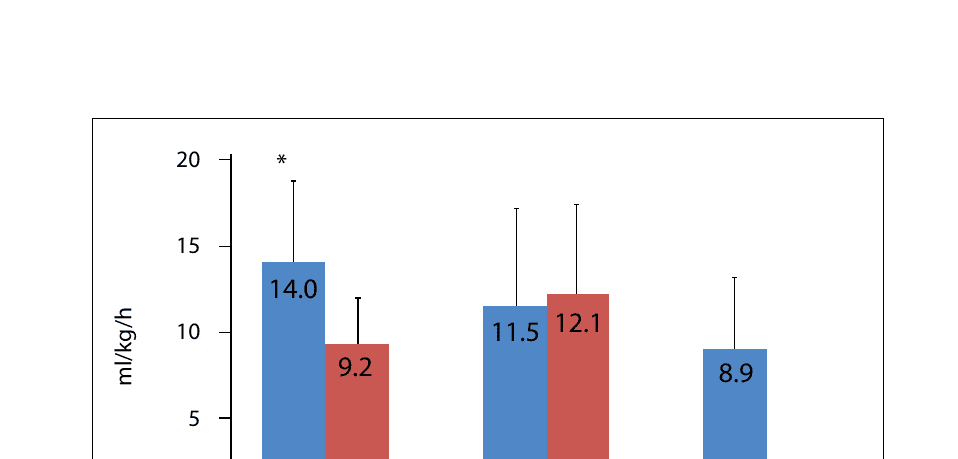
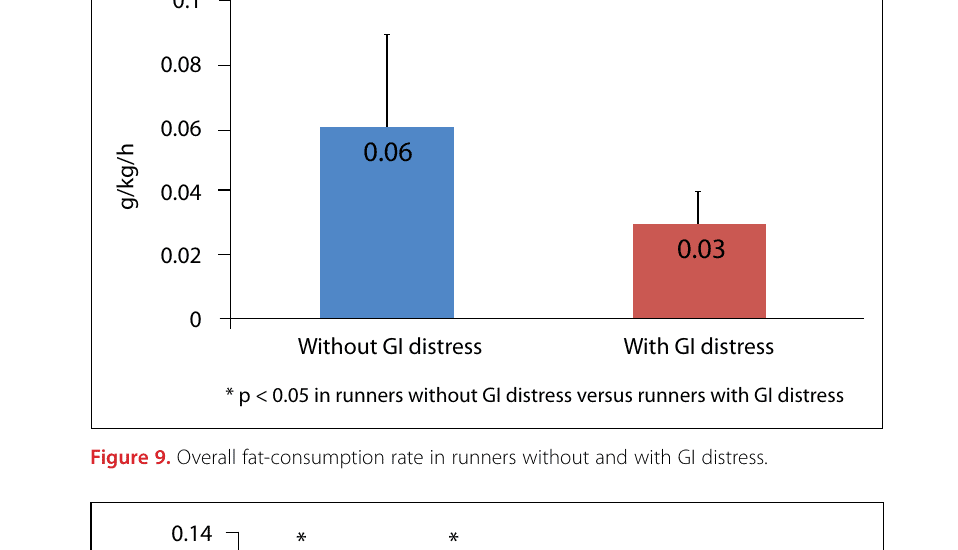
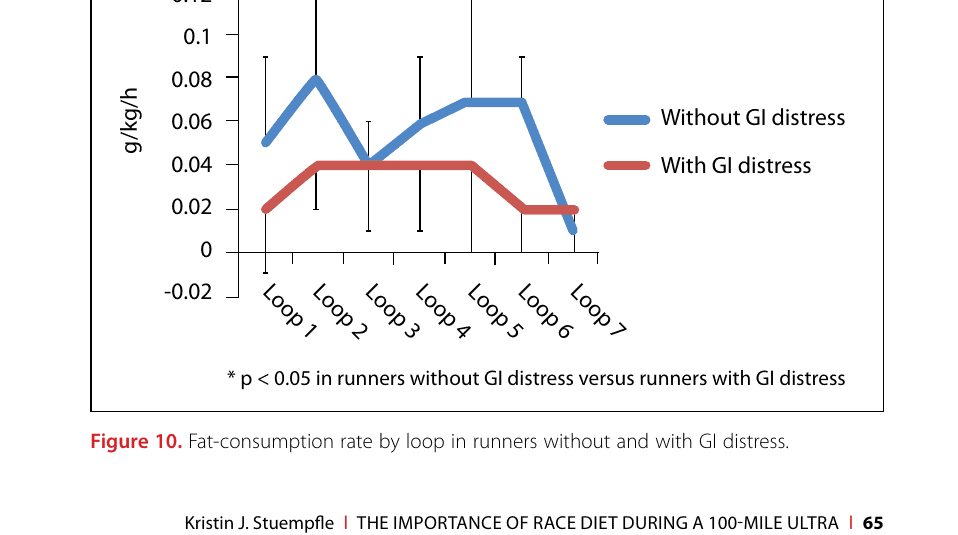
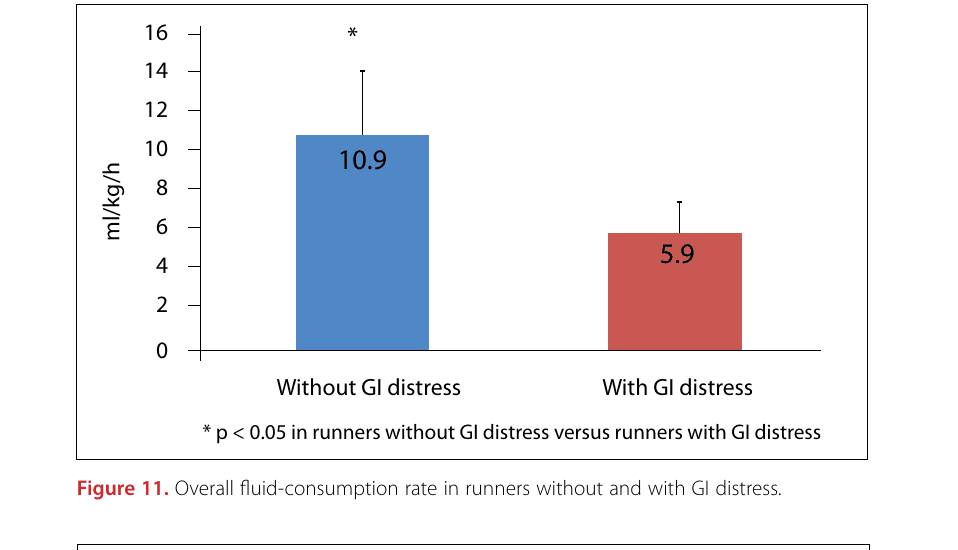
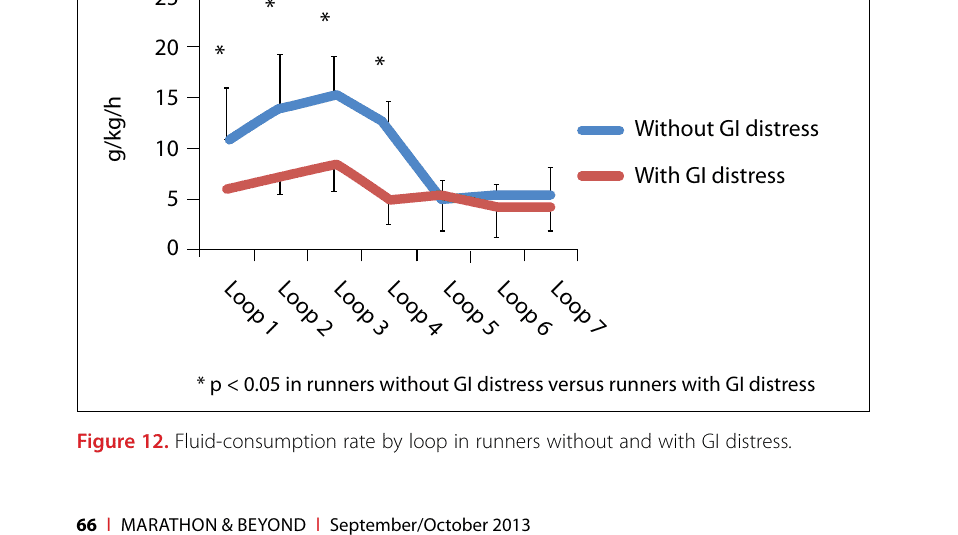
Energy, carbohydrate, and protein consumption rates were similar between the two groups both overall and by race loop. In contrast, the runners who never developed GI distress consumed fat at a significantly higher rate overall (see figure 9 on page 65). Interestingly, this difference was apparent in loop 2, before those who would become symptomatic started developing GI distress during loops 3 and 4 (see figure 10 on page 65). These findings suggest that early fat consumption may help prevent GI distress later in the race. The overall fluid-consumption rate in runners without GI distress was higher than that of runners with GI distress (figure 11). This difference was apparent from the race start. Runners who never developed GI symptoms consumed fluid at significantly higher rates in loops 1, 2, 3, and 4, before the symptomatic runners started developing GI distress during loops 3 and 4 (see figure 12 on page 66). These findings suggest that early fluid consumption may help prevent GI distress later in the race.
In summary, when the race diets of runners without GI distress were compared to the race diets of runners with GI distress, the percentage of fat in the race diet and the consumption rates of fat (g/kg/h) and fluid (ml/kg/h) were greater in the runners who never developed GI distress. Furthermore, these differences were apparent before GI symptoms started in the symptomatic runners. These data suggest that fat and fluid consumption may protect ultramarathoners from GI distress. However, these are associations, and factors other than race diet may have contributed to GI distress.
Conclusion
What an ultrarunner eats and drinks during a race clearly is very important and may have vital implications regarding performance and the development of GI distress. Higher fuel and fluid intake rates may contribute to the successful completion of an ultramarathon. Additionally, higher consumption rates of fat and fluid may protect ultrarunners from GI distress. However, it is important to remember that our studies do not show cause and effect, and factors other than race diet may have contributed to successful completion of an ultramarathon or the development of GI distress. Furthermore, it is clear that the overconsumption of fluid can lead to the development of hyponatremia (Hew-Butler et al. 2008; Hoffman et al. 2013). Thus, there likely is an optimal balance of fuel and fluid consumption for ultrarunners.
References
- Applegate, E. A. 1991. Nutritional considerations for ultraendurance performance. International Journal of Sport Nutrition and Exercise Metabolism 1(2):118-126.
- Baska, R., F. Moses, G. Graeber, and G. Kearney. 1990. Gastrointestinal bleeding during an ultramarathon. Digestive Diseases and Sciences 35(2):276-279.
- Clark, N., J. Tobin, and C. Ellis. 1992. Feeding the ultraendurance athlete: practical tips and a case study. Journal of the American Dietetic Association 92(10):1258-1262.
- Cuddy, J., D. Slivka, W. Hailes, and C. Dumke. 2009. Total energy expenditure, body water turnover, hydration status, and blood composition during the Western States 100. Medicine & Science in Sports & Exercise 41:S336.
- de Oliveira, E., and R. Burini. 2009. The impact of physical exercise on the gastrointestinal tract. Current Opinion in Clinical Nutrition and Metabolic Care 12(5):533-538.
- Dudney, G. 2009. Eat like a horse, drink like a fish. UltraRunning, August, 34-35.
- Dumke, C. L., L. Shooter, R. H. Lind, and D. C. Nieman. 2006. Indirect calorimetry during ultradistance running: a case report. Journal of Sports Science and Medicine 5(4):692-698.
- Eberle, S. 2007. Endurance Sports Nutrition. Champaign, Ill.: Human Kinetics.
- Gil, S., E. Yazaki, and D. Evans. 1998. Aetiology of running-related gastrointestinal dysfunction. Sports Medicine 26(6):365-378.
- Glace, B., C. Murphy, and M. McHugh. 2002. Food and fluid intake and disturbances in gastrointestinal and mental function during an ultramarathon. International Journal of Sport Nutrition and Exercise Metabolism 12(4):414-427.
- Hew-Butler, T., J. C. Ayus, C. Kipps, R. J. Maughan, S. Mettler, W. H. Meeuwisse, A. J. Page, S. A. Reid, N. J. Rehrer, W. O. Roberts, I. R. Rogers, M. H. Rosner, A. J. Siegel, D. B. Speedy, K. J. Stuempfle, J. G. Verbalis, L. B. Weschler, and P. Wharam. 2008. Statement of the second international exercise-associated hyponatremia consensus development conference, New Zealand, 2007. Clinical Journal of Sport Medicine 18(2):111-121.
- Hew-Butler, T., J. G. Verbalis, and T. D. Noakes. 2006. Updated fluid recommendation: position statement from the International Marathon Medical Directors Association (IMMDA). Clinical Journal of Sport Medicine 16(4):283-292.
- Hoffman, M. D., and K. Fogard. 2011. Factors related to successful completion of a 161-km ultramarathon. International Journal of Sports Physiology and Performance 6(1):25-37.
- Hoffman, M. D., T. Hew-Butler, and K. Stuempfle. 2013. Exercise-associated hyponatremia and hydration status in 161-km ultramarathoners. Medicine & Science in Sports & Exercise 45(4):784-791.
- Kreider, R. B. 1991. Physiological considerations of ultraendurance performance. International Journal of Sport Nutrition and Exercise Metabolism 1(1):3-27.
- Noakes, T., K. Sharwood, D. Speedy, T. Hew, S. Reid, J. Dugas, C. Almond, P. Wharam, and L. Weschler. 2005. Three independent biological mechanisms cause exercise-associated hyponatremia: evidence from 2,135 weighed competitive athletic performances. Proceedings of the National Academy of Sciences 102(51):18550-18555.
- Peters, H., L. Seebregts, L. Akkermans, G. van Berge Henegouwen, E. Bol, W. Mosterd, and W. de Vries. 1999. Gastrointestinal symptoms in long-distance runners, cyclists, and triathletes: prevalence, medication, and etiology. American Journal of Gastroenterology 94(6):1570-1581.
- Pfeiffer, B., T. Stellingwerff, A. Hodgson, R. Randell, K. Pottgen, P. Res, and A. Jeukendrup. 2012. Nutritional intake and gastrointestinal problems during competitive endurance events. Medicine & Science in Sports & Exercise 44(2):344-351.
- Rehrer, N., F. Brouns, E. Beckers, W. Frey, B. Villiger, C. Riddoch, P. Menheere, and W. Saris. 1992. Physiological changes and gastro-intestinal symptoms as a result of ultraendurance running. European Journal of Applied Physiology 64(1):1-8.
- Simons, S., and R. Kennedy. 2004. Gastrointestinal problems in runners. Current Sports Medicine Reports 3(2):112-116.
- Simons, S., and G. Shaskan. 2005. Gastrointestinal problems in distance running. International SportMed Journal 6(3):162-170.
- Stuempfle, K., M. D. Hoffman, and T. Hew-Butler. 2013. Association of gastrointestinal distress in ultramarathoners with race diet. International Journal of Sport Nutrition and Exercise Metabolism 23(2):103-109.
- Stuempfle, K., M. D. Hoffman, L. Weschler, I. R. Rogers, and T. Hew-Butler. 2011. Race diet of finishers and non-finishers in a 100-mile (161 km) mountain footrace. Journal of the American College of Nutrition 30(6):529-535.
Both hyponatremia (blood-sodium concentration of less than 135 mEq/L) and rhabdomyolysis are becoming increasingly common in athletes competing in and finishing ultradistance footraces. The percentage of runners who finish ultramarathon races and meet the biochemical criteria for hyponatremia currently ranges between zero and 53 percent, with most of these diagnoses confirmed in postrace screenings of race finishers who neither need nor seek medical care. Similarly, almost every runner finishing an ultramarathon will meet the biochemical criteria for rhabdomyolysis at postrace screenings and will not require medical attention. Although hyponatremia is a potentially deadly medical condition and rhabdomyolysis can lead to acute renal failure/kidney injury (ARF/AKI), less than 1 percent of all ultramarathon runners will require urgent medical treatment or hospitalization for either of these medical complications of endurance exercise (Hoffman and Stuempfle et al. 2013; Hoffman and Ingwerson et al. 2012).
With the low probability that either exercise-associated hyponatremia (EAH) or exertional rhabdomyolysis would result in dire or life-threatening consequences, the possibility of developing both conditions at once would indeed be considered an exceptionally rare and unusual phenomenon. However, alarming clusters of such cases have recently been reported in ultramarathons around the world. For
This article originally appeared in Marathon & Beyond, Vol. 17, No. 5 (2013).
← Browse the full M&B ArchiveMore like this
1,000+ stories from 19 years of Marathon & Beyond
The complete archive of the legendary long-distance journal — digitized and free to read.
