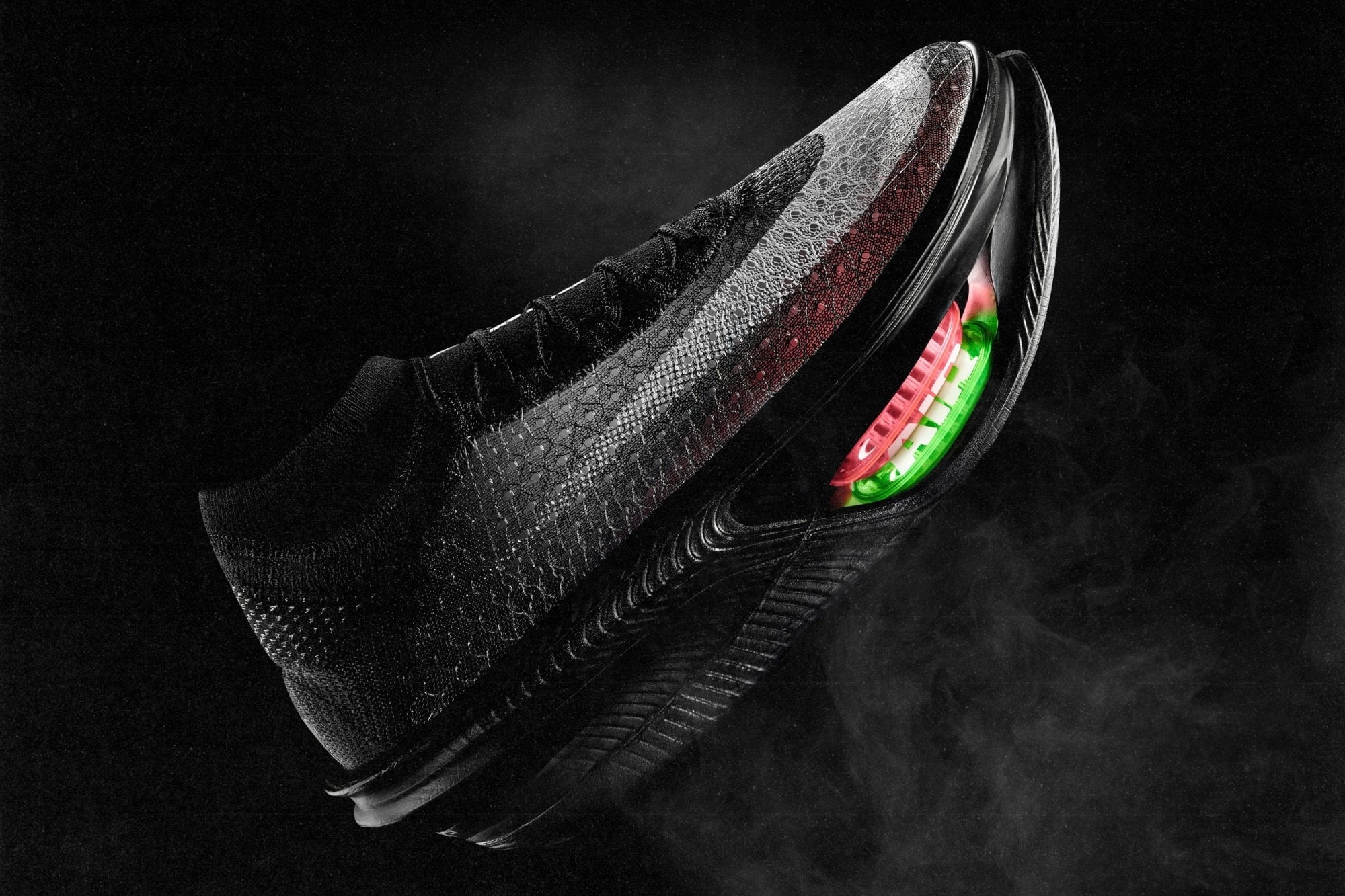
With the Nike Apex, its first entirely new marathon super shoe since the Alphafly that Eliud Kipchoge wore to run under two hours in Vienna in 2019, Nike has made a bet that is both obvious and radical. The Apex has the full 40 mm of stack that World Athletics rules allow under the forefoot as well as the heel, a zero-drop design no other major brand has brought to market, and to get there Nike gave up the extreme lightness the rest of the industry has pursued this year. The company that created the super shoe is putting its reputation behind the idea that more cushioning where elite runners land will matter more than fewer grams.
Will the Apex produce the fastest marathon in history? And, more important for Nike, will it restore the company’s position as the most trusted and dominant brand in marathon racing?
For nearly a decade, super shoes have carried their thickest cushioning under the heel, even though elite marathoners land on the front of the foot for most of a race, which is why the Apex’s design looks like the obvious next step. It is also a risky one, because the Apex is much heavier than its fastest rivals and sits on a flat platform that many runners, elites among them, do not like to race on, so Nike may have built a shoe that only a small number of athletes can use well.
Nike did not mention Adidas in its briefing or release materials, but the Apex is its most direct response so far to the Adidas Adizero Adios Pro Evo 3, and the timing is difficult for Nike, which first put its athletes in super shoe prototypes at the 2016 Olympics and revealed the Zoom Vaporfly Elite for its Breaking2 project in 2017.
The Pro Evo 3 has won the sport’s biggest marathons this year. In April, Sabastian Sawe ran 1:59:30 in the Pro Evo 3 at the London Marathon, a world record and the first marathon under two hours in an official race, and Yomif Kejelcha finished second in 1:59:41 in the same shoe. Jacob Kiplimo, Nike’s most prominent marathoner, ran 2:00:28 in a prototype of the Apex and finished third, 58 seconds behind Sawe.
Last weekend in Berlin, all six podium finishers, men and women, wore the Pro Evo 3, including Guye Adola, who won the men’s race in 2:02:50, and Tigst Assefa, who set a women’s course record of 2:11:04. Nike has just released a new version of its Alphafly, its first in more than two and a half years, and the Apex now sits above it at the top of a three-model racing range that also includes the $145 Swooshfly. Nike says the Apex will be available in January 2027 and has not announced a price.
Three Eras of the Super Shoe
Marathon Handbook’s editor was in the room in 2017 when Nike first showed the shoe that began the super shoe era, and in the nine years since, the industry’s explanation for why these shoes make runners faster has changed at least twice. At first they were called carbon-plated shoes, because the plate was thought to be responsible for most of the improvement in times. The foam was seen mainly as cushioning that made a stiff plate comfortable to run in.
That view changed as more brands built their own racing shoes and tested different polymers. Engineers at several companies concluded that the plate alone was not producing the gains, and that the larger factor was how much supercritical foam could fit under the foot within the 40 mm stack limit World Athletics introduced in 2020. By this account, the plate’s main job was to stabilize the foam and guide the foot forward.
Over the past year, the focus has shifted to weight. Adidas replaced the full-length plate first with carbon rods and then, in the Pro Evo 3, with a carbon rim, which cut weight while leaving room for more of its lighter foam. Other brands have taken the same direction. Mizuno debuted the Hyperwarp 96 in Berlin at a listed 96g, a gram under the Pro Evo 3, and On’s Cloudboom Strike LS line uses an upper that a robot sprays onto the shoe in a few minutes, which removes the laces, the glue and most of the weight of a conventional upper.
What the Pro Evo 3 Set as the Standard
Adidas lists the Pro Evo 3 at 97g in a U.S. size 9 and sells it for $500. According to published specifications, its stack is 39 mm at the heel and 36 mm at the forefoot, a 3 mm drop, and Adidas says the shoe returns 11 percent more forefoot energy than the Pro Evo 2 and improves running economy by 1.6 percent. Mizuno built the Hyperwarp 96 to almost the same dimensions, 39 mm at the heel and 36 mm at the forefoot, a sign of how widely other brands have adopted the Adidas approach.
Nike went in a different direction with the Apex. It lists the shoe at 176g in a men’s size 8.5, which is 79g heavier than the Pro Evo 3’s listed weight, though Adidas’ figure is for a U.S. size 9 and Nike’s is for a half size smaller. Adjusting for that difference puts the Pro Evo 3 near 92g at a men’s 8.5, so the Apex weighs about 1.9 times as much. It is 12g lighter than the Alphafly 4, which Nike lists at 188g in the same size.
Nike’s Bet on the Forefoot
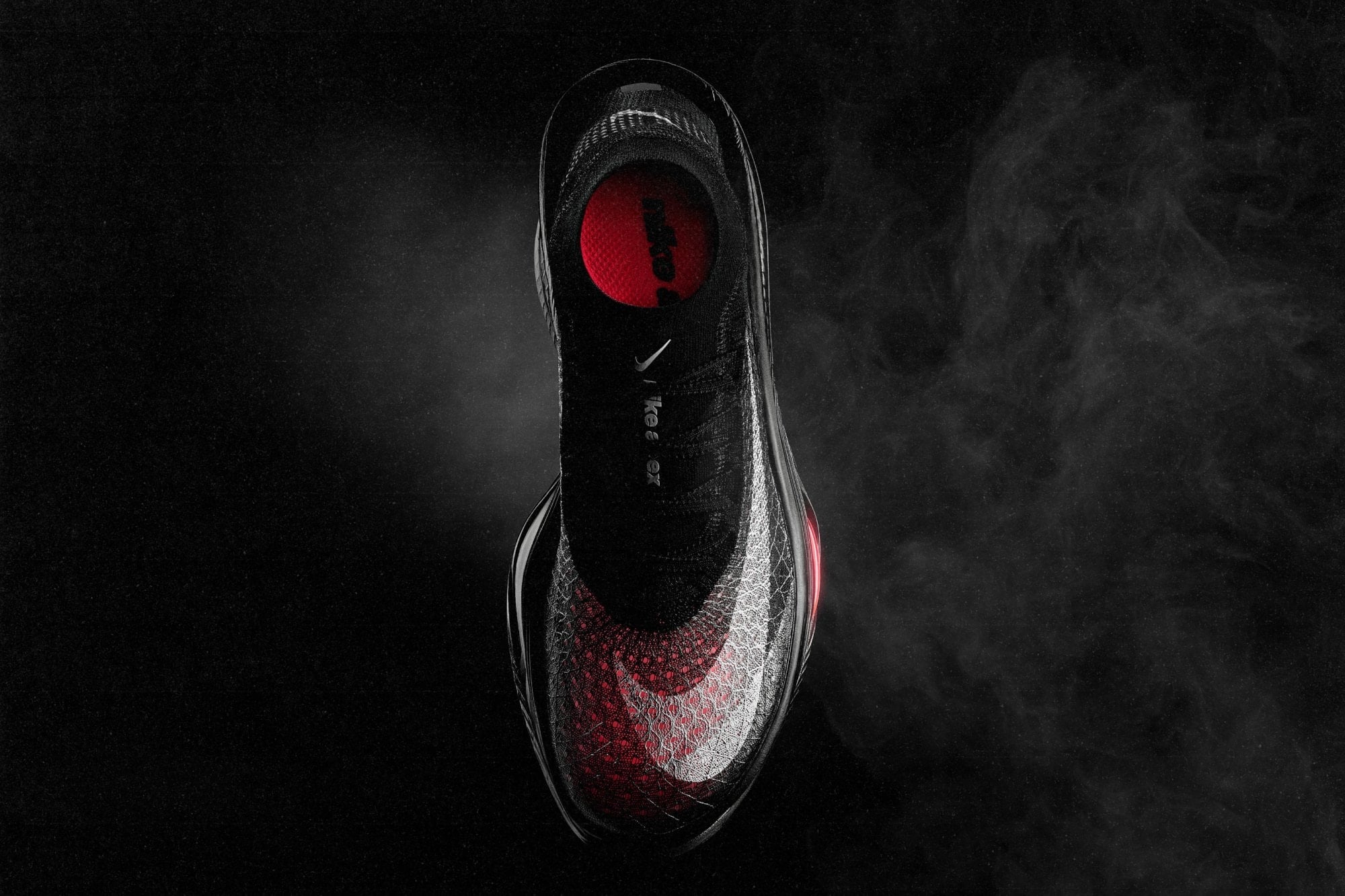
What distinguishes the Apex from other racing shoes is where its cushioning sits. A conventional racing shoe has its tallest stack under the heel, and Adidas left 1 mm of the allowance unused at the heel of the Pro Evo 3 and 4 mm at the forefoot. The Alphafly 4 has a 39 mm heel and a 31 mm forefoot, an 8 mm drop, while the Apex raises the forefoot by 9 mm to match a 40 mm heel and uses the full allowance at both ends.
The reasoning comes from how elite marathoners run. Most of the fastest athletes land on the midfoot or forefoot and keep that form for most of a race, so the tallest part of a traditional super shoe sits under the part of the foot they load least. Those runners tend to rely on the heel foam only late in a marathon, when fatigue shortens their stride and they begin to land further back. Moving that material forward puts the full stack under the part of the foot an efficient runner lands on with every step.
The company that created the super shoe is putting its reputation behind the idea that more cushioning where elite runners land will matter more than fewer grams.
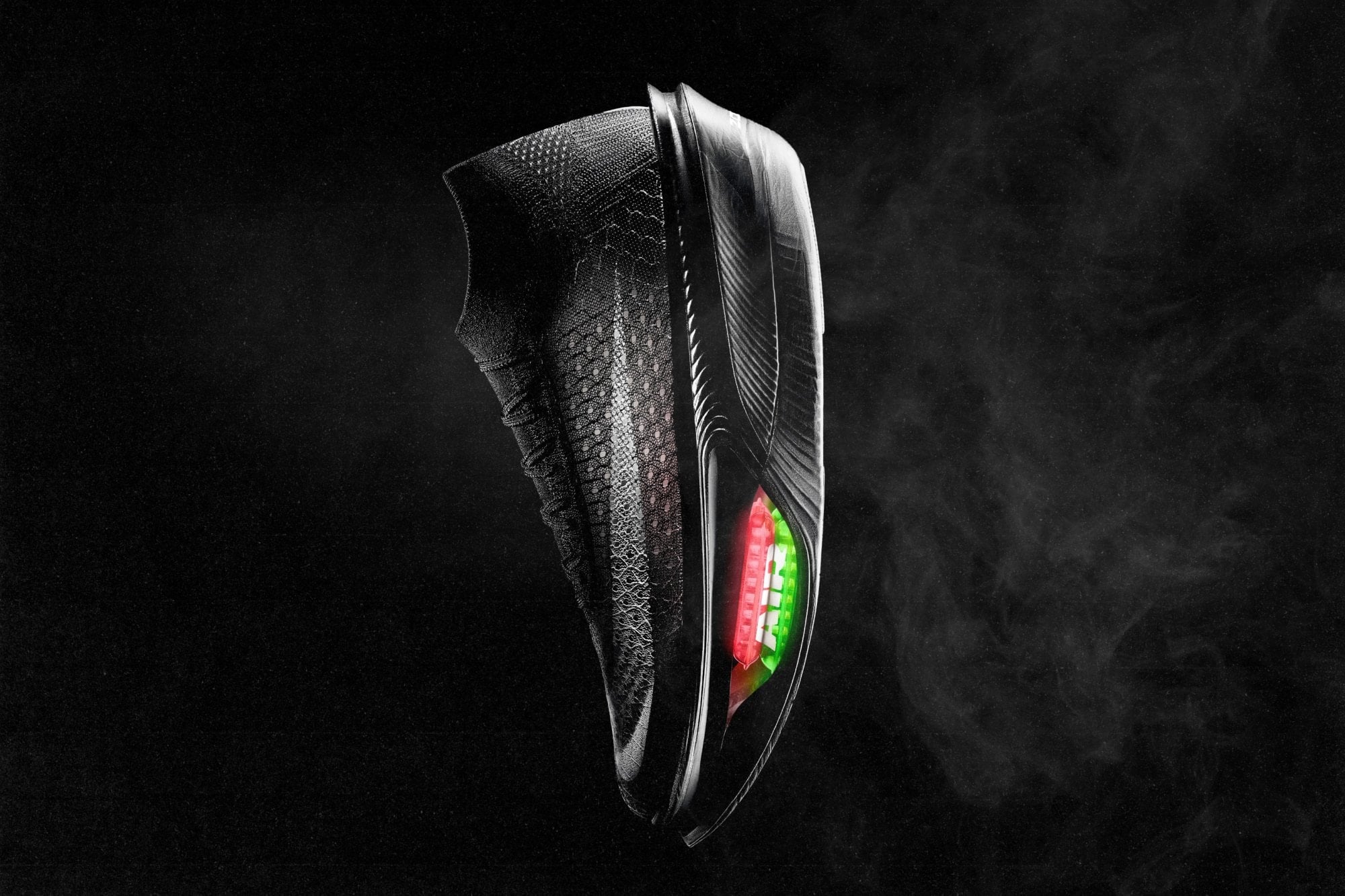
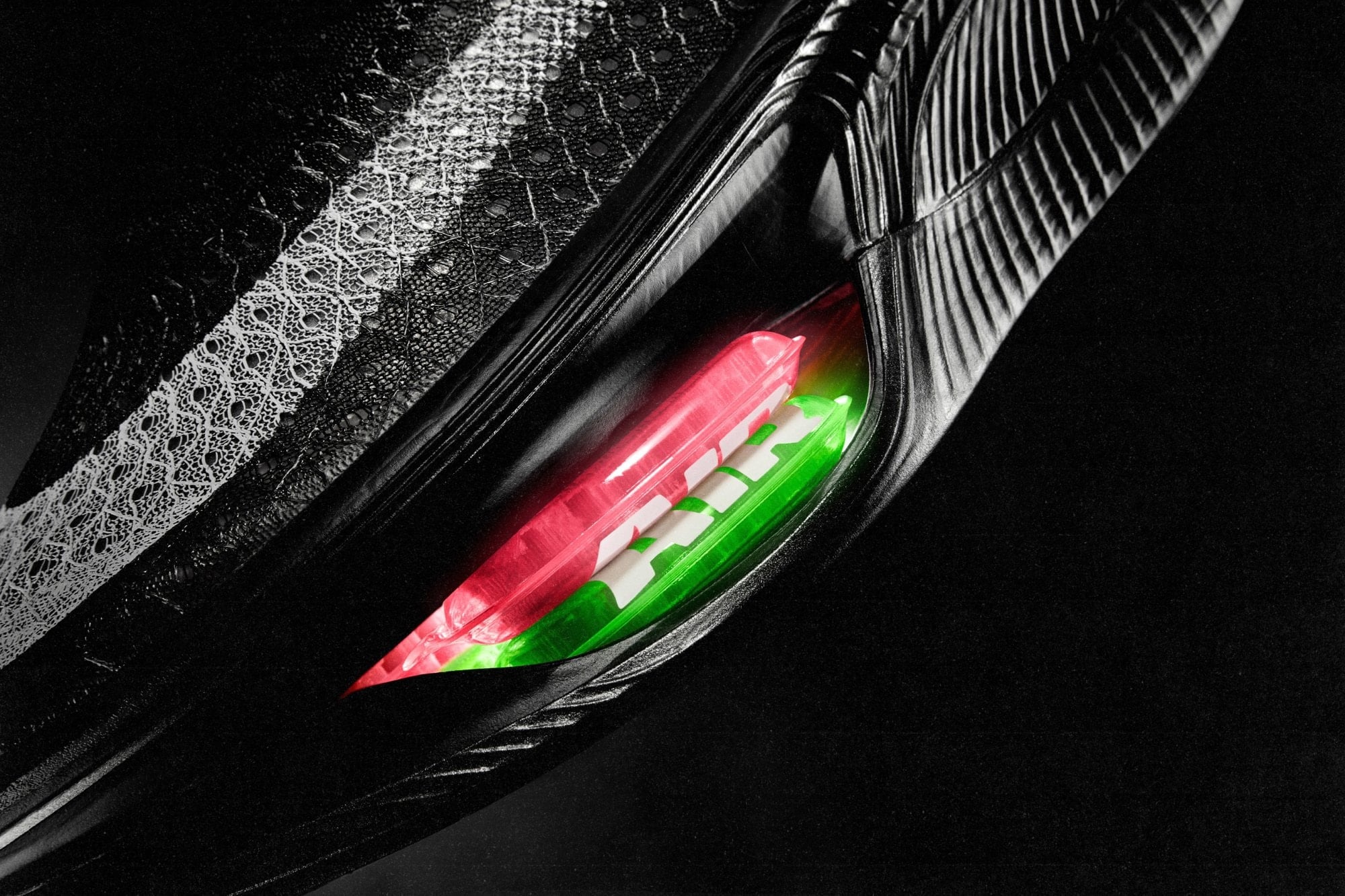
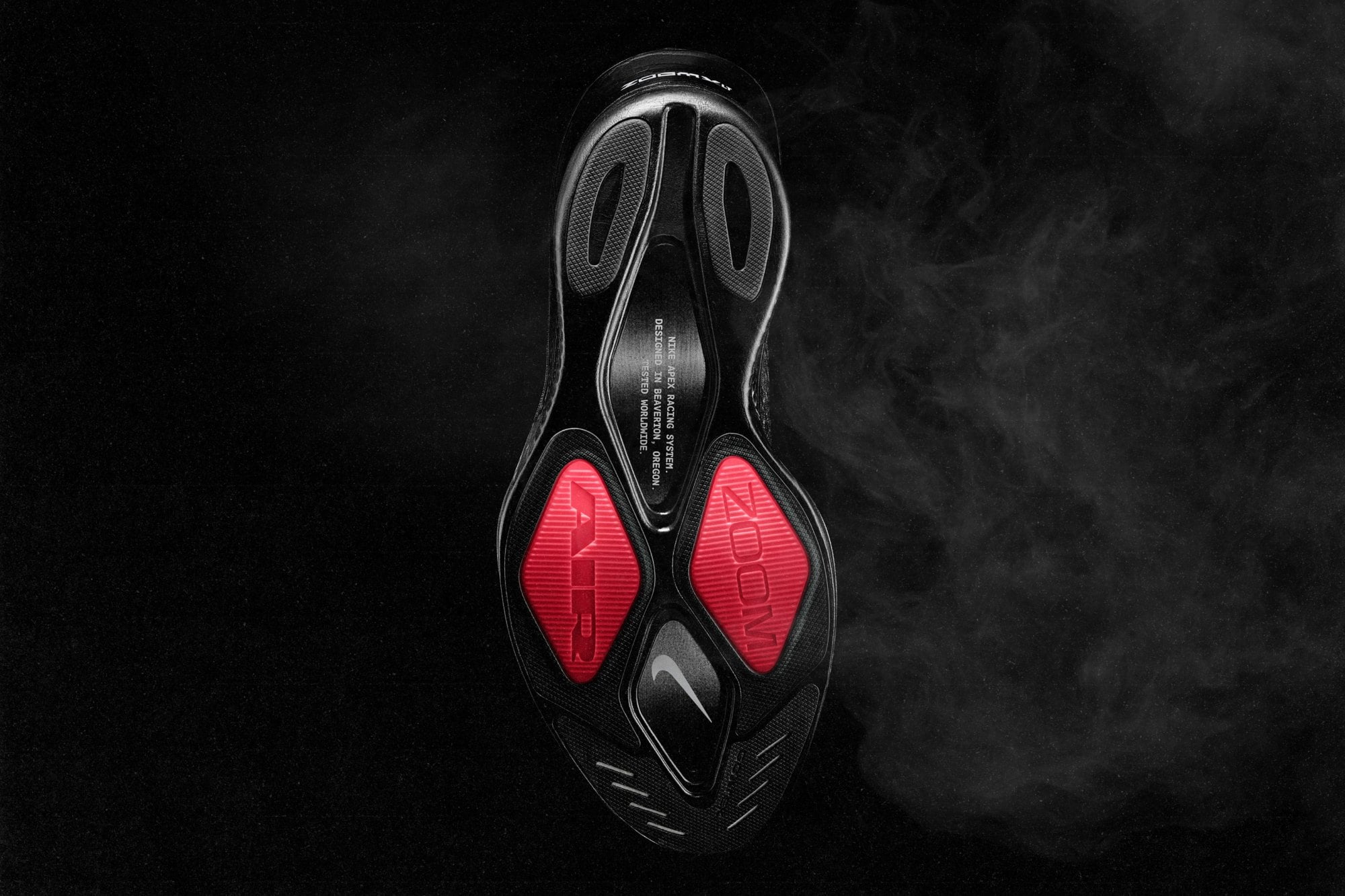
Nike’s forefoot combines four Air Zoom units in two stacked pairs, which the company says is the most Air it has put in the forefoot of a running shoe, with a layer of ZoomX LT, a PEBA-based foam that Nike says is lighter and softer than standard ZoomX and returns more energy. Bret Schoolmeester, vice president of Nike running footwear, said the company moved away from a heel offset so that the maximum amount of material sits where the runner needs the most energy return.
Schoolmeester, one of the architects of Nike’s super shoe program, told Marathon Handbook in an interview last week that running economy, the energy a runner spends to hold a given pace, remains the main measure Nike uses when it designs its top racing shoes, ahead of any single figure such as weight. The Nike Sport Research Lab organizes its testing around that measure, and the Apex is the most extreme design Nike has produced in pursuit of it.

The risk is that many runners, including some elites, do not want to race in a zero-drop shoe. A flat platform puts more load on the calves and Achilles tendons than a shoe with a raised heel, and over a marathon that extra load can become significant in the final 10 kilometers. Even Altra, the brand most closely associated with zero drop, gave its newest racer, the Vanish Carbon 3, a 4 mm drop this year. Nike appears willing to build a shoe that fewer runners can use well, provided it is faster for the athletes who can.
Weight Against Energy Return
For most of the super shoe era, weight was a secondary concern. The combination of a plate and a tall stack of new foam produced improvements large enough to make an extra 30g or 40g irrelevant. As those improvements grew smaller, brands tuned their foams to lower densities and tested other polymers, including TPEE and TPU, and weight became the figure brands advertised most.
Nike is betting that the industry has reached the point where removing more weight costs more in energy return than it saves in effort. The companies’ own figures do not show which approach is better, because each compares its shoe against its own previous model. Adidas measures the Pro Evo 3 against the Pro Evo 2, and Nike says the Apex returns up to 40 percent more energy than the Alphafly 3, which is now two generations old.
The first real comparison will come from race results. If athletes run faster in the Apex, other brands will likely build their own zero-drop shoes with a full forefoot stack, and 2027 could be the year the industry’s priority moves from weight to forefoot cushioning. If they do not, the lightweight approach Adidas has led will remain the standard.
The Prototypes
Marathon Handbook was told in August, by a person familiar with the shoe, that the Apex would be zero drop and that Kiplimo had worn a prototype of it, and Marathon Handbook has since confirmed that Kiplimo raced in early versions of the Apex. Nike’s release quotes him saying that he relied on Nike prototypes “from breaking the half marathon world record in Lisbon to running the fastest marathon time of my life in London,” so both his half marathon world record and his 2:00:28 behind Sawe came in the shoe Nike has now unveiled.
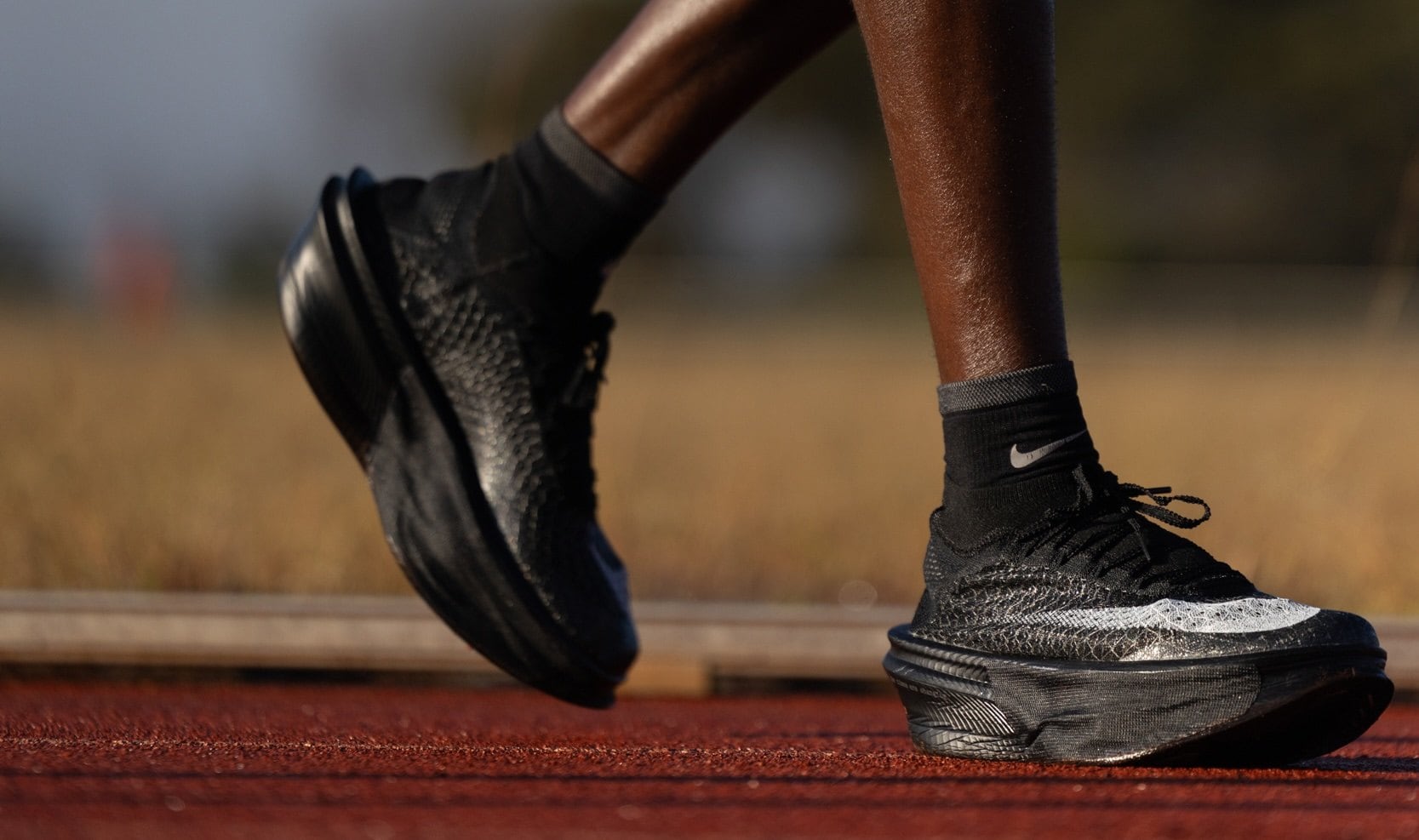
Nike kept the shoe’s identity hidden while he raced in it. On the World Athletics approved list, the Apex prototypes appear to be two unnamed Nike development models, Dev 164 and Dev 1011, which look nearly identical and are cleared only for non-championship road racing. A development shoe stays on the list for 12 months, and the expiry dates on those entries, Feb. 12 and April 23, 2027, indicate they were added in mid-February and late April of this year, about three weeks before Lisbon and three days before London.
In the photographs Nike supplied for both listings, the windows that show the stacked Air Zoom units on the production shoe are covered. Two stacked pairs of Air units would have marked the prototype as an entirely new shoe, and nothing on the public list revealed them while Kiplimo raced in it.
That raises a question about how much the approval list can tell anyone outside the process. Under the World Athletics shoe regulations, a brand applying to approve a development shoe submits photographs of its side and sole along with a physical sample, which an independent expert can examine and, if necessary, cut apart. The federation’s reviewers would therefore have had the real shoe in hand. The images on the public list, however, are the ones the brand provides, and the approval process itself is confidential.
World Athletics can sanction a manufacturer that breaks its shoe rules, up to removing a shoe from the list and suspending the brand’s approval requests. Whether covering a design feature in a submitted photograph counts as a breach is a question only the federation can answer. What the Apex shows is that the list, which runners and journalists check to learn what the fastest athletes are wearing, can be used to reveal very little about a shoe that has already been used to set a world record.
Price and Supply
How Nike prices and distributes the Apex will affect its reception almost as much as its race results. Nike is among the most effective marketers in any industry, and its own limited releases have sold out quickly, including the Alphafly 3 in 2024 and the Alphafly 4 earlier this month. Nike has also seen how the Pro Evo 3’s limited availability, which has left most runners unable to buy one, has added to the attention the shoe receives.
Adidas priced the Pro Evo 3 at $500. Given the cost of its development and materials that last only a race or two, Adidas probably earns less on each pair than it does on an ordinary running shoe. Nike has not said whether the Apex will cost the same or more, or whether it will make enough pairs for most runners to buy one, and those decisions will indicate whether Nike intends the Apex as a retail product or mainly as equipment for its sponsored athletes.
Running. In Your Inbox, Daily.
Fun and informative running tips, news, hot takes, and shoe reviews — read by 345,000+ runners.
Send Me the Next NewsletterRunClub
Get more running stories — join RunClub
Daily running news, a community of 300,000+ runners, free training plans for every distance, and a daily running game. Free to join — no card.
Already a member? Log in →