


A particular kind of silence falls over a room of running media when a brand contradicts its entire brand identity.
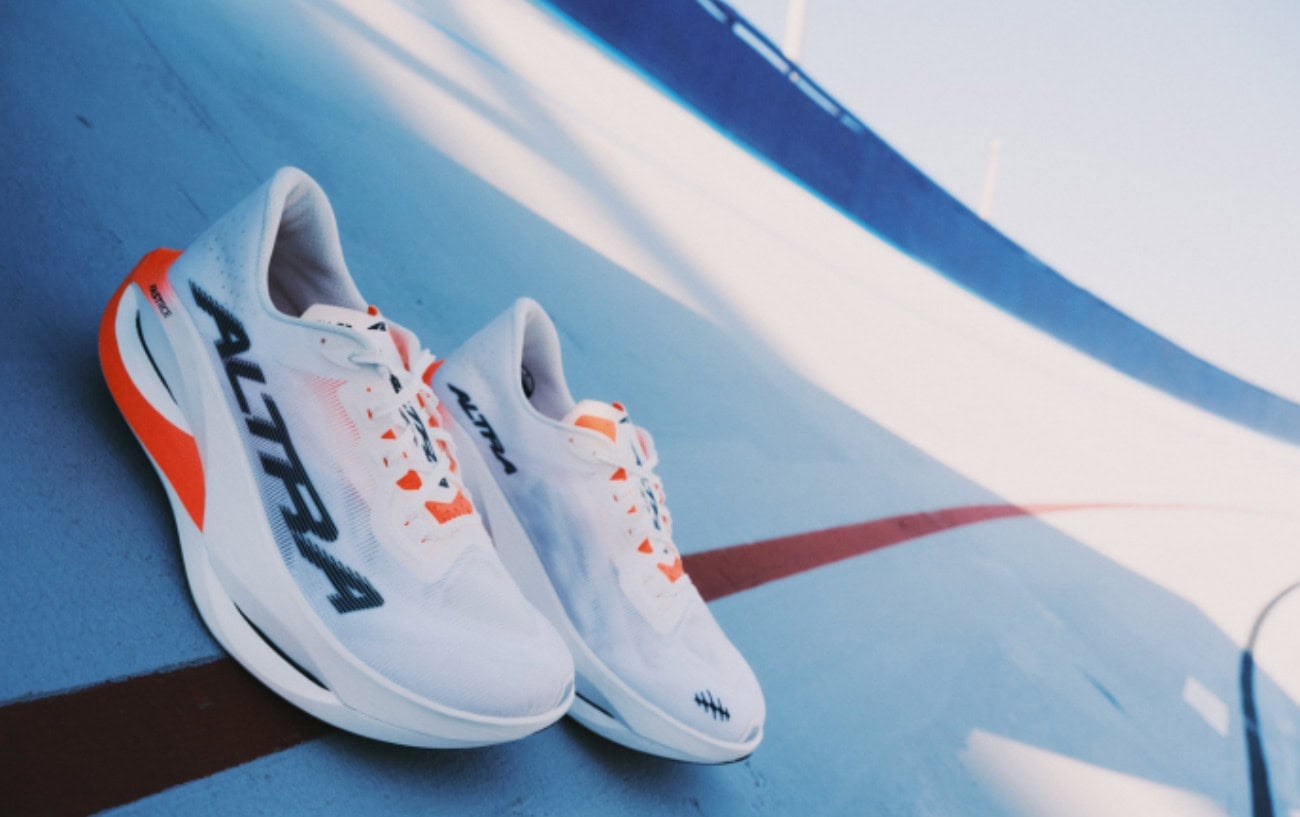
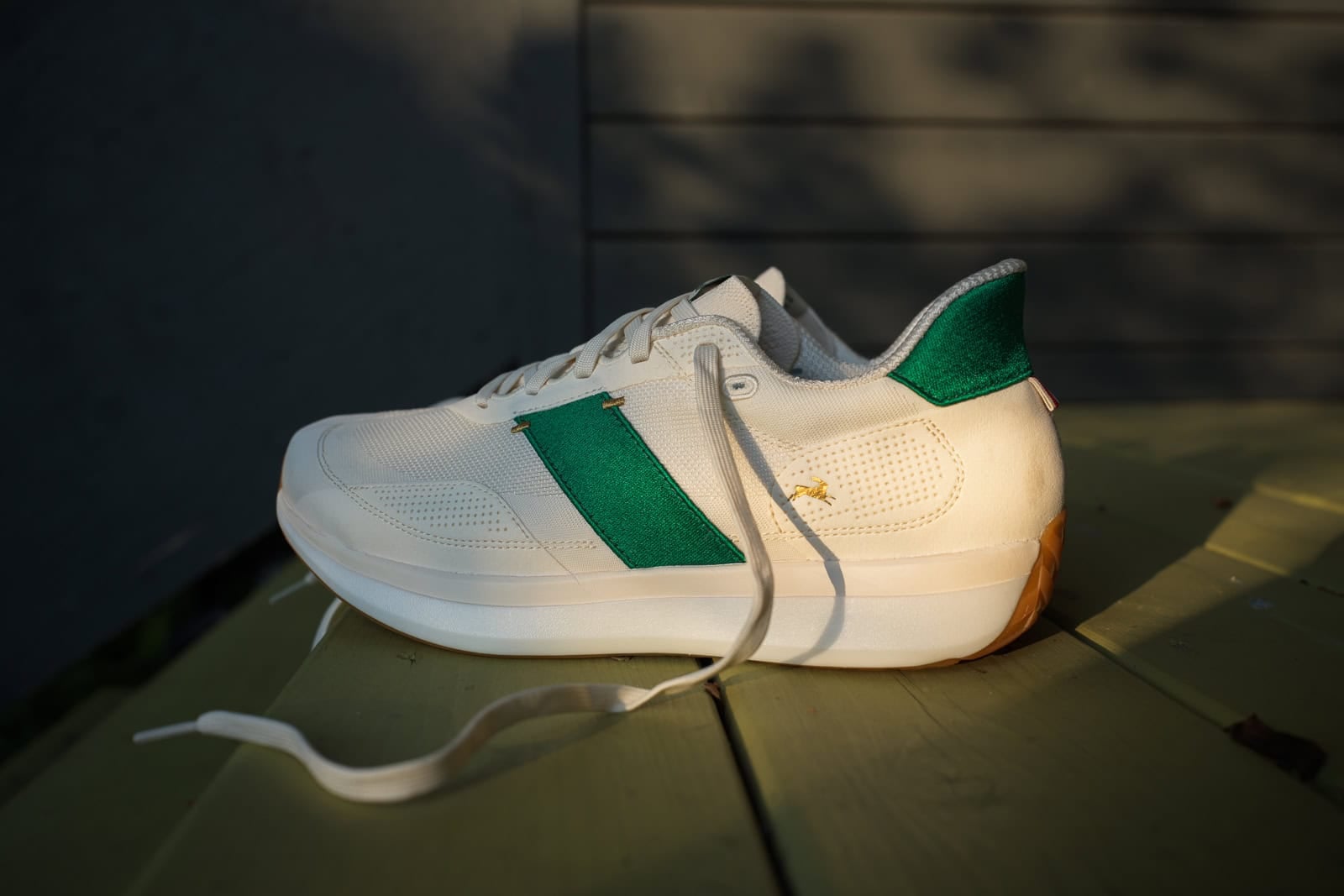
I heard it at Altra’s Denver headquarters last month, in the half-second after a member of the product team said the words “four-millimeter drop” when describing its latest shoe, the Altra Vanish Carbon 3, for which we were all brought in to see (and test) for the first time.
Any other brand could have said those words without anyone in the room even bothering to look up from their notebooks. But Altra has staked its entire existence on the idea that running shoes are better when there’s no difference in height between the forefoot and the heel.
The idea for the company was born when one of its founders Frankensteined pre-existing running shoes, cutting out the heel stack height to level off the shoe’s midsole. Altra launched in 2009 with a radical new vision for a shoe, and it literally invented (then trademarked) the term “zero drop.”
Altra has spent 15 years arguing that lifting the heel is the original sin of the modern running shoe, so a heel that sits 4 mm above the forefoot, however modest by the standards of a category where 8 mm is common, amounts to a public revision of the company’s core doctrine.
Thankfully for all of us in the room, Altra’s product team understood this as well as anyone present, and the silence gave way to self-aware smiles rather than defensiveness. The company had already flirted with, well, more than zero drop in 2023 with the AltraFWD Experience, a daily trainer clearly meant to expand the brand’s reach. Doing it on a flagship race-day shoe is, however, a more consequential step.
By the end of the morning, I had stopped seeing the Vanish Carbon 3, a bold departure from its previous iteration of Altra’s super shoe, as a compromise and started seeing it as the point at which the brand stopped defining itself by what it once refused to do. That shift turned out to be a more interesting subject than the drop itself, and it is the reason the shoe deserves a longer look than merely noting the shift to its spec sheet.
The Doctrine
To understand why a 4 mm drop counts as news, it helps to remember how absolute Altra’s original position was.
Golden Harper, one of the company’s founders and the idea man behind zero drop, was a perennially injured running shop employee in Utah back in the late 2000s, just as the book Born to Run was published and the barefoot craze was catching on. Harper would take various shoes off the running shop wall to a toaster oven in the lunchroom, melt off the heels that seemed to him to be engineered counter to human physiology. He removed the wedge and leveled the cushioning to give the shoe a barefoot running sensation, albeit a cushioned one.
The company has never softened the pitch in the years since. Altra still describes zero drop as a “one-to-one ratio” that “naturally aligns feet, back and body posture,” and its shoes’ other signature element, the wide toe box, exists in the brand’s own words, so toes can “relax and spread out naturally and the big toe to remain in a straight position.” Global brand president Jen McLaren describes the company’s purpose as inspiring the world to “move naturally.”
It’s easy to be cynical about a company’s marketingese, but for smaller brand like Altra this language has been gospel, and the zero drop and wide toe splay design has become a powerful visual signal that these shoes are fundamentally different than a Nike or an Asics everyday trainer.
But this belief became a liability once Altra attempted to create one of the fastest shoes in the world.
Why Super Shoes Do Not Run Flat
A modern super shoe combines a thick slab of supercritical foam with a stiff carbon element and a geometry that tips the runner forward. Drop is an essential trigger for what’s called the “rock forward profile” of a super shoe. A tall heel and lower forefoot create a ramp that shortens the time the ankle spends doing expensive muscular work, and once the foam is stacked high enough to return meaningful energy, the platform has to be angled, or the runner is left balancing on a tall block with nowhere to fall.
The spec sheets of the current racing field bear this out. The adidas Adizero Adios Pro Evo 3 that Sabastian Sawe wore to run 1:59:30 in London in April, the first officially sanctioned sub-two marathon, lists a 39 mm heel and 36 mm forefoot for a 3 mm drop. Asics’ Metaspeed Sky Tokyo lists 39.5 and 34.5 for 5 mm, and Puma’s Fast-R Nitro Elite 3 sits at 40 and 32, a full 8 mm. No elite is racing 26.2 miles in a plated shoe with a level platform, and the explanation has less to do with zero drop being wrong than with the mechanics of a 40 mm stack, which pull against the mechanics of a flat sole at every stride.
Altra spent four years learning this in public. The Vanish Carbon 2 had a carbon plate and some super critical foam, but at zero drop it never produced the rebound that defines the category, and most runners who tried it ended up treating it as a fast trainer rather than a shoe to race in.
What Altra Built Into the Vanish Carbon 3
The Vanish Carbon 3 is a reinvention of its flagship super shoe, with a few concessions to modern engineering principles, but Altra has found clever ways to retain some of what it refers to as the brand’s founding DNA.
Two features were non-negotiable for Altra’s engineers before the design overhaul began: a roomy toe box and a big toe free to move. Everything else, the drop included, was open to negotiation.
The engineering answer is a patent-pending split-toe carbon plate. Instead of a single stiff paddle that locks the forefoot into one lever, the plate is divided so the big toe can articulate on its own, which Altra says provides the appropriate rigidity for speed while allowing the big toe to move around naturally. The Vanish 3’s conceit is that the big toe does propulsive work a solid plate would end up suppressing. It’s a novel idea that the company’s designers believe may actually even produce more power than a conventional single-plated super shoe.
The wide toe box survives too, and the explanation for why it brings value at racing speeds was the most technically satisfying part of our session in Denver.
A secure heel and midfoot create room up front, because a foot does not need to be held everywhere, only where it matters for control. Once again, the brand frames the roominess as a source of power, describing toes that “splay and are engaged for more power,” instead of cramped and inert feet that aren’t fully activated with each stride. In theory, this, too, sounds like a win for both comfort and perhaps performance.
Beneath the plate is a supercritical, two-piece midsole of pure PEBA, which Altra calls its lightest and most responsive foam to date and which replaces the PEBA and EVA blend used in the Vanish Carbon 2. EVA is now seen as a retrograde material for high-performance super shoes, so it was wise for the brand to drop it in this iteration.
Lightweight rubber across the tread supports a claimed lifespan of around 350 miles, several marathons’ worth in a category where $250 shoes routinely deteriorate after one season of racing alone. Although, the durability play means this shoe is not as stripped down and light as it possibly could be.
And Altra claims that the Vanish Carbon 3 improves running economy 2.6 percent over the Vanish Carbon 2, which the brand says brings the shoe level with the current super-shoe market. The problem is that the previous model wasn’t seen as terribly competitive in the super shoe space, so it remains to be seen just how well the Vanish Carbon 3 scores compared to other brand’s top super shoes.
Two features were fixed before design began: a roomy toe box and a big toe free to move. Everything else, the drop included, was open to negotiation.
But the most intriguing thing that stayed with me from the session in Denver had nothing to do with the plate, the foam or the lab metrics. Asked what 13 months of development had taught them, the product team said the lab on its own had not been enough, and that how a shoe feels at mile 20, and whether a runner trusts it enough to push, had shaped the final design as much as the metabolic data.
The Ride: How the Vanish Carbon 3 Runs
After running in the shoe myself, I understood what they meant. The Vanish Carbon 3 does not feel like any Altra shoe I have worn (or super shoe, for that matter), and for the first time in one of the brand’s models I felt the shoe carrying me forward rather than needing me to drag it along for the ride. There is a distinct sensation of being tipped into the next stride, and a responsive, springy ride that made me want to pick up the pace rather than settle into it.
It is adequately light on the foot, at 7.7 oz in the men’s size nine version, although the most recent super shoes are now significantly lighter. The toe box is still unmistakably Altra, with room for the toes to spread on landing, but the overall shape is sleeker than the broad silhouette the brand is known for, and it preserves the roominess without looking wide or bulky from the outside.
What surprised me most was how much I enjoyed running fast in it. I went into the run curious and came out planning to wear the Vanish Carbon 3 for my next road race, and somewhere in the middle of that run I understood why Altra had brought a room full of running journalists to Denver. The company is making a serious attempt at making a viable competitive super shoe that will also please its most dedicated consumers, and after one outing the attempt felt credible.
These impressions come from a few runs and workouts rather than a full season’s worth of testing, so the durability claim, the behavior of the foam late in a long run, and how the split plate holds up over the marathon distance (and beyond) remain open questions until we have real mileage on a pair.
Will the Zero-Drop Faithful Follow Altra Here?
No doubt, many among Altra’s devout following will not forgive the company’s abandonment of the idea that we should be running entirely in zero drop ratio shoes, even on race day.
For that wing of the brand’s faithful, zero drop was never just a feature but instead a sort of red pill moment, and any figure above zero reads as surrender to the industry Golden Harper took a toaster oven to over a decade ago.
A more generous reading is that Altra has finally separated its principles from its constraints. Zero drop should perhaps be seen as a means to an end and not a hardline rule, with the goal being a runner’s foot being allowed to work the way it is built, with the toes spread and the big toe free of the compensation a narrow, tapered shoe forces. The Vanish Carbon 3 maintains that abstract vision, which is what a company does when it wants to be, in its own stated ambition, the most inclusive running brand in the world. After all, inclusion has to extend to people who want to race fast, too.
Seen that way, the 4 mm is more of a clarification than a departure, and definitely not a betrayal.
The Details: Price, Weight and Specs
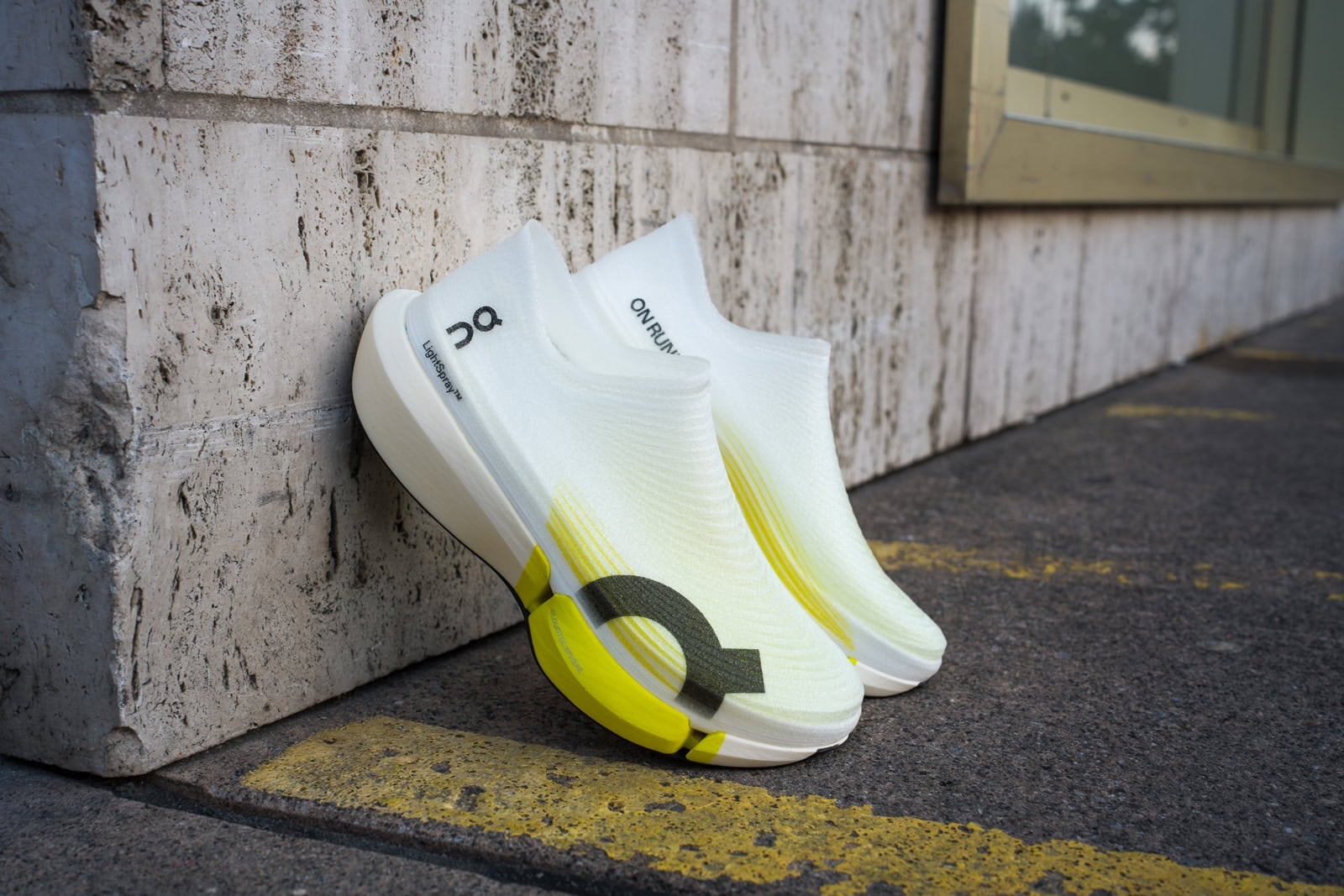
The Vanish Carbon 3 is priced at $239.95, which places it at or under pretty much every major carbon racer currently available, including the $250 Adidas Adios Pro 5, the $275 Brooks Hyperion Elite 6 and New Balance SC Elite 6, and the very pricey $310 On LightSpray Cloudboom Strike 2. The stack measures 40 mm at the heel and 36 mm at the forefoot, and the listed tester weight is 7.7 oz for men and 6.7 oz for women. That is notable in a year when running shoe prices have been climbing across the board.
If the 350-mile durability claim is legit, this would be one of very few super shoes that can reasonably be trained in as well as raced in, making it one of the best values of any running shoe, full stop. But is the Vanish Carbon 3 a true PB shoe? And can it deliver top-end speed at, say, mile 300? These questions can only be answered after significant wear testing, and a willingness to risk a goal race with a well-worn shoe. For how it stacks up against the wider field, see our tested and ranked running shoe picks.
The Verdict: Is the Altra Vanish Carbon 3 Worth It?
The Vanish Carbon 3 is the first Altra racing shoe that behaves like a member of the super-shoe category rather than a principled objection to it, and it gets there by conceding the key concept the brand was built on while keeping everything else that made Altra worth considering.
Running. In Your Inbox, Daily.
Fun and informative running tips, news, hot takes, and shoe reviews — read by 345,000+ runners.
Send Me the Next NewsletterRunClub — Free
Join 300,000+ runners in RunClub
Free training plans for every distance, a daily running game, exclusive coaching content, and a real community of runners. Create your free account in 20 seconds — no card.
Already a member? Log in →



Start the conversation