


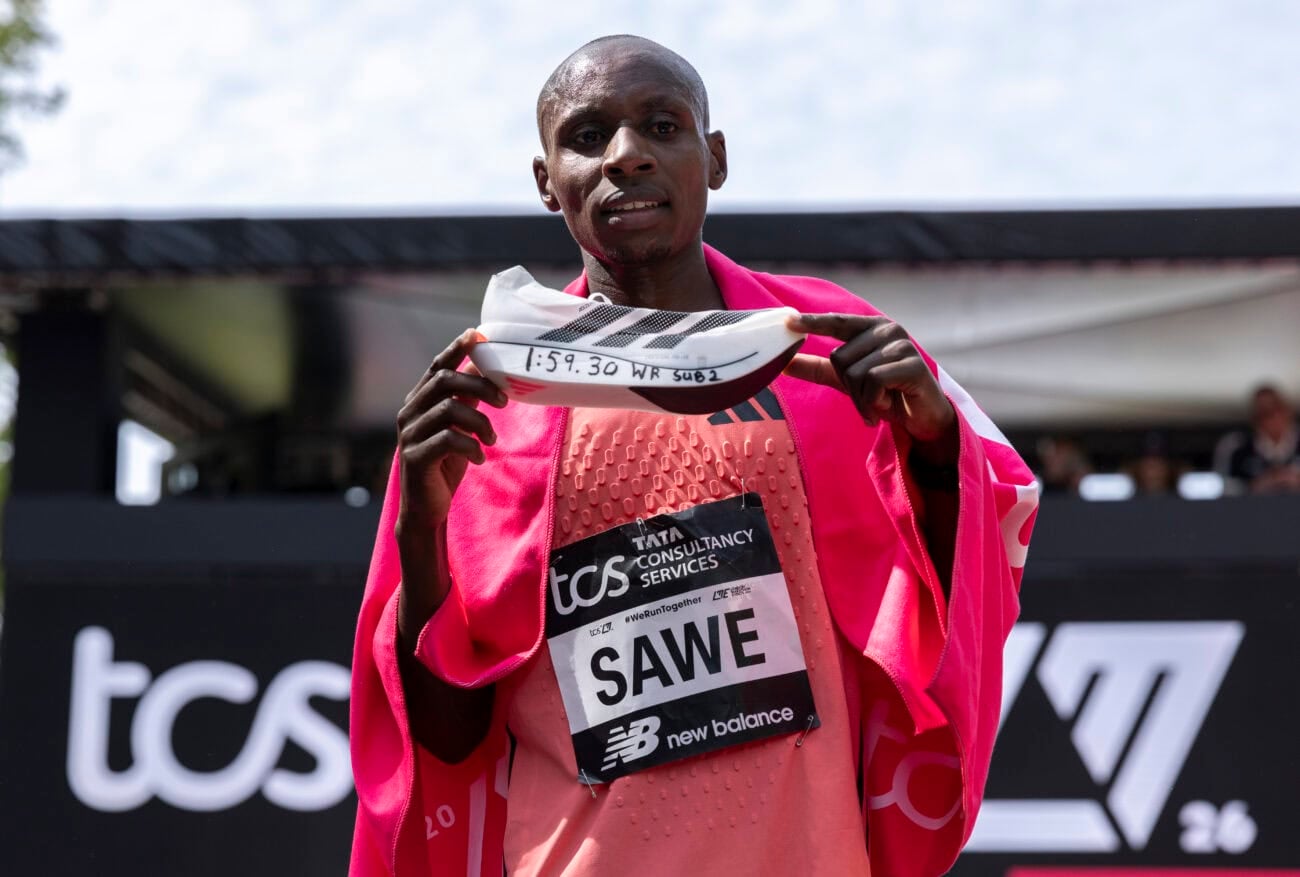
Photo: Shaun Brooks for London Marathon Events
For further information: media@londonmarathonevents.co.uk
The 2026 TCS London Marathon produced the two fastest marathons in history, the women’s-only world record, and six podium finishes that would have been outright world records two years ago. None of it happened without the shoes.
Three different brands’ athletes broke the previous men’s world record. Three different brands’ athletes finished inside 2:16 in the women’s race. The super-shoe arms race is no longer a Nike-versus-the-rest story. It is a four-way fight, and London 2026 was the day the field showed up. A year ago in this same race, the picture was very different.
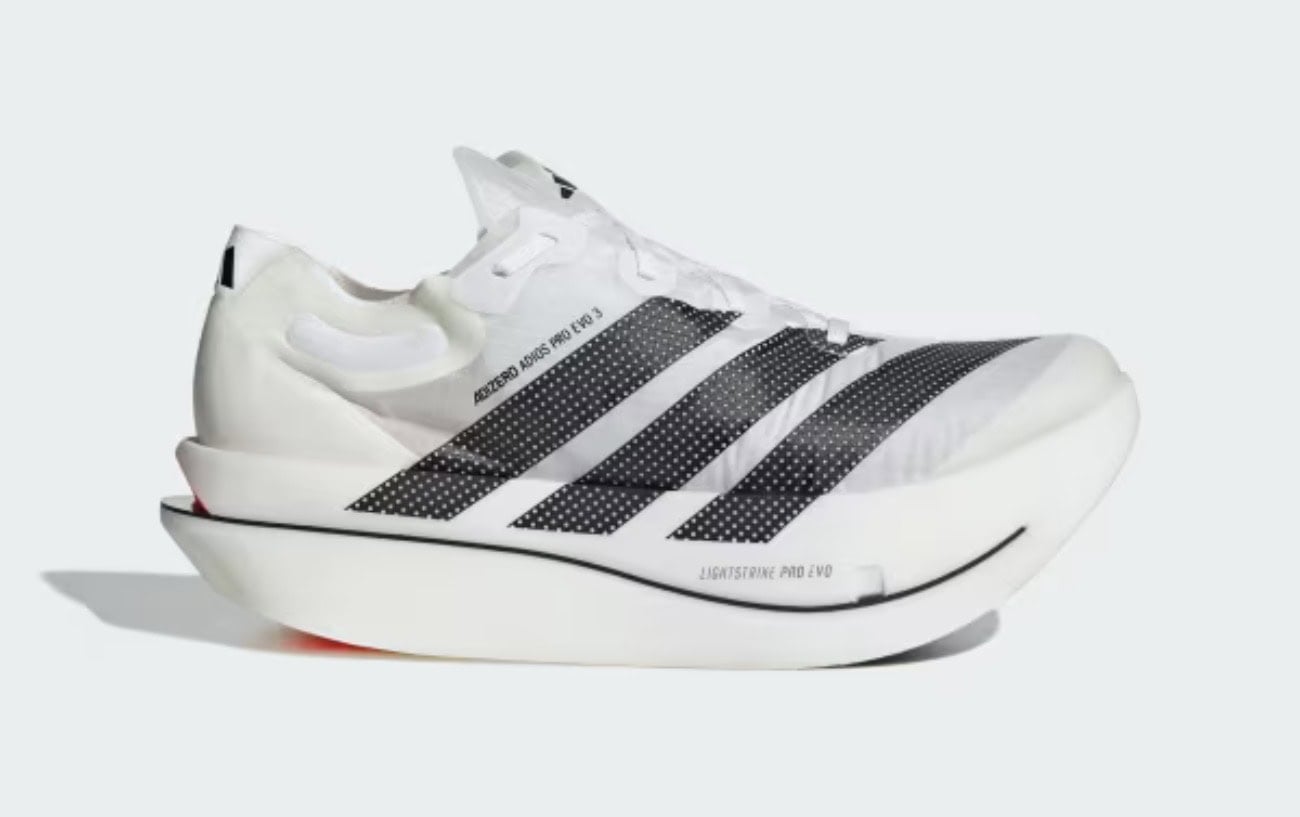
Adidas Adizero Adios Pro Evo 3 — Sawe (1:59:30), Kejelcha (1:59:41), Assefa (2:15:41)
The shoe of the day, by a long margin. Adidas put three athletes on top podium spots — the men’s winner, the men’s runner-up, and the women’s winner — and walked out of London with both world records to its name.
The Pro Evo 3 was unveiled days before the race. It weighs 97 grams in a men’s size 9.5 — Adidas’s first running shoe to go under 100 grams, and, by the brand’s claim, the lightest race-legal model in the industry. That is a 30 per cent weight reduction over the Pro Evo 2.
The reduction comes mostly from a new Lightstrike Pro Evo foam compound that Adidas says is 50 per cent lighter than its predecessor, paired with a feathery woven upper its designers say was inspired by kitesurfing sails. Adidas claim the Pro Evo 3 delivers an 11 per cent increase in forefoot energy return and a 1.6 per cent improvement in running economy over the Pro Evo 2 — small numbers that, at a 1:59-marathon pace, translate into a window for the impossible.
“Great shoes for racing, very light,” Tigst Assefa said after winning. “It’s very thin, it feels faster. I don’t know, but it’s different,” Yomif Kejelcha said of the same shoe, after running 1:59:41 on his debut. Sabastian Sawe wrote his finishing time on the side of his shoe and held it up for the cameras: 1:59.30 WR SUB2.
The retail price is $500. The release date is the day after the marathon. The current Pro Evo 2 has been worn for six marathon major wins and six more podium places across 2025. The Pro Evo 3 just added two world records to that ledger inside its first three hours of competitive use.
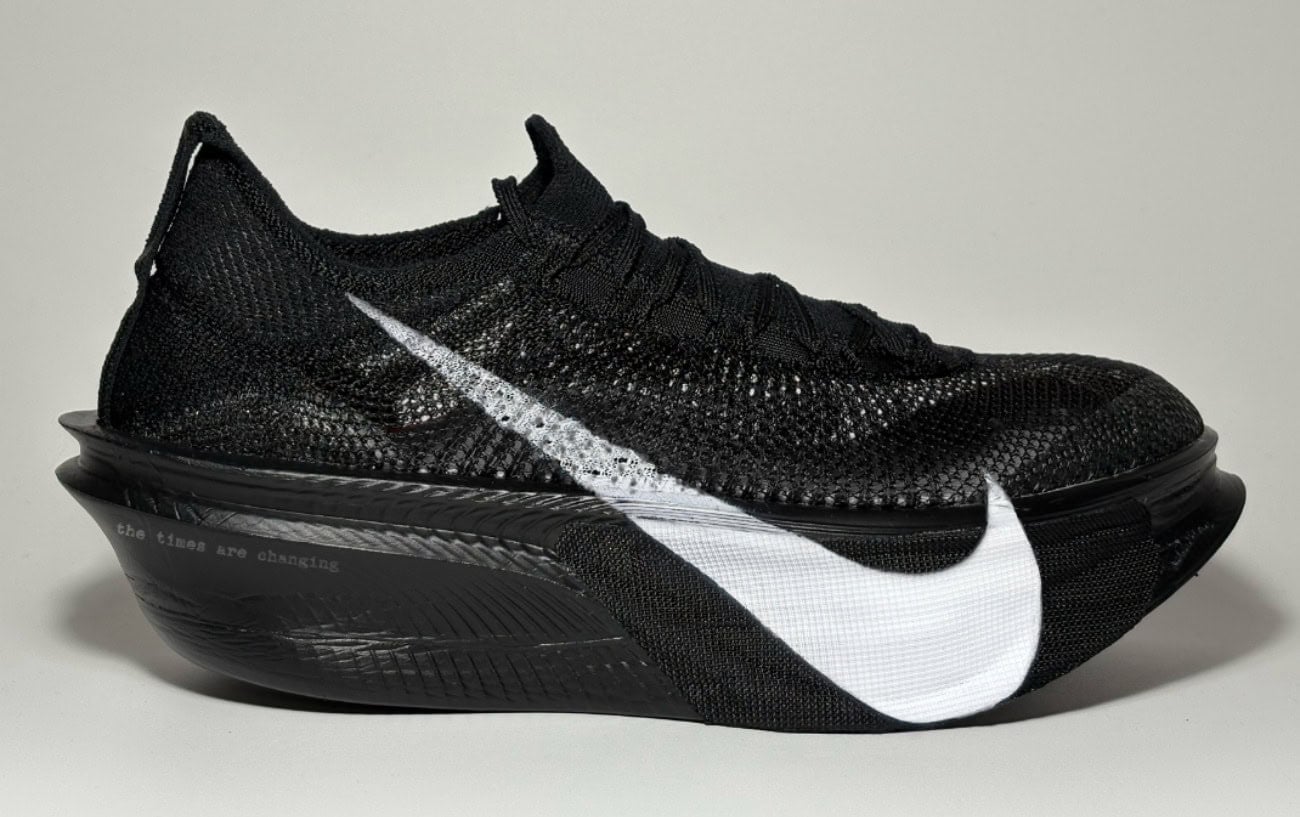
Nike Alphafly 4 — Kiplimo (2:00:28)
The fastest third-place finish in marathon history was run in the Nike Alphafly 3. Jacob Kiplimo’s 2:00:28 was faster than Kelvin Kiptum’s previous world record, and it came in only the third marathon of his career.
Kiplimo, the half-marathon world record holder, has been a Nike athlete throughout his career on the track and the roads. He has been spotted in unreleased Nike prototypes in past races, but the shoe on his feet today was the production Alphafly 4 — the fourth generation of the maximalist Air Zoom-equipped super shoe Nike has been iterating since 2020.
Heavier than the Pro Evo 3, but with the deeper midsole stack, dual Air Zoom pods in the forefoot and a ZoomX foam cradle that Nike’s marathoners have leaned on since Eliud Kipchoge’s INEOS 1:59 Challenge.
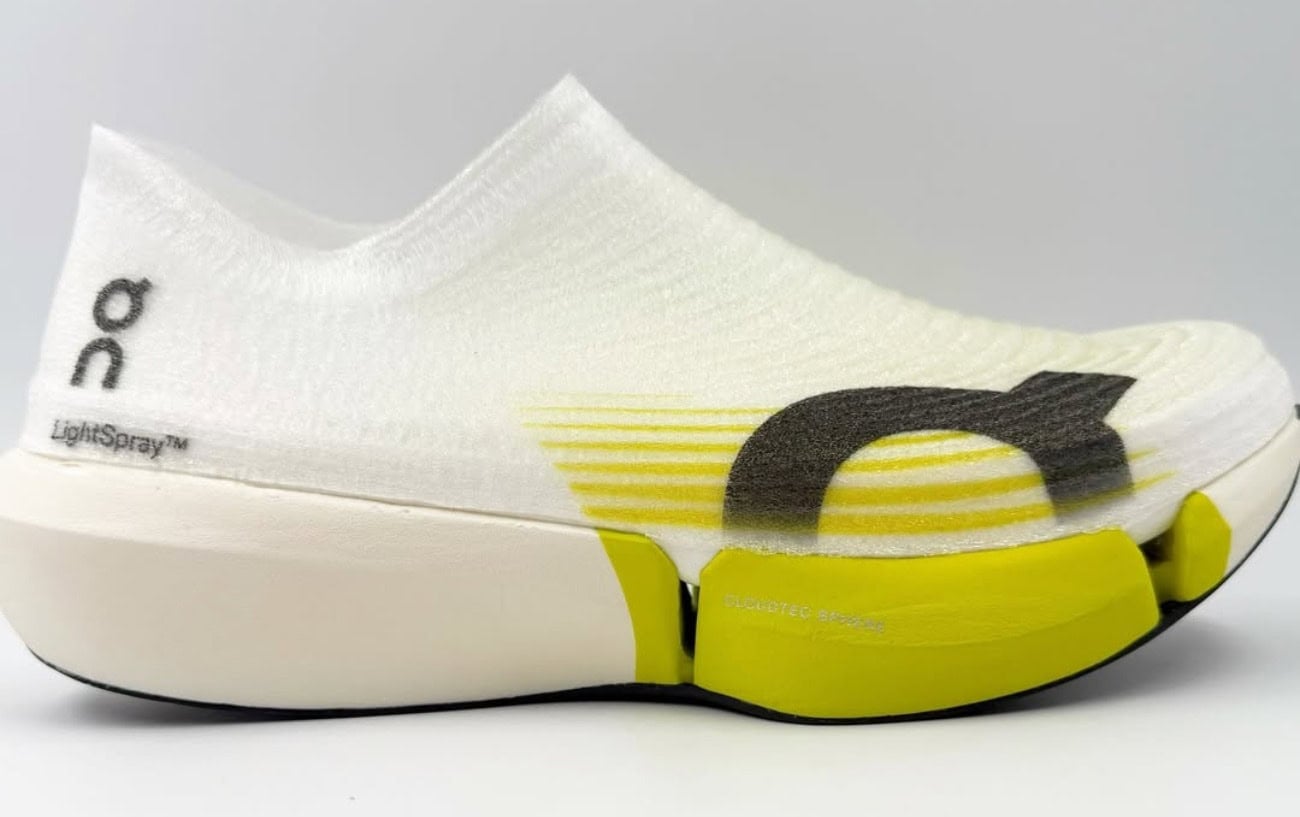
On Prototype — Obiri (2:15:53)
Hellen Obiri ran the fastest marathon of her career — 2:15:53, second to Assefa by twelve seconds — wearing a pair of laceless, sock-like shoes whose upper was sprayed onto the last by a robot in three minutes.
The shoe is an On prototype built using the brand’s trademarked LightSpray process. A robotic arm coats a shoe last with a single-filament polymer in one continuous step, replacing what On says is a roughly 200-step traditional upper assembly. The result is what onlookers have nicknamed the “Spiderman” shoe — a stretchy mesh upper that meets a carbon-plated cushioned sole, with no laces.
Obiri has been racing in LightSpray prototypes since her 2024 Boston Marathon win. She added a second Boston in 2024, back-to-back New York titles in 2024 and 2025, and a New York course record of 2:19:51. London was her debut over the distance on the Tower Bridge course. She had never broken 2:17 before. She broke 2:16 on Sunday.
On has just opened a “robot farm” in Busan, South Korea, with 32 LightSpray robots that will multiply LightSpray production by 30 times — a sign the brand is moving the technology out of elite-only drops and toward consumer drops.
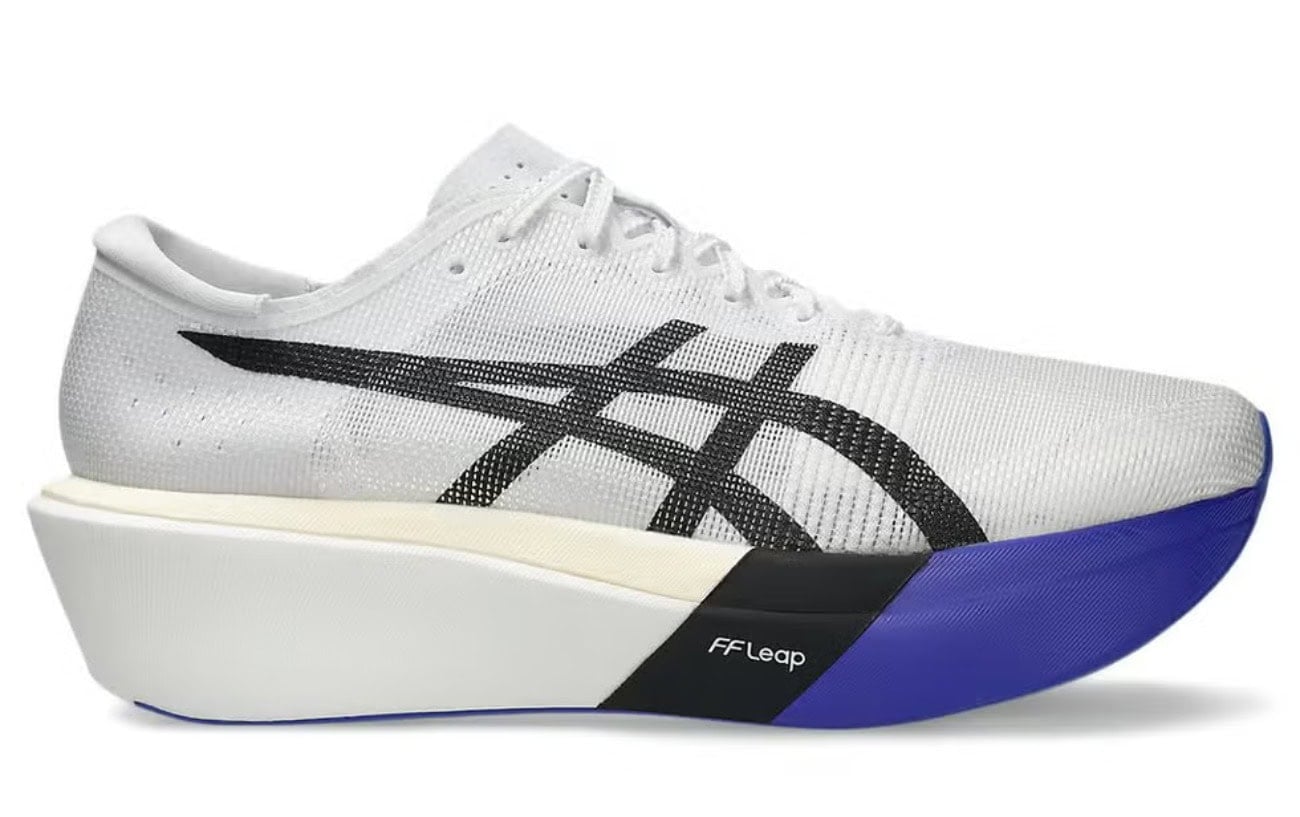
Asics ME5 TYPE-P (Metaspeed Edge prototype) — Jepkosgei (2:15:55)
Joyciline Jepkosgei finished third in 2:15:55, two seconds behind Obiri, in a prototype Asics shoe that does not yet exist for sale: the ME5 TYPE-P.
The model name suggests a fifth-generation Metaspeed Edge — Asics’s marathon racer for forefoot-strikers, the lighter and stiffer counterpart to the Metaspeed Sky in the brand’s two-shoe race-day offering. The shoe currently sits on World Athletics’s list of approved competition models but has not been released to the public.
What is known: the Metaspeed Edge series uses Asics’s A-TPU foam, an ultralight thermoplastic polyurethane bead-foam compound the brand has refined across each model generation. The most recent Asics super-shoe release, the Metaspeed Ray, weighed in at 129 grams — and Jepkosgei’s prototype is reportedly lighter again. Jepkosgei, who ran 2:14:00 to win Valencia in December 2025, has been an Asics athlete throughout her career.
RunClub
Get more running stories — join RunClub
Daily running news, a community of 300,000+ runners, free training plans for every distance, and a daily running game. Free to join — no card.
Already a member? Log in →


Start the conversation